Software
Houzz Logo Print
kathryn_rogers79

monteserra new growth burnt ends

4 years ago
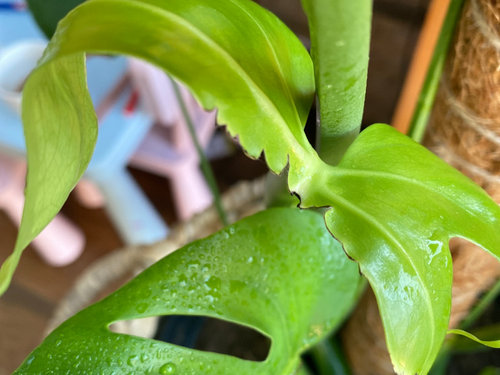


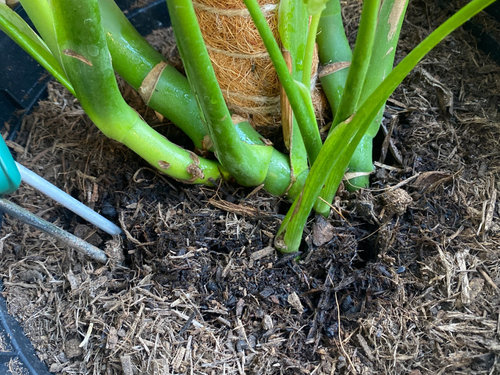
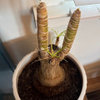
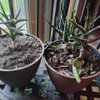
My monteserra has started new growth after i rescued it from water damage, but the new leaves are growing with a burnt end on it. what can i do to prevent this?

Comments (3)

  • 4 years ago

    i rescued it from water damage,


    ==>>


    and what exactly did you do for this rescue???


    did you repot.. how long has it been ...


    it was severely stressed from the root rot.. and whatever you did for or to it ... did you fert it and cause excessive growth before it had a chance to re-establish its root system???


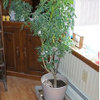
    how about a full history of the plant ... and a pic of the whole plant ... including your current water protocol...


    ken

    Kathryn Rogers thanked ken_adrian Adrian MI cold Z5
  • 4 years ago

    Hi Ken,

    it has been 3 months since i repotted the plant into new soil and a larger pot, the roots were like mush when i first got it and there was a lot of burnt/yellow leaves. So i cut back the roots to get most of the damage away and then repotted into brand new soul with drainage at the base of the pot..

    i have only used 1 fertilizer pod in the past 2 weeks and now only water once a week and mist the leaves once a week. i place the plant in a south facing window and have a meter to monitor moisture and light.

    any help is grateful. thank you


  • 4 years ago

    Necrotic leaf tips and/or margins are most often caused by over-watering and/or a high level of dissolved solids (salts) in the soil solution. These 'salts' come from tapwater and fertilizer solutions and accumulate in the grow medium if and when watering practices are such that the soil is not being flushed when the planting is watered.

    The "moisture meter" you're using does not measure moisture levels; instead, it measures the electrical conductivity of the soil solution. As such, it is a more accurate measure of the level of salts/ions in the soil solution than water. As proof, clean the probe and insert it in a clean cup containing distilled water and note the probe reads "DRY". Sprinkle a bit of table salt into the water and watch the needle move to "WET".

    If you cannot water to beyond the point where the soil is fully saturated (so you're flushing the soil as you water) w/o having to be concerned that the soil will remain soggy for extended periods, the soil is either inappropriate or, at best, needs an extra measure of care to limit the amount of excess water the medium can hold. It's important for ALL growers to understand that unless they are willing to ensure plants in the grow media they use can be watered correctly, or they take steps to limit how much water their plantings can hold, they will be forced to accept the limitations that come with over-watering or watering in small sips to avoid over-watering, the later of which ensures an accumulation of dissolved solids/salts in the grow medium.

    It's much better to use a 'tell' to help you determine appropriate intervals between waterings that a finger, a guess, or a "water meter". See "tell" below.

    You mentioned "drainage at the bottom of the pot" and "only using 1 fertilizer pod over the last 2 weeks". Both of these statements raise questions, so it would be helpful if you elaborated so we have a sense of whether or not these would be considered benign or limiting.

    Also, what did you use as the grow medium when you repotted?

    You should find this link useful.

    Using a 'tell'

    Over-watering saps vitality and is one of the most common plant assassins, so learning to avoid it is worth the small effort. Plants make and store their own energy source – photosynthate - (sugar/glucose). Functioning roots need energy to drive their metabolic processes, and in order to get it, they use oxygen to burn (oxidize) their food. From this, we can see that terrestrial plants need plenty of air (oxygen) in the soil to drive root function. Many off-the-shelf soils hold too much water and not enough air to support the kind of root health most growers would like to see; and, a healthy root system is a prerequisite to a healthy plant.

    Watering in small sips leads to avoid over-watering leads to a residual build-up of dissolved solids (salts) in the soil from tapwater and fertilizer solutions, which limits a plant's ability to absorb water – so watering in sips simply moves us to the other horn of a dilemma. It creates another problem that requires resolution. Better, would be to simply adopt a soil that drains well enough to allow watering to beyond the saturation point, so we're flushing the soil of accumulating dissolved solids whenever we water; this, w/o the plant being forced to pay a tax in the form of reduced vitality, due to prolong periods of soil saturation. Sometimes, though, that's not a course we can immediately steer, which makes controlling how often we water a very important factor.

    In many cases, we can judge whether or not a planting needs watering by hefting the pot. This is especially true if the pot is made from light material, like plastic, but doesn't work (as) well when the pot is made from heavier material, like clay, or when the size/weight of the pot precludes grabbing it with one hand to judge its weight and gauge the need for water.

    Fingers stuck an inch or two into the soil work ok for shallow pots, but not for deep pots. Deep pots might have 3 or more inches of soil that feels totally dry, while the lower several inches of the soil is 100% saturated. Obviously, the lack of oxygen in the root zone situation can wreak havoc with root health and cause the loss of a very notable measure of your plant's potential. Inexpensive watering meters don't even measure moisture levels, they measure electrical conductivity. Clean the tip and insert it into a cup of distilled water and witness the fact it reads 'DRY'.

    One of the most reliable methods of checking a planting's need for water is using a 'tell'. You can use a bamboo skewer in a pinch, but a wooden dowel rod of about 5/16” (75-85mm) would work better. They usually come 48” (120cm) long and can usually be cut in half and serve as a pair. Sharpen all 4 ends in a pencil sharpener and slightly blunt the tip so it's about the diameter of the head on a straight pin. Push the wooden tell deep into the soil. Don't worry, it won't harm the root system. If the plant is quite root-bound, you might need to try several places until you find one where you can push it all the way to the pot's bottom. Leave it a few seconds, then withdraw it and inspect the tip for moisture. For most plantings, withhold water until the tell comes out dry or nearly so. If you see signs of wilting, adjust the interval between waterings so drought stress isn't a recurring issue.

    Al