Software
Houzz Logo Print
webuser_481765712

Rubber plant woes, survival help!

4 years ago
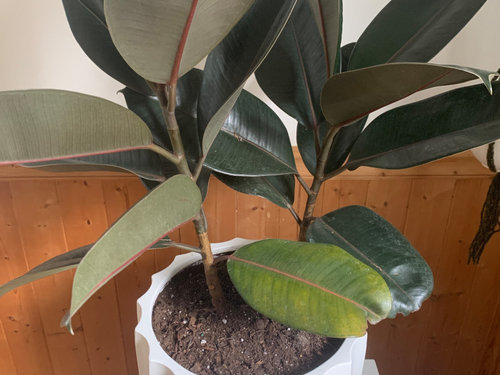
First time poster for some first time house plant momma & poppa!

We started out with Snake Plants and are loving it (for the past few years). But we were looking to expand our family, hence we stumbled upon our newest member, "The Rubber Plant".

After transporting it to a new pot, we started to see unfavorable behavior/results. We did research on the forum other members having the same issues we had, but none posted their results. If we missed something, we apologize ahead of time.

So we transported the Rubber Plant to a new, larger pot, using Miracle Grow planting soil. We filled the pot by 1/3 of the height, removed the old plastic pot from the base of the Rubber Plant, loosely broke some dirt around the vines, placed it in the pot and then filled with Miracle Grow soil but loosely until the Rubber Plant was able to hold itself up (not lean to one side).

We then watered the soil until it was slightly damp.

From there on out, we watered the soil until it was slightly damp, once a week. Well that's when things started to go down hill.

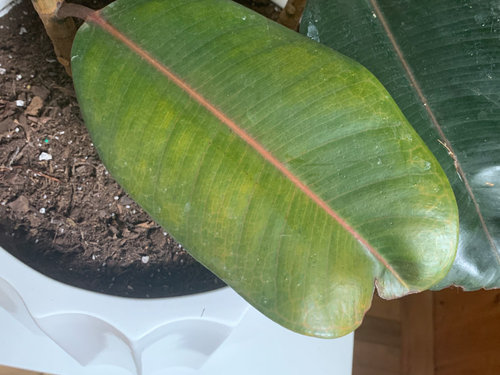
We had leaves turning in & out, we had 2 pedals fall from the lowest point of the plant (after they turned veiny yellow), and it looks like more about to fall too.

The plant stays near a non-sun facing window all day. Our inside temp is 67-68F with humidity between 28-33 percent (Ohio Winter weather).

We have misted and wiped the leaves once a week but based on our own research, we thought we were over watering it based on the leaves turning outward.

Is there anything else we are missing? we love this plant, almost too much. We haven't found any Rubber Plants this size locally and we are desperate for it to survive!

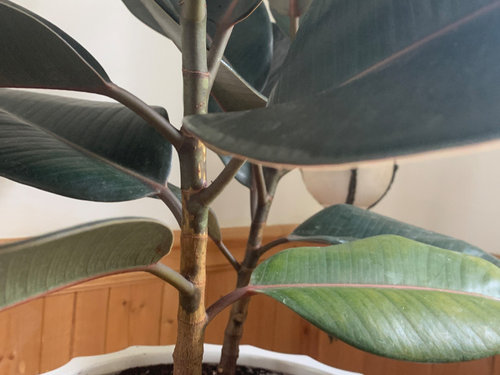
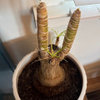
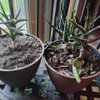
Any help is most appreciated. Please see all of the attached images for the plants current state (note: the 2 bottom leaves that have their tips missing, is how we bought it. We did not see any insects for this root cause).


Comments (3)

  • 4 years ago

    Welcome, Arie! During transitioning from nursery or greenhouse, to point of (retail) sale, to its new home, it's not unusual for the change in light levels to cause some shedding of leaves. Plants' ability to adapt to changing light levels varies by species, and leaves are less able to to tolerate a reduction in light than an increase. That's not to be taken as a diagnosis of what is occurring with your plant, it's simply meant to provide a potential cause. The plant will straighten things out on its own if it is a light issue, but your plant wants a full sun position indoors or outdoors. If you site it in front of a S or W window (in the northern hemisphere), you might need to make sure there is enough air movement in the room to prevent passive solar gain from over-heating the leaves and causing damage. If you have questions about light levels, please ask.

    Most often, shedding of foliage is due to over-watering, and use of the MG potting soil increases the concern re over-watering being the issue. If the pot the plant is in does not have a drain hole, you can be almost certain that too much water and too little air in the grow medium has become a serious limiting factor; and, that there might be a drain hole in the pot is not enough reason to look past that concern.

    For now, I would say A) the pot should have a drain hole, and B) you need to ensure the intervals between waterings are appropriate. You can do that by making/ using a wooden "tell". See "tell" below.

    I'll wait to see what your response is, but I should mention it would be a good idea to talk about what to do about supplemental nutrition/ fertilizing, an essential part of growing in containers. Poor nutrition can also force the plant to rob nutrients from older leaves to fuel new extension growth. Shedding accompanies this process, which is only one of the reasons why nutrition is important.

    Using a 'tell'

    Over-watering saps vitality and is one of the most common plant assassins, so learning to avoid it is worth the small effort. Plants make and store their own energy source – photosynthate - (sugar/glucose). Functioning roots need energy to drive their metabolic processes, and in order to get it, they use oxygen to burn (oxidize) their food. From this, we can see that terrestrial plants need plenty of air (oxygen) in the soil to drive root function. Many off-the-shelf soils hold too much water and not enough air to support the kind of root health most growers would like to see; and, a healthy root system is a prerequisite to a healthy plant.

    Watering in small sips leads to avoid over-watering leads to a residual build-up of dissolved solids (salts) in the soil from tapwater and fertilizer solutions, which limits a plant's ability to absorb water – so watering in sips simply moves us to the other horn of a dilemma. It creates another problem that requires resolution. Better, would be to simply adopt a soil that drains well enough to allow watering to beyond the saturation point, so we're flushing the soil of accumulating dissolved solids whenever we water; this, w/o the plant being forced to pay a tax in the form of reduced vitality, due to prolong periods of soil saturation. Sometimes, though, that's not a course we can immediately steer, which makes controlling how often we water a very important factor.

    In many cases, we can judge whether or not a planting needs watering by hefting the pot. This is especially true if the pot is made from light material, like plastic, but doesn't work (as) well when the pot is made from heavier material, like clay, or when the size/weight of the pot precludes grabbing it with one hand to judge its weight and gauge the need for water.

    Fingers stuck an inch or two into the soil work ok for shallow pots, but not for deep pots. Deep pots might have 3 or more inches of soil that feels totally dry, while the lower several inches of the soil is 100% saturated. Obviously, the lack of oxygen in the root zone situation can wreak havoc with root health and cause the loss of a very notable measure of your plant's potential. Inexpensive watering meters don't even measure moisture levels, they measure electrical conductivity. Clean the tip and insert it into a cup of distilled water and witness the fact it reads 'DRY'.

    One of the most reliable methods of checking a planting's need for water is using a 'tell'. You can use a bamboo skewer in a pinch, but a wooden dowel rod of about 5/16” (75-85mm) would work better. They usually come 48” (120cm) long and can usually be cut in half and serve as a pair. Sharpen all 4 ends in a pencil sharpener and slightly blunt the tip so it's about the diameter of the head on a straight pin. Push the wooden tell deep into the soil. Don't worry, it won't harm the root system. If the plant is quite root-bound, you might need to try several places until you find one where you can push it all the way to the pot's bottom. Leave it a few seconds, then withdraw it and inspect the tip for moisture. For most plantings, withhold water until the tell comes out dry or nearly so. If you see signs of wilting, adjust the interval between waterings so drought stress isn't a recurring issue.

    Al

    Arie Steffan thanked tapla (mid-Michigan, USDA z5b-6a)
  • 4 years ago

    Thank you so much for all of your help!!

    I used a tell and it looked like only about the bottom half inch of soil was still wet. It had been about 10 days since I had last watered, so I watered it on Thursday. The yellowing leaf ended up shedding on Saturday, but I’m hoping maybe it was due to overwatering. the bottom of the pot had a hold, but it was plugged until about a week ago.

    I’m going to try to place it in a spot that gets more light too! I’ll keep you posted on the progress.

    Arie

  • 4 years ago

    Please do let us know how things are going, Arie.

    Al

    Arie Steffan thanked tapla (mid-Michigan, USDA z5b-6a)
Sponsored
Peabody Landscape Group
Average rating: 3.5 out of 5 stars8 Reviews
Columbus' Reliable Landscape Design & Contracting