Software
Houzz Logo Print
webuser_682524959

Indoor tree leaves cracking, bending

4 years ago
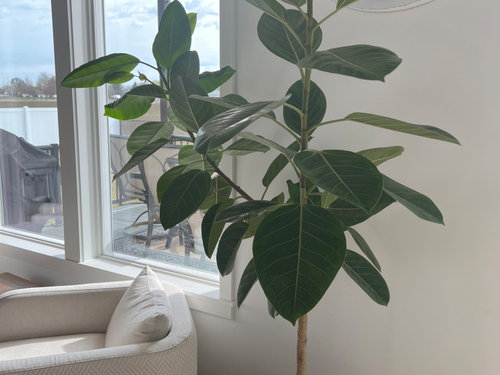
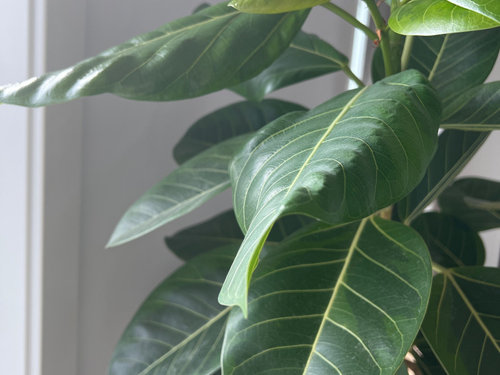
Tree is a variety of ficus. I

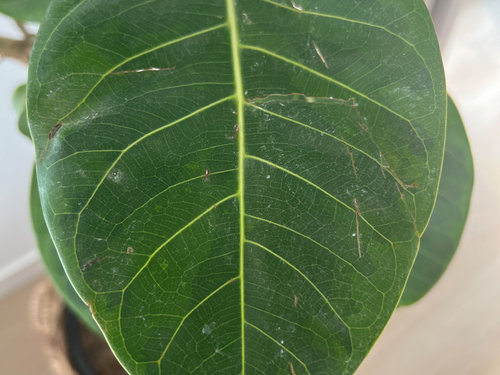
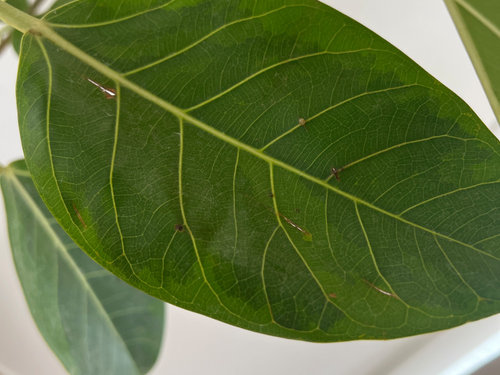
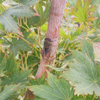
noticed the top leaves have started drooping a little (still stiff to the touch but drooping a bit). Several of the leaves have also started cracking a bit. Are either of these reason to be concerned or what action should be taken? Thank you!


Comments (4)

  • 4 years ago

    The only issues I see are mechanical injury - the equivalent of bruising in a human. This often occurs in transit before you get the plant, when exposed to high winds or the plant is toppled, or possibly on the ride home from the point of purchase.

    There seems to be some residue from the preshipment pesticide/ fungicide that was likely sprayed on the foliage before loading into the delivery truck.

    Just curious, how do you conclude when it's time to water? How long have you had the plant? Do you have a nutritional supplementation program you're adhering to?

    Al

  • 4 years ago

    @tapla (mid-Michigan, USDA z5b-6a) I am watering when top inch or two of soil is dry (about every 1.5 weeks right now), and I have had it for about 5 months now. The leaves just started drooping about a month or so ago. The nursery said to mix water with some 20-20-20 fertilizer with each watering, so its getting that every week/week and a half, but that is the extent of it.

  • 4 years ago

    no plant needs 20-20-20 every 10 days or so ... it you dont stop that soon.. accumulated salts will eventually kill the plant..


    frankly.. from a few feet away.. i see nothing wrong with the plant... and wonder if you arent loving it toward death to some extent ..


    i simply dont see the drooping you refer to.. so i wonder why you are fixing such???


    i agree with al about that leaf looking a bit beat up .... so what.. remove it.. if its the only one.. i would be surprised if you didnt tell us.. its the one sticking out the most on the plant ...


    imo.. you have a very healthy looking plant.. lets try not to screw that up ...


    ken

  • 4 years ago
    last modified: 4 years ago

    Alyssa said - I am watering when top inch or two of soil is dry (about every 1.5 weeks right now). I believe the species of your plant is F benghalensis - often referred to commonly as Ficus Audrey.

    That your planting can go 1.5 weeks between waterings is clear indication your grow medium is holding too much water. The advice to water when the top inch or two of soil feels dry is, in most cases, a recipe for over-watering. If your pot is 5" deep or less, the advice would be true for a high percentage of grow media brands, but not all. Here's why: Most commercially prepared media based on fine ingredients like peat, coir, compost, topsoil, sand, composted forest products, support what is called a perched waster table (PWT), which is a fancy name for water that defies gravity, refuses to leave the pot, and fills all spaces between the soil particles. The ht of the PWT in commercially prepared mixes is usually 3-6" tall, but can be taller in some cases. Roots of terrestrial plants cannot function normally when several inches of the grow medium is 100% saturated, so the condition affects root function and often root health by providing an environment conducive to the proliferation of fungal pathogens.

    What this means is, when the top inch or two of the soil is dry in an 8-10" deep pot, the bottom 4-6" can be 100% saturated. The loss of oxygen that accompanies a PWT causes death of the finest roots, those that do the lion's share of the plants heavy lifting. Root growth always precedes top growth, so when roots die, top growth stops until the roots regrow to the point where they can again appropriately keep the top growth hydrated. This continuing death and regeneration of roots robs the plant of energy it would otherwise be utilized in increasing the plants living mass, and protecting the plant against disease pathogens and marauding insect attackers, not to mention its impact on the plant's growth rate and eye appeal.

    What's most important is not what moisture conditions are in the top 2 ", as roots there serve primarily as plumbing and anchorage, most important is what the air:water ratio is deep in the pot, at/near the bottom, which is why I often suggest using a wooden tell, made from an inexpensive wooden dowel rod (any home improvement or hardware store), a simple tool you can make in less than 2 minutes. Read more below about 'Using a Tell'.

    The nursery said to mix water with some 20-20-20 fertilizer with each watering, so its getting that every week/week and a half. If ANYone gives you advice re what is/isn't appropriate in terms of nutritional supplementation w/o qualifying that advice, ignore it. The foundation of actionable advice (for conventional container culture, like we're discussing here) should always be based on a good understanding of your watering habits and the physical characteristics of the medium grow you're using. Example, if you are using a very fast draining medium (like I use) and are flushing the soil when you water, you have the option of fertilizing EVERY time you fertigate (fertilize + irrigate). If, however, your grow medium is water retentive and you're watering in small sips to avoid over-watering, it would be dangerous and inappropriate to fertigate so often; this due to the build-up of salts that type of watering encourages.

    Ideally, you would be using a grow medium that allows you to water every 3-5 days (or more frequently) and flush the soil as you water w/o your plant(s) having to pay an over-watering tax in terms of the stress that comes from over-watering and the lack of oxygen that accompanies it. Even then it would be better to tie the frequency with which you fertilize to the number of times you water rather than what the calendar says.

    Let me know if you'd like to read a basic overview of geed growing practices and/or visit a thread I wrote on how to care for Ficus in containers over the long term. I'll provide links

    Using a 'tell'

    Over-watering saps vitality and is one of the most common plant assassins, so learning to avoid it is worth the small effort. Plants make and store their own energy source – photosynthate - (sugar/glucose). Functioning roots need energy to drive their metabolic processes, and in order to get it, they use oxygen to burn (oxidize) their food. From this, we can see that terrestrial plants need plenty of air (oxygen) in the soil to drive root function. Many off-the-shelf soils hold too much water and not enough air to support the kind of root health most growers would like to see; and, a healthy root system is a prerequisite to a healthy plant.

    Watering in small sips leads to avoid over-watering leads to a residual build-up of dissolved solids (salts) in the soil from tapwater and fertilizer solutions, which limits a plant's ability to absorb water – so watering in sips simply moves us to the other horn of a dilemma. It creates another problem that requires resolution. Better, would be to simply adopt a soil that drains well enough to allow watering to beyond the saturation point, so we're flushing the soil of accumulating dissolved solids whenever we water; this, w/o the plant being forced to pay a tax in the form of reduced vitality, due to prolong periods of soil saturation. Sometimes, though, that's not a course we can immediately steer, which makes controlling how often we water a very important factor.

    In many cases, we can judge whether or not a planting needs watering by hefting the pot. This is especially true if the pot is made from light material, like plastic, but doesn't work (as) well when the pot is made from heavier material, like clay, or when the size/weight of the pot precludes grabbing it with one hand to judge its weight and gauge the need for water.

    Fingers stuck an inch or two into the soil work ok for shallow pots, but not for deep pots. Deep pots might have 3 or more inches of soil that feels totally dry, while the lower several inches of the soil is 100% saturated. Obviously, the lack of oxygen in the root zone situation can wreak havoc with root health and cause the loss of a very notable measure of your plant's potential. Inexpensive watering meters don't even measure moisture levels, they measure electrical conductivity. Clean the tip and insert it into a cup of distilled water and witness the fact it reads 'DRY'.

    One of the most reliable methods of checking a planting's need for water is using a 'tell'. You can use a bamboo skewer in a pinch, but a wooden dowel rod of about 5/16” (75-85mm) would work better. They usually come 48” (120cm) long and can usually be cut in half and serve as a pair. Sharpen all 4 ends in a pencil sharpener and slightly blunt the tip so it's about the diameter of the head on a straight pin. Push the wooden tell deep into the soil. Don't worry, it won't harm the root system. If the plant is quite root-bound, you might need to try several places until you find one where you can push it all the way to the pot's bottom. Leave it a few seconds, then withdraw it and inspect the tip for moisture. For most plantings, withhold water until the tell comes out dry or nearly so. If you see signs of wilting, adjust the interval between waterings so drought stress isn't a recurring issue.

    Al