Software
Houzz Logo Print
jazzlover1

Japanese maple needs help!

4 years ago
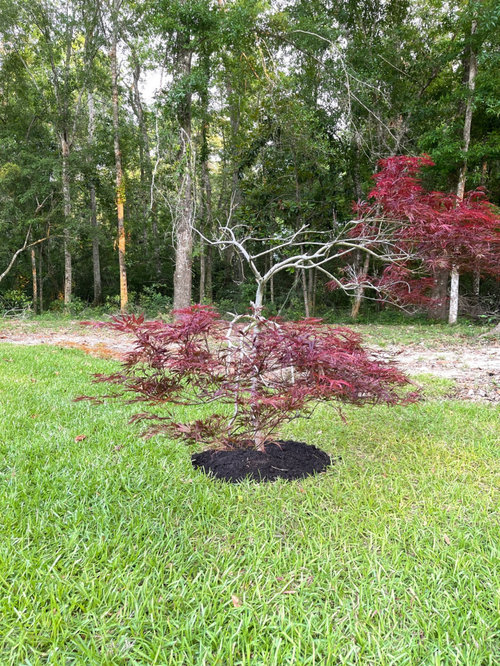
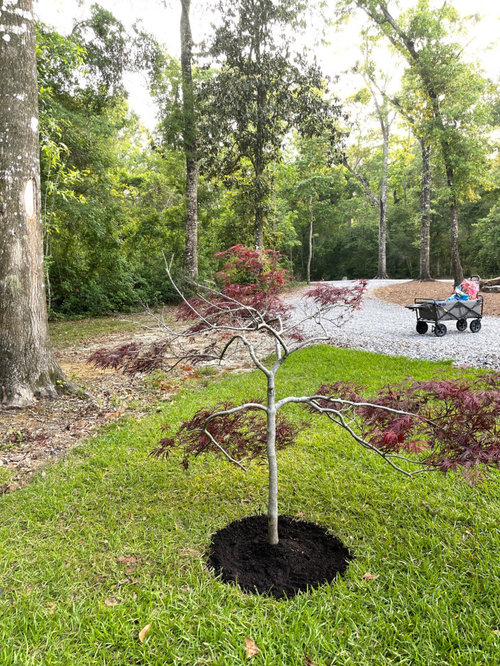
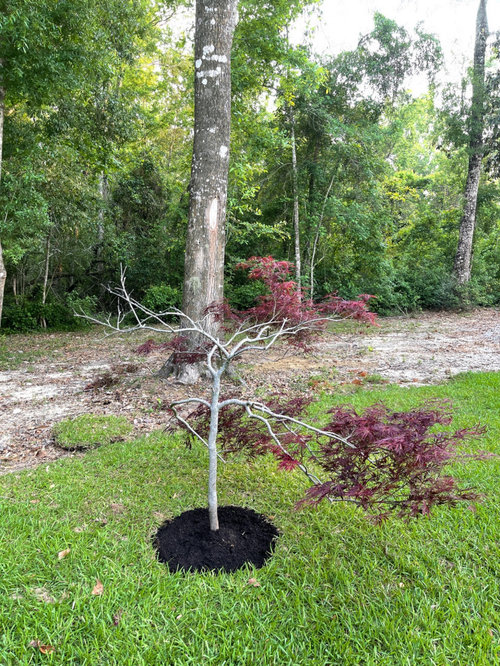
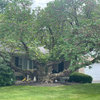
So I rescued this Japanese maple (no idea on specific variety)that was being thrown away yesterday. Got it planted and now I need some suggestions on if and when it needs pruning to shape it up better. Is now a good time- location South Mississippi

Comments (21)

  • 4 years ago

    Just keep it properly watered and let it be. It's already been through enough trauma being rescued and replanted right before summer heat starts so give it some time to recover.

    The only thing you want to prune out any time soon is any dead wood. Let's revisit this next season to see what other pruning may be necessary.

  • 4 years ago

    Ok sounds good! Yes I was thinking it may be in a bit of shock right here at the growing season. I’ll prune off the dead and see how it looks next year. Thx!!

  • 4 years ago

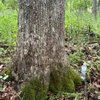
    Scoot your fingers all around the base of that trunk there and make sure you can see the root flare.

    And it would really appreciate some rigged shade while it establishes.

  • 4 years ago

    That looks like Charlie Brown's Christmas tree.

  • 4 years ago

    🤣😂🤣😂 it doesssss!!🥹

  • 4 years ago
    last modified: 4 years ago

    Scoot your fingers all around the base of that trunk there and make sure you can see the root flare.

    And it would really appreciate some rigged shade while it establishes.


    I second this. trunk looks too deep in mulch. Also trim the dead branches off asap and take some but not much of the good branches off too because it doesn't have as many roots as it did to support that much foliage. If you can prop some cheap plywood or hang a sheet or something so it blocks some hours of sun should be good.


    don't fertilize because that'll cause top growth and you want it to focus on rooting the first couple years but something like slow release milorganite which also has phosphorus for rooting should be good to mix in.

  • 4 years ago

    Don't prune out anything that looks dead until you can confirm that it is in fact dead wood. Dead wood will be a light gray in color and with no viable buds present. And there is considerable scientific evidence to support NOT cutting back any viable, living topgrowth when transplanting. All that foliage is necessary to support the development/regeneration of the root system, not the other way around. Pruning or cutting back now will only slow establishment in its new location,

    No fertilizers, no amendments......just water :-)

  • 4 years ago

    https://www.youtube.com/watch?v=ZuMhh8aFIUE

    Transplanting A Large Established Shrub By Hand


    i beg to differ.

    this guy prunes first and then transplants for the reason I mentioned not having as many original roots to support the full amount of foliage.

    Similar to when a fig air layer is transplanted and they cut most of the leaves off.


    I transplanted 4 ~7 foot emerald green arborvitaes and 2 didn't make it and maybe it was from this, plus it was mid summer worst time possible plus area is wet but it was wet where it was. Recently I moved 3 more and I did prune them so hopefully they'll live. Also suggests water the foliage so it doesn't burn out.


    his channel is HortTube and is all about plants and owns a nursery and really delves deep into topics so I trust his suggestions and it seems to make sense to me.


  • 4 years ago

    1 of your links says :

    "Perennials

    In general, perennials seem to be less affected when they loose some of their roots and foliage during transplanting. If you are moving a large perennial and know that it lost a lot of roots, I think that the plant benefits from having some of the leaves removed. In practice, I only do this if I am moving something in mid summer when it has a lot of leaves and it is very hot."


    mostly we're talking about perennials, but I think he means liek small flowering perennials, not trees/shrubs which have another section next which he says not to prune.


    I never heard of either method of pruning or not before or right after transplanting, and I recently stumbled on the video I linked.

    And FYIY, I don't think it's any good how he chopped the roots some time before planning to transplant it, thinking they'll get a head start on growth for when transplanted - instead I'd just try to keep as many roots intact, and it's not like that's a giant tree where most the root ball can't be salvaged, but nurseries do this all the time when they use those giant claw machines to pluck trees out and ball and burlap, they don't get much roots, but they don't cut anything prior that I know of.


    I think timing is most important, early spring transplant. Weird is that the 2 emerald greens that died, a few weeks later I moved 2 more from basically the same conditions to the new spot same conditions few feet apart and those 2 did fine. Both were done around mid summer in NJ and were about 11 years old, 7 foot.

  • 4 years ago

    "nurseries do this all the time when they use those giant claw machines to pluck trees out and ball and burlap, they don't get much roots, but they don't cut anything prior that I know of."

    Have you ever worked for a commercial grower? They do not use tree spades - most B&B stock is hand dug and yes, they DO root prune before about 6 months prior to harvest. Been there, done that.

  • 4 years ago

    I'd like to 3rd (or 4th) the suggestion for pulling the mulch away from the base of the tree. The root flare should be exposed.

    Anecdote: We bought a house last summer that had a 3-ft tree in front. We had ignored the tree because we had a much, much bigger tree in danger of breaking and falling onto the house. When the arborist came to talk to us he took the opportunity to evaluate all the trees and pulled the soil away from the little 3-ft tree to expose the tops of the roots. It had been buried too deep in the soil. So we have worked to keep the soil from refilling back to the trunk. Today, 9 months later, that tree is well over 7-ft tall.

    The condition of the tree is likely why someone threw it away. With some patience it will look fine. It may have some curves to it, but we call that 'character.'

  • 4 years ago

    Thank you all! I will definitely try to salvage it and keep the dirt away from the flare. Hoping it thrives!!

  • 4 years ago

    gardengal48, you seem to be one of the most knowledgeable people on this board, if you get a change I'd love your suggestion for ~35 foo tmax long lived dense evergreens for zone 6.5 New Jersey.

    https://www.gardenweb.com/discussions/6261472/nj-zone-6-7-mid-size-35-ft-max-evergreens 

  • 4 years ago

    @barplants123 barplants123, thank you for your very nice words :-) But I am not sure how much help I will be - you are asking for the conifer equivalent of a unicorn! You may hit one or two of your criteria but to combine them all in a single tree is a pretty unrealistic expectation.

    There are a handful I would consider as offering much - but not all - of what you are looking for: Cryptomeria japonica 'Elegans', Picea omorika 'Riverside' and Thuja plicata 'Excelsa'.

  • 4 years ago

    gardengal48, you seem to be one of the most knowledgeable people on this board,

    Yeah, she throws around a lot of big botanical names like Archontophoenix cunninghamiana but was she ever a rocket scientist like some of us???

    ;-)

  • 4 years ago

    Ideally when you transplant, if the plant can support all the top growth, then I think it's better to leave the top growth, but if it starts wilting and watering within reason doesn't help, you really have no choice but to cut off some of the top growth. I've transplanted lots of things and sometimes things don't go as planned or you're in a terrible digging environment and you end up with fewer roots than you wanted.

  • 4 years ago

    ^ good point, from what gardengal linked, I wouldn't trim anything, but if see wilting, burning etc, then I'd trim some off.


    thanks anyway gal, but those 3 get to like 60 ft and I don't want them to catch too much wind and possibly fall in a storm and break something.


    I know, I'm asking basically everything of a tree in mid size evergreen and it's been hard to find. If only green giants maxed at like 35 ft I have already planted them.

  • 4 years ago

    Those cultivars were chosen because none of then will grow to 60'.......or certainly not in the next 50+ years! They ARE midsize evergreens! And if sited and planted correctly, none of them are likely to "catch too much wind and possibly fall in a storm and break something."

  • 4 years ago

    no idea on specific variety


    FWIW, it looks like an Emperor to me. That's based on the color and shape of the limbs. There are several red varieties, though, so as it fills out it might take on a different shape.


    I can triple down on the "pull back the mulch" statements. I know you don't want to because it looks really good, but having it against the truck will overheat the roots and just do more damage :-( I have a Tam that struggled for a few years, and when I pulled the mulch back from the roots it did a LOT better!


    Most Japanese maples do best in part sun, at least until they're mature. I couldn't see the canopies of the bigger trees in the picture but it looks like they'll probably shade the tree pretty well, which is good. If you start seeing burned spots on the leaves or wilting, though, then you might want to set up a light shade for at least the first few years.


    But let me also add that I'm one of the less knowledgeable people on this forum, so if someone disagrees with me then you should probably listen to them :-)

  • 4 years ago

    ^^^ The only thing I'd disagree with is ID :-) It's not Emperor 1. Emperor 1 is a Bloodgood look-alike - big tree, big leaves, upright habit. The tree in question is some form of dissectum or laceleaf maple. Maybe Red Dragon or Crimson Queen.

    btw, with nearly a 1000 named cultivars of Japanese maples on the market, there are a whole lot more than "several" red leaved forms!!