Software
Houzz Logo Print
bradpitch92

Field Horsetail Invasion Help

4 years ago
last modified: 4 years ago
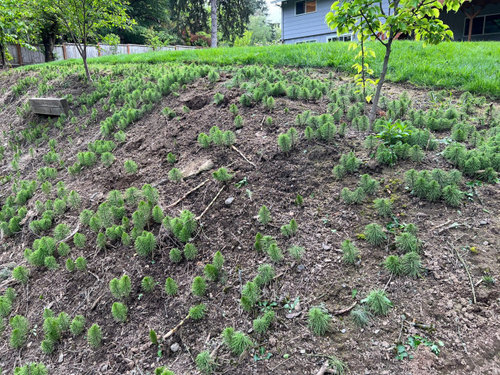
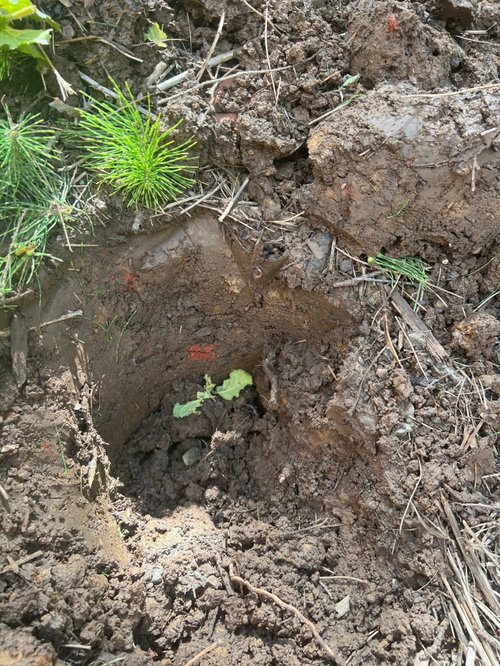
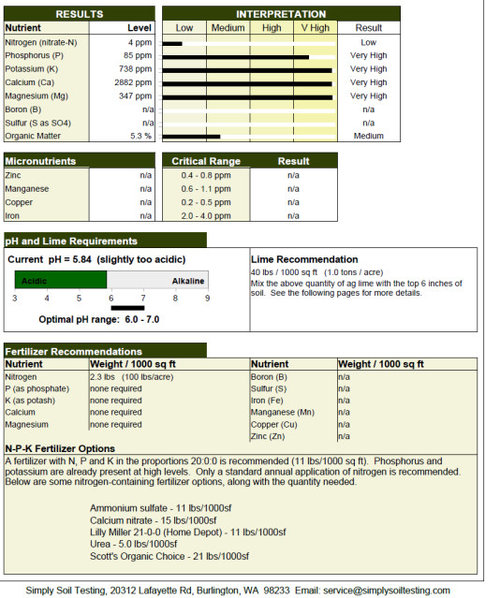
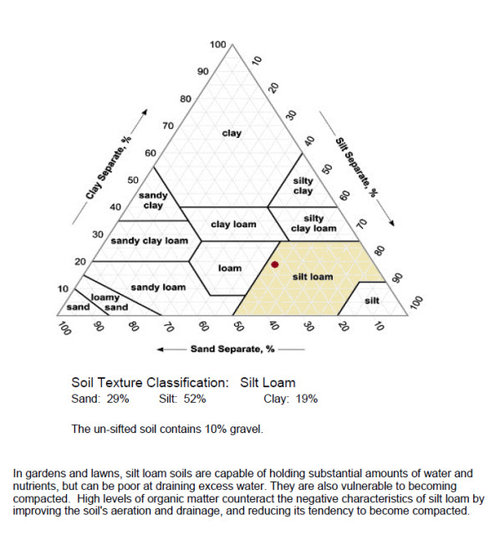
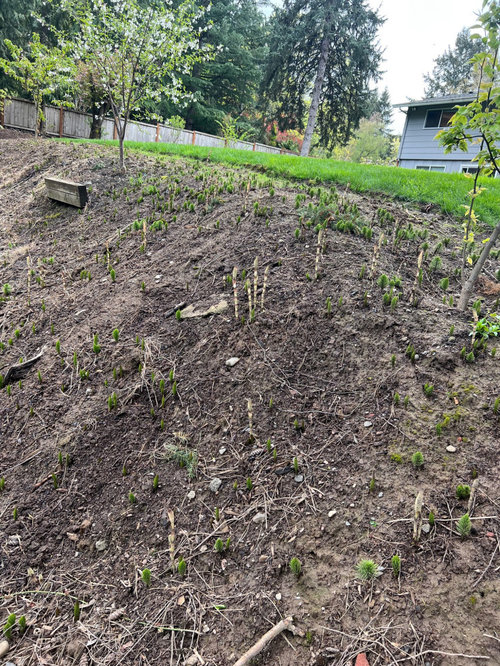
Our yard is being invaded by field horsetail and I'm looking for suggestions for removal. I realize this will not be easy. See pics of the part where its prolific. I got my soil tested, which I have also pasted the relevant results below (both nutrients and soil texture). My soil was in decent shape, but very low in nitrogen. I just recently added some nitrogen. I also still need to add some lime to raise the pH. My soil texture seems a bit too silty, and by looking at the picture I took, it seems compacted too. It also feels very waterlogged, which I suspect is contributing to the horsetail growth. Anyone have any advice? It's sort of a weird spot for horsetail to grow because its a hill, which I would think has decent drainage. It has started to get into my grass, but only barely and mostly on the edges. I think because it's having a hard time competing against the grass and i suspect the turf soil is in better shape.

My plan is as follows: 1. Use crossbow herbicide to kill it.

2. Add about 40 lbs of lime to increase the pH. What is best way to add lime? The report says to mix the lime with the top 6 inches of the soil, does that mean i need to add the lime and then till the soil so its gets mixed in?

3. Try to improve the soil so it's not so waterlogged and compacted. What can i do here to do this? I was thinking about planting some sort of ground cover plant like Vinca which could help the soil. Should i also add like peat moss to increae the organic matter?

Now:


2 weeks ago:


soil:


soil health:


soil texture:


Comments (13)

  • 4 years ago

    You can do whatever you like regarding soil improvement but it is unlikely to have any impact on the horsetail. It is a hugely adaptable plant, millions of years old, and grows just about anywhere and with any soils. I've encountered it on a steeply sloped hillside with excellent drainage, a higher pH and a sandy soil and it spread like the plague! Dealt with it in a variety if other sites as well and with different growing conditions.

    You can try herbicides but paint (not spray) full strength on the cut stems. The high silica content of the plant deflects herbicide spray penetration. Once you have killed back the topgrowth, you will need to stay on top of it and remove any new shoots you see as soon as they appear. This is a multi-year project unfortunately, but the consistent removal of any sign of new growth will prevent photosynthesis and eventually will starve out the very deep and widespread root system.

    The other alterative is to move :-)

  • 4 years ago

    when you say cut stems, cut like most of the visible plant and then paint the herbicide on the top part where the cut is? Any herbicide or does Crossbow actually work well here?

  • 4 years ago

    pdxhome:

    I’m not familiar with horsetail.

    What is the 3rd photo depicting?


  • 4 years ago

    the soil, trying to get some views on whether its compacted or not.

  • 4 years ago

    You used a Washington based soil test lab. Is it safe to assume you are in the PNW? Knowing where you are always helps with gardening solutions. And if the PNW, which side of the mountains?

    You cannot determine compaction from photographs. Compaction results from removing all the air pockets from the soil. It is extremely unlikely to happen on a slope unless you have cars driving up and down or other activity (motorcycles, bicycles, livestock, etc.).

    I'm always curious as to the suggestion for lime in a soil with extremely high amounts of calcium and magnesium. Also ammonium sulfate is often used to reduce the pH in high calcium soils, but you have both extremely high calcium and relatively low pH. My soil is all calcium with a pH of 8.0. Maybe GG has thoughts on that.

  • 4 years ago
    last modified: 4 years ago
    pdx - the first part of the OP's screen name - is the abbreviation for Portland OR. Or more specifically, the Portland International airport. But that is a very regional reference so not likely to be helpful to anyone living out of the area :-)

    I don't really place any significance on the soil test with regards to the horsetail. IME with several decades of gardening in this area and as a consulting horticulturist, horsetails are not the slightest bit fussy about any soil conditions and will grow wherever they feel like it regardless of soil pH, soil texture, compaction versus fast drainage or even soil moisture levels.

    With the OP's pH of 5.84, it is not worth the time or effort mucking about attempting to change. It is so close to the optimum level for this area as to be inconsequential. And changing it will have NO impact on the horsetails anyway.

  • 4 years ago

    GG, I was hoping you'd say that. The OP is giving all the information he/she has, and some is not pertinent to the issue.

    PDX, thanks. I've seen LAX, PHX, LAS, JFK, ATL, DFW, SAT, and some others, but did not recognize PDX. I don't fly much anymore.

  • 4 years ago

    Yes I’m in Portland. That’s all helpful, thanks. About the pH discussion, I also did a soil test for my lawn near that horsetail hill and the pH and nutrients were about the same. How should I raise the pH of turf with sky high calcium and magnesium levels?
    As for the horsetail, I’ll just cut them and kill them with the herbicide, and then keep doing that for any new growth, and hopefully that will starve the root system.

  • 4 years ago

    This is all somewhat perplexing :-) It's unusual to find an acidic, clayey soil with those levels of Ca and Mg. And even more so in a location that can receive some decent rainfall. Typically, those are the fastest elements to leach out with rainfall, resulting in more acidic conditions.

    If it were my lawn, I wouldn't bother liming. The current pH is close enough have minimal impact on the development and maintenance of a healthy lawn. And then there is also the conundrum of the high Ca and Mg to consider and how liming would impact that.

    Or maybe fertilization is something that could be used under both scenarios to ameliorate any issues. I am not a lawn fertilizer person at all for various reasons so I'd let dchall take the lead on that topic.

  • 4 years ago

    pdx, do you have a preference for fertilizing? Organic or chemical? My preference is organic.

  • 4 years ago

    I might try another soil sample then. I’m not sure how good my samples were. How far down should I be digging to get a sample?

    I have zero preference. I have used chemical based ones as they seem easier and cheaper.

  • 4 years ago

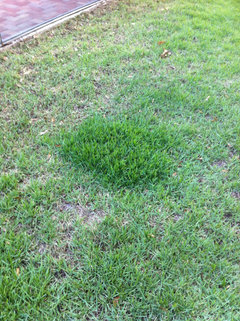
    Chemical fertilizers are less expensive even when you compare $$ per 1,000 square feet of coverage - and THAT is the only way to compare fertilizer cost. But they are not that much less expensive. The benefits of the grain-type organic fertilizers are that you can apply any time, any amount, rain or shine, and you cannot damage anything. It's been tried. One of the former members here applied about 80 pounds per 1,000 square feet every weekend for the summer and had no issues...other than mowing through the extreme dense grass. What I use and what I recommend might be two different things. What I use is ordinary corn meal and alfalfa pellets (rabbit chow). I use these because I can get them inexpensively at my local feed store in 50-pound bags (coverage = 2,500 square feet). If you look at the ingredients on organic fertilizers, corn and alfalfa are often found on the list. I'm just bypassing the commercial bagging and advertising to save money. So if I can get a bag of corn meal for $8 and it covers 2,500 square feet, that's $3.20 per 1,000 square feet. Alfalfa pellets are a little more expensive, but again, not that much. Sometime I want to try the fish food from Tractor Supply. It is basically alfalfa but in a very tiny pelletized form which should flow through a spreader very easily. Another benefit of organics is you don't need to stress about NPK. I suppose you can if you want to, but I definitely don't. What you care about with organics is protein content. The protein gets converted into plant food by the soil microbes, and that's how organic fertilizer works. What seems to bother people is that it takes 3 full weeks for the biology processes to make that transformation. It is not instant gratification. Here is an old picture from mrmumbles posted here years ago showing the effectiveness of alfalfa pellets.


    You can clearly see the improved density, color, and growth. Alfalfa was applied in mid May and the picture was taken in mid June.

    As for soil sampling, contact your test laboratory website and look for their instructions. As I recall the depth of 4 or 6 inches does not matter as long as you tell them how deep you went. They are making recommendations based on volume of soil, so if you sampled 4 inches deep and they calculated for 6 inches deep, the volume would be off by 333 cubic feet per 1,000 square feet.