Software
Houzz Logo Print
christopher_cnc

After The First Mowing

4 years ago
last modified: 4 years ago
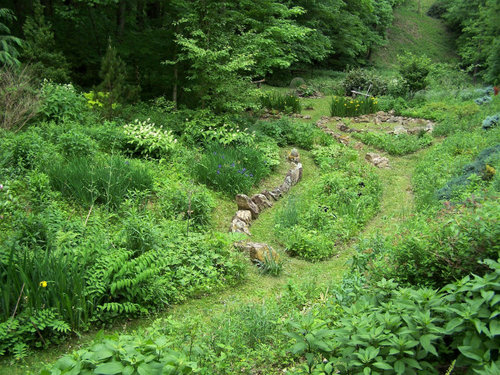
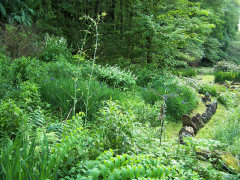
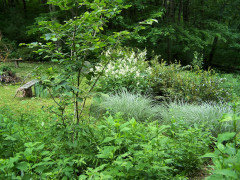
The wild cultivated garden in May when everything is fresh and perfect, before any pestilence or calamity have arrived, is civilized and defined by one simple element of order, freshly mowed paths. This was the first mowing of the season.

One of these days all the iris will bloom profusely and in sync. That is my hope. Iris have troubles with my elevation.


Comments (40)

  • 4 years ago

    Beautiful

    Christopher CNC thanked mariagrazia
  • 4 years ago

    Great work! Beautiful design. 👏

    Christopher CNC thanked Jay 6a Chicago
  • 4 years ago

    I like it! Can you give us a ”tour”?

  • 4 years ago

    Gorgeous! Very relaxing and inviting. I’m green with envy 🤗

  • 4 years ago

    It's fresh and wonderful.

  • 4 years ago

    macranthos it has been a few years since the gardens were on a tour. I am still open to that. All I have to do is mow the paths and it's showtime. There are several peak bloom times to choose from.

    This will take you to an online tour. Outside Clyde: The Mountaintop Gardens In May

  • 4 years ago

    Is that link to a tour of your garden close up?


  • 4 years ago

    @prairiemoon2 z6b MA I'm not sure what you are asking by close up.

  • 4 years ago

    Sorry, I mean is that link photos of your garden in more detail than the one you posted above? It's not another garden in your area?


  • 4 years ago

    That link shows more of my garden and my mom's garden next door. There are not many close up pictures of individual plants per se. I tend to look more at the big picture and the mood or ambiance the design of the garden creates.

  • 4 years ago

    ^^ Rinse and repeat above. It’s a joy to behold.

    Christopher CNC thanked indianagardengirl
  • 4 years ago

    Christopher, what's are the white flowering shrubs, Itea, Clethra? Is the Polygonatum the giant P. biflorum var. commutatum, or an Asian species?

  • 4 years ago

    Jay the white flowering plants are the native Solomon's Plume, Maianthemum racemosum, two in the center of picture, and Giant Fleece Flower, Persicaria polymorpha, two in the top corners. One of them in the distance. This Persicaria is supposed to be non-invasive and sterile compared to the Polygonum Giant Knotweeds. So far that is true. I can't vouch for the current classification of either.

  • 4 years ago

    Fabulous indeed! I have grown P. polymorpha for years and have never cut it down until well after it has gone to seed. While not sterile I have had few seedlings (possibly 5-6) and have always been happy for them. It is one of my favorites plants.

  • 4 years ago

    Beautiful and very inspirational. We are going to have some work done at our place and are needing inspiration for how to get from the patio to the pond while keeping it very rustic and natural.

  • PRO
    4 years ago
    last modified: 4 years ago

    I feel with your first mow Christopher. I did the first one of my gardenyard last week and it was deeply satisifying. For some reason a regular mow on the front yard just isn't as good as a garden mow.

  • 4 years ago

    Lovely gardens !

    Christopher CNC thanked carol23_gw
  • 4 years ago

    So lovely!

    Christopher CNC thanked pricklypearcactus
  • 4 years ago

    Lovely is the word - for sure!


    Christopher CNC thanked carolb_w_fl_coastal_9/10
  • 4 years ago
    last modified: 4 years ago

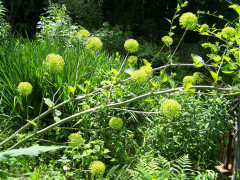
    Thanks All. Here is plant you are not likely to see every day, the giant spears of Smilax herbacea. The flowers, round green puff balls, smell terrible. The common name is Carrion Flower. Those annoying brown sticks in the background are Callicarpa japonica. They are one of the last shrubs to leaf out. I'm thinking there is some major winter dieback at this point and I haven't had the time to get in there for a closer look.

    After a decade, I would have to call the Japanese Beautyberry a failure. They are so slow, they never manage to bloom and set fruit before the time of vegetation is frozen closed. What's the point without the berries?


  • 4 years ago

    How marvelous. I would love something like this in my mess of a back yard. I need rocks, though. And a gardener who can help me design. And help me dig until my new knee is completely healed. And keep my DH from weed-whacking plants that aren't weeds. And...and...and...


    Please share more pictures. You and everyone else inspire me!

    Cynthia


  • 4 years ago

    Great photo, that area looks pristine. Every tree looks like it's been pruned and shaped. I love the lines you create and use.

  • 4 years ago

    Other than my Gold Mop Niwaki off the front porch, pruning and shaping are not really activities that could be fairly applied to the wild cultivated gardens. Mowing the paths and the Great Lawn, editing and making elbow room for preferred plants are the main growing season chores and there is very little of that.

    This is a current view of one of the Persicaria polymorpha in full bloom


  • 4 years ago

    I went to smell the Carrion Flower and the scent was not there. I will have to try again under different conditions.


  • 4 years ago

    Christopher, are you growing any native Clematis in the viornae ?

  • 4 years ago

    christopher what kind of grasses are those in the Persicaria photo?

  • 4 years ago

    Carol, I don't have any native Clematis in that group. Every time they pop up online I am intrigued. The native Clematis virginiana that grows here I consider a pest. Clematis wilt is very prevalent here and makes growing the showy garden varieties problematic.

    I do have Clematis stans, a sprawling perennial native to the Japanese forest. It gets the wilt which knocks it back a lot, but it has persisted and even self sowed a touch.

  • 4 years ago

    Miscanthus sinensis 'Morning Light' which have started to set viable seed as our first frost date gets later and later.

  • 4 years ago

    I just removed a Pennisetum that was prolific in its reseeding. I still haven't weeded out all the seedlings it produced. It was only in it's 3rd season. I thought last year I could keep it if I cut off all the seed heads before they formed, but discovered it was a bigger job than I expected and I can't tolerate that kind of plant in my garden. I have Pennisetum 'Hamlin' that never reseeds for me, so I thought this variety would be okay.


    I love 'Morning Light'. I hope it remains manageable for you.

  • 4 years ago

    Christopher, I think these would grow well in your garden. That's why many are hybridized , particularly texensis , due to heat and humidity tolerance. My garden contains most species of the natives. I have seedling plants as well that could be dug up and transplanted. Pitcheri, viorna, glaucophylla, versicolor, texensis, carrizoensis, crispa, addisonii and non-vining ochroleuca. They are all a big hit with the hummingbirds as the nectar is secure in the pendant flower, even after a thunderstorm. I've never seen any wilt in 12 years. I'm in Hendersonville not terribly far from you. I can send you pictures if you are curious.

  • 4 years ago

    I'm curious as to where you are finding these native clematis because I have not seen them in any local nurseries. My experience with the wilt could also cause me to just walk on by clematis in general.

  • 4 years ago

    I collected them over the past 15-20 years. Some species seed originated from a botanist friend who received his PhD from the University of Tennessee and is now employed at Missouri Botanical Garden. He collected in the wild. The glaucophylla was a mail order from Sunlight Gardens in TN many years ago. A friend in Texas sent me the carrizoensis. Plant Delights sold some species. Friends who like Clematis also helped. No local nurseries sell them . They are rarely seen in gardens even in botanic gardens . Longwood Gardens in Pennsylvania grew a purple clone, perhaps versicolor. Chanticleer then grew one of my donated plants of glaucophylla. Scott Arboretum planted some of the native species. I worked in Charles Cresson's garden in Swarthmore for many years. There was a gorgeous Clematis texensis growing on a fence. Mt. Cuba Center in Delaware planted an unnamed species in their parking lot and grew other named species in the garden areas. The seed needs no stratification . But it takes time for a plant to mature. They are close to impossible to root from cuttings. I have soaked seeds, removed the pericarp, then placed seeds in moist paper towel in a ziplock bag, and had great success with germination.

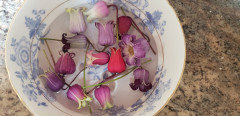
    Various colors of flowers cut today.


  • 4 years ago
    last modified: 4 years ago

    That is quite impressive Carol. And you think they would do well in my garden. Visitors to the wild cultivated gardens are always welcome.

    The flowers look twice the size of C. stans flowers and there are plenty of hummingbirds up here.

  • 4 years ago

    Looks beautiful Christopher. You've done a lot of work.

  • 4 years ago

    Christopher , I see no reason your garden would not be a great place for the Clematis species. I have seen C. viorna off of the Parkway in the wild. I will try to find seedlings to pot up.

    The elevation here is 2000 feet above sea level. Your area is slightly at a higher elevation I would guess.

  • 4 years ago

    Carol my elevation is double that at 4000' and out there in Siberolina near the TN border.

  • 4 years ago
    last modified: 4 years ago

    Just spotting this thread now. I'm all for semi-wild gardens as long as they are not full of invasives and/or nuisance species, like poison ivy. For example I let wild foxgloves self-seed in a part of my garden. They spread a bit, obviously, but are not nearly as aggressive as the real weeds are.

  • 4 years ago
    last modified: 4 years ago

    I find it amazing that anyone can promote a wild garden and keep out the invasives. I allowed a Virginia Creeper to do it's thing on my small property because it was a 'native' and regret it. It's created a lot of work for us to get it out. You have to be so vigilant with the plants you're trying to keep out of the garden.

  • 4 years ago

    I have to head off to work so don't have time for a long response on the subject of invasives which includes several native species. A generality to offer about a wild cultivated garden of this size is that removing the unwanted is more about population dynamics than total elimination. That includes the poisoned ivy which fortunately I am not really allergic to.