Software
Houzz Logo Print
hzdeleted_17428269

What is this? Should I be concerned?

4 years ago
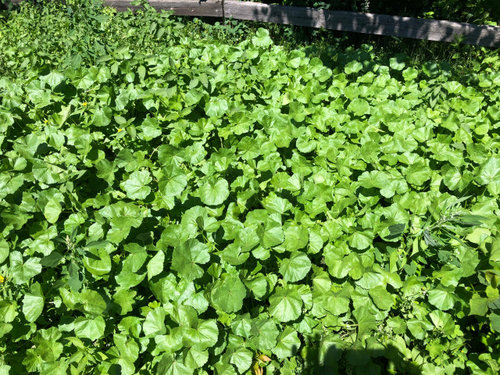
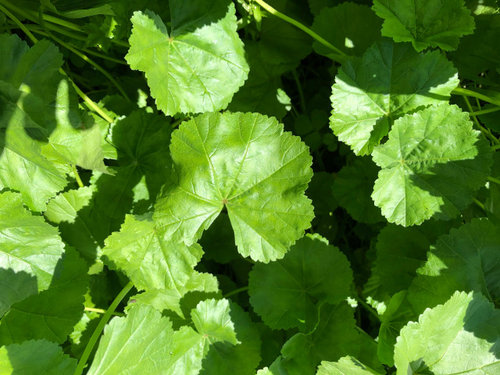
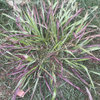
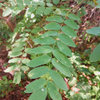
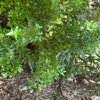
I have no knowledge about plants at all. I just found a 3 metre by 3 metre growth of this on my property. Should I be concerned? North central Alberta.


Comments (31)

  • 4 years ago

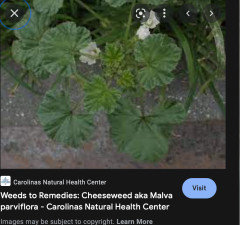
    It is a Mallow, perhaps Malva parviflora, but without flowers hard to tell. It’s just a plant. No reason to be concerned.

    User thanked floral_uk z.8/9 SW UK
  • 4 years ago

    Thank you, floral.

    I now have some idea where to start my research. I will post photos when/ if it flowers.

  • 4 years ago

    I would call that pennywort

    User thanked Elizabeth
  • 4 years ago

    Maybe. But it isn’t Pennywort.

    User thanked floral_uk z.8/9 SW UK
  • 4 years ago

    If it were smaller, I'd think creeping charlie, but its leaves are much smaller than that.

    User thanked Annie Deighnaugh
  • 4 years ago

    According to my "plant snap" app, it's "muscadine" (vitis rotundifolia)


    Vitis Rotundifolia is a vine specia described by Andre Michaux Vitis rotundifolia is part of the genus family and family vineyards


    User thanked WittyNickNameHere ;)
  • 4 years ago

    Well Deb, that shows how crummy your plant snap app is LOL. Definitely not a grapevine.

    User thanked cecily 7A
  • 4 years ago
    last modified: 4 years ago

    This is a totally sincere question. Can someone explain what about @User plant makes it clear that it is not pennywort?

    (To explain: When folks tell me that their neighbor/friend/grandpa has a horse and I ask them what kind it is and they reply "it's brown", THAT is my level of plant identification ability.)

    User thanked barncatz
  • 4 years ago

    The size and shape of the leaves, primarily. 'Pennywort' is the common name give to a number of plants, most of which have smaller rounded leaves about the size of a coin. Those plants with that common name with larger leaves are mostly tropical aquatics that would NOT pop up spontaneously in Alberta!!

    User thanked gardengal48 (PNW Z8/9)
  • 4 years ago

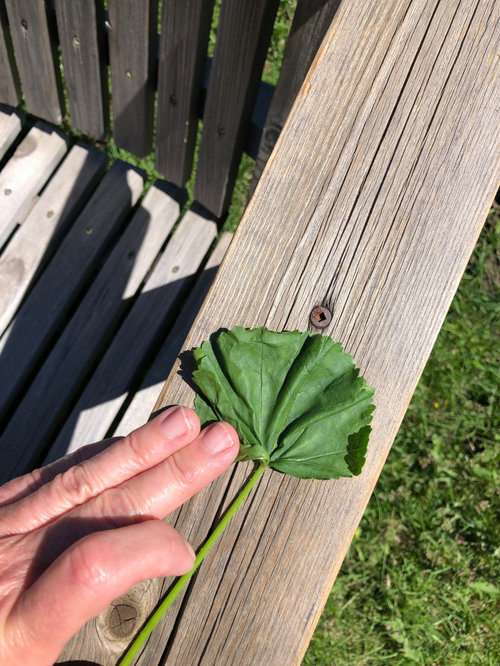
    The leaf size, shape, texture, vein pattern, leaf margin, habit of growth and every other detail other than being green and roundish are different from any plant usually called Pennywort. Eg Hydrocotyle or Umbilicus rupestris. Also the petiole of Pennyworts comes from the centre of the leaf, like an umbrella handle. The Malva petiole comes from the base of the leaf.

    User thanked floral_uk z.8/9 SW UK
  • 4 years ago


    User thanked kittywhiskers
  • 4 years ago

    I'm in east central Alberta and it's a malva, either parviflora as floral suggests or neglecta. It's possibly toxic to horses if you have any. It has a long taproot, so if it's somewhere in your garden as opposed to out in the middle of nowhere I would yank it out now before those roots get any longer, and definitely before the plants flower and go to seed (which is how they spread).

    Stay cool tomorrow!

    User thanked beckysharp Reinstate SW Unconditionally
  • 4 years ago
    last modified: 4 years ago

    My app says ”small mallow”.

    User thanked foodonastump
  • 4 years ago

    Which is a common name for Malva parviflora. Does the app give a botanical name?

    User thanked floral_uk z.8/9 SW UK
  • 4 years ago

    Whatever it is, it looks very healthy!

    User thanked pudgeder
  • 4 years ago

    Most of the time plant ID Apps are like:


    User thanked User
  • 4 years ago
    last modified: 4 years ago

    How tall are the plants? Malva neglecta can reach 20", Malva parviflora 4.5'. If you measure height measure the length of a stem. Malva parviflora can sprawl.

    User thanked Jay 6a Chicago
  • 4 years ago

    Just a friendly PSA. I've downloaded several plant ID apps just out of curiosity. For anyone with a familiarity with plants beyond Boston ferns, they are mostly good for a good laugh :P At best, for more common plants they perform at about 50% accuracy. For any plant remotely uncommon, their success rate is abysmal.

    User thanked fig_insanity Z7b E TN
  • 4 years ago

    I too have not found one that identifies plants correctly if the plant is not in flower. I have given them up for foliage identification.

    User thanked maifleur03
  • 4 years ago

    Google lens is a decent app. It gives several choices that have to be narrowed down. For this plant it listed both M. parviflora and M. neglecta, but it also listed Pelargonium, Zucchini, Centrella, Ladies Mantle, Malva verticillata, etc. You have to use leaf close ups, so the app can see the details. If I used the 1st picture of the whole mass of plants, the app would probably say something crazy like slime mold or mint milkshake.

    User thanked Jay 6a Chicago
  • 4 years ago

    “Which is a common name for Malva parviflora. Does the app give a botanical name?”


    They’re identifying it as malva pusilla.


    User thanked foodonastump
  • 4 years ago
    last modified: 4 years ago

    Thanks for everyone’s input.

    I do believe that floral is quite correct about what it is.

    I’ve read up on it and was a little concerned about it being toxic to horses as I did have (until 3 weeks ago) two horses that could access it. Both horses were/are older horses and the 26 year old Morgan died suddenly 3 weeks ago but he had been diagnosed with equine Cushings so I’m pretty sure that is what he died from. His death showed no signs of poisoning nor did he exhibit any signs when he was alive. Plus, there was no sign of ”the plant” having been grazed.

    My other horse, the American paint, Chex, was moved to a neighbours shortly after Shadow died and I don’t plan on keeping horses any longer so I’m not concerned about it being toxic to horses.

    I’m waiting for it to flower and then I will post the photo.

    beckysharp, I got my nine holes of golf in this morning and plan on hunkering down in the shade tomorrow.🌞

  • 4 years ago

    M pulsilla is a possibility in Alberta. But the most usual common name for that species is round leaved Mallow. This is why using botanical names is to be encouraged. There’s no ambiguity.

    User thanked floral_uk z.8/9 SW UK
  • 4 years ago
    last modified: 4 years ago

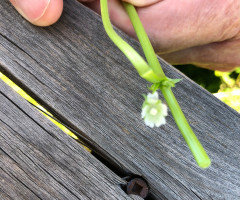
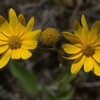
    I spread the leaves apart this afternoon and found little blossoms like this about halfway on two foot stems.


  • 4 years ago

    "26 year old Morgan died suddenly 3 weeks ago but he had been diagnosed with equine Cushings"...curious re:symptoms of equine Cushings because my daughter had it (pituitary adenoma).

    User thanked Marcie Stone
  • 4 years ago

    I know it’s neither creeping Charlie nor pennywort (gotu kola). I have both of these one is an invasive weed, and one is an herb which can be mixed in salad.

    User thanked palisades_
  • 4 years ago
    last modified: 4 years ago

    Marcie, equine Cushings is actually Pituitary pars intermedia dysfunction (PPID).

    Generally, the signs in a horse is age, failure to shed his winter coat and laminitis among other things. He also had lost a lot of his energy.

  • 4 years ago

    My daughter's symptoms were too numerous to list but once the pituitary was removed,(when she was 10) she is left with lifelong deficiencies requiring multiple hormone replacement therapies. She's doing quite well and even has 3 children, albeit with lots of help (IUI fertility treatments).

    User thanked Marcie Stone
  • 4 years ago

    I’m happy to hear that your daughter is doing well. And lucky you being a grandmother.🙂

  • 4 years ago

    I am a great-grandmother! We have 13 grands and 4 great-grands...life is good!

    User thanked Marcie Stone
Sponsored
Industry Leading Kitchen & Bath Remodelers in Franklin County, Ohio