Software
Houzz Logo Print
katie_adamson1

New(ish) snake plant owner questions

4 years ago
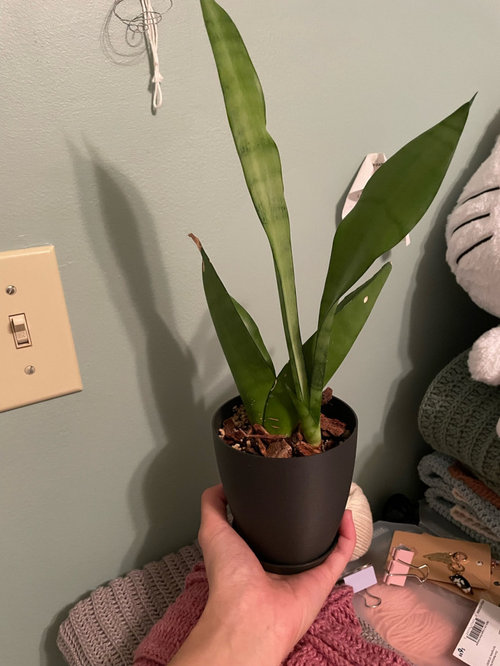
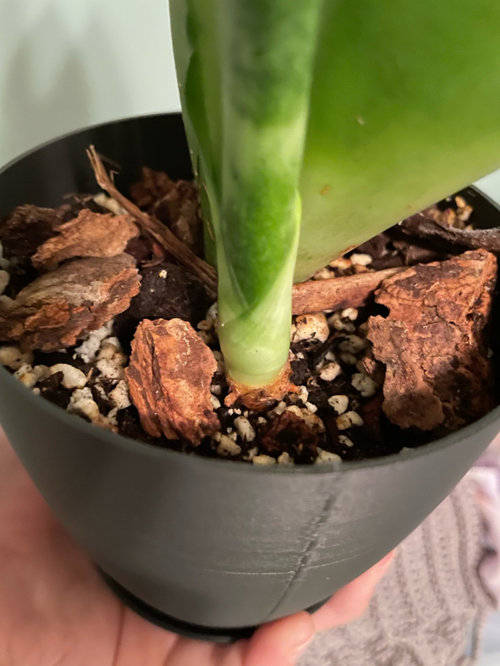
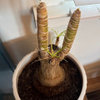
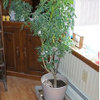
Hi! I got a snake plant to keep me company while I knit about a year ago and so far I think it’s doing ok. I was just wondering if it’s normal for new shoots to look different from the original plant? This one came out a lot taller and thinner and I can’t seem to find any Google results that explain it exactly. Can you tell from looking at it if I’m doing something wrong? (I’ve been keeping it opposite to a south-facing window with a curtain that lets plenty of light through. The lighting in the pictures looks weird because I waited until after dark to ask. I water it basically whenever the soil seems dry, which is usually 1.5-3 weeks, maybe pushing 4 if I’m not paying attention. I repotted it this spring with a cactus mix, not sure if I should mind the oxidizing perlite).

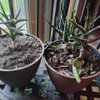
Second picture: I forgot to water it for about six weeks during the end of the semester this year and a new leaf at the base shriveled up and turned white. It started to go brown (still dry), so I removed it just now and noticed that there was an exposed bit that was sort of orange with two little nubs. Did the soil shift and expose roots? Can I just cover it back up?

Comments (7)

  • 4 years ago

    The nubs would root if they touch soil. Perfectly normal. The long thin growth may be due to insufficient light. Where is the plant positioned in the room?

  • 4 years ago
    last modified: 4 years ago

    I got a snake plant to keep me company while I knit about a year ago and so far I think it’s doing ok. Sooo ........ what do you guys usually talk about? I was just wondering if it’s normal for new shoots to look different from the original plant? New leaves are often lighter than mature leaves, and often express pigments other than chlorophyll (green). The purple pigment, anthocyanin, is commonly expressed in new leaves of many species.

    This one came out a lot taller and thinner and I can’t seem to find any Google results that explain it exactly. Can you tell from looking at it if I’m doing something wrong? Light levels play a significant role in determining the the dimensions of leaves, including thickness. Plants grow when they are able to synthesize more food (during photosynthesis) than they use (during respiration). Light is so key to this issue that the point at which the plant brakes even, makes exactly as much energy as it uses, is called the LCP (light compensation point). When the plant is making more energy than it uses, it needs a place to store the extra food, so it lays down files of cells that work collectively to store energy; so, the greater the amount of food it produces beyond the plant's LCP, the wider and thicker the leaves will be, but not necessarily longer.

    I water it basically whenever the soil seems dry, which is usually 1.5-3 weeks, maybe pushing 4 if I’m not paying attention. While the plant is well known for its tolerance of generally poor conditions, that doesn't mean less than ideal conditions have no effect on the plants level of vitality (health), it's ability to defend itself against insect herbivory and disease pathogens, or its eye appeal. And while the plant will tolerate going dry, it's best to water before that occurs as under-watering creates unnecessary stress. I'll leave a piece about 'watering based on use of a "tell" below'.

    I repotted it this spring with a cactus mix, not sure if I should mind the oxidizing perlite. I'm not sure what you mean by 'mind the oxidizing perlite.

    Second picture: I forgot to water it for about six weeks during the end of the semester this year and a new leaf at the base shriveled up and turned white. It started to go brown (still dry), so I removed it just now and noticed that there was an exposed bit that was sort of orange with two little nubs. Did the soil shift and expose roots? Can I just cover it back up? The little nubs will form what are called stilt roots, though they won't be anywhere near as spectacular as those which form on Sansevieria pinguicula. I don't thing the appearance of the roots had anything to do with the soil shifting or the volume of the soil being diminished by the breakdown of soil particles; and I wouldn't add more soil to cover the emerging stilt roots. Plants do perfectly fine with roots exposed after soil has eroded from the roots, as witnessed by this 'root-over-rock' schefflera:


    Do you have any interest in listening to suggestions about fertilizing? It's a key part of any care regimen for containerized plants.

    Using a 'tell'

    Over-watering saps vitality and is one of the most common plant assassins, so learning to avoid it is worth the small effort. Plants make and store their own energy source – photosynthate - (sugar/glucose). Functioning roots need energy to drive their metabolic processes, and in order to get it, they use oxygen to burn (oxidize) their food. From this, we can see that terrestrial plants need plenty of air (oxygen) in the soil to drive root function. Many off-the-shelf soils hold too much water and not enough air to support the kind of root health most growers would like to see; and, a healthy root system is a prerequisite to a healthy plant.

    Watering in small sips leads to avoid over-watering leads to a residual build-up of dissolved solids (salts) in the soil from tapwater and fertilizer solutions, which limits a plant's ability to absorb water – so watering in sips simply moves us to the other horn of a dilemma. It creates another problem that requires resolution. Better, would be to simply adopt a soil that drains well enough to allow watering to beyond the saturation point, so we're flushing the soil of accumulating dissolved solids whenever we water; this, w/o the plant being forced to pay a tax in the form of reduced vitality, due to prolong periods of soil saturation. Sometimes, though, that's not a course we can immediately steer, which makes controlling how often we water a very important factor.

    In many cases, we can judge whether or not a planting needs watering by hefting the pot. This is especially true if the pot is made from light material, like plastic, but doesn't work (as) well when the pot is made from heavier material, like clay, or when the size/weight of the pot precludes grabbing it with one hand to judge its weight and gauge the need for water.

    Fingers stuck an inch or two into the soil work ok for shallow pots, but not for deep pots. Deep pots might have 3 or more inches of soil that feels totally dry, while the lower several inches of the soil is 100% saturated. Obviously, the lack of oxygen in the root zone situation can wreak havoc with root health and cause the loss of a very notable measure of your plant's potential. Inexpensive watering meters don't even measure moisture levels, they measure electrical conductivity. Clean the tip and insert it into a cup of distilled water and witness the fact it reads 'DRY'.

    One of the most reliable methods of checking a planting's need for water is using a 'tell'. You can use a bamboo skewer in a pinch, but a wooden dowel rod of about 5/16” (75-85mm) would work better. They usually come 48” (120cm) long and can usually be cut in half and serve as a pair. Sharpen all 4 ends in a pencil sharpener and slightly blunt the tip so it's about the diameter of the head on a straight pin. Push the wooden tell deep into the soil. Don't worry, it won't harm the root system. If the plant is quite root-bound, you might need to try several places until you find one where you can push it all the way to the pot's bottom. Leave it a few seconds, then withdraw it and inspect the tip for moisture. For most plantings, withhold water until the tell comes out dry or nearly so. If you see signs of wilting, adjust the interval between waterings so drought stress isn't a recurring issue.

    Al

  • 4 years ago

    came out a lot taller and thinner


    lack of proper light.. look up the term etoliation ...look at the pix.. then flip to the AL side and read up


    https://duckduckgo.com/?t=ffab&q=etoliation&iax=images&ia=images


    and you said: I’ve been keeping it opposite to a south-facing window with a curtain that lets plenty of light through.


    it probably needs to be within a foot or two from the window.. and not across the room from it..


    and drapes completely interfere with proper light level.. even if there are what you might call shear ...


    if you cant move the plant.. or open the drapes.. consider supplemental light ...


    i see on rereading.. flora is on the same track ...


    ken

  • 4 years ago

    Thank you for the detailed suggestions! I’ll move it closer to the window and pin back the drapes. When I water it, I wait for it to start coming out the drain holes and let the dripping stop before I put it back on its shelf. I’ll use your advice for the timing. As for the perlite, I used the wrong word! It’s been turning brown

  • 4 years ago

    Below, you'll find a tip that can make a very big difference for plants in easily manageable pots:

    Newton's First Law

    For conventional container culture, it's a given that saturated/partially saturated media rob roots of the oxygen they need to function normally and efficiently. At best, soil saturation robs your plants of immense measure of potential in areas like growth, appearance, yields, ….. At worst, plants unable to cope with the strain of drought stress caused by saturated media will succumb to it. This isn't a 'scare tactic, it's a very simple and straightforward observation that will be difficult to disagree with a straight face.

    Newton's First Law of Motion states that an object will remain either at rest, or in motion at a uniform rate and in a straight line unless acted upon by an external offsetting force. In this case, we will designate the 'object' as excess water in your potting medium. At risk of my being redundant, the 'law' can be seen as a simple statement about inertia, that objects will remain in motion and in a straight line unless a force acts to change the motion. To put the law to work for you/your plantings, you should water to beyond the point of total soil saturation - so the medium has been completely saturated and at least 15-20% of the water you have applied has exited the pot. Unless your soil is purposefully constructed to eliminate all/nearly all excess water, it's extremely probable, when the pot has stopped draining, there will be too much water in the potting medium for the plants' liking.

    To eliminate this excess water: immediately after a thorough watering, hold the pot in one hand over the sink, lawn, or over-sleeping significant other and move it downward, then sharply reverse the direction to upward. You'll immediately note that a good measure of 'excess' water will “continue downward in a straight line” and exit the drain hole. The sharper the reversal of direction, the more water exits the drain hole. When you have repeated the exercise until water no longer exits the drain hole on the reversal of direction, you will have eliminated all excess water and your plants will regard you with a newfound sense of awe.

    If you want evidence of how well this works, water, then wait for the pot to stop draining before you put the trick to work. Any water that exits the pot after the pot has stopped draining (by gravity alone) is water that had only the potential to be limiting in terms of the plant's well being.

    Al

  • 4 years ago

    Like the use of Newton's Law. As a former science geek/nerd, it made me smile. It's also very good advice using it.

  • 4 years ago

    How is it even possible you got over being a science geek/nerd?

    It's amazing how often very simple scientific principles anyone can apply to wring some additional personal satisfaction from the growing experience. Did you know that simply tipping any pot with a drain hole, after it has stopped draining, can eliminate a good amount of excess water from grow media that tend to be too water-retentive? Compare B to A. Or how using a smaller over-turned pot in the bottom of the plant's pot can act as ballast to remove a LOT of excess water? Compare D to A. The pots are full to the top with soil and the shaded part represents a (100% saturated) perched water table, inherent in almost all media commercially prepared for and targeting hobby growers.


    Al

Sponsored
Bella Casa LLC
Average rating: 5 out of 5 stars17 Reviews
The Leading Interior Design Studio in Franklin County