Software
Houzz Logo Print
webuser_840928478

indoor plants yellow leaves problem

3 years ago
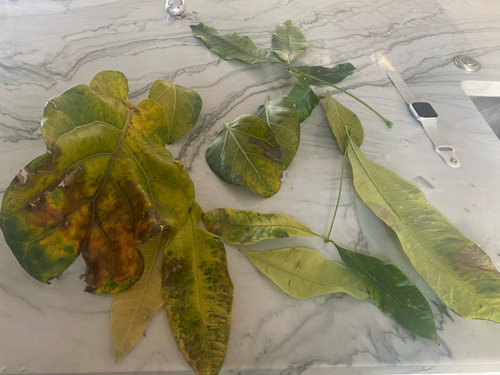
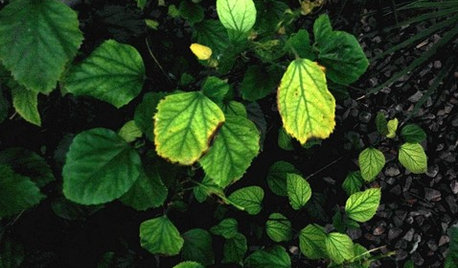
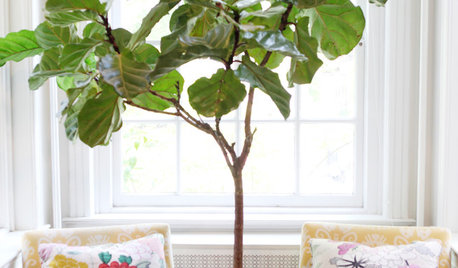
All my large indoor plants, Fiddle leaf, banyan tree and money tree has leaves turning yellow as in the picture.

They are 5-6 ft each. In a well drained pot.
Are located north facing windows with plenty of daylight but without any direct sunlight.
I have these plants for 1 year. Started noticing this more in the last month. I live in Dallas, Texas so get long day light.

I am not very regular with fertilizer but water every 1-2 weeks using a soil meter.

My other plants placed on east windows don’t have this problem.

I use reverse osmosis water and we have water softener for entire house.

Is this happening because of type of water I am using or Lack of direct sunlight or mineral deficiency due to lack of frequent fertilizer.

Thank you

Comments (8)

  • 3 years ago

    I use reverse osmosis water and we have water softener for entire house. This statement is almost contradictory, unless you use r/o water from another source?

    R/o water is excellent, that's what I use for plants while they are indoors. Water having passed through an ionic exchange water softening system (uses salt as the exchange medium) is inappropriate because it will contain phytotoxic (poison to plants) levels of sodium and chloride.

    Inexpensive water meters don't work well insofar as telling you how wet or dry the soil is. They measure electrical conductivity. A clean probe inserted into a clean cup partially filled with distilled water will read 'DRY'. Add a little table salt to the water and note the needle move all the way over to 'WET'.

    The cause of the spoiled foliage is not lack of light, nutritional deficiencies, or intervals between fertilizer applications being too long. It's almost certainly due to a high level of salts in the soil or chronic over-watering. Do the pots have drain holes? Do you water at the sink or with the plants in place? Is there a there a collection saucer under the plants and is the plant allowed to sit in the waste water that exits the drain hole? When you water, are you certain you're wetting the entire soil column and using enough water so at least 20% of the total volume of water applied exits the drain hole?

    If you answer the questions, I'll be better able to help you figure things out, including setting up a fertilizer regimen for all of your plants. As you might have divined, one of the key questions is whether or not you are actually using water that has been routed through an r/o system or through an ionic exchange softener (uses salt).

    Al

  • 3 years ago

    Appreciate your response.
    To answer your questions…
    My pots have drainage hole
    I would say I water till some water drains out, may not be 20% drainage. Should I move the plant outdoor and give excess water to drain any accumulating salts in the soil?
    They have collecting tray under to collect excess water, but the pot do not sit directly on the collecting tray.

    Will try to space watering and use the stick to check the soil before watering
    What I under stand is R/O is good and will continue using for plants

  • 3 years ago

    To answer the last part of the questions,

    I use water from R/o system for most times. Occasionally I maight be giving regular tap water at home that goes thru the water softener.

  • 3 years ago

    Table salt is sodium chloride. Both sodium and chloride is essential to normal plant growth but in minute quantities. The poison is in the dose and the line between appropriate and toxic is very easily crossed, so it's important to avoid water routed through an ionic exchange water softening system that uses sodium chloride to replace unwanted ions, commonly calcium and magnesium.

    Using a wooden tell as the metric by which you establish appropriate watering intervals works better than inexpensive "moisture meters".

    Watering with at least 20% more water than required to moisten the soil flushes accumulating salts from the grow medium and it keeps the ratio ov nutrientsin the soil solution from becoming seriously skewed, which causes it's own set of problems with nutrient uptake.

    I suggest you flush the soil thoroughly by slowly pouring evenly over the soil surface a volume of water equal to at least 10X the volume the pot your plants are in. This will effectively reset the fertilizer meter very close to 0 (TDS). At that point, I suggest you fertilize with foliage-Pro 9-3-6. It will do a great job for at least 95% of the plants you're likely to grow, and it's a complete nutrient supplementation program from a single source. During the late spring through early fall, you can fertilize at production rates (it's on the label) about every 4th time you water. During the dark months every 5th or 6th time would be appropriate. To keep track of which plants need fertilizing, drop a marble, button, other in the pot when you water. When it's time to drop say the 4th marble in, fertigate (fertilize + water) instead and pick up the marbles and start that plant's cycle over.

    Thoughts or questions?

    Al

  • 3 years ago

    if everything in the north window is struggling.. but everything int eh east window is thriving..


    why dont you switch windows for the set of plants.. see what happens ...


    never take a houseplant outdoors into sun... they will burn.. and lose leaves ... full bright shade.. until properly hardened off ... if ever ...


    do understand the salts al talks about.. are NOT from the water softener system ... they are form the water itself ... softeners add very little salt the the water .... or else we would all be dead of hypertension.. salt is used to back flush the filter membrane.. not added to the water ...


    yes.. your pix are of damaged leaves.. thats all we get from your pix.. how about showing us the plants.. including the pots...


    many plants do lose leaves in fall and winter.. as the sun declines .. weakens... and it would weaken the most.. in a .. wait for it.. north window ....


    lastly... are they the lowest oldest leaves .. those do fall off annually.. and/or cyclically.. sometimes they lose more than usual for what seems.. just the heck of it ...


    more pix please ...


    ken

  • 3 years ago

    I am talking about the salts that come from the softening system; however, the danger in using water that passes through an ionic exchange softening system does not arise as a result of any increase in treated water's level of TDS (total dissolved solids) because the system has little to no effect on the level of TDS. What makes water hard is primarily Calcium (Ca) and magnesium (Mg). Ionic exchange water softening systems exchange sodium (Na) and chloride (Cl) ions for unwanted ions that interfere with the effectiveness of surfactants (soap/ detergent) and wreak havoc with plumbing (limescale). Because ions are exchanged, the Na and Cl levels of water routed through these systems varies according to the initial concentration of Ca and Mg. Assuming the need for a water softener was real, the levels of Na and Cl will be extremely high, from the perspective of what is/isn't toxic to plants. In short, the system exchanges ions that are normally not toxic (but can be if water is excessively hard) for ions that quickly become toxic when present in anything more than minute levels. If the level of Ca/Mg in the untreated water was initially high, the level of Na and Cl will be high after treatment.

    BTW - Ionic exchange watering systems that use NaCl (rock salt) as the exchange medium are a concern for those with hypertension. These systems can add as much as 100mg of Na per quart/liter of water.

    Al

  • 3 years ago

    @tapla (mid-Michigan, USDA z5b-6a) How many things we learn by reading what you write!

  • 3 years ago

    Thank you, Michele. I enjoy helping others get more from the effort they put into growing. Sometimes that takes to form of providing a forum member specific information about any issue they might be having. But also important is challenging erroneous information that has the potential to detract from someone's growing experience.

    "The destroyer of weeds, thistles and thorns is a benefactor, whether he soweth grain or not." ~ Robert Ingersoll

    Al