Software
Houzz Logo Print
dfremodel

Recent Remodel - Stair Replacement - Does this Look Correct?

4 years ago
last modified: 4 years ago
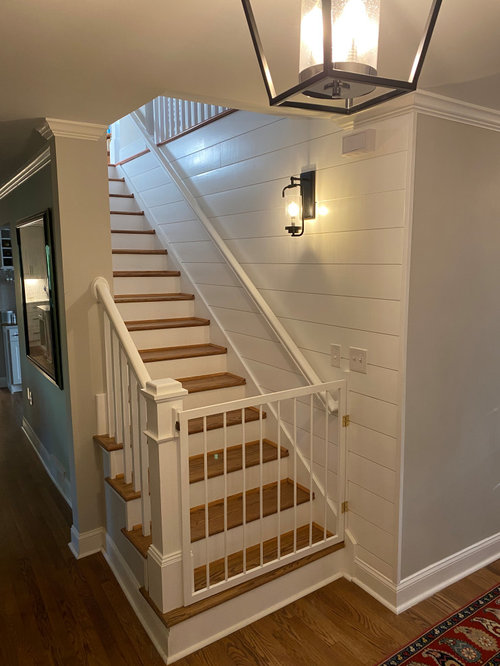
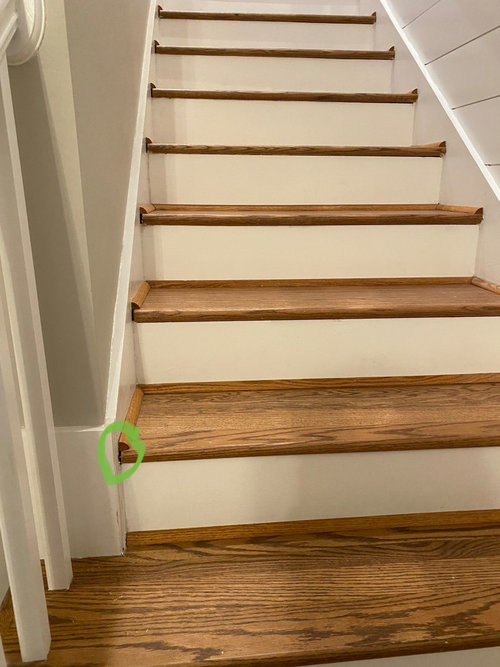
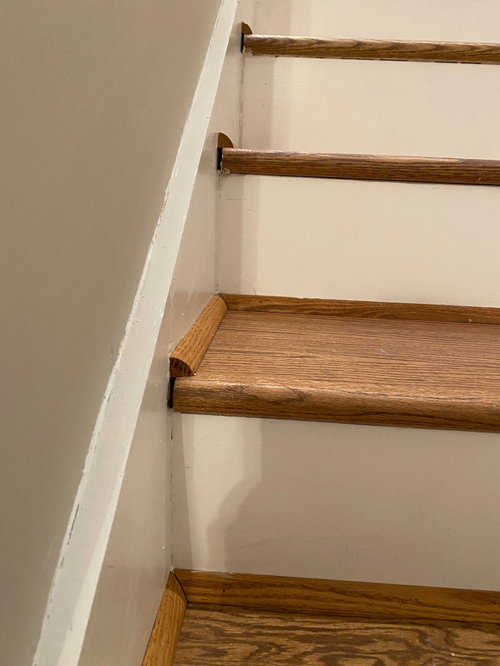
We did a recent remodel which involved completely removing and replacing two staircases. Our contractor put shoe molding along all the edges to cover gaps. Does this look correct? We want to put a runner on and the rug company tells us the shoe molding along the back should come off for good installation. But then you will see the gaps along the back... and what about the side molding? Should we have our contractor redo the entire staircase??? What would you do? We also are considering painting the banister and steps black? Any thoughts on how that might look or photos of how to do it?


Comments (15)

  • PRO
    4 years ago

    There should have been no gaps and you should have had a proper stair compnay do the work IMO now you will need to run a runner that covers the whole stair case treads and risers . What a hack job . I have installed retrofit treads with no gaps and I am surely not a stair pro.

  • PRO
    4 years ago

    Your contractor used quarter round, not shoe molding. Shoe molding is the better option. To install a runner, the molding for the back is done after the runner is installed. A separate trip, and trip charge.


  • 4 years ago

    Sorry this happened to you. This is a hack job. There shouldn't be any molding at all on these joints. My stairs don't have them. The only way this will be right is if it's redone. If you cover it up with carpet you didn't need to have the stained treads. Stair work is actually difficult and exacting and not everyone is up to it.


    DH says taking money for doing stuff doesn't make you a professional. I think everyone has encountered at least one bad contractor, and I think you're lucky if it's only one over the course of a lifetime.

  • 4 years ago

    I don't see how a runner is going to help those hideous gaps at the stair nose.

    This is a hack job and it didn't need to be. All for want of templating each tread. Stair tread templating tools are quite inexpensive. Way less than the cost of half a mile of hardwood quarter round (gasp!) Real shoe moulding is the lesser evil.

    Oh, and story boards cost almost zero. It isn't like you have to have a store bought templating tool.

  • PRO
    4 years ago

    To not get gaps, the skirting and risers must be removed and done after the treads. Even then, you need expansion gaps. If you do not have expansion gaps with a wood install, you get cupping, bowing, splitting, and other problems. Wood moves with the change of weather. You have to build that into the installation.

  • PRO
    4 years ago

    @User


    To not get gaps, the skirting and risers must be removed and done after the treads.


    How would that work? Are you saying the skirting should be cut to fit around the treads?


    Here are a couple of videos showing my preferred method.


    Stair Skirt Board Installation Master Class | An In Depth Guide


    How to Install Hardwood Stair Treads & Risers...Key Techniques for Perfect Results


  • PRO
    4 years ago

    This is about the first time I've seen this done. Honestly, there shouldn't be gaps that have to be covered with moulding. Not exactly sure how to correct it without rebuilding the stair.

  • 4 years ago

    Thank you so much for all the feedback. This confirms my concerns. Luckily this is the only piece of our remodel we aren't happy with. I don't want the stairs to cause concerns about the quality of our entire remodel when we sell one day! Feel free to share any further input on how to go about fixing them! AND if anyone has design thoughts on painting the railing and/or bannister black I'd welcome that as well!

  • 4 years ago

    "Feel free to share any further input on how to go about fixing them"


    How did he install the new treads that you ended up with these gaps? Did you need to pull building permits for the work? If so, have the stairs been inspected?

  • 4 years ago

    The entire remodel was permited and passed inspection. We moved out for the remodel and entire staircase was taken down, moved and rebuilt. I am not sure how it was done as we were not here when it was rebuilt.

  • 4 years ago

    The other thing is I think your toes are going to hit the quarter round against the riser sometimes. The tread is effectively shorter by the dimension of the quarter round. May not be a big deal may notice it depending upon how big people's feet are, and how deep the tread is, since there is a range of allowable riser to tread measurements.

  • PRO
    4 years ago

    Feel free to share any further input on how to go about fixing them!


    Replace the treads and possibly the risers. See the videos I linked above.


    if anyone has design thoughts on painting the railing and/or bannister black


    No to the black. If you want a bit of variety, use stained components.

  • PRO
    4 years ago

    If these new stair threads he should have used a stair tread template to accurately mark his cuts, these gaps shouldn't have been there and no need for shoe molding.

    Hiring experienced trades with the right tools to complete the job makes things a whole lot easier with an excellent outcome.


  • 4 years ago

    "entire staircase was taken down, moved and rebuilt"


    Probably would have been easier and a better look to just have a complete new set of stairs built, judging by the carpentry skills shown/

  • 4 years ago

    For the stringer-side gaps, you could overlap a new stair skirt board on both stringer sides (involved carpentry skills, but doable), as long as you retain the required clear width between stringers.


    For the riser gap, typically you could intall a new thin riser fascia over the old. However, since it appears there is only an 1/8" nosing overhang the size of the tread radius, an overlay fascia isn't possible. And if it's a sizable gap replacing the riser won't work either. Note that if your tread is less than 11", then you must have a nosing overhang of min 3/4".

    If you removed the quarter round, measured gaps and all the stair measurements regarding code, I'm sure there are a few of us here who could walk you through getting this right. However, you should just hire a different, competent finish carpenter (one who does stairs) to do this.