Software
Houzz Logo Print
evelynsmom

Can I narrow this air return opening?

3 years ago
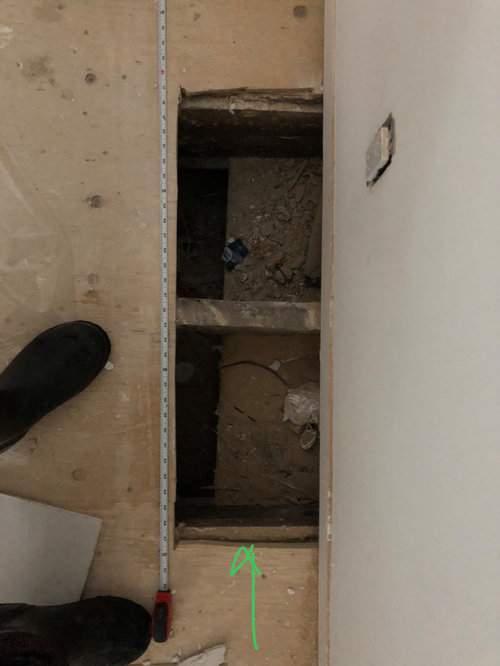
We're in the middle of a major home reno, which has included adding a second storey (560 sq ft) and a new higher-efficiency gas furnace. Lots of additional ductwork for the second storey running down to the furnace room. This air return (in the pic) on the ground floor, used to be the only air return vent in the house. Now we have 3 additional air returns on the 2nd floor as well as this original one on the main floor. (The green arrow represents where I want to gain an additional 2".)


This air return hole is 30.5" wide by 10". Two questions:

  1. Can I reduce the opening slightly e.g. from 30.5" to 28", without negatively affecting my air circulation?
  2. Is there any chance that reducing this air return opening slightly e.g. from 30.5" to 28", without getting sign-off by an HVAC engineer, could be a Code violation? (I'm in Ontario, Canada, BTW).


Thank you!

Comments (19)

  • 3 years ago

    That appears to be joist cavities, not ducting. That in itself would be a violation.

    JM$.02W

    evelynsmom thanked HU-178658043
  • 3 years ago

    @HU-178658043 Wow, thank you for an eye-opening thought. This hadn't even occurred to me. Can you please tell me more? Is there an easy-ish fix for this? Can they line the cavity with duct material, e.g.?

  • 3 years ago

    I am not trying to suggest the guy above is mistaken, however literally millions of homes (Including Yours!) uses joist cavities without apparent issues. These are not a violation at this point in time... that said, you may be required to current code requirements if you modify the existing installation. Some would argue that waht you propose is not a modification of any consequence - simply you are re-fitting tye return cover.

    YMMV!

    evelynsmom thanked Stax
  • 3 years ago

    @Stax, so if I were to cover up 2" of the hole with subfloor material and then use a grille that fits that new narrower opening, do you think that would have no effect on its function or adherence to Code?

  • 3 years ago

    The system will never know the difference and neither will code enforcement.

  • 3 years ago

    That's what I'd do. Honest answer.

  • 3 years ago
    last modified: 3 years ago

    @Austin Air Companie, thank you for your recommendations. Yes definitely will be cleaning this return out. We are planning a full duct cleaning before we move back in.

    I will ask the guys about sealing this return. I did a quick google and it seems the major options are sealing with mastic vs. sealing with metal tape. I'm really trying to avoid materials that off-gas, so without any pro knowledge, my gut makes me want to request metal tape, rather than mastic. Or perhaps there's something yet better? What are your thoughts on what I should ask for here?

  • PRO
    3 years ago

    Hi, evelynsmom,

    Using joist bays for return air ducts has never been a good idea. They leak and they are impossible to clean. If you have an opportunity to open up the joist bays they can be lined on all sides with sheet metal and properly sealed. I can't tell from the photo, but I suspect your return may not comply with the current code. The 2020 National Building Code of Canada (section 3.6.5.8.40 requires that:

    a.) Combustible return ducts shall be lined with non-combustible material below floor registers.

    I think you'll be well served to at least upgrade that portion of the return for improved fire protection and ease of cleaning.

    evelynsmom thanked Charles Ross Homes
  • PRO
    3 years ago

    evelynsmom: Mostly what Charles implies here is that you need to tear down this house to the foundation and rebuild it using current building code standards. (Charles would hire an HVAC contractor for any build he is performing I recommend you do the same.)


    Charles says what he does right here: click to enlarge


    I would take a new construction builder's recommendations with a grain of salt. Unless you are made of money.


    Mastic doesn't have much if any off gassing in my experience. Ductboard is commonly used in addition to mastic -- but accessability can and will influence the cost. I wouldn't recommend foil tape unless there is substrate to stick it to that will remain sealed.


    Using sheet metal is more costly for a return, because often times it needs to be insulated as well. Ductboard serves that purpose. What you are able to use can be influenced by local requirements. Best if you discuss this with a local licensed HVAC contractor in your area.


  • PRO
    3 years ago

    I would never use duct board. It's impossible to clean.

  • PRO
    3 years ago

    The purpose of the filter is for what Charles?


    Concentrate on building new Charles. Stop pretending to be something you're not.

  • PRO
    3 years ago

    HVAC ducts can and will accumulate dust over time. The amount will depend on a number of factors including the outdoor environment, the construction details of the home, the number and lifestyle of the occupants, pets, and the efficiency and placement of air filters (which can be located close to the air handler or in a return air grill.)

    Periodic duct cleaning improves indoor air quality to the benefit of the home's occupants. In contrast to panned floor joists which utilize lumber for three sides of the duct or duct board which is constructed of fibrous material, sheet metal ducts can be thoroughly cleaned. We don't use duct board in either new construction nor remodeling and I wouldn't recommend its use to anyone.

  • 3 years ago

    I've stayed at the Hyatt Hotel and serviced a couple or three ACs (thousands) and aside to what can be easily reached with vacuum cleaner, never cleaned my own ducts. Downstream of filter,coils and ductwork is clean as hound's teeth in my home,my kid's homes and homes of a few close friends. Despite being simple to evaluate by homeowners with common sense,duct cleaning gets more press and scam by self professed experts than bootleg elixirs. A dusty supply isn't indication for cleaning ducts,it's indication of poor filtration resulting from countless installation and routine maintenance issues. Duct cleaning accomplishes nothing unless root cause was addressed. I guess YOU MIGHT SAY when it comes to self professed experts peddling sorry advice.

  • PRO
    3 years ago

    Leaky return ducts in vented crawl spaces can pull lots of interesting stuff inside the duct work where it doesn't belong. The amount of dust or foreign matter can vary from one home to the next just as conditions in crawl spaces do. Coupled with high relative humidity, dust can provide a food source for mold and mildew. As with most things, inspection and identification of existing conditions before prescribing a fix will serve clients well and differentiates the competent from the charlatans.

  • 3 years ago

    Read what the EPA has to say - link above.

  • 3 years ago

    I did not read the pages on pages linked from your link but this caught my eye and I quote from the the EPA link above,

    " Duct cleaning has never been shown to actually prevent health problems. Neither do studies conclusively demonstrate that particle (e.g., dust) levels in homes increase because of dirty air ducts. "

  • PRO
    3 years ago

    The EPA information in the link includes this statement:

    "Knowledge about the potential benefits and possible problems of air duct cleaning is limited. Since conditions in every home are different, it is impossible to generalize about whether or not air duct cleaning in your home would be beneficial." Whether or not duct cleaning is indicated or may be beneficial should be evaluated on a case-by-case basis. As someone who has had to deal with mildew in a home, I would recommend duct cleaning to reduce the potential for propagation if mildew is observed in ductwork. Ditto for any evidence of insect or rodent infestation.