Software
Houzz Logo Print
jason_carlton26

What size container for dwarf radicans gardenia?

I put a dwarf radicans gardenia in my garden a few years ago, but after removing several wild trees it's now getting WAY too much sun! It's in direct sun from dawn to dusk :-/


I'd like to transfer it to a container soon, and take as much soil with me as possible to minimize any root shock. In a container I can control the sun a little better, and protect it if next winter drops down to 3F again.


What size container would you suggest?

Comments (22)

  • 3 years ago

    I'd like to transfer it to a container soon, and take as much soil with me as possible to minimize any root shock.


    ==>> mother earth should not be used in pots.. that is what media.. or potting medium ... is for ..


    3 to 5 weeks before bud break.. dig up the plant.. bare root it .. cut the roots to fit the new pot.. and repot it in pre moistened media tuned for trees and shrubs.. than means a lot of large particles to aid in the full drainage that trees and shrubs in pots prefer .. and then put it in full shade..


    since i dont know the size of the plant.. how can i suggest a pot size to you..


    how about a pic of the plant with a yard stick for scale ... and we can go from there ...


    stay away from a high peat only media.... it will just stay to wet ..


    ken

  • 3 years ago

    i dont know why you didnt include the shrub forum ... rather than landscape design.. since you want to know how to grow it.. not how to design a garden around it. ..


    ken

  • PRO
    3 years ago
    last modified: 3 years ago

    A 24" planter will be good for long term survival in your climate. You can transplant them now. Gardenias are tough plants.

  • 3 years ago

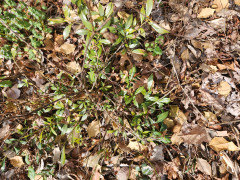
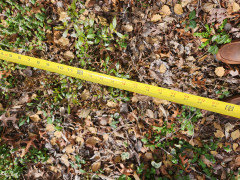
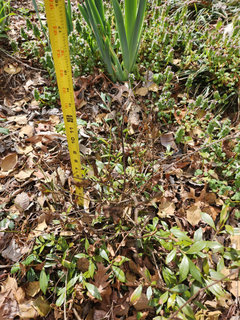
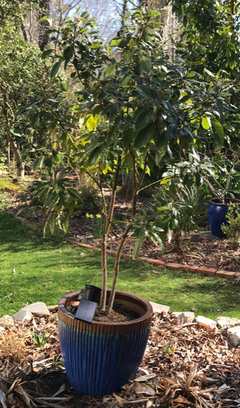
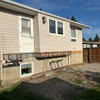
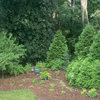
    @ken_adrian Adrian MI cold Z5, here are some pics with my measuring tape. I don't have a yardstick ;-P


    From the farthest tip to the opposing tip is about 2', and from ground to the uppermost tip is about 18".


    You can see that it's a little hidden in the garden, too, so it's just not a great area. I have a part sun area close to my back door that would be better, and you could smell the flowers!


    i dont know why you didnt include the shrub forum


    I originally chose Container Gardening, and the site recommended the other two. The site has a major design flaw in that it has too many subforums, so it's impossible to remember them all and often hard to find the one(s) you want :-/

  • 3 years ago

    @Dig Doug's Designs, do you agree with bare rooting it? I thought it would be best to keep as much original dirt as possible to prevent root shock, but Ken said the opposite!


    I took 12 cuttings last year with the hopes of having at least 6 survivors, but it looks like I have 0 survivors :-( I keep reading that gardenias are finicky and sensitive, so your comment throws me off, too! LOL

  • PRO
    3 years ago

    I would amend the existing soil add that to the planter. I would not bare root gardenias.

  • 3 years ago

    Unless you plan on the gardenia in the container as only a temporary measure, then yes, you do need to bare root it. Growing anything in a container long term requires some very specific techniques and the inclusion of garden soil is to be avoided at all costs as it will not provide adequate drainage and aeration. And it should be done now before the plant puts on new growth for the season.

    Wait until it is dug up and the roots washed and then determine how large a container you will need. It should only be 1-2 inches larger than the diameter of the root ball/root mass. And make sure you use a proper container potting soil intended for acid loving plants. Most nurseries will carry this.

    And gardenias have a very well publicized and well deserved reputation for being difficult or fussy.....especially in containers!

    btw, you don't need to cross post in a variety of forums unless you want to. When I start a new thread, I pick the forum I think is most appropriate and then Houzz/GardenWeb offers a drop down menu of ALL the other forums in alphabetical order from which to choose if you wish to cross post.

  • 3 years ago

    he best time to lift or transplant is immediately prior to the spring push.

    What size container is appropriate depends in part on how large the root/soil mass is, but more on the physical characteristics of the grow medium than any other factor.

    Like most plants other than conifers, gardenias are regularly bare rooted by growers who understand the value of a full repot as opposed to potting up. A full repot consists of bare-rooting, root pruning to relieve root congestion, and fresh potting medium. Potting up ensures limitations associated with root congestion remain as limitations; whereas, a full repot ensures all limitations associated with root congestion are eliminated until the approximate point in time when the root/soil mass again becomes congested to the point it can be lifted from the pot intact.

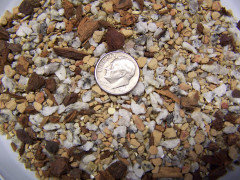
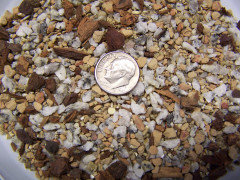
    Too, I wouldn't be too anxious to lift a large rootball of mineral soil and put it in a pot. That invites issues associated with excessive water retention, insofar as it's particle size (of the grow medium) that drives water retention. If my plant, i would lift it, bare root it, root prune it, prune the top, and but it in a pot with a very fast draining medium - something like this.

    This is the time where someone touting conventional wisdom chimes in with how it isn't appropriate to prune a plant's top at planting time. But the first question they need to answer is, Have you ever lifted a plant from the ground while in leaf, bare-rooted it and rid it of a soil that will not perform well in a container without reducing the top to prevent the entire organism from collapsing. The answer will be 'no'.

    Al

  • PRO
    3 years ago
    last modified: 3 years ago

    In Zone 7 in North Carolina gardenias are NOT fussy in large containers. Dig up your small gardenias, shake excess soil off the root ball, Fill large planter with bagged in-ground garden soil, plant gardenias in the new planters. I have done this with great success in southeast Virginia for 35 years with good success.

  • 3 years ago

    "Fill large planter with bagged in-ground garden soil "


    Advising anyone to use "in-ground garden soil" to fill a container is absurd.

  • PRO
    3 years ago

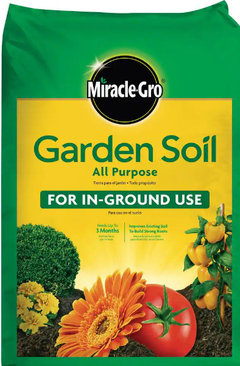
    Using this is not absurd:


  • 3 years ago
    last modified: 3 years ago

    You can read it says for "in-ground use"?? How is growing anything in a container considered "in-ground use"??

    Garden soil - bagged or otherwise - is not potting soil and does not offer the necessary characteristics of a potting medium that will support long term successful and healthy container growth.

    Comments like the above are indications that a) the poster has no clue about growing in containers or b) does not care about the long term health and viability of the plant.

    Is that product 'absurd' for container usage?........you bet your bippy!! The bag even tells you it is!!!!!

  • 3 years ago
    last modified: 3 years ago

    @Dig Doug's Designs All plants are fussy in containers when compared to their in-ground counterparts, and they are particularly fussy about the grow medium used. Container growing is inherently limiting even with an appropriate grow medium.

    Water and air retention in container media is driven primarily by the size of the particles the medium is made from. Garden soil is so fine that, in containers it will hold several inches more than the 3-6" of perched water bagged container media holds. This means that the bottom 6-10" of soil will be 100% saturated after a thorough watering. A denial won't change the laws of physics, and most of the experienced growers here understand that. After several waterings, compaction occurs. The lack of aeration that accompanies fine textured media, like shown, severely limits roots' ability to function normally, resulting in plants' inability to move water efficiently to its distal parts, which ends up with plants dying of thirst with roots awash in an ocean of plenty.

    The forces of adhesion (water's tendency to stick to soil particles and the pot) + cohesion (water's tendency to stick to itself) added together = capillarity. A perched water table is created whenever the gravitational flow potential of soil's water column is less than capillarity. Water often perches in pots and will not respond to the force of gravity. The combined surface area of a given volume of fine particles is greater than the surface area of the same volume of larger particles. More surface area increases the collective force of adhesion which increases the ht of the perched water table to hts no experienced grower would want to deal with.

    Simply put, water behaves differently in containers than it does in the earth because the force of the earth's capillary pull added to the water's gravitational flow potential is always enough to pull water downward through the soil, the exception being when water perches in a layer of fine material over a coarse substrate. Water commonly perches in a clay or silt layer above a layer of sand/ gravel, e.g. With nothing but air or a flat surface below a conventional container planting, there is no additional capillary pull from below the pot ..... unless the pot is resting on soil and there is a bridge of continuity between the grow medium and the soil below the pot. THEN, the water will move out of the pot and into the soil below; but, you no longer have a 'conventional' container planting. From the perspective of hydrology, one will have changed a conventional container planting to a small raised bed, changing the way water behaves; and, compaction of fine particles will still severely limit root function and plant performance.

    Al

  • PRO
    3 years ago
    last modified: 3 years ago

    You all can say whatever you want about planting plants in containers and how to do it. All I can tell you is that it has been my experience over the last 36 years as a professional landscape designer that what I describe works quite well when taking small Radicans gardenias out of the ground & replanting them in pots with the soil I described. These gardenias are very shallow rooted. By leaving some of the soil on the root system & using a slightly coarser planting mix (as shown) will allow the root system to acclimate more quickly. It works very successfully in zone 7 North Carolina.


    " Garden soil - bagged or otherwise - is not potting soil and does not offer the necessary characteristics of a potting medium that will support long term successful and healthy container growth. " .....My experience says that is wrong.

  • 3 years ago

    " My experience says that is wrong. "

    Then your experience is very much in the minority. Countless online publications as well as an understanding of soil physics and how water moves through any type of planting medium will attest to that.

    The "it must work because I have always done it this way" approach is invalid and is detrimental to providing the best information to those who are new to the practice. In short, what you do is not the accepted convention and it should not be outlined or suggested as a recommended practice despite whatever so-called success you may have experienced. Which we are unable to confirm anyway.

  • PRO
    3 years ago
    last modified: 3 years ago

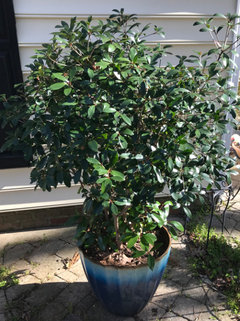
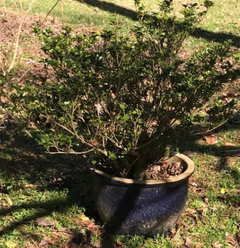
    "it must work because I have always done it this way" is not why I do it that way. I do it because it is reliably successful. The attached pictures are of plants that I have done this way, they have been in their pots for over 10 years & seem quite happy. Perhaps you are a little close minded in your approaches to gardening or maybe gardening in the southeast US is not your specialty.


    Persea borbonia


    Leann Cleyera


    Kleim's Hardy Gardenia


    Have a good day.

  • 3 years ago

    You buy 'em books and buy 'em books and all they do is eat the pages. 😜

    Perhaps it is you that is being closed minded..........you are certainly flying in the face of science and the decades of study that support successful container culture. And it has nothing to do with location!!

  • 3 years ago

    A few commercial nursery ops 'might' use a small fraction of mineral soils (5%?) in some of their media to help boost CEC and for the added weight to help limit toppling, but no commercial operation would ever consider what you're suggesting, Doug. Grab any edition of Greenhouse Grower magazine, which caters to pro greenhouse/ nursery ops and you'll quickly see that very few nursery ops and virtually no greenhouse ops have used significant fractions of mineral soils in their media since the 1950s.


    Plants of any given species prefer pretty much the same conditions - no matter where they are grown. It's not that the plants' wants change because they are grown in the north, south, east, or west; what changes is our ability to provide what they want. It's not that the plant wants a water-retentive medium in the south; no, it's the fact that the container gardener won't commit to watering twice per day, so they accept the limitations associated with an overly water-retentive medium for the sake of their own convenience.


    More often than not, the view from grower's perspective and that from the plant's perspective are mutually exclusive, and that can hardly be any clearer than in this discussion. I've been studying soil science and experimenting with container media since the 1980s. This is the most productive grow medium I have ever used:

    The reason for its productivity is simple. It holds water on the surface of soil particles, in the pores of the porous ingredients, and at the interface where particles contact each other. It holds no (or precious little) soil in the pore space between particles; whereas, the garden soil in the bag holds a tremendous volume of water (to the exclusion of air) in the pores between soil particles.


    No one objects to the fact you prefer your way to any other. The point being made is, people with decades of experience growing woody plants in containers know the probability of failure when using garden/mineral soils in a container is extremely high, and, they are familiar with far more productive methods not fraught with the pitfalls inherent in using garden soil as a container medium.


    A "good" medium is one that can be watered to beyond the point of soil saturation without the plant having to pay an over-watering tax because the soil remains saturated for intervals measured in weeks. I know for certain that the garden soil doesn't qualify as 'good' because 3/4 of the media labeled for use as potting soil don't even qualify, and they hold far less water than what MGGS holds. You can prove this to yourself. cut the top off a clear half gallon plastic bottle. Fill it with soil. Saturate the soil completely. Melt a hole in the bottom (hot nail/screw) and let it drain. Look through the side of the bottle. Where you start to see air pockets in the soil is the max ht of the perched water table. You'll likely find it is 10-12" tall. Since this is a constant, no matter the shape or size of the container, you can expect that ht of the soil column to be saturated with water and devoid of free oxygen in any container after a thorough watering when using that product as a container medium.


    We can evade reality, but we cannot evade the consequences of evading reality. ~ Ayn Rand


    Al

  • PRO
    3 years ago

    That's informative Al, but we are not talking about commercial growing operations, merely transplanting a few very small gardenias that already have a tiny bit of soil into a pot. I highly suspect that the gardenias will later be replanted in part shade in the ground.


    I would not recommend this for a commercial operation, merely for a homeowner to save a few tiny gardenias. It works well as my photos show.


    The OP can choose to do whatever he wants.

  • 3 years ago

    The OP can choose to do whatever he wants. True enough. I don't doubt he'll weigh what's been said and choose accordingly. I hope you fare well.


    Al

  • 3 years ago

    As far as I can tell, the real debate is on whether there's a significant difference between bags of container soil and garden soil.


    You all agree that I should dig it up right now, bare root it, maybe prune the roots (something I've never done and scares me), then plant it in a container using bagged soil. Right?


    If that's the case then I have no problem buying container soil, it's only about $3 more than garden soil.