Software
Houzz Logo Print
doctor_disco50

Issues making and using Als 5-1-1 mix: ingredients and nutrients

3 years ago
last modified: 3 years ago
Hello everyone,


I've been silently lurking this forum for quite some time now looking for an appropriate substrate for my aroids. I dislike overly complicated mixes so I naturally more or less stumbled upon Taplas 5-1-1 mix.


I live in Germany and 2 of the 3 ingredients are sadly not available: partially composted pine bark and sphagnum peat (I also misread Als recipe and used sphagnum moss instead ...). At least I'm not able to find them.


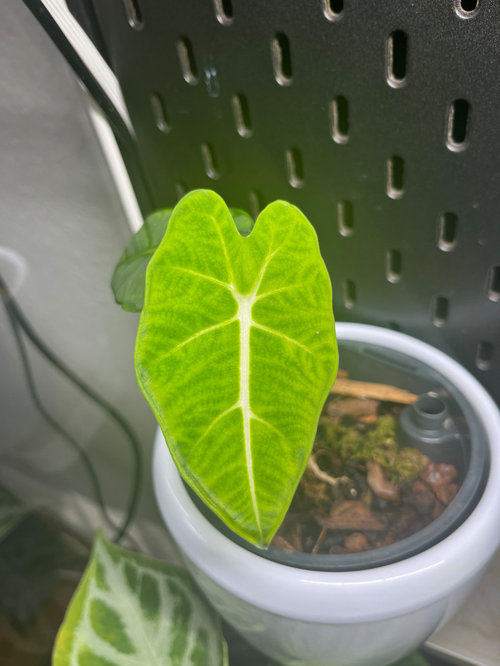
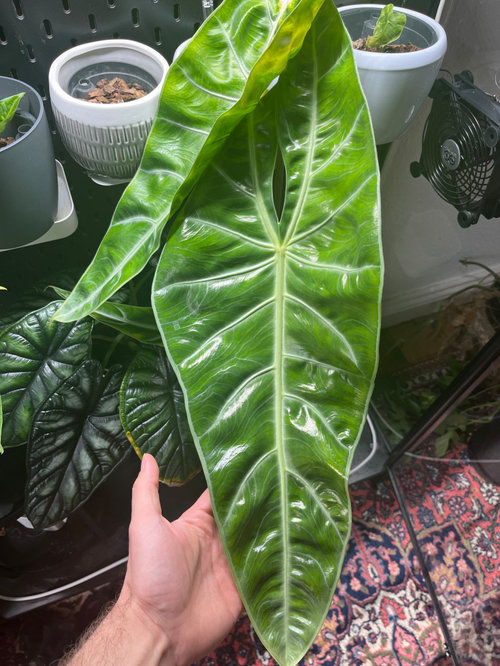
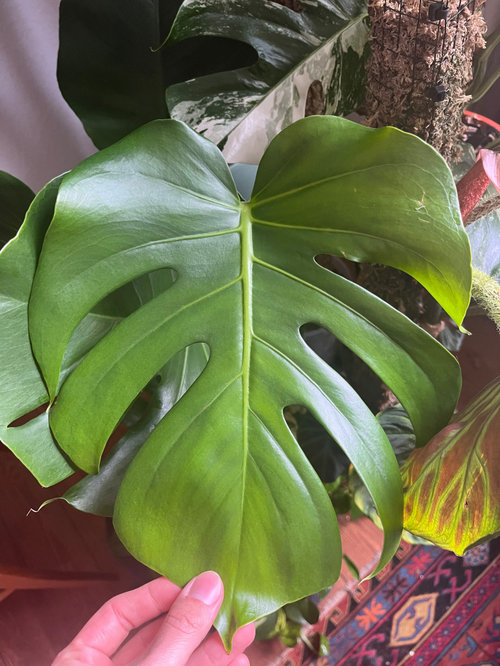
So, I basically made the mistake of using uncomposted pine bark. I've been using the mix for about 4 months now, and most of my plants recently started showing signs of nutrient deficiencies (the pictures are just 3 examples):


There's no stunted growth or browning going on, only chlorosis.


Now, I have a few questions:

  • Looking at the leafs I would say that this is not a nitrogen deficiency but rather iron or manganese. Only young leafs are affected. Could this be caused by my "faulty" mix?
  • As it is not possible for me to find sphagnum peat, could I use white peat as a substitute?
  • I did a pH slurry test to rule out pH issues. My meter read 5.5. If I were to use peat, wouldn't the pH drop considerably?
  • I do not use dolomitic lime in my mix, instead I add CalMag to my fertiliser (I water + fertilise every 5-8 days): CalMag to 450µS, then fertiliser 8-3-6 (with trace elements) to 1450µS, pH 6.5 (RO water). Is this an adquate substitute for lime?

I know those questions are quite specific and understand that remote diagnosis is hardly possible with plant related issues, but I feel like I'm losing my mind about this. I really want this mix to work for me. I've been researching for days now, digging endlessly through weird, vague blog sites and forums. Maybe you guys have an idea.


Thank you for taking your time reading this.

Comments (5)

  • 3 years ago
    last modified: 3 years ago
    Hi Doc D.!

    I can only share the way that I have made 5-1-1 and hope it helps.

    I have never used composted bark. Just regular pine bark, bought as bagged mulch that I've chopped up in a pail to get it down to the 3/8" to 1/2" size, then run through a screen to separate the really fine dusty stuff from the coarse usable parts.

    Now it's my understanding that the milled peat moss portion of the mix, is in there to give moisture retentiveness. Otherwise, using bark alone, even with perlite, there would be little to no moisture holding capacity.

    On the same note, I could've used the bark fines instead of the peat moss and get generally the same results as I would using peat moss.

    The dolomite lime only adjusts the mixture ph as the bark and peat tends to be on the acidic side.

    One thing to remember, when using a soilless potting media like 5-1-1, is that there are no nutrients in the mix. Any macro or micronutrients, have to be supplied by you and is most often applied in and during the watering regiment, by watering until the liquids run through the mix and out the drain holes in the bottom of the containers. How often depends on the plant type and your discretion.

    Otherwise, your plants will be totally nutrient deficient.

    p.s. I use a Mirical grow brand of water soluble wide spectrum fertilizer although there are many good brands out there. I also add magnesium sulfate as the MG here in the US doesn't contain any mag.

    :-)

  • 3 years ago
    last modified: 3 years ago
    One other comment that came to my mind. If you do not flood the pots, so the liquids run out the bottom, you can get a build up of salts from the fertilizers. The flooding and draining not only helps keep the salts moving out of the mix, but also pulls air into the mix along with the water. Roots love air as well as water. ;-)

  • 3 years ago

    it should be pretty easy to make composted pine bark for next year.. buy piling couple bags in a tub or in a back corner of the yard.. and composting it this summer ... just steilize it before you put it in your mixes ..


    https://tipnut.com/sterilize-soil/


    wood steal nitrogen from the soil.. to aid in decomposition ... so the yellowing of the leaves can very simply be a lack of usable nitro.. i would water with half strength water sol fert.. and see if you cant green them up ... or i might go to quarter strength.. and use it with every watering ....


    not many of us have a lot of faith in the hand held gizmo sticks for watering.. nor nutrient analysis ..


    ken

  • 3 years ago

    It really doesn't matter if the bark is composted or not. You can increase the nitrogen a bit if needed, to account for any nitrogen immobilization (according to AL).

    https://www.gardenweb.com/discussions/1610475/partially-composted-bark#n=2


    And bark is not the same as wood and doesn't decompose at as fast of a rate like wood, or immobilize the nitrogen at as high of a scale like wood products do.


    I used to pick out as much of the wood product as possible for that reason.


  • 3 years ago

    ..... and it needn't be "sterilized", either.


    I regularly use uncomposted (raw) bark.


    Keep in mind that the pH of container media should be lower than whatever pH is suggested for a plant in mineral soil. IOW, if a plant label says the plant prefers a pH of 6.0 - 6-5, unless noted it should be assumed to mean 'in mineral soils'. In contrast, a plant preferring a pH of 6-0- 6.5 in a mineral soil will need a pH of about 5.2 - 5.7 in a container substrate. This is one of the reasons coir and CHC's need to have a workaround in place (due to their high pH) other than a liming agent as a Ca/Mg source.

    Al