Software
Houzz Logo Print
xcanuck2011

Deodar dying - what can I do?

3 years ago
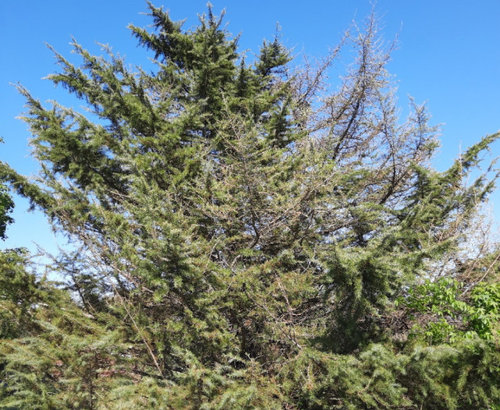
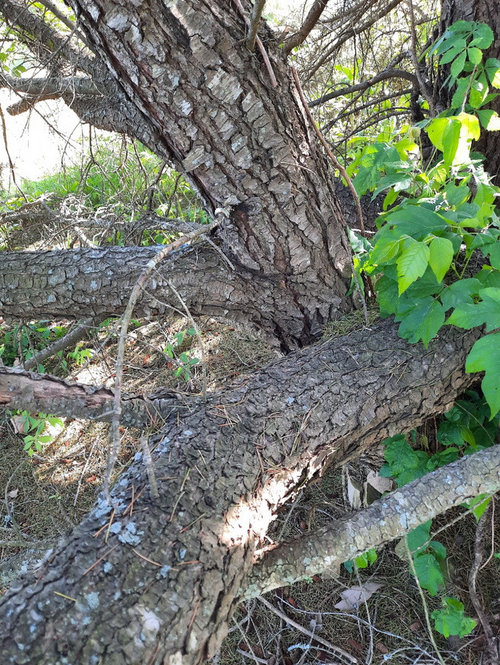
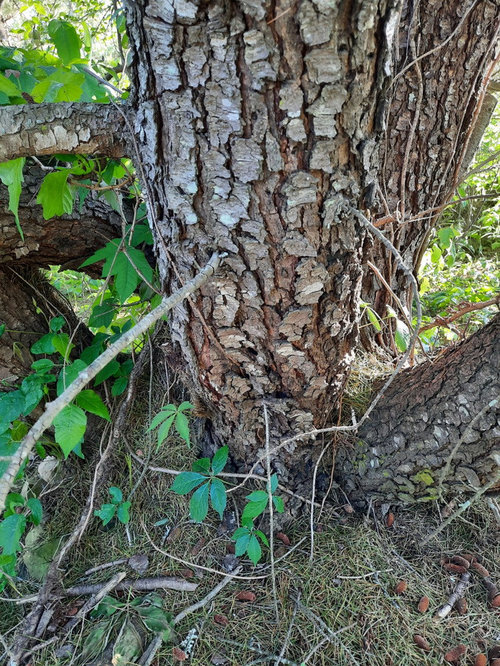
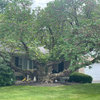
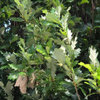
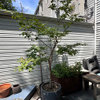
We have a mature Deodar in the front yard that has died. This has happened over the last few years until it's completely bare today. I have tried to research why this would happen and mostly come up with a disease or cedar bark beetles, but I am not sure of either. My issue now is, I have two more Deodar trees in the back yard, both of which appear now to be rapidly dying (much faster than the one in the front yard). Can anyone help me to find out what is wrong and if there is anything at all I can do to save the trees?


Comments (17)

  • 3 years ago

    Where are you located? State and closest large city, please.

  • 3 years ago

    Apologies for not including that first. I am near Jonesboro, AR, in NE AR. Thanks!

  • 3 years ago

    Might be canker I see in the second pic and the last pic looks like it was planted too deep. You may want to contact your local county extension office.

    tj

    xcanuck2011 thanked tsugajunkie z5 SE WI ♱
  • 3 years ago

    Your climate should be okay although at the bottom of its hardiness range. There are reports of top dieback in sharp cold spells although this looks like more of an all over decline than just the top. Cedars can be subject to root rots and also some fungal blights. The blights shouldn't kill it but the root rots can.

    Checking with your extension service is smart advice.

    xcanuck2011 thanked gardengal48 (PNW Z8/9)
  • 3 years ago

    Many years ago, when i lived in the south, I had a mature Deodar cedar die in a similar way to yours. It happened over the course of about 3 years…dying from the top down. It had cankers from time to time…and it had been planted in a low, wet spot. I assumed it was a combo of root rot and canker.

    If you have a knowledgable extension office, it would be worth inquiring. However, I often remind people here, many of us aren’t blessed with such a thing. My local office gives nothing more than a few pages of Google search results and a price list if I want to send samples to a nearby university ag department.

    xcanuck2011 thanked Joe Williams
  • 3 years ago

    EVERY COUNTY IN THE US HAS federal extension offices... its usually in same building as the Ag office...


    https://www.usda.gov/topics/rural/cooperative-research-and-extension-services


    find yours.. and discuss with them.. and let us know...


    ken

  • 3 years ago

    I have no knowledge of the species or your climate and conditions but having an evergreen like this festooned with Virginia Creeper and Poison Ivy is probably not helping. They are not parasitic and they don't 'strangle' but they'll be shading out foliage and using moisture thus weakening the tree and making it more vulnerable. Have you had several drought years?

    xcanuck2011 thanked floral_uk z.8/9 SW UK
  • 3 years ago

    Thank you all for your help and suggestions! It took me until today to get an answer from my local Extension office (called them Monday AM), so today I did get a call back from the office and the suggestion was that it was the late cold snap that damaged the trees. (We did not have any appreciable drought last summer).

    However, one tree is all but completely dead, two are what I would say are 'half dead' and only one still has any noticeable amount of needles left on it (pics of that tree in my OP). The contact as the Extension office suggested I spray Round Up under the tree to rid the ivy and creeping vines (which he suggested are not fatal to the tree anyhow).

    As Joe mentioned, this fellow at my Extension office, while trying to be helpful, did tell me that he researched using Google and that he talked with another forestry guy to get his opinion... he did say I could call them back though, if I would like them to come out and see the trees, which I just may do, since I am at my wits end and would like to save at least one of the trees.

    Again, I thank you all and I will post again once I find out anything more.

  • 3 years ago

    No, as I said, the vines won’t kill the trees but they can cause less than ideal growing conditions which make an already unhealthy tree weaker.

  • 3 years ago

    Virginia State Arboretum had a row of large blue Atlas cedars that declined and died for unknown reasons -- at least they didn't know the cause when I asked about them, tho they didn't think it was cold as they had survived much colder winters previously.

  • 3 years ago

    I'm afraid this is a larger issue than just our own trees. The byline suggests the loblolly pine is being attacked by this mystery disease or bug, but it is in fact most pines.

    https://www.arkansasonline.com/news/2023/may/30/a-forestry-mystery-whats-attacking-arkansas-state/


    I want to thank all of you again for the helpful suggestions. Looks like there's not much I can do other that what I have already done.

  • 3 years ago

    Every county in the US does NOT any longer have an extension office. but all have access to extension resources. every state has a land grant university and they provide extension services look up you state land grant university and contsct them for how to connect with Extension!

  • 3 years ago

    Unless combined into a regional extension service office, every county does indeed have an extension office!! There are currently 2900 extension service offices and just over 3100 counties, so you do the math.

  • 3 years ago

    xcanuck2011, check out my thread you may have the same problem. You will have to get up close to the bark of the dead branches to be sure.

  • 3 years ago

    Regarding Extension services, there are 3142 counties in the US according to the most recent census surveys and not all have extension offices. That would leave 242 ( ~8% )counties without one. But as I stated earlier ALL counties have access to Extension, it may just take a little more looking to find your contact in your particular county or state.

  • 3 years ago

    And regarding your deodar cedars, there are many things that attack them - Deodar weevils, cedar rust, cedar bark beetles, cedar leaf miners, needle blight, etc. I strongly suggest you do try to contact your nearest Extension service for help in identifying your issue.