Software
Houzz Logo Print
hillary_bluhm

raised vegetable beds in front yard?

3 years ago
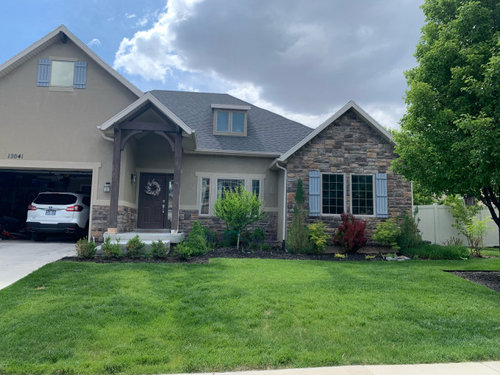
Looking to DIY our front landscaping. Our road is busy so our front lawn isn’t being used for play. It’s got a slight incline. Would raised garden boxes for veggies work? It’s a full sun yard. What placement/paths would you recommend?

Comments (29)

  • 3 years ago
    last modified: 3 years ago

    Not sure why you need a raised bed. Just make a bed. Line it with slats to keep the grass out, if the grass is vining. You could improve it later by raising it, if you like. A slight incline isn't an issue. You might dig down and see if it's all rocks or clay under thin turf. If so, then a raised be might be useful.

  • PRO
    3 years ago

    Sure they can work. Depends on your beds and gardening dedication :) Though I would also add in depends on the neighborhood- if you live in an area where a front garden might be feeding the neighborhood more than you. And check with your local codes and ordinances to see if there is anything there about how you can or can't use your yard in this regard.

    In general, raised beds shouldn't be more than 4' across. It gets to be more difficult to reach past that comfortably for many people. How long you want them is up to you, though the longer it is, the more walking you have to do to go around then. Depth recommendations tend to the 6-12 inches deep, I'm a fan of 18-24 deep if it's possible. I have raised cages that are around 36", and those are very nice for some plantings.

    What you can do for dirt is a personal prefrence. Some folks like premade mixes, making their own mixes... doing sheet methods or small composting methods. If you do a deeper bed you can bottom fill a bit with wood like hugelkultur method.

    Paths can be walkway couple feet, but often a wide enough path for a wheelbarrow to comfortably go through is nicer. What you mulch with is a personal preference. But in general use something organic over something inorganic or synthetic. Or if you like you can make your paths a mower pass wide and just keep it cut nice. If you like, you can add in arbors over paths to grow vertical crops on.

    Plan a space now for composting if you don't already have a space. Lots of veggie gardening invloves spent plants or plant parts. Compost them and use it to help feed your beds in the future.

  • 3 years ago

    You certainly can do a vegetable garden in the front yard. Raised beds are an option or you can just make a regular garden bed. My vegetable garden is directly in the ground and I get more vegetables than I can handle every year. I also have a neighbor on my jogging route that has raised vegetable garden beds in their front yard parking strip. Another neighbor has turned their entire front yard into raised garden beds for vegetables. Sorry I don't have any specifics on how to lay out the beds. If it were me, I'd break out the graph paper and start working on a design.

  • 3 years ago

    I agree that you should be sure if you live in an area that has a neighborhood association with some strict/funky rules, you don't want to waste your money and effort if they will prohibit you from building it or even have you remove it. Good luck!

  • 3 years ago
    last modified: 3 years ago

    I should add that raised beds are actually disadvantageous in a very warm climate. I know people with foot-plus high raised beds with walls and, in mid summer, in full sun, the roots get fried. So it kind of depends on where you are. Raised beds are advantageous only in that you don't have to bend down quite as far to pick and weed, and you don't necessarily have to dig packed or rocky native soil. But beds that are just mounded, native soil amended with compost, can be a lot simpler.

  • 3 years ago

    On a slope you could have a terrace effect with in ground beds but with a low retaining wall at the front. I am firmly in the grow it in the ground school. Why make work for yourself and spend more money than necessary? I think lots of people are persuaded by marketing that they need to import soil and 'build' beds when their local soil is quite possibly perfectly fine, especially when amended with compost.

  • 3 years ago

    What they said. Sometimes terminology gets in the way. “ Raised beds” typically means 6,8,12 or more inches high straight- sided boxes of treated wood or plastic or metal, filled with some kind of soil mix. The higher the soil, the greater percentage of the root mass is above or not engaged with the native soil below, so very drought- susceptible.

    But in- ground beds are frequently “ raised” a bit above grade, mounded as described above, especially while building and amending.
    If you have even some idea of what your front yard soil is like— mainly if it’s not a rock pile with a thin veneer of soil for the lawn— the less “ raised” you need to be. In that approach there is either tilling or no- till layering ( or possibly, not power- tilling but layering plus some spading or forking) , the latter taking more time for the amendments and biome to mix with native soil. But that’s how I did my mounded/ layered beds as I did not use a tiller.

    The other aspect is that if you are creating “ beds” inside an expanse of lawn, you need an edging or border material concept and a way to mow around and the extra maintenance of “ edging “ the grass that’s adjacent to beds( whether veggie or ornamental), and also consider whether your lawn grass is aggressive ( some Bermuda) and will sneakily invade. Most people think of actual edging products & also that’s part of appeal of straight board sides of raised beds, but the less high thd mounding, you could do trench edging. If you do have raised beds of wood etc, plonked in the middle of grass, you’ll have to continually edge/whack the grass that’s adjacent or use an herbicide ( GrassBGon) to kill a strip around. So if you determine that you have no HOA restrictions, or that you understand the limits/ regulations, you will want to think of it in a more overall front yard “ design “ which might include a way to do veggies plus something flowering or with winter interest but not blocking the summer sun.

    You could “ start small” so can see how is working, maintenance and then expand. But that would also benefit from a Plan.

  • 3 years ago
    last modified: 3 years ago

    Despite all the naysayers, there are very valid reasons for opting to garden with raised beds:

    • soil incompatibility (heavy clay, poor drainage, rocky or thin topsoil, pH irregularities)
    • accessibility - easier for those gardeners with limitations or physical disabilities to access and maintain
    • adaptable to tricky site issues, like slopes
    • limiting critter or pest access
    • flexibility with siting to maximize sun exposure

    As to how appropriate these would be in a front garden, that is up to you and any restrictions your community may have. Plenty of folks do choose to locate them in their front yard but there are some things to keep in mind. A vegetable/edible garden is not always very attractive, especially in the off season, resulting in a rough, unkempt look for several months of the year. You might want to consider expanding the concept to that of a potager or a kitchen garden that combines ornamentals as well as edibles.

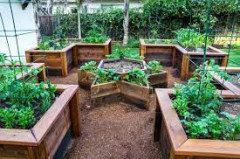
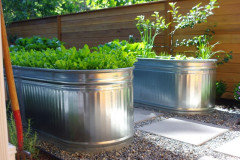
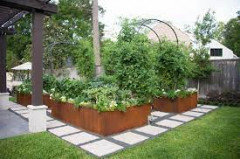
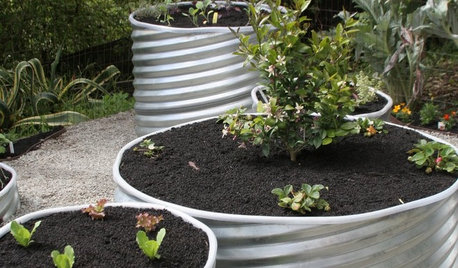
    And if in a front garden, I would strive to make this planting concept as attractive as possible. Galvanized stock tanks, Corten steel beds or complimentary shapes or layouts can increase aesthetic appeal considerably (inspiration photos to follow).

    btw, a raised bed is no harder to keep irrigated than any inground planting and soil depth will limit just how "cooked" roots may get. Have never encountered that issue even when gardening in containers!

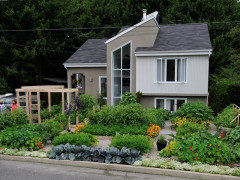
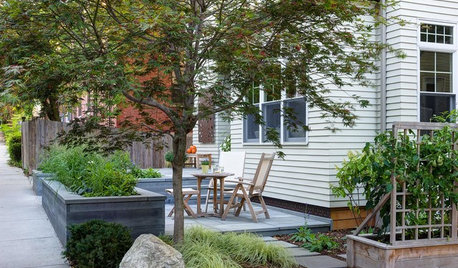
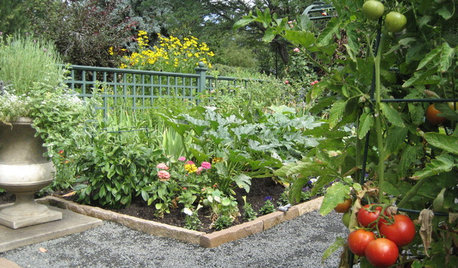
    decorative layout:


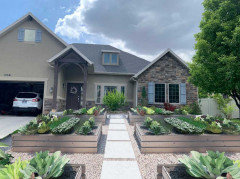
    galvanized stock tanks:


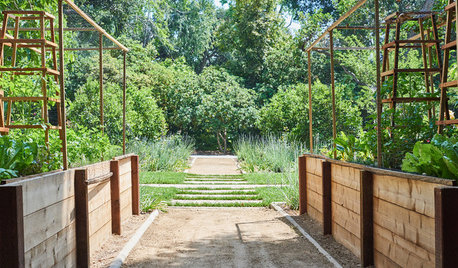
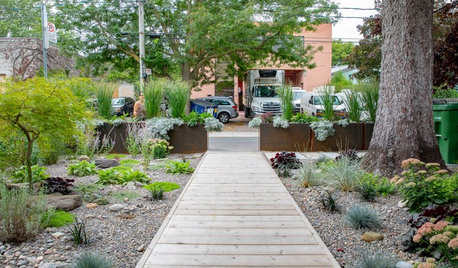
    Corten steel:


  • 3 years ago
    last modified: 3 years ago

    Raised beds certainly don't limit critter or pest access. You can erect a structure on them that does, but you can erect a structure around an in-ground bed as well. As to soil incompatibility, my suggestion was to just get a shovel, and see what's under the turf. A mild slope isn't a tricky site. Nothing about raised beds that allows maximizing sun exposure. Flexibility with siting? You mean you can install a raised bed where you can't stick a shovel in the ground? As to accessibility, yep, if you want to reach 3 feet instead of 4, a raised bed might be for you.

    A raised bed can be more attractive. however, in that it looks like a real structure instead of just dug-up ground.

    Certainly, for a novice gardener, go for in-ground, and get some lessons-learned that might help you plan for an optimal raised bed on that site, if you have your heart set on that.

  • 3 years ago

    Your house is pretty and your landscaping is nice. You will have to fence off a vegetable garden to protect it from rabbits and deer, and you will lose a lot of curb appeal.

  • 3 years ago

    Depend on where you are. I have absolutely no rabbits and deer, and I avoid damage from possums and coons by trapping. No fencing required. But it would be smart to assess the presence of critters. Ideally by asking gardeners in your area. They've probably figured out the right strategies.

  • 3 years ago

    dan, you are just making excuses to justify your opinions. Raised beds can and do deter critters. Voles and groundhogs or gophers are unlikely to be much of a concern. slugs and snails are far less of an issue and if using taller beds, rabbits seldom bother. I know this to be true from practical experience. Deer will always be an issue wherever they have a presence, raised beds or inground planting, and only fencing can restrict that.

    Flexibility with siting means one can locate a raised bed wherever best suits their needs and conditions and where a planting area doesn't already exist. You are not required to go through all the sod removal and soil prep one needs to do to prepare a new planting bed if opting for raised. And you can maximize sun exposure by claiming an open sunny area in an otherwise mostly shady garden.

    I really don't understand why some are so inclined to be negative about any topic on which they (obviously) have no real world experience. This is supposed to be a helpful website. Just chill a bit!

  • 3 years ago

    Yes to raised beds! Full sun could be taken advantage of for a variety of plantings, not just vegetables. Depending on your gardening zone, roses like lots of sun, as do many other beautiful perennials. Or, plant a few of your favorite perennials or shrubs as anchor plants, and tuck in vegetable, annual, perennial, spring or fall blooming bulbs, and herb starts here and there for a colorful garden that also produces food and herbal items!

    There are no rules when it comes to bed shape or planting in rows. Your beds could compliment the front of your home without appearing too linear or starched, and at the same time be planted so they provide cut flowers, seasonal color and shape, food items, etc.

    The beds needn't be too tall, or deep, as the case may be. I might draw up a few different plans, showing various shapes, using a variety of materials, etc. I think you are only limited by your imagination! Picture flowing beds that compliment your home, planted in food items and your favorite flowers, perhaps tiered so the beds closer to the house are a bit taller so any plant colors and flowers can be viewed.

    It could prove to be a great project that ends up providing lots of cool plants, flowers for vases, seasonal color and shape for interest, food for canning or fresh picked for that day's meals, and so much more! I can image a couple of steps and a walkway between 2 terraced beds, with a little garden bench or other seating where coffee and sunshine can be enjoyed. Orr maybe a bird bath, or a small container held fountain with solar workings for interest! Or, a spot to show off a favorite garden statue or obelisk, or maybe some signage - like "kitty crossing" or whatever you prefer!

    In my mind's eye I can see the potential for so much. Good luck with your project!

  • 3 years ago

    Raised beds are great but I would not put them in your front yard, for resale reasons. No need to. There are some herbs that are great perrenails. Thyme, chives, Rosemary (if winter is not below 20 deg), oregano. All hardy and looks good. The more sun the better so look at AM and PM shade areas and pick the most sun. Summer is fine but spring and fall a little more sun makes a big difference.

  • 3 years ago

    Hilary, my only concern with doing any of the above are the rules/Covenant for your subdivision. You should have gotten a copy of the Covenants (if any) with your Deed or from the Title Company when you bought your house.

    Good luck with whatever you do.

    gardengal, I love the design of the first of your photos. The OP would definelty want whatever they put in to be very attractive.

  • 3 years ago

    Done well, the right additions to yard and landscape can actually raise a home's value, not necessarily detract from it. I would think that, if a person does want to eventually sell, the right buyer is out there. And what if they are actually looking for a home with gardening potential? They may see it as, the hard part has already been built in the form of raise beds and landscaping, and all that is required is a few small changes to make it the buyer's own, to personalize it.

    I like the home, myself, and I see the potential. One could use complimentary stone or brick to build a more freestyle type of raised bed that flows and maybe draws the eye to certain focal plantings or other focal points, with walkways in between for ease of planting and weeding, etc. Perhaps some type of flagstone or slate-like material, or brick with color matched capstones. Maybe complimentary wooden posts, or some type of split rail fencing. The ideas are literally endless!

    Pathways can be made out of stones, bark or gravel, decking, in any color scheme or pattern desired. Lots of mulch on the beds, several inches, to help maintain moisture... I might move the trees that are close to the foundation and place them further out so as they grow they aren't blocking any windows, or their roots interfering with the foundation. It's easier to see it in my mind's eye than to describe it in writing, but there is so much one could find through a search using various key words.

    What fun to let your imagination run while checking out what the internet has to offer!

  • 3 years ago

    We don’t have an HOA or other covenants when it comes to lawn. Just fences. I’ve started slowly replanting the existing beds with a mixture of herbs/fruit/veg mixed in with the flowers. Still playing around with designing the planters, but waiting to see how much more planting space we need now that I’m converting the existing beds. This thread was SO helpful and i appreciate all the contributions. Thank you!

  • 3 years ago

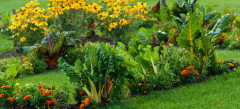
    Whether you do raised beds or not, there are so many beautiful vegetable plants, you can create a gorgeous landscape with edible plants.


    If more people used edible plants in the landscape it would help the environment and definitely reduce food costs.

  • 3 years ago

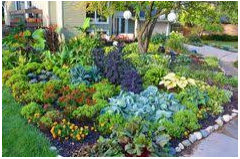
    While vegetable plants can be extremely beautiful, as in olychick's top picture, one needs to remember that not everything will look its best all the time. Often pictures of pretty potagers neglect to tell you that you need a constant supply of transplants to fill gaps after harvest and there will be a lot of time when soil is bare (after seed planting) or barely filled (when you just have tiny transplants). And, of course, if you have winters there will be nothing there for months. That's why mixing edibles into ornamental beds , or vice versa, is a good idea, if appearance is important, as it would be in a front garden.

  • 3 years ago

    For location - close to a source of water. Not so far from the house that you won't keep a good eye on them. There are many options that can make them attractive.

  • PRO
    3 years ago
    last modified: 3 years ago

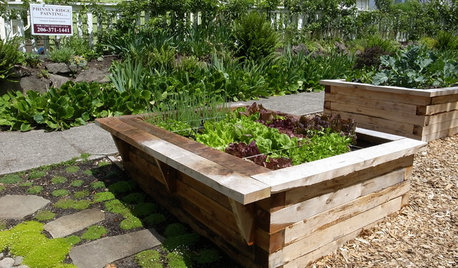
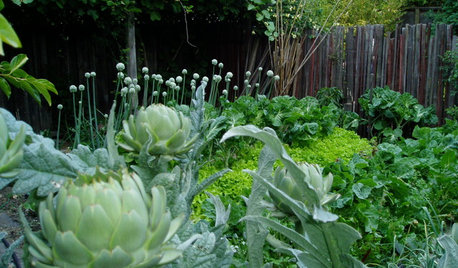
    Some visual to go with


  • 3 years ago

    Those are gorgeous Celery! At my location, they would get eaten, and would need a fence.

  • 3 years ago

    That’s the problem for me with integrating edibles—deer!

    But some herbs like rosemary and lavender can be almost evergreen depending on climate , and also give structure. Of course that’s not the same as things that are actually filling your plate for supper.

    If you actually have a LOT of hours of sun you can more successfully intersperse veggies or succession planting and have some strategic foreground ornamentals that might maintain a greater street appearance.

  • 3 years ago
    last modified: 3 years ago

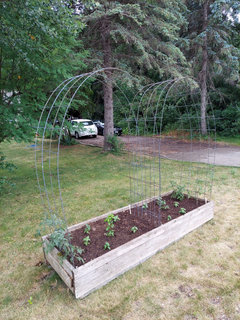
    I just put in a raised bed 6 ft back from the curb. on a slight incline. It is 8ft long and 28" wide. I have cut a piece of cattle fencing in half and made 2 arches to support the tomatoes and cucumbers.

    I used to have a large raised bed garden in the back yard, but the back has gotten to shady over the years, so I thought this year I would take advantage of .the sun in the very front of my home.

    Start small, and make it attractive for the neighbors


  • 3 years ago

    What about fruit trees/shrubs?

    And large concrete/brick/stone planters that compliment the home's facade would look nice, I think.


  • 3 years ago

    There was a long thread a few years back about thieves who cleaned out the gardens - both flowers and vegetable - that were in the front yard… as if this was OK. I don’t thin it was ever resolved.

    I put a fig in the front bed to eventually provide shade. There were lots of figs getting ripe…. and, they are all gone. If it was two legs or four that cleaned out the largess is debatable.

  • 3 years ago

    Birds can be a menace to home grown fruit too.

  • 3 years ago

    Personally, I like to mix annuals, bulbs, perennials and veggies/fruits, making it more of a cottage style garden of sorts, with lots of color and uses! I keep height and shape, texture and color in mind when planting, using groups of no less than 3 plants of each variety, more for banks of color and shape. I try to go for seasonal interest, as well, so even some plants look interesting after frost, during winter.

    If you're worried about human thieves, game cameras and motion activated lighting can be decent deterrents. So can a good dog! Critter thieves can be deterred in many ways, using netting, fencing and other items. Even the use of some plants can deter critters like deer, such as onions, Allium bulbs and other plants that they don't care for. I use food grade diatomacious earth to deter many insect types, like beetles... though it does require reapplication after rain

    I've been reading that planting front yards is a growing trend as people want to learn how to grow and preserve their own foods... rather like tiny homes and off grid, organic living are growing trends.

    Lawns that require lots of water and the use of chemicals, and mowing are so wasteful, not to mention unhealthy, and what good are they, really? I'd much rather grow beautiful flowers, blooming or fruiting shrubs, fruit and other trees and useful food items! As a family, you can learn to grow and preserve your own foods! For example, we grow and make apple jelly and butter, raspberry and mulberry jams, paw paws, gooseberries, elderberries, and many veggies and herbs.

    Happy Gardening!