

Is Fragrant masterpiece patented?
It doesn't clearly say in the search results at helpmefind, but it does state an introduction year, 2002. If that was the year the patent was issued it would have expired in 2022. Is "introduced" another way of saying, "patent issued"?
https://www.helpmefind.com/gardening/l.php?l=2.40795
Thanks,
SB
Comments (37)
 3 years ago
No, it is not patented. Or if it was, the patent has expired. Typically, if the patent was still in effect, sources would indicate that and print the patent number on the tag or in their advertising.
btw, lots of new roses get introduced to the marketplace without patents.
Believe it or not, the very first plant patent issued was for the rose 'New Dawn', way back on 1931!!
SeniorBalloon thanked gardengal48 (PNW Z8/9)SeniorBalloon
Original Author3 years agoAre you gathering whether it's patented from the info at helpmefind or another source?
Thanks,SB
Related Professionals
Shreveport Landscape Architects & Landscape Designers · Columbus Landscape Architects & Landscape Designers · Pittsfield Landscape Architects & Landscape Designers · Eau Claire Landscape Architects & Landscape Designers · San Bernardino Landscape Architects & Landscape Designers · Edmonton Landscape Architects & Landscape Designers · Poplar Bluff Landscape Contractors · Brattleboro Landscape Contractors · Spring Home Builders · Greenfield Home Builders · Barnstable Landscape Contractors · Port Saint Lucie Home Builders · Anniston Home Builders · Waterbury Home Builders · Poughkeepsie Home Builders- 3 years ago
From any other source that specializes in roses, including Heirloom (the breeder/introducer) and the ARS. I see no indication that it was ever patented.
SeniorBalloon thanked gardengal48 (PNW Z8/9)  3 years ago
gardengal, good information. Sometimes I see new roses with this indication: Patent status unknown (to HelpMeFind). No patent Code is found. So these roses could be introduced without a patent
SeniorBalloon thanked forever_a_newbie_VA8 3 years ago
I just looked up two other roses I know were bred by John Clements, and they also had no patent info on HMF. Which leads me to think that he did not go to the trouble of patenting his roses.
- 3 years ago
in the hosta world... there was just no way a breeder could recoup the cost of patenting a plant... a decade a go.. it was something like 5 to 10 THOUSAND dollars..
who is going to invest that kind of money.. unless its something so sublime .. that he could find a grower/seller... to mass produce a couple million of them.. to actually make the few cents per plants he would earn.. to payback the patent cost...
im sure not much has change in the ensuing years...
why are you asking.. you thinking of mass producing them???? ... if you are wanting another 1 or 2 for your own garden... a patent is going to stop you... you would not be doing it for profit.. key word profit.. the patent protects the holder from another profiting off his work...
ken SeniorBalloon
Original Author3 years agoMass? No. But yes I do plant to produce and sell them. And a patent would stop me from producing them for my own garden.
- 3 years ago
At the point when someone decides they intend to produce copies of a rose in order to make $$, it becomes a moral issue: do you or do you not owe the author of the rose some financial compensation for profiting from their creation? I believe the answer is yes.
But John is long gone, so he's not going to benefit from any royalties his roses generate. But his wife might, or Heirloom Roses, which probably now owns the rights to John's intellectual property - patented or not. I expect that Heirloom never patented any of John's roses because - as others have stated - the cost of filing a patent is likely to cost more than the profits that creation will ever generate. IE: it will never pay for itself, let alone guarantee profit for the patent holder. The only way a patent works for a rose breeder is when they can guarantee tens of thousands of units sold every year. This is why I never patented any of mine. The only nursery that has ever actually send me royalty payments is Rogue Valley Roses. Janet is under no obligation to do so, but she does it because its the right thing to do. But I can't afford to expect it of other sellers - I'd just make myself miserable trying to make it happen. Most small propagators are happy to ignore the issue and just do what they please to make a few $$.
SeniorBalloon
Original Author3 years agoI have no issue paying someone a patent or rights fee. When I looked into selling patented plants the minimums were 100 to 200 plants a year. We are a very small operation and will maybe produce 50 roses in a year...someday. As it is we've had a business license for 3 years and have yet to sell a plant. This is a hobby/retirement project (I am not quite retired) and I'm not looking to turn a huge profit. It would be nice if I can defray the cost of soil, fertilizer, pots and propagation equipment.
Over the last 2 years I've gotten better at determining if there is a patent and who holds it. The patent system is very poorly documented and it's often not at all plain if a plant has one. Is there an authority or clearing house that maintains information on who has the non-patented rights? If not, and I'm not saying you are, but this would be system ripe for scamming. Anyone could come along and say "I made this".
Patenting may be expensive, but it does insure that patent rights are assigned to the hybridizer and that you can, sort of, look them up. And they expire after 20 years. In your concept does a plant ever become Public Domain, like a play or a piece of music?
What is the fee you charge for selling your roses?- 3 years agolast modified: 3 years ago
A rose that was introduced into commerce without a patent is automatically "public domain" - if you must use that phrase in this context. The hybridizer has no legal avenues to enforce the payment of royalties. However, the nursery/author of a variety CAN say to any prospective propagator/seller "If you want to have access to our variety, you must sign a contract that stipulates the terms for payment of royalties". I know nurseries that used to do this (this was 20 years ago and the nursery I am referring to is long gone) and it was their only way of securing royalty payments on non-patented varieties.
Of course, a propagator/seller can always circumvent this process if they want (finding another source of plant material to start their propagation) but this risks being shunned by the author of the plants in the future. ( also know of instances where this happened and the author nursery refused to sell anything to them.)
I can't imagine anyone laying claim to a unique hybrid that they were, in fact, not the author of. It would be easy to establish the facts. Hybridizers keep breeding records, many document potential selections in photographs (which these days have time stamps on them), etc. A more likely scenario is an unscrupulous grower renaming a plant and distributing it under a false name, to avoid their responsibilities (I guarantee that happens occasionally).
Say what you want about patents, but the cost of filing a patent on something like a rose isn't just prohibitive, its unrealistic: you will likely never recoup your investment unless you can persuade a BIG producer to make and sell 20,000 copies a year. "Protection" doesn't have much value if you don't stand a chance of ever recovering the expense of the patent.
SeniorBalloon
Original Author3 years agoI appreciate your thoughtful response. Not so sure about this, "It would be easy to establish the facts." The research/time required and access to records and photos is no simple hurdle.
It would be easier to do the right thing if the information was more readily available. The way it's set up now it's no simple matter determining who has the rights. Perhaps one of the rose societies could take on the roll of creating a database. Maybe one exists now that I'm unaware of.- 3 years ago
@SeniorBalloon In your case (pursuing propagation rights to a specific variety of known origin) the sensible thing you can do is contact the current owners of Heirloom Roses and ask them: who owns the intellectual property that is John Clements hybrids? and if its them, ask: Would you permit me to propagate a small number of copies to sell? If they say "we own the IP and you're free to do as you please", then you have all the permission you need.
As for documentation, the HMF database is about as thorough and complete as you can hope to find. - 3 years ago
Here's a link. You can search by the denomination.
SeniorBalloon
Original Author3 years ago@hugogurll The link gets a 404 not found. And what is a denomination in this regard? Thanks.
@User That is a good suggestion and I will follow up with Heirloom. I am looking at buying several roses from them and will inquire about each.
And a suggestion for you, you would find a more receptive audience if you didn't enter a thread like this with the attitude people are amoral as opposed to ignorant. Starting with the suggestion about how to contact hybridizers who choose not to patent as you did with Heirloom.
The entire issue of plant patents and patent fees and rights is very complicated and not easy to research for the uninitiated.
Thanks. 3 years ago
“And a patent would stop me from producing them for my own garden.”
John, are you sure? I thought most of those laws are not violated as long as the product stays within your household. I know there are many things under copyright law (music, books, and more) In which you can copy as much as you want as long as you don’t distribute it. And, with the older laws on paper books, you could buy a book and legally let one friend at a time borrow it. The key thing being that there was only one book being read by one person at at time and then copyright laws were upheld. Maybe there is a difference between copyright and patent.SeniorBalloon
Original Author3 years agolast modified: 3 years ago@deanna in ME Barely zone 6a, more like 5b My understanding is it's illegal reproduce a patented plant for any reason. This is from a Better Homes and Garden article.
Plant patents
These are the most common. They prohibit you from any kind of asexual propagation (AKA vegetative propagation). Translation: you cannot divide that overgrown perennial, root cuttings, or layer branches if the plant is protected by a plant patent. Basically, the only legal way to reproduce a plant with this type of patent is by seed. But Myers says that plant patents don’t actually guarantee the right to grow from seed. They just don’t prohibit it. He suggests that in the future someone could file a lawsuit that argues that plant patents also prohibit seed saving.
Plant patent numbers begin with “USPP.” There are a few common variations on tags like “PP,” “US Plant Patent,” or “Plant Patent #.” You may see “PPAF” or “plant patent applied for.”
Utility patents
https://www.bhg.com/what-is-a-plant-patent-6823149
All of that said, the plant police are not coming to your house.SeniorBalloon
Original Author3 years ago@Paul Barden Well Paul, you've sent me down a very interesting rabbit hole. I contacted Heirloom about 5 rose they sell and they very kindly replied that they have the breeding rights to Fragrant Masterpiece, and do not allow others to propagate. They included information about the breeders of the other 4.
I've reached out to them and have heard back from two, Colin Dickinson and Gareth Fryer. They were both quite pleased I'd reached and that the small number wasn't worth royalties (Colin said it wouldn't be enough to buy a beer) :o) ) and I was free to propagate.
A third replied back and cc'ed someone else that will assist me in my inquiry.
The fourth is a rose named "Francis Dubreuil". It was registered in 1894, and while helpmefind has the breeder as "Francis Dubreuil" I have been unable to find any contact information about who may hold the rights to it today. If anyone knows who to contact it would be appreciated.
Both Colin and Gareth are in the UK and if my wife and I are in the area, will try to look them up.
Thanks,SB
 3 years ago
Fwiw, I think the plant sold as FD in the US is actually Barcelona.
SeniorBalloon
Original Author3 years agolast modified: 3 years ago@Vaporvac Z6-OhioRiverValley Apparently there is more than a bit of mystery about whether or not it is Barcelona.
https://www.rose.org/single-post/tea-for-two-the-romance-and-mystery-of-francis-dubreui
 3 years ago
This is an interesting thread……I am hanging out from the hosta forum. In response to Paul Barden’s comment about a person “laying claim to a unique hybrid that they were in fact not the author of.”
On the home page of the Hosta Library, there’s the “Paul Aden Story.” He did exactly that with hostas. It’s an interesting read, even though it’s not about roses.
debra
- 3 years ago
I believe that in the USA, the rose distributed under the name ’Francis Dubreuil’ is in fact ’Barcelona’.
SeniorBalloon thanked User SeniorBalloon
Original Author3 years agoHmm, the pic of the one I ordered from Heirloom is a bit of a different color and petal count than the ones shown on helpmefind for Barcelona.
Here is the link to photos on helpmefind -
https://www.helpmefind.com/rose/l.php?l=2.524&tab=36
and here is the photo ’Francis Dubreuil’ from Heirloom -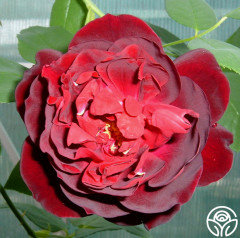
- 3 years ago
'Heirloom' has over the years had a large number of mislabeled/misidentified roses in their catalog. Remember the repeat blooming 'Ville de Bruxelles'??
I wouldn't be too sure that the rose they sell as 'Francis Dubreuil' is the same as the "Barcelona-Dubreuil" found elsewhere.
SeniorBalloon thanked User SeniorBalloon
Original Author3 years agoBelieve me, as I learn more about all of this, I am not sure of anything.
I did a bit of research on you Mr Barden, and was pleasantly surprised to find you are not what I expected. You have lived an interesting life.
Thanks for popping in here and adding to my education.
SBSeniorBalloon
Original Author3 years agolast modified: 3 years agoI have reached out to Kordes regarding Barcellona and another rose they appear to have the IP rights for named Buxom Beauty.
I have found no information on how to contact Francis Dubreuil. Helpmefind lists him as the original breeder, but he died in 1916, so someone else may have the IP rights.
Editing to add that the IP holder might be https://meilland.com/en/. I've reached out, we'll see what they say.- 2 years agolast modified: 2 years ago
@SeniorBalloon Have you heard anything from Meilland about Francis Dubreuil?
I did a little research into this rose around May this year. Among other information, I found that the person Francis Dubreuil is "the second generation of the Meilland family to breed and grow roses." (From Wikipedia) That the Francis Dubreuil rose that Peter Beales acquired from Sangerhausen was not the true Francis Dubreuil. (Help Me Find Francis Dubreuil Discussion id: 80-550 17 SEP 14 Comments by Billy Teabag) In addition to some information that the the Francis Dubreuil in commerce today is not Barcelona. (Heritage Roses In Australia Journal Sep 2020) Page 19. Vol 42, No. 3. By Hillary Merrifield: https://www.helpmefind.com/rose/l.php?l=66.1331&tab=3&qn=28&qc=27) The first I saw about this is from Margaret Furness 2019 Vol 41, but I have been unable to locate the full text from the Heritage Roses In Australia Journal.
I am very interested if the Meilland family have a surviving plant of the original and I know there are others also interested.
SeniorBalloon thanked Sharon z8b Texas - 2 years agolast modified: 2 years ago
As far as patents go: in practice, it only means the patent owner has the right to sue you.
"Once a patent has been issued, the patent owner may bring a lawsuit against anyone accused of infringing the patent." (Cornell Law School)
Someone who used to be a police officer explained to me that lawsuits are very interesting in that there are limits to how much a person or business can be sued for and that many times a patent lawsuit is used as a scare tactic and is not seen through to the end. Is it worth the legal fees for a company or hybridizer to come after you?
**I am in no way suggesting to infringe on someone's patent!** There is more to the lawsuit process, like preliminary and permanent injunctions, if someone does this for profit. Specifically, a lot of profit because lawyers are expensive and lawsuits take time, which means a lot of lawyer fees.
The time limit on plant patents is why some hybridizers and companies are trademarking the name and not the plant. A trademark is good for 10 years, but can potentially be renewed an unlimited number of times. My understanding is also that trademarks cost significantly less than a patent, but I have not done sufficient research on this.
SeniorBalloon thanked Sharon z8b Texas SeniorBalloon
Original Author2 years agoSharon, I did hear from Meiland.
"Unless we are wrong, there is no IP rights for FRANCIS DUBREUIL which was introduce in the market before the 1930’s (1897).For all question related to our IP in USA/Canada, please see directly with STAR ROSES & PLANTS : https://www.starrosesandplants.com/breeder/meilland/"
I have yet to reach out to Star Roses. That is my next step, but at this point I believe I am free to propagate Francis Dubreuil. Will update if I hear back from Star.- 2 years ago
Thank you! I went to the link you sent but didn't see Francis Dubreuil listed and most of what they do list is copyrighted or trademarked so I think they will also say you may clone this rose. If they give you any identifying information or hints to which/where the real one is, I would love to know.
Interesting that what they wrote about "Innovation through Trademarks, Patents" is lightly discussed in the article by Tony Avent. - 2 years ago
BTW, what you're propping as Francis Dubreiul is likely Barcelona. It is broadly mixed in the trade.
SeniorBalloon
Original Author2 years agoI hadn't even gone to the Star Roses website. I now recall the reason was I took Meiland's response to be their are no IP restrictions on Francis Debreiul, and that I should contact Star Roses if inquiring about other Meiland roses. I think I will still send them an email to double check.
As to whether my rose is really a Francis is nearly impossible to ferret out. Based on the description at helpmefind by Hillary Merrifield at the link Sharon posted above, where they compare Barcelona to the supposed Francis, which they refer to as Not Francis Debreuil (if you don't read the link this will make things even more confusing :o) ), mine matches the description for what they call the Not Francis Debreuil. Intensely fragrant smallish flowers, 2 to 2 1/2 inches.
Based on that I feel fairly safe saying mine is not Barcelona. What will I call it? I purchased from Heirloom roses and they called it Francis Debreuil, and I plan to do the same until I get more or better information it's not.- 2 years agolast modified: 2 years ago
Will be a fun time trying to figure out what he has. Because it might also not be Barcelona.
Heritage Roses In Australia Journal
Sep 2020) Page 19. Vol 42, No. 3.
By Hillary Merrifield
(Sep 2020) Page(s) 19. Vol 42, No. 3. Includes photo(s).
Hillary Merrifield. Francis Dubreuil and Barcelona.
For many years, a black-flushed crimson rose originating from the Europa-Rosarium, Sangerhausen has been sold around the world as the Tea Francis Dubreuil, (Dubreuil, 1894). Recently it has been equated in the United States with the Hybrid Tea Barcelona (Kordes, 1932). The discovery by Patricia Routley of a named plant of Barcelona in a country garden in South Western Australia has raised doubt about this assumption. The garden was established in 1959-60 by the mother of the present owner, David Martin. Mrs Martin drew up a numbered plan of her garden giving the position of all the roses she planted. Most are still in the positions given on the plan. No. 41, Barcelona, is one of these and was purchased at Dawsons nursery, Perth, about 1960. This gives it an excellent provenance. More information and photographs can be found on HelpMeFind under “David Martin’s No. 41”.
Barcelona was introduced into Australia by Hazlewood in 1934 not long after its release in Europe. It was a popular rose that was recommended by rose societies around the country through the 1930s, 40s and 50s. In Western Australia it remained on nursery lists until the early 1970s.
The original Francis Dubreuil was offered by nurseries in Australia up to the mid-1940s but no plants are known to have survived. The Sangerhausen rose that is presently being sold here as Francis Dubreuil was imported by the Rumseys in 1981.
In order to discover whether the Francis Dubreuil in commerce today is identical to Barcelona, Lynne Chapman, Billy West and I decided to grow this rose and Martin’s Barcelona side by in our gardens in different parts of Perth. For almost two years, their appearance and behaviour over the seasons and in different weather conditions have been studied and their botanical details recorded.
A table was drawn up to compare the observed botanical features of the two roses and, from the literature, those of the original Tea Francis Dubreuil and Kordes’ Barcelona. This comparison shows that the present Francis Dubreuil is not the original rose and is not a Tea nor the same as Barcelona, and because we do not know its identity, we have given it the study name of “Not Francis Dubreuil”. Martin’s Barcelona seems to be the same as the Kordes’ Barcelona.
When we started this experiment, we had two aims. One was to find out if “Not Francis Dubreuil” was the same as Barcelona, and we have found that it is not. The other was to see if Martin’s Barcelona was correctly named. We usually hesitate to identify a rose unless it matches early descriptions and plates in the literature, is the same as a reliably named specimen in an established garden and has a verifiable heritage. Martin’s Barcelona has met all these requirements and we feel confident that it is the original Kordes rose.The main differences between Barcelona and “Not Francis Dubreuil” (NFD)
Inflorescence: The flowers on Barcelona are held on long strong stems, NFD’s are shorter.
Flower life: Barcelona’s flowers last for a long time but those of NFD are short lived.
Bud: The bud on Barcelona shows a flat top as it opens and this is not seen in NFD.
Flower size: Barcelona has a bigger flower and can reach 12 cms in diameter and those of NFD are medium and 7-9 cms.
Flower shape: Flower shapes are not the same when fully open, Barcelona’s is a shallow cup, while that of NFD is a more rounded cup.
Petal numbers: Barcelona can have up to 100 petals and NFD’s are usually around 30-42.
Flower colour: Both are dark red roses with black shading in varying degrees on the inside of the petals but this is much more obvious in NFD. The colour of Barcelona is very variable, ranging from dark to vivid crimson with a hint of blue through to lighter red and occasionally a pinkish colour. It can age to a quite attractive purple (which was noted early on in Australia by Hazlewood). NFD’s colour is stable and does not blue.
Receptacle: Barcelona has a large flared or rounded cup and NFD ‘s is a small slender cup which looks smooth but has bands of stalked glands at top and base.
Stamens: Barcelona’s filaments are creamy yellow and those of NFD are pink.
Fragrance: The sweet old-rose fragrance of Barcelona is moderate to strong and has a hint of cloves. The fragrance of NFD is strong and damask-like.
Leaves: The new leaves of Barcelona can be a quite dark purple-red, whereas those of NFD are red brown.
Bush: Barcelona has thick strong canes like a Hybrid Tea and its growth habit is upright and angular, while NFD is lower-growing, bushier, with quite dense foliage.
Disease susceptibility: Barcelona is very prone to mildew. NFD can mildew occasionally under certain weather conditions.https://www.helpmefind.com/rose/l.php?l=66.1331&tab=3&qn=28&qc=27
 SeniorBalloon thanked Sharon z8b Texas
 - 2 years agolast modified: 2 years ago
I think for SeniorBalloon, all he needs to know is whether Barcelona is out of patent, in case that is the one he has. Since the "Not Francis Dubreuil" is not in patent. I am fairly certain Barcelona is also no longer under patent since not only was it released 1932 (well over 20 years ago) there is no copyright or trademark symbol next to the name. I searched https://www.kordes.us/ for Barcelona and no results came up.
SeniorBalloon thanked Sharon z8b Texas SeniorBalloon
Original Author2 years agoI just read the Tony Avent article on trademarks. What a mess. I read it as I am also researching a Knockout rose we have had for over 15 years. It is one of the original knockouts that was covered by the patent issued in 2001, which has now expired. And as I was reading I see Knockout TM all over the place and realized that's the trademarked name, not the cultivar. That lead me to Tony's article that Sharon posted. Thanks for that.
He lays out how Trademarks work and how they are misused. It's a good read. It's misused by breeders giving their new plants nonsense names and then selling them under the trademarked name. For instance the Knockout rose is actually Rosa Radrazz. This is now Monrovia uses it,
"Knock Out® Shrub Rose, Rosa x 'Radrazz', Monrovia Plant."
Everyone knows it as Knockout and if you sell it under it's scientific name no one will recognize it. Though Tony also notes that if a trademark becomes associated in the public's mind as the actual name of the plant the trademark is invalidated. A trademark is where it's from, not what it is.
I have some cuttings I've grown from these roses and if I marketed them as Knockouts, Star Roses, who handles the IP for the knockout roses, could come knocking.
All very interesting, confusing and messy to the uninitiated.- 2 years agolast modified: 2 years ago
This may be of some interest (includes Knock Out and Star):
MarkWatch Plants
Comprised of five industry partners — Bailey Nurseries, J. Frank Schmidt & Son, Spring Meadow Nursery, Plant Development Services, and Star Roses & Plants — MarkWatch™ was created to educate and inform the proper use of trademarks and plant patents in the listing of plants in catalogs, at retail and online. Additionally, MarkWatch™ monitors the use of trademarks and plant patent information for the group’s plant brands.
https://markwatchplants.com/info-resources/proper-use-trademarks-patents
I would read that with a large grain of salt. I am sure how they word things is carefully chosen for their purpose.
I also question who made this website. Many links are not clickable (specifically ones to the US Patent and Trademarks Office). Is that due to an incompetent web developer or to discourage people for going to the source directly?
I don't propagate plants for sale, but if I did, I would stay away from plants that would possibly be trademarked by a company that invests money into the protection and oversight over their products. My guess is that these are the companies that would put effort to look for violations and pursue legal action. But this is just a guess. You are clearly doing your due diligence and research, so this comment is for others who may stumble on this discussion. With anything and everything legal: always cross your T's, dot your i's, and pay close attention to where punctuation marks are. The placement of a comma on a legal document really does make a difference.
SeniorBalloon thanked Sharon z8b Texas SeniorBalloon
Original Author2 years agoIt mirrors much of what Tony says about how they are used.
I note that if they are patented they must include the patent number. Here are two examples of Knockouts. One patented, as it clearly has the patent number and the other not, as it does not include the number
Not patented:https://www.knockoutroses.com/the-knock-out-rose
Patented:https://www.knockoutroses.com/the-double-knock-out-rose
And you can see the use of odd, nonsense name and both marketed as knockouts (tm).







SeniorBalloonOriginal Author