Software
Houzz Logo Print
gary_cotterill

Rejuvenating container plants

3 years ago
last modified: 3 years ago

I live in Riverside CA -- 60 miles east of Los Angeles -- where the summer temps exceed 100F degrees and the winter temps may drop to 20F degrees.


About 8 years ago, I drastically pruned all of the various potted plants on my patio, washed off all of the soil from their roots, pruned the roots and re-potted the shrubs in a modified "Al's Gritty Mix" [equal portions of 1/8"-1/4" redwood bark, Turface MVP and grit (#5)].


Except for applying all-purpose granular fertilizer several years ago, I have done nothing to the gritty mix.


Now, the shrubs look like they need some plant nutrients.


What do you recommend?

Comments (7)

  • 3 years ago

    So for the past 8 years, these containers have not been repotted or root pruned? And no regular, routine fertilization over that period either?

    The lack of any significant nutrients in the potting mix makes it incumbent on the grower to provide these. Or the plants will suffer. And with the frequent watering required of containerized plantings - sometimes daily in hot weather - what nutrients are supplied by the grower are rapidly leached away and need to be regularly replaced.

    I have a large collection of trees and shrubs grown permanently in containers. They get root pruned and repotted every 3-5 years. They get a dose of a CRF (Osmocote Plus) at planting or replanting and again at the start of every growing season. And I supplement periodically with a liquid formulation when tending my more seasonal container plantings. If I were to forgo the CRF, I would fertilize weekly with the liquid........something like Dyna Gro or even Miracle Gro.

  • 3 years ago

    I agree with gardengal... they need regular fertilization. I have many things in pots and fertize about once a month - except in the late fall and winter - with a liquid fertilizer because I don't want new growth in the cold.

  • 3 years ago

    After 8 years, your plants are likely suffering as much from root congestion as from lack of nutrition. Fertilize REGULARLY every 1-2 weeks while the plant is actively growing, using a high quality fertilizer like Foliage-Pro 9-3-6, and try to set aside time for another repotting session early next spring. You can make things easier by using Osmocote Plus, but there is a drawback. If it gets hot enough in the summer that you'd want to be pulling back on the amount of fertilizer applied, and since controlled release fertilizers are primarily controlled by temperature, the fertilizer prills will be releasing nutrients at the highest rates. That's why I use SOME CRFs but I don't rely on them, ever, to entirely satisfy plant's nutritional needs.


    Root congestion will eventually rob 100% of your plant's potential for growth and vitality, not to mention the plant's ability to defend itself against insects and diseases is the first casualty of root congestion.


    Al

  • 3 years ago

    Fertilize REGULARLY every 1-2 weeks while the plant is actively growing, using a high quality fertilizer like Foliage-Pro 9-3-6, and try to set aside time for another repotting session early next spring. You can make things easier by using Osmocote Plus, but there is a drawback. If it gets hot enough in the summer that you'd want to be pulling back on the amount of fertilizer applied, and since controlled release fertilizers are primarily controlled by temperature, the fertilizer prills will be releasing nutrients at the highest rates. That's why I use SOME CRFs but I don't rely on them, ever, to entirely satisfy plant's nutritional needs.


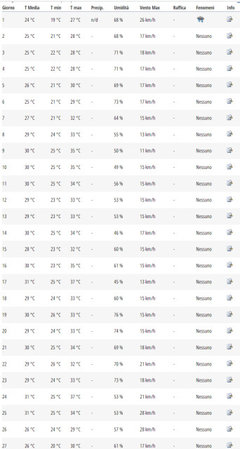
    I'm confused about this topic (I also wrote about it here 7 days ago: https://www.houzz.com/discussions/1389454/fertilizering-containerized-plants-iv#28622132). As you know, I use a liquid fertilizer. As you can see in the other discussion here the summer temperatures are always above 30 degrees Celsius. As I fear fertilizing in these temperatures is wise, I haven't fertilized since June 4th and have watered my benjamins 6 more times since that date. But I see that the ficuses are in full growth and therefore I guess they need the fertilizer.

  • 3 years ago

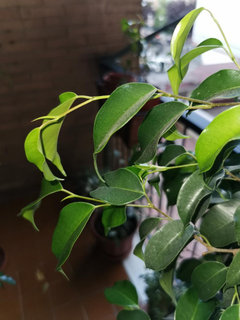
    If I understand correctly, benjamin ficuses would tolerate high temperatures better because they are tropical (or subtropical?) trees. My question arose from the fact that most people recommend not watering when temperatures are high, but here in Southern Italy in June, July and August the average temperatures reached are no lower than 90° F (you can see the temperatures of this month). Ficuses grow actively even at these temperatures (please see the photo: many new leaves are sprouting and therefore I assume that the plant can be said to be actively growing, right?).


    PS: I was convinced that the release of CRFs was primarily controlled by watering rather than temperature. At this point I wonder what happens in the bags of soil containing CRFs.

  • 3 years ago
    last modified: 3 years ago

    Ficus grow actively even at these temperatures (please see the photo: many new leaves are sprouting and therefore I assume that the plant can be said to be actively growing, right?). Right

    At this point I wonder what happens in the bags of soil containing CRFs. If the soil is dry, the prills will remain intact. If the soil is moist, and remains moist, the fertilizer will eventually dissolve and move into the grow medium. That's why CRFs should never be added to moist media you intend to store for long periods - more than a month or two.

    Controlled-release materials

    The second major group of materials is the coated or CRFs. The term “coated fertilizers” is also used for products with a soluble-fertilizer core covered with a water-insoluble coating. The coating limits or controls the rate of water penetration to the soluble fertilizer core, and, in some products, controls the release rate of the solubilized fertilizer from within the granule to the soil. The three categories of coated fertilizers are based on the coating material and include sulfur, polymer, and both sulfur and polymer coatings. These products are now the fastest growing sector of the S/CRF market (Simonne and Hutchinson, 2005).

    Sulfur was chosen as a coating material for sulfur-coated urea (SCU) because of its low water solubility, relative low cost, and its value as a secondary nutrient. The mechanism of N release for SCU is by water penetration through micropores and imperfections in the coating. This is followed by a rapid release of dissolved urea from the core of the particle. When wax sealants are used, a dual-release mechanism is created. Microbes in the soil must attack the sealant to reveal the imperfections in the sulfur coating. Because microbial populations vary with temperature, the release properties of the wax-sealed SCU are also temperature dependent (Sartain et al., 2004). The release rate of SCU is directly affected by the coating thickness. Particles with thicker sulfur coatings have fewer imperfections compared with lighter sulfur-coated materials.

    Polymer-coated fertilizers represent the most technically advanced state of the art in terms of controlling product longevity and increasing nutrient use efficiency. Because most polymer-coated products release by diffusion through a semi-impermeable membrane, the rate of release can be altered by composition of the coating and coating thickness. Coated substrates can consist of urea alone or a complete fertilizer containing N, phosphorus, and potassium. Water vapor penetrates the resin coating and dissolves the water-soluble fertilizer core. The dissolved nutrients then diffuse through the coating into the soil. The release patterns are much more linear than SCU technology. Soil temperature influences the rate of diffusion, therefore having the greatest influence on fertilizer release rate. Release periods of these materials vary greatly depending on coating material and thickness, and ranges from 3 to 16 months.

    Link: https://journals.ashs.org/horttech/view/journals/horttech/19/1/article-p10.xml

    Al