Software
Houzz Logo Print
david_wilson75

Trying to identify lawn type and weed type

3 years ago
last modified: 3 years ago
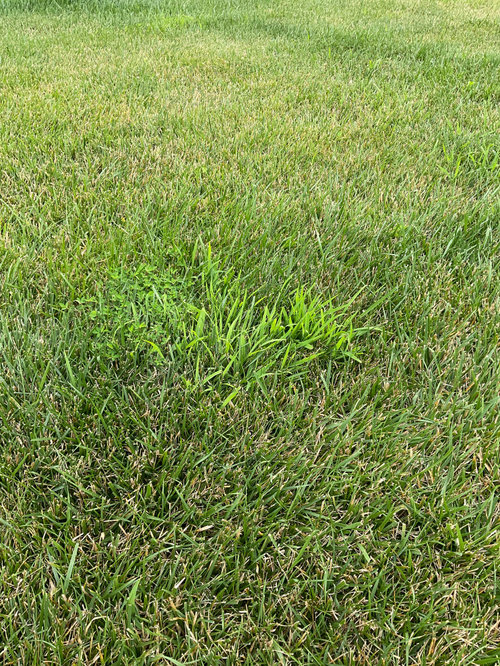
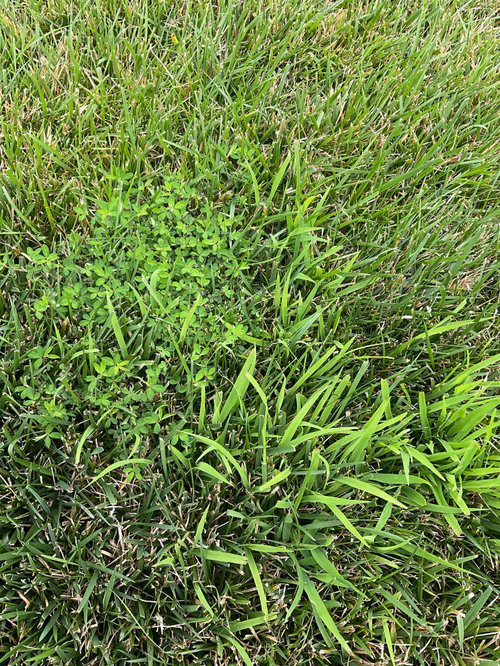
I have 2 questions. First, is my lawn mainly fescue, or is that some other grass? (Yes, I’m a complete amateur at lawn maintenance) Second, what are these two weeds? The one on the right I only noticed after adding a weed and feed this summer? I live in west central illinois (plant hardiness zone is 6a).


Comments (4)

  • 3 years ago

    It really helps to know where you live, because certain grasses and weeds cannot live/thrive in certain climates.

  • 3 years ago

    I updated my posting. Thanks!

  • 3 years ago
    last modified: 3 years ago
    Rather than identify the weeds, I'll give you what you need to know for Central Illinois lawn care. As a beginner you are already making some mistakes, so here goes. Get comfortable.

    Watering: This is the single most important part of lawn care. Deep and infrequent is the mantra for watering. Ideally Mother Nature takes care of this for us, but She's not that reliable if you like having green all summer long. Deep mean 1 inch of water, all at one time, and not spread out 1/7th inch every day for a week. Deep watering gets the water down into the root zone and infrequent forces the roots to grow downward to where the water is. How do you know you have 1 inch of water? Set out several tuna or cat food cans and turn on the sprinkler. Time how long it takes to fill all the cans. As long as you don't change sprinklers, that is your watering time every time you water from now on. As for watering frequency, it depends on many factors including daily high temperature, cloud cover, rain, humidity, shade, wind, soil type, grass type, mowing height, grass type, and probably some I'm missing. It turns out that the daily high temperature is the most important factor after rainfall. Generally, and you can adjust this after you get started, you should deep water once every 4 weeks when temps are below 70 degrees. Between 70 and 80 deep water once every 3 weeks. Between 80 and 90 deep water once every 2 weeks. Between 90 and 100 deep water once per week. If, in Central Illinois, you happen to get several days above 100, then deep water every 5 days. At no time should you ever be watering every day or even every other day. Here is a picture from morpheuspa taken many years ago. He watered once per week and his neighbors all water daily. The pic was from July, so pretty comparable to now.


    These lawns are all Kentucky bluegrass. Morpheuspa uses only organic fertilizers, no insecticides. He does use chemical herbicides as spot treatments.

    Mowing: Mulch mow at your mower's highest setting for your grass(es) type(s). Tall grass will never look scalped, and it provides plenty of shade over top of the soil to keep it from drying out under direct sunlight. Generally once a week for your area and grasses is fine. Never mow on wet grass or waterlogged soil. Mulch mowing returns the clipped grass blades to the soil as an organic type of fertilizer. You will need less fertilizer if you mulch mow.

    Fertilizing: Never use a weed-n-feed type product. Why? I'll get to that later. In your area you should fertilize for the first time in late May (think Memorial Day). Grass coming out of the winter dormancy will have enough energy to make it through May. You will notice in May that it needs some food, so that's the time. Then take the summer off and don't fertilize again until early September (Labor Day). Then take the next few months off and fertilize again in late November as the holiday's start. There is a fine tuning of this date, so don't count on Thanksgiving as THE day. The time to apply late fall fertilizer is after the frost has stopped the grass from growing but before a freeze puts the roots into dormancy. The idea is to use a high nitrogen, fast release fertilizer that the still-active roots can take up prior to going dormant. But you don't want to stimulate late growth that will suffer from the impending freezing temperatures.

    Those are the three main factors of lawn care in order of importance. Now here are some tips.

    Herbicide: Spot spray weeds in mid April after they are fully formed and growing well in the spring. Healthy weeds die better than weak weeds. Rather than using a granular herbicide and wasting it over the entire area, spot spray with a product like Weed-b-Gon or Weed-b-Gon Chickweed, Clover, and Oxalis Killer.


    If you get some new weeds during the summer, wait to take care of those after you have fertilized in September. Never use weed-n-feed products because the timing is off for the combined product. Remember that the fertilizer goes on in late May? That is too late for an herbicide, and April is too early for a fertilizer. Always fertilize with a real fertilizer and always kill weeds with a real herbicide.

    Preemergent herbicide: Yes, to that. The preemergent herbicides generally work for many weeks (read the directions). That means you don't have to get very accurate as to application dates. In the north they generally apply at the first sign of the forsythia blooming. That means the established plants are beginning to awaken, and soil temps are getting up for weed germination. Apply preem immediately to cover you for many weeks. Apply again later in the spring to prevent late starting summer annual weeds.

    Overseeding: If you are absolutely certain that you have a pure fescue lawn, then you will likely have some thin or bare spots showing late in the summer (August). The best time to put down more fescue seed is right after the summer heat lifts and the nights cool off. The main reason for seeding in the fall is to give the new plants plenty of time to develop roots that can survive a hot summer. The reason for going as early as you can is to give you a chance to reseed again if you missed a spot. So start planning any over seeding in August. If you lived farther north you would start planning in late July. When you overseed you need to know what kind of grass you have so you can match it. If you cannot determine what the grass is, sometimes it is best to use a mix of tall fescue, Kentucky bluegrass, and rye. The triple mix is easy to find at every hardware store. Don't get tempted to overseed in the spring. Spring is when the summer annual weeds are germinating. If you can avoid daily water of the new seed in the spring, then you can minimize summer weeds.

    Insecticide: Never anticipate insects and apply insecticide just in case. This actually goes for herbicide, too. There are ways to identify which insects might be causing damage to the lawn, so you can target them with the correct insecticide. The reason you should not overuse -icides is that they can kill off the population of beneficial microbes living in your soil. You can restore those microbes, but it is much better if you don't kill them in the first place. The term, healthy soil, refers to the health of the biology living in the soil. There are literally trillions upon trillions of microbes, roughly 35,000 species, living in the soil. Cherish them.

    Core aeration: Despite what you might read and hear from your neighbors, I am not a fan. Virtually every lawn care company recommends core aeration at least once in the fall. Why? Because they have boat payments to make and the lawn mowing biz is dropping off for the winter. The core aeration machine punches holes in the soil to allow air in. Typically your provider will walk on the grass and tell you the soil is hard and "compacted." For the most part, homeowner lawns do not get compacted. Compaction comes from lots of activity over a soggy soil. The mechanical pounding on wet soil drives the air out of the soil causing the mineral particles to smush together. It is literally compacted because there is no air left. This happens naturally around a water pond where livestock come to drink. It also happens on football fields where either they practice after a rain event or the marching band practices after the rain. Service providers will tell you it happens to your lawn every time you mow it. This is why you don't mow right after it rains. If you irrigate deeply and infrequently, then do that after you mow.

    Instead of Core Aeration: Instead of pulling out a few hundred plugs of soil, what if you could open up a few trillion tiny air holes? This is the beauty of having a healthy population of microbes in your soil. More specifically in this case, beneficial fungi. There are species of fungi which grow miles and miles of strands called hyphae. If you've ever seen a bread bag a day or two after it went moldy, that bag full of green fluff is fungal hyphae. Well fed and well watered soil fungi will do the same thing in your soil. This is a good thing, because when the fungal hyphae are moist after rain or irrigation, they swell and push apart the soil minerals. When they dry out they shrink allowing air to reenter the soil. Thus, natural aeration. There is a way you can encourage the fungi to thrive and do this for you. You can spray hair shampoo on the lawn. And now you're thinking, 'this guy's a wack job.' I know because that's what I thought before I actually tried shampoo. Finally I figured it was going to cost me 50 cents to try it out so just see what happens. I did. That was in 2012. After the shampoo treatment my soil became almost too soft to walk on after it rained. One treatment lasted for years until we sold the house. Shampoo is a surfactant which will allow rain and your irrigation to penetrate deeper into the soil. The deeper moisture sets up the perfect environment for the fungi. It is cooler, and the moisture lasts longer which is perfect for the fungi to thrive. The application rate is 3 ounces (at least) per 1,000 square feet. Put 3 ounces for every 1,000 square feet you want to treat into a hose end sprayer. Carefully fill the bottle the rest of the way with water to avoid foaming it out. Then spray as evenly as you can over the yard until the bottle is empty. Give it three weeks to see the improvement. You can test this with a screwdriver before you spray and 3 weeks after. Push a screwdriver into the soil to see how hard it is (wet and dry) and how deep you can push.

    Dethatching: If you are watering deeply and infrequently, and fertilizing as explained above, you should not have a thatch problem. The thatchy lawns I've seen were fertilized with liquid fertilizer every month and watered daily.

    Fungicide: These are the worst things you can put on your lawn. You need a healthy population of beneficial fungi for your soil to be healthy. Still, sometimes Mother Nature will bless you with a little too much rain. The occasional mushroom does not mean you have a disease, but when you have large patches of ugly grass, or even a circle of mushrooms, then it is time to bite the bullet and apply a fungicide. Be sure to identify the fungus you have before spraying. Some fungi have no treatment, so you have to let them run their course. Some are harmless, but ugly as sin (I'm lookin' at YOU, dog barf fungus).

    Organic fertilizer: I switched to organic fertilizer in 2002 and never looked back. At the time I was applying more and more chemical fertilizers and getting poorer and poorer results. When I applied organic fertilizer, there was an explosion of growth. One of the neat things about organic fertilizer is that it does not interact or interfere with chemical fertilizers. You can use both at the full rate on the same day. In fact with organics you can use them any day, or every day of they year, rain or shine, without doing any harm to the grass. Here is a picture from mrmumbles taken in 2010. He tossed a handful of alfalfa pellets onto his zoysia lawn to challenge my claims that organic fertilizer really worked.


    You can see the improved color, density, and growth. He applied the alfalfa in mid May and took the picture in mid June. I posted this picture to couple of forums in Texas, and it went viral (before viral stuff happened). The next time I bought alfalfa pellets at my feed store, they asked me if it was for animals or for my lawn, because suddenly they had two different products available. So I use alfalfa pellets and ordinary corn meal from the feed store in 50-pound bags. But you live in Illinois, so you have other options. Check the prices of alfalfa pellets (rabbit chow sized, not horse cube sized), ordinary corn meal, corn GLUTEN meal, and soybean meal. The application rate for any of these is 15 to 20 pounds per 1,000 square feet. The meals are easier to apply than a pellet. Since these are animal feeds they are commodities and are priced differently as the seasons and crops go. If you look at a bag of commercially labeled organic fertilizer, you will see these ingredients. By buying at the feed store, you can shave about 6/7ths of the price off of the commercial organic fertilizers and get the same results. There are many other benefits I've seen using only organic fertilizers in the garden, but it's probably getting late for you plus that discussion is way off topic.

    Getting back to your weed question, the Weed-b-Gon in Sept will take care of the broadleaf weed on the left side of your pictures. Weed-b-Gon is selective and will not harm your grass. The grassy weed is a different problem. Grassy weeds in grass usually only submit to a general grass killer like Grass-b-Gon. It is easier to use RoundUp for such spots, because you can reseed sooner after RU. Spot spray the RU, give it a week but keep it watered. Check for any new weed growth after a week and respray if needed. Then reseed.

    Believe it or not there is a lot more to know about grass care, but this should get you started.

  • 3 years ago

    Wow, thanks for the detailed response. I’ll definitely implement these ideas. I’d still like to know what those weeds are and why they only showed up after a weed and feed application. Is it possible I got some contaminated stuff?