Software
Houzz Logo Print
soumil_yarlagadda

Mycorrhizae in potted maples

3 years ago
last modified: 3 years ago
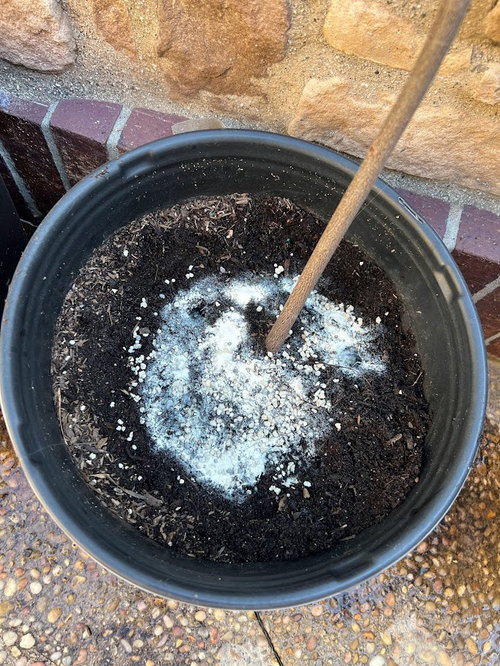
Hello everyone, I decided to try an experiment with arbuscular endomycorrhizae on my potted maples (Chalk Maple, Silver Maple, Sugar Maple, Trident Maple, Norway Maple). I exposed the rootballs of each, spread the powder, then covered them with soil again, watered heavily. In some of the maples i added fertilizer with the mycorrhizae, but I think they will counteract eachother. Im aiming for fast, uniform growth.

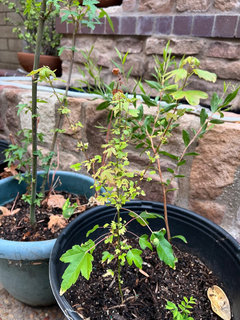
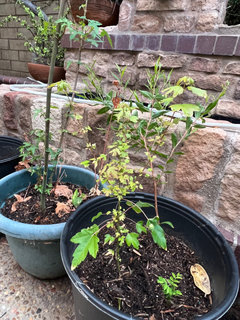
To show an example of what i did, i attached photos of the process with this Silver Maple, I used both mycorrhizae and fertilizer.
I live in coastal southern california, the summer temps are high (80-90F), the water i use is hard, full of minerals and maybe salts, will thee factors negatively affect the fungi?


Comments (17)

  • 3 years ago

    i wouldnt have bare rooted a tree.. and then fertilized it while repotting.. the burn shows rather evidently on the leaves... hard to tell if the burn is from the repotting.. or the fert.. was it leafed out.. when you did this..


    the tree is already too big for the pot.. how much bigger do you want to get it.. before you free it to mother earth???


    jesus.. i thought that was a striped snake in the last pic.. lol ...


    ken

  • 3 years ago
    last modified: 3 years ago
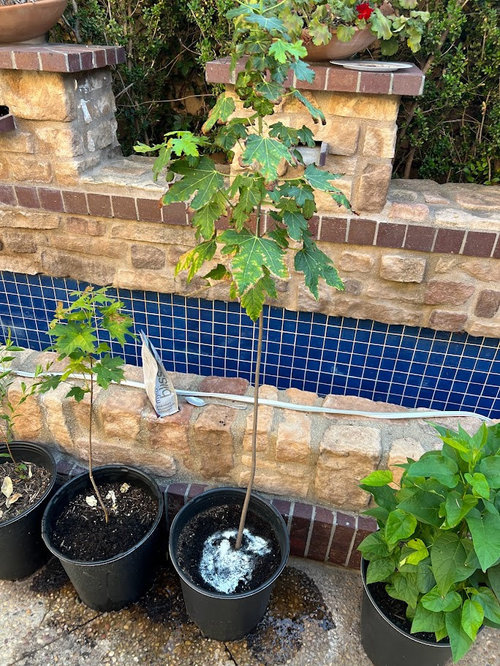
    I bought the tree 8 months ago last fall. It was half this height and its rootball was extremely small, likely it was a rooted cutting. I am actually planning on planting it in the ground this fall or next fall. I didint repot it since. just dug up the potting mix around the rootball and added the myco powder, then covered it all up again, watered heavily, so the tree should be fine. Only risk is I added fertilizer, which may burn the tree even more.

  • 3 years ago

    @tapla (mid-Michigan, USDA z5b-6a) whats a good fertiliser regimen for these plants? I currently have Dyna gro foliage pro (superthrive) 9-3-6, but i havent used it yet.

  • 3 years ago

    There's nothing wrong w/adding mycorrhizae fungi to trees, tho different families of trees typically need/use different fungi than other families (oak vs maple). Often an area will already have the proper fungi if there are nearby trees/woods (I simply dug some oak humus from nearby and added to my sourwood planting hole, and sure enough, mushrooms grew around it after a couple years). A contractor practice that scrapes the ground of topsoil to construct housing developments may very well NOT have those fungi anymore and adding it would help. However, as ken notes, fertilizer is different and rarely required -- in fact, prb'ly would hurt/burn very young trees.

    Soumil Yarlagadda thanked bengz6westmd
  • 3 years ago

    Well thought out answer! thanks

  • 3 years ago
    last modified: 3 years ago
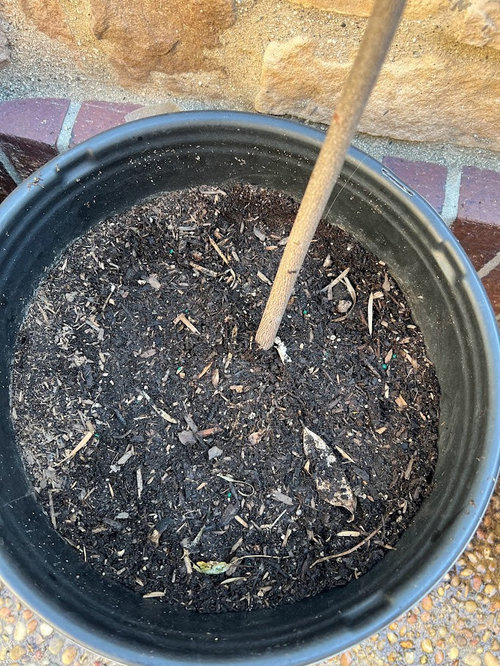
    @tapla (mid-Michigan, USDA z5b-6a) Whats a good potting mix/soil that you reccomend? Something with good aeration for gas exchange, and something that is optimal for plant growth.

  • 3 years ago

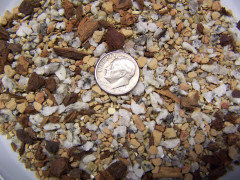
    I use/make what has been dubbed 'the gritty mix' for all my trees. It's very easy to grow in and very productive:


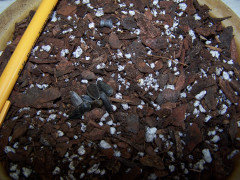
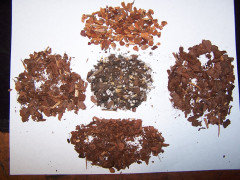
    When it comes to mixed plantings for decks/gardens, veggies, and short term plantings (1-2 years) I make the 5:1:1 mix:


    5:1:1 mix at center

    Both of these mixes make it much easier to maximize growth rates and maintain plants at a high level of vitality while significantly reduce the margin for human error when it comes to watering/fertilizing. Their superlative performance comes from the fact that all or most of the water these media hold is hold on the surface of soil particles, within the internal pores of porous materials, and at the interface where soil particles contact each other, leaving all or most of the spaces between soil particles filled with air. The gritty mix holds almost no water between soil particles while the 5:1:1 mix holds some water between soil particles, but far less than media based in fine materials like peat, coir, compost, composted forest products, sand, etc. Understanding what makes a good grow medium and understanding how to manipulate water retention is probably the largest step forward a container gardener can make. It's a game changer.


    I actually wrote something about what determines whether or not a grow medium can be (realistically) called 'good':

    Appropriate Medium

    From my perspective, an appropriate medium is a medium that allows us to water to beyond the point of saturation at will, so we're flushing the dissolved solids (salts) that are present in tapwater and fertilizer solutions. These dissolved solids are left behind and accumulate in soils whenever we're forced to water in sips, which is commonly employed as a strategy in order to avoid the sogginess that limits root function and wrecks root health. It's important to realize that a healthy plant is not possible w/o a healthy root system. If you have established goals that include healthy and attractive plants, it's critical that you have a plan to avoid the limitations imposed by over-watering and an accumulation of dissolved solids (salts) in the soil solution.

    Not every grower fully understands the dilemmic issues associated with inappropriate soils that force the plant to pay a vitality tax resultant of an unhealthy amount of water being retained for extended periods when we water correctly – which is to say, when we flush the soil to limit salt build-up. On one hand, we have the potential for over-watering, and when we act to avoid it by offering dribs and drabs of water here and there, we have high salt levels to deal with. It's easy to see how we all might benefit from use of a soil that allows us to water so we're flushing away excess salts without limiting our plant's vitality via waterlogged soils.


    Al


    Soumil Yarlagadda thanked tapla (mid-Michigan, USDA z5b-6a)
  • 3 years ago
    last modified: 3 years ago
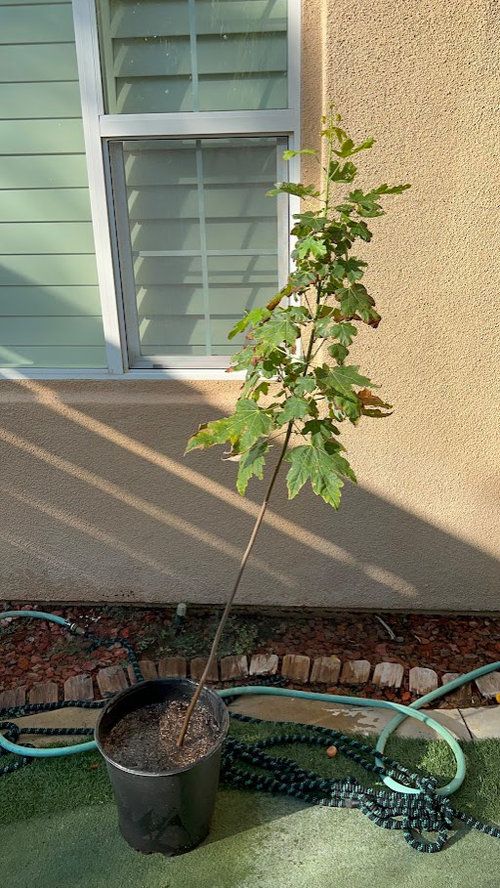
    Thanks Al. Also in periods of extreme heat and dry weather, would you cover the pots temporarily with mulch to prevent dehydration? Since the medium would be so well draining that drought stress would be a problem, sinc eim planmning on growing trees that are fairly water intensive. Another question, would it be ok to start seeds in the gritty mix, as the seedlings might stay in that pot for 5-6 years?

  • 3 years ago

    I have a lot of trees in small pots, so some of my plants get watered on average every 1, 2, 3, or 4 days in summer and every 3-6 days in winter, which means I'm obligated to make the watering rounds every day unless we get a good/hard rain, so I have no use for mulch. In fact, I'd rather a plant needs water every day than every 3 or 4 or more days. I think that the only time I would think about using mulch on a planting would be if I was unsure it could make it through a 24 hour span before the next watering. Regular watering forces waste gasses from the medium and pulls fresh air into the soil as the water moves down/through the medium.


    If you're going to start seeds in the gritty mix, I would cover the seeds with 1/4" of screened sphagnum peat or milled sphagnum moss and maybe a bit of sand or screenings from the Turface.


    If you have interest, I'll soon have hundreds of fresh seed heads from an Acer buergerianum (trident maple). Usually there are 10-20 seeds on each seed head. The seeds can be dewinged and planted individually, or you can cover the entire seed head and grow a clump. The tree (trident maple) itself is a fast-growing native of Japan and a tidy little tree very well-suited to container culture, hard pruning, and root pruning. If you have interest and live in the USA, just send a SASE and I'll send some seeds. I'll probably have some Acer ginnala (Amur maple) seeds as well. Plant in a flat or tub in fall and they'll germinate in spring.


    Al

  • 3 years ago

    Hi Al, thanks for the answer. I lost access to my other account. Yes i do live in the US (California)

  • 3 years ago

    My tap water is also very hard, full of minerals. Im planning in getting a water distiller and mixing part tap water part distilled water to water the plants. Bad idea?

  • 3 years ago

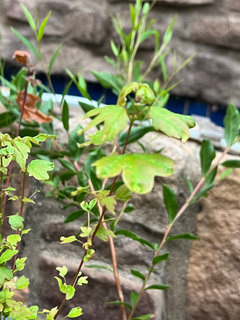
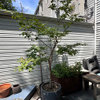
    Here i have photos of this trident maple. It seems to be suffering, since i was trying to apply gibberellic acid to speed up its growth but i think the concentration was too high so it ended up messing up its growth pattern.

  • 3 years ago

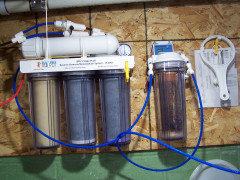
    You might consider getting a small R/O system like the one I have.

    This one can make up to 150 gallons of R/O water (with 0 ppm dissolved solids - like distilled water) per day: https://www.bulkreefsupply.com/5-stage-premium-plus-150-gpd-water-saver-ro-di-system-bulk-reef-supply-bundle.html and it's very inexpensive to operate and maintain. I use it for watering plants all winter and for all of our drinking/cooking water.

    Al

  • 3 years ago
    last modified: 3 years ago

    @tapla (mid-Michigan, USDA z5b-6a) so i just started using both foliage pro and pro tekt. I first mix 1 tbsp of pro tekt in the jug, then mix it for a minute, then add the foliage pro inthe solution. for some reason the whole mixture becomes cloudy.. my guess is that the potassium in the pro tekt is binding with the calcium in the foliage pro, and precipitating. also when i add very little pro tekt this doesnt happen.. are the plants affected by this?

  • 3 years ago

    Should i mix the pro tekt in Hot water?

  • 2 years ago

    Soumil -


    The pic in the 1st post. That sure is a whole -lotta myco.

    While there are instructions for soil drench, etc, it's my understanding this only works when in direct contact with the roots.


    I innoculate the roots of my pot plantings with myco as well.

    What I found easiest is at time of planting, when I am mildly removing some of the potting medium that came from the grower, with the exposed roots, I spritz the roots with a water spray bottle. With the roots wet, when you sprinkly the myco on the roots, the myco just sticks - very getting everywhere...


    Mainly as a -best effort- sort of thing since I'm planting in a sterile medium. While I've never done a comparison of the same plant (one with myco and one without), the many images of myco and the Mary-Ju-Wanna growers show there is a substantial difference in plants with vs without Myco Added.