

Variable Speed Inverter A/C
Will be replacing my 15 year old cental a/c. Received proposal for a Bosch, variable speed a/c using inverter technology. I am in hot, humid, Florida.
How is an inverter different from standard technology?
Would appreciate any feedback on this company and technology.
Comments (25)
 3 years agolast modified: 3 years ago
When a thermostat detects a rise in room temperature above the set point (say, 78 degrees), it turns on the AC which runs full blast until the room temperature falls. In then turns off. This cycle is repeated as the thermostat instructs the the AC to turn on, off, on, off... The temperature of the room goes up and down, say, by a degree or two as instructed by the thermostat.
An inverter system's compressor, under control of a sophisticated thermostat, adjusts its output to match the cooling needs of the room. Instead of running full blast all the time, it can slow down (and speed up) to allow the thermostat to keep the room temperature within a narrow band and help to reduce humidity (by running the AC longer).
I upgraded from a single-stage to a two-stage system (i.e., the compressor can run at two speeds) and the change has been wonderful. The best thing is when the unit is in stage one cooling, the blower also slows down, dramatically reducing the whoooosh of air audible through the registers.
Note that Carrier also sells inverter AC units. It also sells five-stage and two-stage units so if the fully-variable speed unit is too expensive, you can go with a less-sophisticated model. Carrier also sells other than its fully-variable speed models through its other corporate brands.* It pays to shop around. I got quoted dramatically different prices for the similar products.
-----
*compare the specs carefully. You'll see that Carrier is selling the same product through its multiple brand, changing only the appearance and model names.
Related Professionals
Jackson General Contractors · Houston General Contractors · Oneonta General Contractors · Santa Barbara General Contractors · Temecula General Contractors · Marietta Home Remodeling · Georgetown Bathroom Remodelers · Sedalia General Contractors · Roanoke General Contractors · Madison General Contractors · Bloomington Home Remodeling · Bemidji Home Remodeling · Selma Bathroom Remodelers · Rochester Bathroom Remodelers · Vancouver Bathroom Remodelers PRO3 years agolast modified: 3 years ago
"My opinion if you are looking for humidity control install a properly sized dehumidifier." That might be good advice for someone living in a climate zone with shoulder seasons when no air conditioning is required, but that's not likely to be the case for an OP in Florida. The IECC climate zone in Florida (with the exception of Miami and the Keys) is defined as "hot-humid." A properly-sized air conditioner should function as the primary dehumidification device in a HVAC system designed for a hot-humid climate. @wdccruise provided a good (and succinct) description of how it does that.
"The range at which you should keep humidity levels at your home. This is going to vary some as well. Some will tell you below 60% RH. Some will tell you below 50% RH and some may even tell you below 45%." There's a pretty wide range of what is considered comfortable indoor relative humidity. ASHRAE suggests summertime conditions of 60% relative humidity or less with no lower limit. Given the wide range of comfortable conditions, the suggestion to install additional equipment to provide more precise control of relative humidity is illogical.
Louise Smith thanked Charles Ross Homes- 3 years ago
One of the reasons for paying the premium cost for a variable speed AC is good humidity control. You should not have to buy a dehumidifier. I keep my house in the 40-50% humidity range at 77-78 degrees when the outdoor humidity is above 85%. I can do this without a dehumidifier.
The Bosch inverter is unique and relativley new to the market. I would be concerned about parts availabilty and servicing. If you are serious about the Bosch see if you can get a quote from a second HVAC dealer. You want a back up in case the HVAC contractor goes out of business.
Louise Smith thanked mike_home  PRO3 years agolast modified: 3 years ago
ASHRAE suggests summertime conditions of 60% relative humidity or less with no lower limit.
Alergens such as dust mites live and thrive in RH conditions above 50% RH. The possibility of mold is of greater concern as well.
It's common to add in a whole lot of garbage for controlling indoor air quality without treating the real source of the problem... so keeping humidity levels under 50% RH is another benefit to a healthy home environment.
Keeping RH under 50% as much as possible (some fluctuations will occur without a dehumidifier actively "controlling" your levels) other comfort problems tend to be greatly minimized. Things like hot spots etc. Less humidity in the air makes you more comfortable this doesn't mean no humidity at all.
If RH is too low your skin starts to crack, lips may get chapped in extreme cases or you shock yourself every time you touch something. (static electricity)
I'm at 39% RH this morning in my office with 43% as a high over the past 24 hours.
Is Bosch a fit for everyone? No. You're buying a feeling more or less. Due to how the Bosch operates is how it provides that "feeling". How do you describe a crisp cool feeling in text?
Obviously this feeling comes at a premium compared to standard on or off AC units and or / heat pump.
As I grow older I live for those Indian summer days when humidity vacates and that crisp cool air filters in... mmm it's just to die for. Why I selected the Bosch Inverter for my home is that I wanted that feeling or as close to it as possible for my home all year long. I don't regret the purchase so far. (Oct 2019 to now)
Parts for systems in this "Inverter" realm will be some trouble regardless of the brand you choose.
Inverters are the future... at some point they likely take over the whole HVAC market. Maybe as little as another 10-20 years or so. Manufacturers continue to be pressured to making more efficient equipment. One more step up in efficiency requirements may do it.
Louise Smith thanked Austin Air Companie- PRO3 years agolast modified: 3 years ago
"Alergens (sic) such as dust mites live and thrive in RH conditions above 50% RH. The possibility of mold is of greater concern as well." The American Society of Heating, Refrigeration and Air Conditioning Engineers (ASHRAE) includes some pretty smart folks. The general consensus is that maintaining indoor relative humidity below 60% precludes mold/mildew growth unless there are condensing surfaces which make moisture available. That's consistent with ASHRAE guidelines. While maintaining low indoor relative humidity is less favorable for dust mites, they can complete their life cycle in environments as low as 35% relative humidity. Control of relative humidity is certainly not a sufficient strategy for minimizing dust mites in a home.
"Keeping RH under 50% as much as possible (some fluctuations will occur without a dehumidifier actively "controlling" your levels) other comfort problems tend to be greatly minimized. Things like hot spots etc. Less humidity in the air makes you more comfortable this doesn't mean no humidity at all." While decreasing indoor relative humidity can indeed improve occupant comfort in summer, it doesn't mitigate hot/cold spots in a home. Those are the result of either building envelope issues (e.g., radiant heat gain, drafts) or air distribution issues (e.g., inadequate air flow or poor mixing.)
Louise Smith thanked Charles Ross Homes - 3 years ago
Above messages are all good stuff related to air conditioning functionality from the user point of view. At the risk of inducing terminal boredom, I'll comment on the OP's question about inverter difference.
Simple historical induction motors rotate by allowing the electrical field generated by the motor stator's coils to lead the induced field in the rotor (can be vice versa) so the rotor tries to catch up with the stator. In the USA we have 60 Hz alternating voltage and various schemes exist to establish the rotating field. Some motors operate synchronously with the field, some slower with load, and some just go wild (universal motors).
What about 3-phase motors. Their power already provide phase different voltages, so they can more easily operate near synchronism and can start without any capacitative aid. But they require one's residence have 3-phase power (not likely) or one builds a 3-phase source (e.g., from a 3-phase motor.)
But wait, there's more. Suppose one winds a motor for 6-phase power, includes hall effect sensors to know the stator to rotor phasing, generates power from the mains power for it via an inverter (think HiFi power amp with 6 outputs) , and then also controls the voltage and frequency of the inverter output. This requires a tad of electronics, but allows different motor speeds at different power loads. In use with air conditioning, this allows a refrigeration system to operate over a range of BTUh/tons of A/C as if it were many or variably sized.
Louise Smith thanked kaseki  3 years ago
A two, five or greater multi-stage AC system at the same SEER rating isn't going to save you any money on running costs (a BTU is a BTU not matter how you cool it) but these system are designed to give you greater comfort - no blasting full on then full off every five minutes. Multi stage system are very nice but cost more than a single state system. Personally, I wouldn't go greater that two stage (it'll be on low most of the time) but that's just me.
- PRO3 years ago
I spend all summer long going into homes that complain of hot spots. Of those cases 99% of them also have elevated humidity within the 55-60% RH range / sometimes higher.
Where as temperature is often times with in a few degrees of set point.
---------2 speeds (single compressor with 2 speeds) vs 2 stage (two compressors) vs Inverter with 5 speeds vs Inverter with 1% steps (60 speeds or more)
Note I have the Inverter at my home with over 60 speeds. Air conditioning is what I "do" for a living. I didn't choose what I have based on a name, I chose based on what it does and how it does it. It just happens to be the Bosch IDS 1.0 -- the 2.0 came out after I installed mine or I would have picked that one.
In my office this morning 77F 38% RH with a high of 45% over the last 24 hours. In the opposing zone it's 72F currently... more the feeling of a meat locker over there that is how I like to sleep... any thing that comes in physical contact with your body over there is cool and crisp to the touch.
About the best I can explain it in text. ah, ah, ah --- hooked on a feeling. (I'm in love with cooling)
The temp difference from the zone I am in now is 5F different with the door open to the zone that is 72. Slighty warmer but perfectly comfortable. I can tell you without question if RH was 55% or higher at 77F I'd be forced to turn this zone on.
To me it's not just about dust mites & mold... it's about comfort 100%. I know humidity is a large part of that equation --- not just temperature.
If everything you touch sticks to you? That's the kind of feeling often experienced in my neck of the woods in Katy, Texas.
It doesn't bother me if you choose something else. single speed, 2 speed, 2 stage or whatever. The main reason I get involved in these discussions is to highlight why I am in the camp I'm in / describe the feeling I get for it.
Essentially that is what you are paying for... a feeling. Choose lesser and you get less of a greater feeling. If you think temperature is the only thing to think about in terms of comfort go ahead I'm not likely to convince you -- especially those that live in mild climates.
The OP lives in Florida. I live in Katy, Texas both of these climates are far and away different from more mild climates... where even a 2 speed unit is probably over kill. (I didn't always live in Texas)
2 or 3 month cooling season vs 9 or 10 month cooling season so you understand what the difference really is like. I know what I like, so I'm explaining why that is in text form. I'm not a spokesperson for Bosch. - PRO3 years ago
"The temp difference from the zone I am in now is 5F different with the door open to the zone that is 72. Slighty warmer but perfectly comfortable. I can tell you without question if RH was 55% or higher at 77F I'd be forced to turn this zone on." By definition, some individuals will feel comfortable under conditions that will be uncomfortable to others. That's why HVAC systems are designed to perform over a range of conditions and why users get to select a setpoint temperature. Tables of perceived or "feels like" temperatures have been developed which show the effects or relative humidity on perceived temperature. Decreasing indoor relative humidity can make the temperature feel 3F to 4F lower than the measured dry bulb temperature. With regard to lower indoor relative humidity and hot/cold spots, I think you've confused causes and effects. Room-to-room temperature variations or temperature variation within a single room result from either building envelope issues (e.g., radiant heat gain, drafts) and/or air flow issues (e.g., inadequate air flow, poor mixing.) A variable-capacity system with a multi-stage compressor or an inverter-driven compressor can help with the latter by extending run times (even running continuously) under partial load. And when the system run time is longer, it has the potential to strip more moisture from the air. Decreasing the relative humidity may be a benefit of longer run times, but it's not the underlying cause for any decrease in temperature variation.
"2 or 3 month cooling season vs 9 or 10 month cooling season so you understand what the difference really is like. I know what I like, so I'm explaining why that is in text form." Don't confuse the duration of a cooling season with the design criteria for air conditioning systems. Houston, TX is a hot-humid climate zone as defined by the IECC (zone 2), and the air conditioning season may be longer than other climate zones, but the design conditions aren't all that different from neighboring climate zones to the north. The 2018 IRC specified design outdoor air temperatures for Houston, TX are 94F d.b./79 w.b. The design conditions for my area of coastal VA (zone 4) are 91F d.b./78F w.b. (Norfolk data) and the design conditions close to our friend @mike_home in NJ are 91F d.b./76F w.b. (assuming Newark, NJ) I know that psychrometrics isn't your thing, Ray, so I'll translate those data into design outdoor relative humidity: Houston 62.1%; Norfolk 65.9% and Newark 61.7% relative humidity. Our air conditioning season may only be 7 months here in coastal VA, but that affects system longevity, not the required cooling performance.
- 3 years ago
It is interesting you mention Newark NJ. Newark is about 40 miles northeast from where I live. Yet on a typical summer day it will be 2-3 degrees warmer. It is also warmer than NYC which is about 10 miles to the east. Winter temperatures are usually colder than where I live.
I agree the length of the heating and cooling season should not influence the design criteria. Places like Newark have hot summers and cold winters. You have to design for both. Can you imagine telling a customer to stop complaining about being too hot or too cold because the heating or cooling season is only 2 or 3 months?
- PRO3 years ago
"Can you imagine telling a customer to stop complaining about being too hot or too cold because the heating or cooling season is only 2 or 3 months?" Well said. Mixed climates are more challenging to design for than climates which are strictly heating or cooling climates.
- PRO3 years ago
And when the system run time is longer, it has the potential to strip more moisture from the air. Decreasing the relative humidity may be a benefit of longer run times, but it's not the underlying cause for any decrease in temperature variation.
So that leads to better comfort by stripping more moisture from the air? WOW.
The homes I go to, the home I live in aren't new homes most of the time Charles, I'm not going to rip a house down to the foundation because the master suite on the lower level has temp variance of 5-10F and even more when two people are in there with the door closed adding more steam and sauce to the comfort equation.
What is offered as a soution sometimes is more than just an Inverter AC. But the inverter AC is as much or more of the equation to providing a solution to a complaint. Due to cost it isn't always selected... if temp variance and the degree at which that is occuring is significant I may recommend a zone system for better temperature control. (it works it's 79F in my office this morning with zone next door at 72F -- the office zone is off at night)
Did I not say you are more or less buying a feeling?
These design choices cost real money. We'll find out really quick if the complaint is to the level of actually wanting to fix it or try a "practically free" gimmick that won't work 9 times out of 10 in a hotter climate that requires AC 9 to 10 months of the year. But I can't lose it's practically free. If you're in a climate that depends on comfort 9-10 months of the year you are losing time of enjoyment. Everything has a cost don't kid yourself. Time or money and sometimes both.
Can you imagine a business that is operated entirely from people who complain:It's too hot, It's too cold, my unit makes noise, my unit runs all the time, my unit is not cool enough, my electric bills are too high, my unit runs a short time and shuts off. My unit just runs and runs doesn't cool. The temperature at the thermostat doesn't fall quick enough. my contractor installed this and it doesn't work, my neighbor installed this and now it doesn't work, you talk condescending to me or my wife, I can't handle the truth so please lie to me, I am looking for someone who is honest and not ripping me off, I expect you to make nothing and I also expect to call your number when I need you to make no money again to fix my unit.
I could go on and on... 30 years. There is not likely any argument or complaint you could provide that I haven't heard or seen in person -- this tenant is a psycho the unit is cooling fine it's 72F in there in the morning. [ I check it a go behind to check some HW company and the split temp is like 12F] turns out the tenant isn't so psycho after all. But the HW company charges less... Let's complain!
The price is too much, this is too much, that is too much...
Yet here I am with 30 years knocking on the door in a little over a week more to go. (How to turn complaints into a living... gimmicks? no
Then to follow that up a builder often says: Hey HVAC is not rocket science. (Nope it's worse because of your complaints and no money to fix them.) ha, ha, ha, ha.
Darn that Austin Air Co, he's got an answer for everything. LOL.
PS: I am in the comfort business. complaints are tossed around like cheese on a pizza around here.
In my office this morning I started the day at 41% RH with a previous 24 hour high of 44% now with the door open I am down to 38% RH with the door open to the zone I run at 72F over night. Temp in my office is 79F --- completely comfortable to me.
Are you like me or?
I service the Katy, Texas area.Louise Smith thanked Austin Air Companie - PRO3 years ago
Decreasing relative humidity may increase comfort, Ray, but by itself, it doesn't remedy temperature variations-- which have different root causes. Inverter-driven and variable speed systems can provide better occupant comfort, but they are not the only options for reducing indoor relative humidity, and may not be the most economic, particularly on a retrofit basis and where the periods of high relative humidity are brief. We all know that's rarely the case in Katy, TX, but there's a wide, wide world out there.
- 3 years ago
How is an inverter different from standard technology?
I not sure if you received an good answer to your original question. It gets very confusing what exactly is an inverter HVAC system. Inverters are used to convert a DC voltage into a AC voltage. For HVAC equipment the term inverter really means variable speed operation. In the latest version of equipment there may be no inverter inside the equipment. What really matters is how the equpment works in terms of efficiency and comfort level.
Here is a video that does a decent job of explaining this:
- PRO3 years agolast modified: 3 years ago
Decreasing relative humidity may increase comfort, Ray, but by itself, it doesn't remedy temperature variations
If you are comfortable will you really care if the temp in one room is a few degrees off from the thermostat in the other room? the temp number in the room is argumentative when it comes to true comfort. (Humidity or the lack thereof rules the roost provided it's not too low, like less than 25-30% RH because then other problems become apparent.)
I know what I like and I choose what I choose for very important reasons. Daikin as mentioned in the video that mike_home posted is another version of inverter, with design issues -- namely it's communicating equipment that will force you to use proprietary controls. Great when they work, not so much when they start spitting out error codes. The errors could be equipment problem or something more sinister the communication network itself. (The difference from my explanation video on what inverters are and how different some incarnations are like some are limited to only 5 speeds... drop to 2 speeds if you use an off the shelf thermostat.) This is why there is trouble listening to certain folk on this board. They often times point you to things that may prove costly for a wide variety of reasons. mike_home is a home owner who lives in New Jersey. How long is New Jersey cooling season compared to Florida or Texas for that matter? (context for those reading content on this board)
Daikin problems recently posted to this board --- A big mess click to read it.
My experience since October 2019 with Inverter ACI say this every morning for several days in a row now will this example open your eyes -- probably not but it's not really for the builder or the home owner who thinks he's helping this situation ---just to high light it... like it / argue with it some more / play fiddle faddle / demonstrate moods of cooling envy --- I don't care it makes no difference to me if you agree with me or not.
it's 72F in a zone next door to my office it's 79F in my office -- temp difference is by "design" because I have a zone system I can turn off zones or turn on zones at any time I want. I shut the zone to my office off in the evening I only run this zone to around 76F around noon or so.
I like to sleep at 72F and because I have a zone system I can just cool that section of the house. The zone system is cooled via a Bosch IDS 1.0 inverter AC the nature of how the Bosch works reduces humidity in how it runs. But you have to run it to achieve that? yes.
The humidity in my office today is 38% RH with a high of 42% RH over the past 24 hours. At 79F in the morning with the door open. Currently dropping to 37% RH now while I type this.
If Humidity was 55% or greater it's likely I would have to turn the AC on in this zone at 79F? I know I would.
I have the control to run this system any way I want so there is nothing stopping me... but If I am comfortable why would I do that? Because there is a temp difference of 7F from my office to my bedroom zone?
This example that I have given you daily for several days now is to show you that the temp number is of little importance when humidity levels are reduced. If humidity is not reduced? forget about it.
I service the Katy, Texas area.
- PRO3 years agolast modified: 3 years ago
Ray,
No one is debating the indoor conditions in your home in Katy, TX nor are they debating those conditions were produced by a Bosch inverter system you installed in Katy, TX nor is the debate that decreasing indoor relative humidity in the summertime improves occupant comfort. What I called into question was your claim that "Keeping RH under 50% as much as possible (some fluctuations will occur without a dehumidifier actively "controlling" your levels) other comfort problems tend to be greatly minimized. Things like hot spots etc." Decreasing indoor relative humidity does nothing to remedy hot/cold spots. To suggest otherwise is, well, a lot of hot air.
"mike_home is a home owner who lives in New Jersey. How long is New Jersey cooling season compared to Florida or Texas for that matter? (context for those reading content on this board)" The design parameters for an air conditioning system in NJ aren't all that different from one in Katy, TX. The outdoor design data are provided above. The duration of a cooling season affects equipment longevity; it does nothing to alter the required cooling performance. Incidentally, Ray, the design outdoor relative humidity here in coastal VA is higher than it is in Katy, TX.
- PRO3 years agolast modified: 3 years ago
Sure Charles.
I must be at the nexus of the universe... 38% RH this morning with a previous high of 44% RH and temp of 77F in my office this morning. / 72F in the zone next to my office.
You're not debating my comfort? yeah but you obviously have a problem how comfortable I am. (cooling envy) if it's not that what is it? (not a professional mind reader)
So Charles are saying don't worry about RH levels in your home even if they are elevated 55% or higher... not for me but for the record of the board?
While 55% RH doesn't necessarily mean it won't pass an HVAC inspection. It is a good part of the reason you feel hot not just temperature alone.
We're not talking about what will pass an HVAC inspection here we are talking about what makes ONE air conditioner (inverter) and how it operates BETTER than an air conditioner that merely turns on and off with one speed or maybe 2 speeds.
The inverter costs more but is a GREATER machine for more than one reason. Are you going to lose sleep over higher humdiity in the home? That's a question for the home owner to decide. That's who is going to live in the home.
Some people making this decision is more about spending less money up front, then not be over excited how that machine may work under various temperature extremes. New Jersey or Norfolk, Virginia is as far as I know never in the national news for extreme heat. BUT where I live (approx 3 clicks west of the Gates of Hell) in Katy, Texas? often a place referred to as with a bunch of problems. LOL. Not so much.
But the builder would rather argue that an air conditioner is an air conditioner. If that's your view point you probably go out to hire installers that like to be paid in beer or suspicious white powder
yeah I leave little to the imagination.
We are all different and comfort means different things. I've explained in this thread what comfort means to me and why. I am fine if you disagree with me.
I am one guy living in a heavily populated high heat area I have more than I need more often than not. I only come here in the morning to entertain myself while I drink my morning coffee and dispell rhetoric of builders and home owners who *may not always* have your best interest at heart.
Saving you from yourself (and maybe a builder or home owner with too much time on their hands) isn't an easy job. Why I do it defies all explanations.
I just installed in a single speed Goodman condenser a few days ago for a long time customer. He said he really wanted the Bosch, but these folks are retired living on fixed income and couldn't swing that. I don't just sell the Bosch Inverter.
Having an elevated RH of 55% in the home is probably in the realm of normal for my area. My home where I live isn't normal. There's costs involved to do that. Designed that way. (not a gimmick). Gimmicks are practically free, then you complain when they don't work out. Deal of the century kind of nonsense. You choose. I just give you more info to consider rather than just passing things off as "completely acceptable" -- "just live with it" mentality.
How hot is hot, how cool is cool, how humid is humid?
Only you the home owner can decide how important your comfort is. I've given you plenty to think about in this thread. The builder just supplied me with the spring board to deliver more information to you to help you come to a comfort conclusion for yourself. (Yeah I'm not really talking to the builder or the home owner with too much time on their hands... comfort decisions are often unique from one home to another.)
I could cool a place like Norfolk, Va with one arm tied behind my back. The builder wouldn't like that I bet. ha, ha.
- PRO3 years ago
Control of relative humidity is important not just for occupant comfort, but for occupant health and the sustainability of the structure. Controlling relative humidity is not, however, a panacea for a poorly-designed or improperly balanced air conditioning system; it won't mitigate room-to-room temperature variations (to be clear, the variations will still be there after reducing relative humidity.)
Katy, TX isn't the only place on earth that gets hot and humid in the summer. We know a lot about high temperatures and high relative humidity here in coastal Virginia. Indeed, the IRC design relative humidity for Norfolk, VA is actually higher than it is in Katy, TX (yes, really.) As previously stated, ASHRAE advocates maintaining indoor relative humidity in the cooling season less than 60% (with no lower limit) for comfort. That's typically a stated minimum to support mold/mildew growth. I advocate a 50% maximum relative humidity to accommodate fluctuations and still prevent mold/mildew growth.
You don't need an inverter-driven or even a variable-speed air conditioner to maintain relative humidity below 60%. You just need a system designed with that in mind. I have a single-stage air conditioner on the first floor of my home and a two-stage heat pump on the 2nd floor where moist air likes to hang out. I also have a dehumidifier on each floor for control of relative humidity during shoulder seasons when air conditioning isn't called for.
Temperature variations within a home are also comfort issues, but, again, they're not remedied by reducing relative humidity. ACCA manual RS (Comfort, Air Quality and Efficiency by Design) gives a +/- 3F variation for comfort considerations and a maximum allowable +/- 6F variation during cooling season. Houzzers interested in the causes of room-to-room temperature variations may benefit from the following article https://medium.com/@KeenHome/7-causes-of-temperature-imbalances-in-the-home-f01e47a00f7c Spoiler alert: control of relative humidity is notably absent from the list of solutions in the article.
- 3 years ago
How long is New Jersey cooling season compared to Florida or Texas for that matter?
Hi Ray,
I have lost count, but I think this is fourth time you have asked this question. I am happy to answer it again. The cooling season for most of New Jersey is about 4 months. However this year the temperature in mid April hit 90 degrees for two consective days. This required turning on the AC to be comfortable. After that short stint the temperatures dropped and furncaces came back on for the rest of April. There were a lot of no cooling calls in my area in April.
I would also like to point out New Jersey has a 6 month heating season. Homeowners want to keep comfortable for 10 months of the year. If you own a heat pump in it has to operate for 10 months every year. I think the conditons in winter are more harsh on heat pumps compared to summer. However being a homeower I don't have data to support this idea.
Two weeks ago New Jersey experienced very high humidity. The dew point one day was 74 F degrees. Condensation was forming on the outside of my car's windshield it was so bad. Yet my Carrier Infinity 2-stage variable AC, was able to keep my house at 78 degrees and 40-45% humidity. The point is there are other options other than inverter type HVAC systems which can have produce good humidity control.
Louise Smith
Original Author3 years agoWOW! I am overwhelmed and enthralled by all the responses! I have decided to go with the Bosch variable speed system. I liked that it is a non-communicating system, and I can keep my present thermostat. I have my fingers crossed that my house humidity will be lower than with the old single stage system and that the new system will be reliable.
Thank you for all your helpful and detailed responses.
- 3 years ago
"I have decided to go with the Bosch variable speed system."
The Bosch IDS units are heat pumps so they provide cooling and heating. Didn't you just need an air conditioner such as a Carrier products? (Or perhaps there's not a significant difference in price between the Bosch IDS and another company's air conditioner and you can just use the Bosch for AC only).
Louise Smith
Original Author3 years agoI need heat also (infrequently, but others down here seem to need it more than I). All the proposals were for heat pumps.
- PRO3 years ago
Louise it's very hard to beat Bosch Inverter for what it does when comparing it against other inverter systems. All major manufacturers are twisted up in communicating systems and more costly because of it, even as low as two speed equipment it's all geared to communicating.
The little time you spend running it for heat won't matter that much. I have mine set up as a heat pump as well. Most in my area though are gas heat so really not a heat pump market like Florida is. Good luck, if the Bosch is installed well he's a stallion that loves to run.
Mike_home we've had a stretch down here of around 17 days straight of 100+ temps with 108+ heat index. So you complaining about 2 days doesn't come close. (nice try though). Kind of goes with my commentary of every morning in my office...
Today with 38% RH and 45% RH high over past 24 hours at 77F this morning. 72F in the zone next to my office. (It's nearly the same mark day in and day out)
Comfort? Everyone is different. What makes you comfortable? That is how you figure out what equipment to buy folks. Buy a machine because of what it does and how it does it. It's either that or you'll complain of performance.
In my neck of the woods: You don't get to upper 30's RH without something seriously aiding your HVAC system. I imagine Florida is quite similar to where I live in Katy, Texas.
This is a good thread about Bosch Inverters / other competitors to help you understand what comfort problem you may be over looking at your home. The commentary provided by me may trigger you. That's fine much of what I do and say these days triggers everyone. From arguments over money to this or that isn't fair -- this job isn't rocket science, but it might as well be --- trying to put certain climates in certain boxes to be compared against others is a game of hyperbole.
It's important that you know what you are buying. Not all systems in the realm of inverter are created equal. Plenty of buzz words to go around. This thread will stay here and go down in infamy -- it already has in a way because the OP replied back to say what she decided to do.
It's a win for Ray Austin? no. I have nothing to gain by suggesting how this brand vs this brand works and does various things. HVAC is what I do. These other perpetrators that come to this board do not do HVAC directly.
The only satisfaction I get is that someone better understands what they are buying. That's it.
Is it always perfect? no. This is HVAC and new equipment can and does break for a wide variety of reasons. Regardless of brand. I've said it before... if everything is installed well Bosch IDS 2.0 is one hell of a comfort machine. A stallion. Let him run.
In case you missed it: I service the Katy, Texas area. - PRO3 years ago
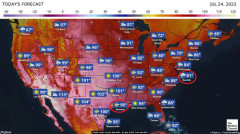
"Mike_home we've had a stretch down here of around 17 days straight of 100+ temps with 108+ heat index. So you complaining about 2 days doesn't come close. (nice try though)" I believe you've confused weather and climate again, Ray. Mike's comment was to provide context to the duration of a cooling season in NJ. Comparing the required heating or cooling performance in different climate zones would require more than comparing temperatures on one or two days. We've needed to run the a/c here in coastal Virginia at Christmas sometimes, but it's rare and it wouldn't alter winter design criteria. It's a departure from the norm like Mike's need for a/c in April in NJ. Since you complained about 100F temperature in Houston, I thought it would be good to compare your July weather to our weather. Weather Underground, www.weatherunderground.com provided the following data for July 2023 through July 23rd:
Houston, TX High temp = 100F; average temperature = 89F; max. dewpoint 80F
Norfolk, VA High temp = 96F; average temperature = 88F; max. dewpoint 81F
Those conditions aren't radically different; the required cooling performance of an HVAC system in homes of similar size and construction would be comparable in both locales. What would be different is the duration of the cooling seasons. But that affects the life expectancy of a system, not the required cooling performance.
Designing a well-functioning HVAC system in Katy, TX isn't magic and there's not just one way to do it.





Austin Air Companie