Software
Houzz Logo Print
bill_mn_z3b

Juglans Nigra good? Pinus Mugo instead.

2 years ago
last modified: last year

I have a spot in the front yard, where I lost a pagoda dogwood and was considering what to plant there for a replacement.

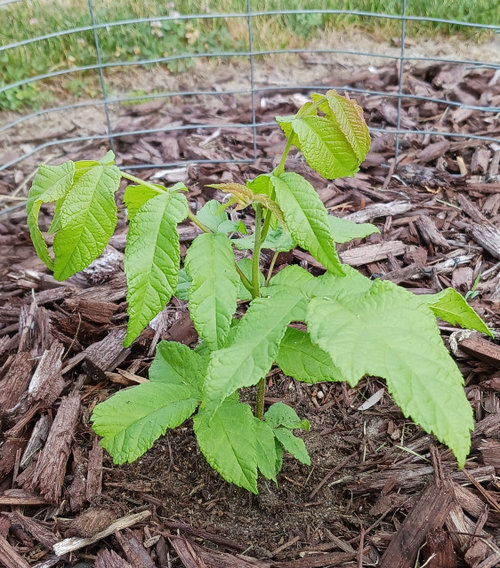
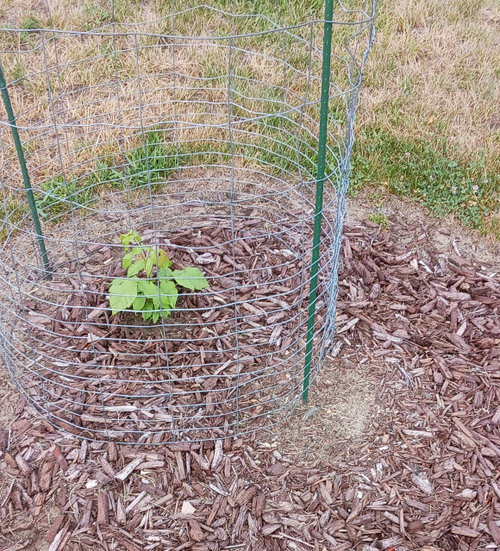
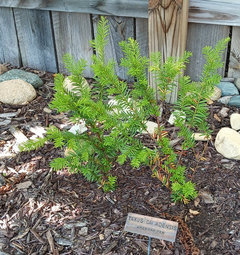
A week ago, I could see something growing in the existing mulch ring that was around the Cornus.

Turns out, it resembles a black walnut.

Any reasons not to let it grow and be the replacement tree?

It will be about 20 ft. away on east side of my Korean maple tree (hoping for some summer shade for the k. maple).

I know all about juglone and nuts on the ground. And there are many J. nigra growing around town, so I know it grows here. I'm concerned there may be unforeseen problems that aren't found in documentation and not generally spread by word of mouth. TIA.


Comments (46)

  • 2 years ago

    I would not be happy if black walnut replaced dogwood. I’d miss the flowers, hate the falling nuts, and some things will not grow under balck walnut. I’d look for a native flowering ( or beautiful foliage) smaller tree.

    BillMN-z4a thanked lisaam
  • 2 years ago

    From the Morton Arboretum "Black walnuts produce a chemical called juglone, which occurs naturally in all parts of the tree, especially in the buds, nut hulls, and roots. The leaves and stems contain smaller quantities of juglone, which is leached into the soil after they fall. The highest concentration of juglone occurs in the soil directly under the tree’s canopy, but highly sensitive plants may exhibit toxicity symptoms beyond the canopy drip line. Because decaying roots can release juglone, toxicity may occur for several years after a tree has been removed."


    BillMN-z4a thanked TBL from CT
  • 2 years ago
    last modified: 2 years ago

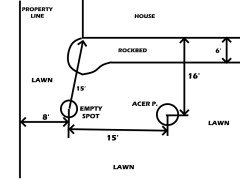
    Okay, I added a diagram showing some distances. I really don't care about mature heights or anything like that. I'd have to live here to be 100 for any of that to matter.

    The dogwood never got past seedling stage so don't worry about replacement factor.

    Again, juglone is a non-factor.

    Although I haven't ruled out the black walnut, I am open to something else, it would have to be a worthwhile tree, and blooms would be nice but not necessary. There are some existing immature trees further north, but I'm not worried about them either. I can remove one or two in the future depending on which ones I like the best.


    South ^

    North

  • 2 years ago

    Their beauty is really in their maturity starting around 20 years old. Before that they really look rather weedy. That spot is too close to the house and property line and guaratees removal at some point (and cursing the one who planted it). I have no alternative suggestions at this time.

    tj

    BillMN-z4a thanked tsugajunkie z5 SE WI ♱
  • 2 years ago

    We had three next to our house when I was growing up. They were beautiful (mature and goodness knows how tall-child's memory would put them at at least 50'. My dad was not a fan because as tsugajunkie said, they drop stuff all year round. They were close to the house. 15-20' or so. They gave great shade. We had a small-ish sour cherry tree close by and that was the source for the best pies. Dad did like the ripe walnuts.

    BillMN-z4a thanked cyn427 (z. 7, N. VA)
  • 2 years ago

    Well, there went my post.... poof. :-/


    I'll probably dig this one and gift it to my son for his acreage in the country.

    Might be a good spot for weeping white spruce or any kind of spruce really.

    No emergency so I'll look around and see what I can find.

    Thanks for all the brainstorming everyone!

    Appreciate all of you. ;-)


  • 2 years ago

    It doesn't look that much like a walnut to me. I have a butternut, which is big and beautiful. But the nuts are more of a nuisance than harvestable and the compound leaves get stuck in lead vacs.


    I get a lot of fruit, bucket-loads. It has to be removed, which is best done with a hammer. Wear old clothes as it splatters and you can make a good dye out of the fruit. Wear gloves unless you want peach to brown fingers for a few weeks. Then, after removing the fruit, the nuts need to dry. After drying, you need a hammer to crack them. Put them on a very hard stone surface. Anything else and you will just create a nut-shaped dent in the surface. After you whack them a few times, you can open the shell and extract whatever nanograms of nut you find.

    BillMN-z4a thanked Sigrid
  • 2 years ago

    This is about the 5th or 6th I've pulled from my mulch beds this season and a few more growing out of the ground.

    Every one of them had half a walnut shell attached to the roots. The squirrels must plant them all over here even though I never see any squirrels doing that.


    No, I've tinkered with trying to extract black walnuts in the past and agree, it's not worth the time and trouble. I've heard about them turning your fingers black. ;-)


    I'd be better to find something narrow and medium/tall and TBH, but I probably don't need shade for the Acer psuedoseiboldianum, by the time a newly planted tree would supply shade, the maple would be well established and able to stand full sun (or dead lol).


    I've considered getting something that's more of a shrub or small tree. No fruit. No Thuja. No Juniper. No one-week flowers. Mostly just hoping to find 'Something Different', ornamental is fine.


    Of course, in my zone, first choice would be something zoned z3 even though z4a would most likely work. I'm real close to the border between z3b and z4a.


    I am heading to a larger town Monday, so I'll have a chance to check some of the nurseries and garden centers to see what they have left.


    Thanks again.

    ;-)

  • 2 years ago
    last modified: 2 years ago

    I don't know. B walnuts are EVERYWHERE around my area, including coming up on my lot. They can make a fine tree, but regardless there are many other "fine" trees and I consider B walnuts a scourge on my lot (along w/black cherry).

    BillMN-z4a thanked bengz6westmd
  • 2 years ago
    last modified: 2 years ago

    So, I can conclude then, that only the squirrels like these trees. :-)

    There are some real beauties around town. To me they have sort of a 'Tropical' look when the branches get longer and sway in the wind.

    Oh well, I just gave this one away although I won't dig it out until Fall dormancy.

    And we'll see what tomorrow brings.

    If all else fails, I can always run out to my sons and get a woods dug white spruce. ;-)

    They are bullet proof at this location.

  • 2 years ago

    I had a walnut sprout about 30-35' SE of the house the year after we moved in. (Indianapolis) That was 1976. That tree must be about 60' tall now. I wouldn't want one any closer than that to the house! I don't mind the nuts. Summertime storms with high winds (50-60 MPH) when the nuts are at least half their full size can be a major problem with numerous medium and smaller broken branches. However, the tree doesn't seem to mind and is still a fantastic looking specimen after a few episodes with storm damage. The other negative is the leaflet stems that can quickly dull mower blades. Consequently, I rake those (and pick up walnuts) before mowing. Also, keep the walnut trees away from concrete driveways!!! The staining is a problem!


    For a smaller replacement tree, check out acer triflorum. I now have three. One is about 18 to 20' tall with single trunk. Great foliage and fall color, usually a rich pumpkin color. The two smaller ones may be about 10' tall now. One of those has had rich red fall color a couple of times; otherwise, both smaller ones have a deep pumpkin color. The are also single-trunk specimens. All three hold leaves through winter, but the older one has been less likely to do that in recent years. They seem to be tolerant of short periods (up to 3 hours) of flooding as well as periods of drought. Great trees!

    BillMN-z4a thanked restorephoto
  • 2 years ago

    Have you thought about trying a columnar oak or maple in that location? Wouldn't get that wide so as to hang over the neighbor's property that far and certainly wouldn't reach your house (if the specs of mature size on these trees are correct.) I know most of the cultivars are listed as zone 4 hardiness but I'm not so sure. Black walnuts and bitternut hickory are listed as hardy to only zone 4 by most websites yet I see them growing near Aitkin.


    Autumn Spire maple is zone 3. Would you take a chance on an Apollo maple or Crimson Spire oak? I'm guessing there are some others, too.


    I really like black walnut, but I agree with others. Not a good spot for how close to the line and house.

    BillMN-z4a thanked mntreegrower
  • 2 years ago
    last modified: 2 years ago

    7-31-2023:

    After a lot of back and forth on this, and I did consider acer triflorum, but another deciduous tree really didn't ring my bell.

    And I was thinking that some sort of conifer would fit the area best.

    Just not a huge, tall one.

    Another factor is, I do have some full-sized trees planted closer to the street. Far enough from the street, I hope, so the city workers don't have a happy day, chain saw competition on them.

    And If I plant too large a tree, I wouldn't mind taking out the red maple but that one is further away from the planting spot and wouldn't be affected by the new tree any time soon.

    The one most likely to be too close is the honey locust and I would hate to remove that one unnecessarily.

    So, with all this in mind, I was in St. Cloud today and after conducting business, I checked out the local Menards Garden center (there's a Woods nursery only a mile away that I looked into later).

    Menards was, as many of the BBS were doing, cleaning/straightening out their gardening departments for the season (As I found out the other day when I was at the Brainerd Menards, and they had no trees in stock at all to look at).

    But in St. Cloud, they did have a few Junipers, a Hemlock, a couple of Mugo pines and even a cloud pruned Thuja or two, all in that 2–3-gallon range.

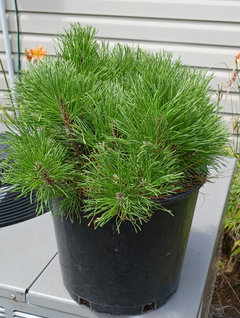
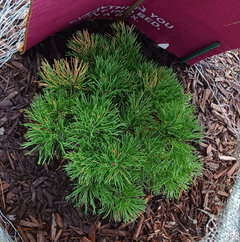
    What looked the best to me and what I've previously thought about getting is the Mugo pine.

    2.65-gallon pot, roots not Pot bound and generally nice and healthy in appearance (even a little Lamaas growth coming on some of the branch tips) and it was in my price range. ;-)


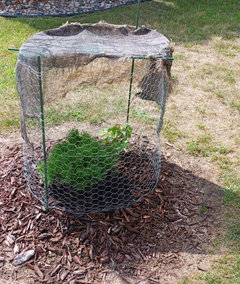
    They're predicting rain the next few days, so I think I'll head outside after the sun diminishes and put this guy in the ground. I shouldn't have to disturb the roots and if the clouds don't hold up for a few days, I'll put a little sunshade over it until the roots settle down.

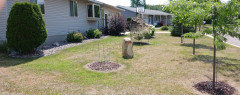
    Here's the planting spot (lower center).


    I did get over to Woods nursery after and it was very nice. They didn't have a lot of smaller conifers but did have regular Colorado spruce, blue spruce, white pine, Thuja, Junipers etc. some quite large and a lot more $$.

    I did pick up a few things there just because.

    Thanks again for all the help and suggestions.

    bill

    :-)

  • 2 years ago
    last modified: 2 years ago

    Got it in the ground!

    Needed some root surgery, more than I cared to do this time of year.

    eta: There was no Lamaas growth. Winter buds well developed.


    :-)

  • 2 years ago

    8-1-2023:

    The sun came out today, no rain last night. Highs low 90's, dry and windy. We had 8/10ths of an inch a week ago but it's getting pretty dry again.

    Sunshade:


  • 2 years ago

    Prb'ly right to shade it as you don't know if it was in full sun where you bought it.

    BillMN-z4a thanked bengz6westmd
  • 2 years ago

    Yup, and with the number of roots I cut, anything I can do to reduce shock and stress, should help.

    Once I removed it from the pot, I then realized it had circling roots and one big knot that must've been present when in a former smaller pot, then shoved into this 2.65g. pot. It wasn't pretty but we'll have to wait 'n see. It was a 'Menards' brand and didn't say who their supplier is on the tag.

    Another $25 experiment on my part. ha-ha,

  • 2 years ago
    last modified: 2 years ago

    If you maintain plants in pots, don't do it (plant a black walnut). squirrels will come from a distance to the tree and squirrels see pots only as a source of food or a easy burial ground for the nuts. They're messy trees. My neighbor has one on the back corner of our lot and I sure wish he'd take it down.

    For something "different", you might consider a Alaskan yellow cedar. It used to be Chamaecyparis nootkatensis, but it's been reclassified. It comes in several forms, a couple of which are very strict weepers ('Green Arrow' and 'Strict Weeping').


    Edited to say oops! I just noticed your USDA zone(s) - won't work as it's a z5 plant.


    Al

    BillMN-z4a thanked tapla (mid-Michigan, USDA z5b-6a)
  • 2 years ago
    last modified: 2 years ago

    Thanks Al!

    Some say zone 4 but the area I have to plant is off the NE corner of the house. So, when the howling winter winds come from the NW, the house channels the wind to that side. So, anything around that planting zone will take the brunt of it when high winds go to the South around the house corner. So, that may be a 'microclimate' a bit harsher than other spots around the yard.

    But if the Mugo pine fails, you never know what I might find to plant there.

    Thanks again! :-)

  • 2 years ago

    Check out the fernspray Chamaecyparis. They have a unique growth habit.


    Al

    BillMN-z4a thanked tapla (mid-Michigan, USDA z5b-6a)
  • 2 years ago

    If P. mugo fails, I think I'd move. C. obtusa (i.e. fernspray) is a non-starter. It is imply too cold for this one. I am at least a half zone warmer than Bill, and probably a full zone. C. obtusa is beautiful, but it is not for the upper midwest. Bill, have you experienced -40F or colder? Sorry, I digress.

    Do you have any gold conifers in the garden? If not, maybe try one of the numerous C. pisifera gold cultivars. Most are of the haystack variety, but they are hardy and stay relatively small. Menards usually has a handful of them. In my opinion, they are not as nice as obtusa, but northerners can't be choosers.

    BillMN-z4a thanked maackia
  • 2 years ago

    Hi maackia.

    I'd Move, ha-ha that's a good one. :-)

    But when I said if P. Mugo fails, I was referring to the root surgery I had to do before planting. Time will tell but I think I see a few browning needles already.


  • 2 years ago

    C obtusa 'Fernspray' and 'Filicoides' are both listed as hardy to z4.

    Al

    BillMN-z4a thanked tapla (mid-Michigan, USDA z5b-6a)
  • 2 years ago

    My back yard is getting to be quite sheltered. If I tried anything like that, it would be somewhere back there.

    Of course, the first few years of establishment and what kind of winters you have during that time is paramount to whether you get things off to a good start, where it might stand a chance.


    I'm from the school that if it's not a solid zone 3, you always have that chance that in 4-5 years, you'll get a zone 2.5 winter that will finish off the planting.


    But you never know, the longer it goes, the more secluded my back yard becomes, and it just might happen I'll be somewhere and see a smaller version of a plant that's close enough to my zone that I just have to try it. ;-)

  • 2 years ago

    Welcome to zonal envy.


    Al

    BillMN-z4a thanked tapla (mid-Michigan, USDA z5b-6a)
  • 2 years ago

    I'm over the idea of someday having a subtropical garden. If I had ended up in a warmer part of the country during my search for fortune, maybe, but for me, it's getting too late to start over again from scratch.


    Am I satisfied? Yes, I think I am. To me it's not so much what kind of plant, although I like woody plants the best, it's more the learning the things you need to, about each plant, so you have success growing them in your area.


    And over time I've learned, and I think there was a discussion about this subject earlier, it's better to have plants that thrive, rather than plants that just survive. :-)

    So, I'm good!

    Even in this dry year, I've heard comment from people saying how much my trees have grown since spring.


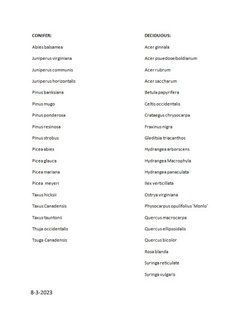
    For the fun of it, I've compiled a list of the plants that I planted since I moved here 10 or so years ago (the ones that thrived).

    A few are multiple specimens of 7 to 12 each (mostly the white spruce and red pines).

    I think I got them all. ;-)


  • 2 years ago

    How's the Canadian Yew doing?

    BillMN-z4a thanked maackia
  • 2 years ago

    Pretty good maackia.

    You just have to water them twice a week in my silty sand, with the 90's we've been having and no rain.

    Slow growers, maybe 2-3" a year. They like the less than 4 hrs. sun a day. They'd probably do fine in shade/dappled shade all day.

    They got a few brown needles when I was gone for 5 days a while back in June.

    I let the Ferns go completely, they don't last barely a day in the conditions we've had, most of this summer.

    8-3-23:


  • 2 years ago
    last modified: 2 years ago

    ".. it's better to have plants that thrive, rather than plants that just survive."

    Do you see them thriving someday? They definitely like it shady and cool. As your garden evolves, I would think this bodes well for the Yew. Isn't this why we garden?

  • 2 years ago
    last modified: 2 years ago

    When I think of plants thriving, I think more in terms or climactic conditions. Like is the season long enough or warm/cool enough for the plants liking. Being able to endure a winter without having to recover from damage or perform poorly during the following growing season. Things like that.

    My soil here is a limiting factor. It's known as 'The Sands around Wadena' to the real estate people and most Farmers have installed irrigation equipment for that reason.

    And this is why I focus on woody plants, trees in particular. Once established, they'll take those extended periods without rain with temps in the 90's, that are quite common here.

    I irrigate my yard and I do that because I don't want things to simply survive.

    I go by the old adage, 'When is the best time to water? When it needs it!' ha-ha!

    The Taxus c, planted a year ago last spring, from rooted cuttings, is growing in a course gravelly, droughty spot, yet being it has a woody root system, it did remarkably well (considering I supplied all its other needs) and didn't die during the 90's with no water for the 5 days when I was gone (Welcome to my yard). ;-)

    It may never be able to endure drought conditions but then we do have seasons that rain is not an issue, and the subsoil retains enough moisture for maintenance.

    So, moral to the story. In a few years, when everything I planted is established and rainfall returns to more acceptable conditions, I can sit back and enjoy my yard with minimal gardening work and not have to listen to the weather people saying rain is coming next week and it never comes. :^)

  • 2 years ago

    I had a back, side, and front garden plus about 300 sq ft of raised beds. The front garden had a LOT of herbaceous plants in it that needed dividing, dead-heading, pruning, cutting back in fall ..... . My bonsai trees were being neglected due to the work required by the other gardens/plantings, so I seeded over the back and side garden, removed most of the raised beds, and eliminated most of the herbaceous plantings in the front garden in favor of more bones (trees/shrubs). That freed up more time for potted trees until I decided to take up fishing again. Now, with fishing 3-4 days per week, I still don't have enough time for my trees, so I've been cutting back on the number of bonsai I care for. By spring, I want to have trees in pots cut back to less than 100 for as long as I'm able to remain healthy and have the ambition.

    Al

    BillMN-z4a thanked tapla (mid-Michigan, USDA z5b-6a)
  • 2 years ago

    I just pulled the Juglans nigra from that planting spot.

    It dawned on me that Mugos don't like juglone, and I didn't want to take any chances.

    I'll report back once I see how the Mugo does, adapting to its place in a week or two.

    I've kept it quite moist this first several days.

    Makes me wonder why they call it a 'Bog Pine' (common name).

    Does it like wet conditions?

  • 2 years ago
    last modified: 2 years ago

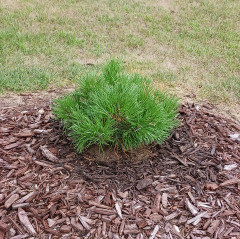
    8-9-2023: update.

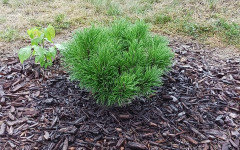
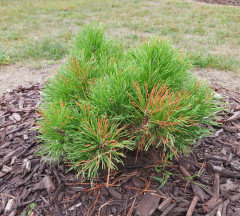
    I'm happy to report that the Mugo pine is settling in well, with what appears to be minimal damage up top.

    There are only a couple/three spots that had needles that browned. It could be that side had more daily AM sun (before I added cardboard) or it could be the fact that I overdid the (Hibachi) root cutting a little. ;-)

    Either way, the browning isn't progressing, it's not every needle on the branch, and some that have browned are only browned from the tip of the needle into about midway part of the needle.

    So, I'm optimistic about this one's survival and it being able to outgrow anything incurred trying to correct results of the bad practices that are the norm in the gardening industry today.

    Pinus Mugo:


    :-)

  • 2 years ago

    8-10-2023:


    I'm feeling lucky. ;-)

    I took the sunshade off the P. Mugo last night.

    Cloudy today, light rain as we speak and cloudy with TS forecast the next several days.

    If anything will grow well in this area on this soil, it's Pinus. Will still protect from wabbits. ;-)


  • 2 years ago

    9-14-2023:

    End of season update:

    The needles that browned haven't spread, maybe got darker.


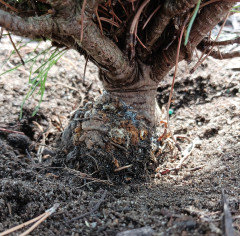
    There's still a knot of roots on one side I didn't dare to cut at the time purchased.

    I'm thinking of waiting until spring then cut some of this off?

    Maybe someone knows whether this should be done or not?

    I did snip the two small roots you can see wrapping around the base, just now.


    Otherwise, nice color:


    All the branch tips have set winter buds:


    Even on the branches with brown needles:


    :-)

  • 2 years ago

    9-21-2023:

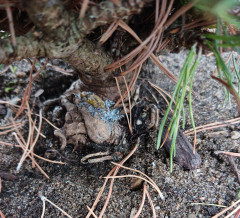
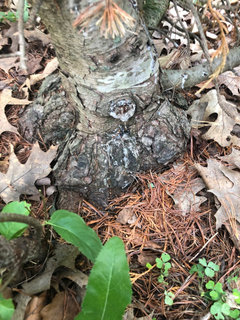
    Got around to dealing with the knotty root flare on the Mugo pine.

    It was more of a root burl, rather than a root flare.


    I did cut a few thick roots that were wrapped around and partially imbedded into the 'burl'.

    And there were a few thicker roots, that were growing slightly away from the burl but were circling also, removed. Then there was many, thread like roots wrapped tightly around the lower part of the burl that I removed.


    Not much to say. We'll have to wait and see if the cutting I did today make more browning on the needles. The plant appeared stable in the ground. I think the good roots all grow out from the bottom of the mass.

    Replaced the soil, mulched and soaked it down good.


    Pinus Mugo root flare (burl) area:


  • 2 years ago

    I refer to that as a graft bulge. Seen occationally on tours and in arboretums. My Pinus pumila ’Jeddeloh’ has one about 8” in diameter. Not sure exactly what causes it.

    tj

    BillMN-z4a thanked tsugajunkie z5 SE WI ♱
  • 2 years ago

    I never thought that it might be a graft there. Interesting.

    I think it's growing really well for being such a mess to start with.


    I've done all I can do with it for now.

    We'll see what it does next spring.


    Thanks again! ;-)

  • 2 years ago

    JFWIW:

    I called NFF nursery and they pretty much confirmed that all of their low growing shrub Mugo Pines are not grafted.

    But as long as it looks good and grows next season, I'll not be concerned.

    :-)

  • last year

    5-16-2024:

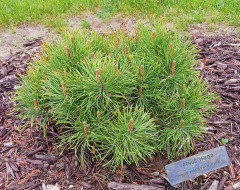
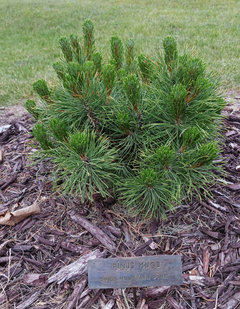
    The Swiss Mountain pine (Mugo) endured the near snowless winter and is making candles. Never mind the black copper name plate, I've been trying different concoctions for instant patina, and some were good, and some were not.

    ////

  • last year

    6-9-2024:

    Apparently, the swelled growth on the trunk didn't affect spring growth at all. Although the candles aren't what I'd call uniformly even. It could be once the needles spread out this will be less noticeable but some of the branches seem taller than others?


    This might be a dwarf variety because some P. mugo I noticed at the local nursery had candles 3-4 times this long already. So, no candle pruning on this one. But no matter how it grows, I'm liking this plant. ;-)


  • last year

    The green has darkened considerably -- more chlorophyll.

    BillMN-z4a thanked bengz6westmd
  • last year

    Our day length this time of year is 15 hr. 45 min. and this shrub gets every bit of it. :o)

    Thanks.

  • 10 months ago

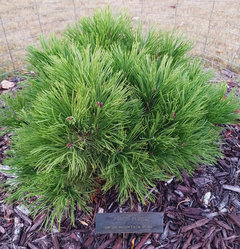
    1-16-2025:

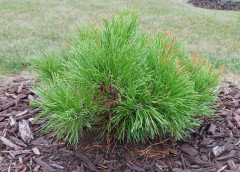
    Pinus mugo end of season. :o)

    Picture taken 10-23-2024:


  • 2 months ago
    last modified: 2 months ago

    9-8-2025:


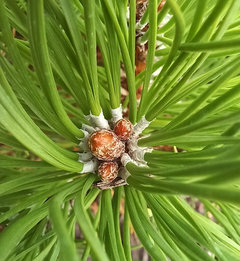
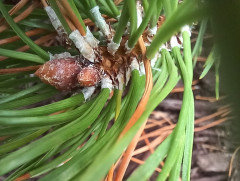
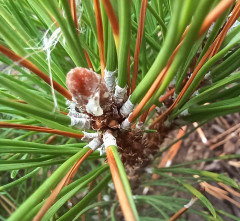
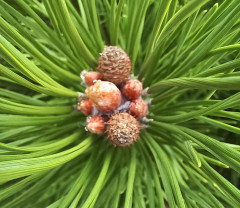
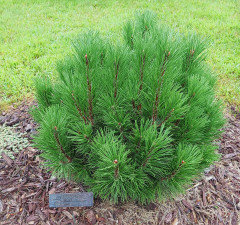
    First cones on this P. mugo.


    It's grown a foot this season which makes me believe this one may be a mature height of 20ft. as depicted on the label. (picture below from mid August)