Software
Houzz Logo Print
devin_leejohnson

What’s wrong with my Limelight Hydrangea?

3 years ago
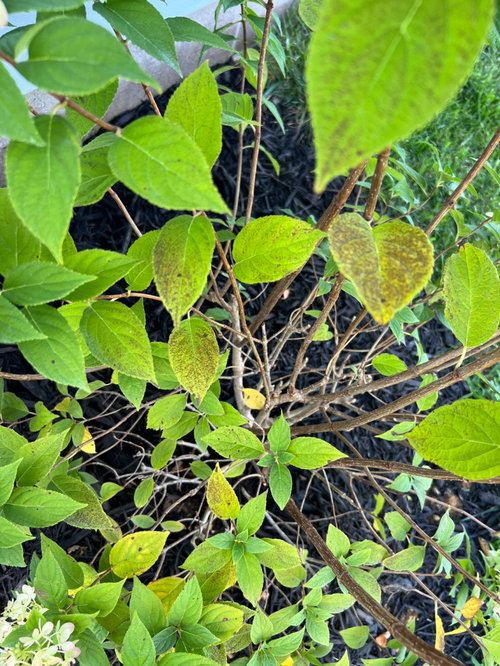
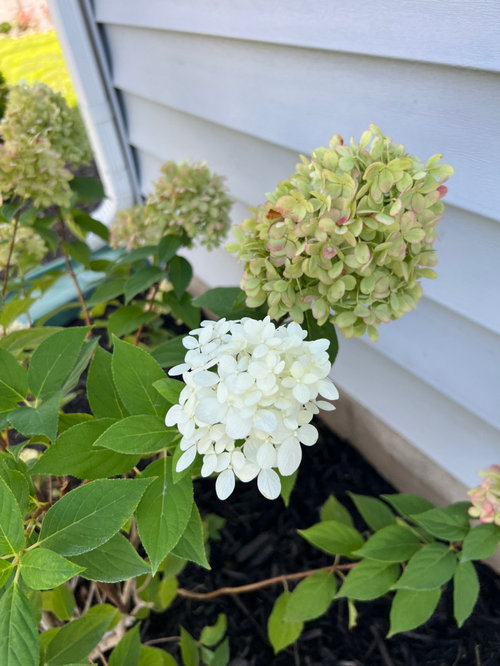
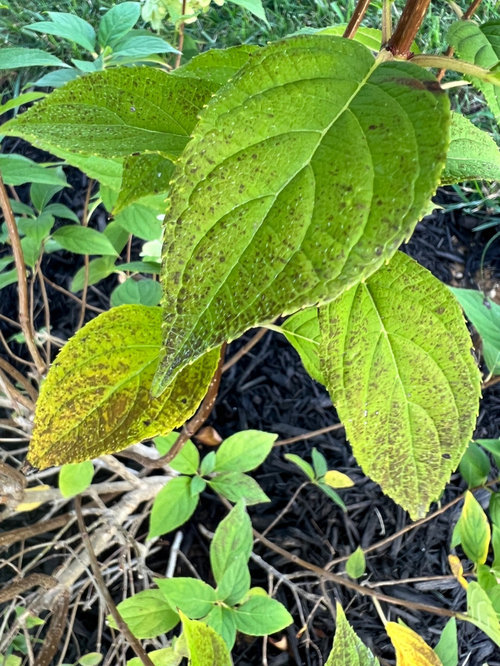
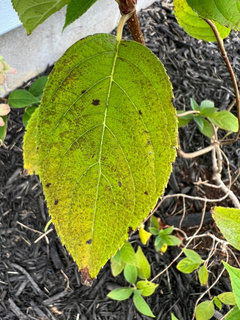
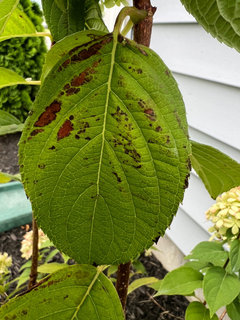
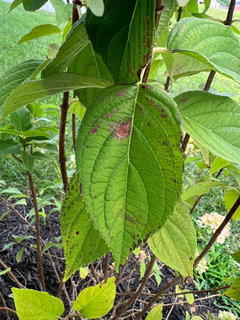
I went away for a week and came back to a struggling Limelight hydrangea. It was thriving and beautiful before I left. Now all the leaves are splotchy and some have large brown splotches.
All the flowers have faded (except one), though I realize that happens over time, but many of my neighbors still have bright white flowers while mine have faded to green already.
It rained several days while I was gone, so I know it got plenty of water.
Could this be botrytis blight? Or is it something else? I did use an insecticide 2 weeks ago because beetles had started to attack, but that is the only change there has been. I’m so sad she’s taken such a nasty turn.

Comments (17)

  • 3 years ago

    Also please share how much sun it is in and how much rain it actually received.

  • 3 years ago

    @gardengal48 @djacob
    Sorry, forgot to mention that!
    I’m in Zone 6 in Louisville, Ky.
    It’s on the East side of my home where it gets morning sun and afternoon shade.
    It rained 1.2” in the past week.

  • 3 years ago

    when did you spray... did you spray in sun in the heat of the day...


    what did you spray..


    how did you spray...


    i suspect you damaged the leaves .. they will not recover... no matter what we do now... but as long as they are green.. they continue to do their work.. converting light into energy ...


    they will fall off.. and clean them up in fall..


    where are you.. big city name..


    things getting ugly.. and looking like carp in mid august.. is COMMON .. not all that rare.. and its seasonal... and increased by any of the plant culture variables being out of whack ....


    imo.. in august.. you just consider a long hard summer.. long before you jump to killer disease ... its possible.. and worth looking into and learning ... but dont freak out with every little thing.. nor react to most of them ...


    if you had not reacted to trying to kill all the bugs.. and let them nibble on a few leaves.. then we might not be here now.. wondering if we need further invasive treatments... i see no leaf damage.. so im not sure the bugs needed killing .. i mean really.. most of the bad ones do.. but they have to be harming something to deserve such ... lol..


    ken


  • 3 years ago

    @ken_adrian
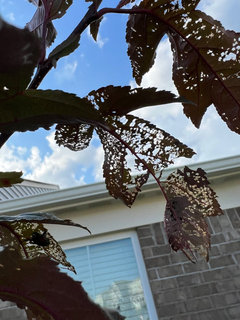
    It was Japanese beetles, so I absolutely had to intervene. They had already defoliated my crab apple trees and had moved onto my rose bushes and azaleas. When I found a few on my hydrangeas, I was not going to let them destroy those as well. There would be no leaves left had I not intervened. (I attached a photo of the shambles they left my tree leaves in.)

    I used an insecticidal soap spray (Bonide) and just manually used a spray bottle to cover the plant in late evening. I also applied this spray to 4 additional plants that night, my 2 azaleas and 2 mophead hydrangeas, all of which are still thriving wonderfully & did not have any type of leaf burn. I have used this spray multiple times previously on plants for white flies and spider mites, which has never resulted in a negative result, so I felt confident it wouldn’t hurt it. Not to say it didn’t, I just think it’s unlikely since 4 additional plants were sprayed that evening and none of those had a negative reaction. It was 82 & cloudy the following day after application and then rained the day after that, so it had a break from intense heat for a few days after application as well.

  • 3 years ago

    Insecticidal soap is only effective on soft bodied sucking insects. And even then only under certain conditions. It will have virtually no effect on Japanese beetles.

  • 3 years ago

    I notice that you still haven’t indicated your growing zone or the largest big city you are close to.
    What may be true for someone in zone 7 is most likely to be completely different than someone in zone 4,5, or 6. So it helps us to better help you when we have this info.

    Your photos do look like Japanese Beetle damage and once it’s done, it’s done. They should recover for next year. I don’t know of anything preventative for the beetles. Maybe someone else will????

    I had them on my Pendula Salix caprea (weeping willow) a few years ago. I tried to knock off as many as possible into soapy water every few days. What I learned that year is NOT to squish them as that releases the pheromones that attract more. They haven’t been back since. Of course by saying that, I will be cursed with them next year. 😝

    debra

  • 3 years ago

    Based on the original photos, I wouldn't be concerned about that amount of damage on a Hydrangea paniculata. I don't see any evidence of Japanese beetle feeding on it in those photos. Interesting you noted they were going after it, I have plenty of hydrangeas in the yard of various species and have never noticed any significant damage from JB. The roses and larch on the other hand......

  • 3 years ago

    Oh my gosh if you squish JBs, they atttact more !?!! I have wasted so much time this year. It feels like a lot of effort to get out that bucket of soapy water, but I guess that’s what I’m doing now. Thanks, @djacob Z6a SE WI

  • 3 years ago

    @PennLake What I said was that I found a few on the flowers. I did not see any damage at that time, I just jumped into action when I saw them going after it. The bottle I used said “beetles” on it so I gave it a shot. I am new to landscaping and do not know what all plants beetles like and don’t like. I didn’t even know beetles existed until a month ago.
    I just want to figure out what is wrong with this plant so I can fix it. Once again, I sprayed the soap on several other plants with no issues, so I’m not sure if the soap was the problem but I suppose it could be.

  • 3 years ago

    Ok Devin, one more time, your growing zone would be helpful information. You can look up USDA growing zones. You can find out there what your zone is, which you need to know if you’re getting started with landscaping your yard. Many of us put it in our handle.

    So, later in the growing season as we get towards fall, cooler nights and less sun, leaves on my LH will get some yellowing before the time when they will fall. So could be that or if you’re in a warmer zone than me the color could be due to heat stress.

    Pennlake, I didn’t see JB damage on the hydrangea either. My comment was in reference to the other plant. So we agree. ….👍🏽

    debra

  • 3 years ago

    My point was the plant was sprayed because the Japanese Beetle was on the plant without signs that it was feeding on the flowers or foliage of the plant.

  • 3 years ago

    Yes, I agree with you there. 👍🏽
    debra

  • 3 years ago

    @Djacob z5b se wi
    Yes, I replied & posted my growing zone and city information 4 days ago. I live in the suburbs of Louisville in Zone 6.
    It’s currently around 85-90 here every day and 75-70 at night.

  • 3 years ago

    " I’m in Zone 6 in Louisville, Ky. " This info is upthread.


    As it happens, Zone is not much use since it only tells the average winter lows. It gives no information about summer temperatures, precipitation etc. Zone is meaningless without a geographical location, which has been provided. An example: my zone is 8/9 because my winters are relativley mild. Loquat trees survive my winters. But they do not fruit because the summer is too cool and lacks sufficient sunshine.

  • 3 years ago

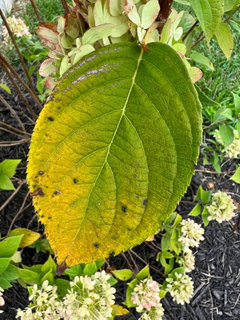
    Updated photos of what the upper leaves now look like. Whatever is happening has moved up the plant.

  • last year

    8, Mineola TX. Treating I'm