Software
Houzz Logo Print
prh2dogs

Lightbulb specifics please

2 years ago

LEDs are confusing. I have watched several videos, read etc and am starting to understand. I have can lights in kitchen so have started by switching out a couple of bulbs to see the difference. I bought GE Reveal "pure, clean light; enhances colors and whitens whites for exceptional clarity". I can see it is definitely different (somewhat cooler) than the usual floodlights in there, which I now see are distinctly warm/yellowish. I am trying to decide on countertop and the lighting clearly makes the difference in how it looks either white or cream. What lightbulbs do you actually use/like in your kitchen? There is virtually no natural light for this room so lighting is definitely a factor.


Thank you.

Comments (20)

  • PRO
    2 years ago

    There are several things to consider. First is the color temperature which is measured in kelvins. Your old incandescent bulbs had a warm hue of 2700 kelvins. Daylight is closer to 6000 kelvins. Good bulbs say the exact kelvins on the package (I use 3000) while bulbs at places like Home Depot tend to just say ‘warm’ or ‘daylight’. Next is cri- bulbs with low CRI are cheaper but won’t show colors as well (like halogens gave off nicer light then fluorescents even when they were the same color) Finally you have wattage. You can get a higher wattage fixture that gives out more light than your old incandescent just make sure to use a dimmer.

  • 2 years ago

    ^^^^Good overview by Hallett. I have 3500 kelvin in my personal kitchen, which has many windows. In some rentals I own there was very little natural light so I used 4000 in them. It worked well and was not at all “clinical.” I have a basement with zero natural light and I use 5000 down there. They are on dimmers, so I can adjust intensity. I wouldn’t want 5000 anywhere else in my house, though. The 2700 are too yellow for me - I prefer 3500. I use the same GE bulbs you have in my home office (also a guest room). Not sure what their CRI is, but it seems very good to my eyes. They’re on a dimmer, so when it’s a bedroom it doesn’t have to be so bright. For your under cabinet lights I would try to match the color temperature of your overhead lights. It. Tends to look weird when you have different colors going on.

  • 2 years ago

    Hallett, thank you for the addl info. It is confusing that HD shows warm and daylight etc, so I will try to find the other info on the box. Do you use just the regular Ecosmart ones sold there, or a different brand? Thank you.


    Susie, sounds like the 4000 may be appropriate for the kitchen in that case. I wonder if it is hard to swap out to a dimmer - i did notice these all say "dimmable". I won't be having undercabinet lights (just no way to have outlet access, unfortunately), but I am changing the overhead flush to something - possibly lantern, etc, and will make sure the bulbs match. Thank you.

  • 2 years ago

    We forgot an important measure: lumens. They are related to the estimated wattage and measure the amount of light you’re getting. For task lighting, I’d aim for 75 lumens per square foot, for ambient kitchen lighting around 35 lumens per square foot. You need less in the living room, but the kitchen is a work area. The light bulbs will say how many lumens they have - multiply that by the number of bulbs you are using. You may need between 3500-5000 total lumens for a kitchen.

  • 2 years ago

    You might find more choices outside of home depot. Look for the Kelvin (color) that you like best with high CRI and high lumens. Use dimmers.

    You can also change the look slightly by comparing clear vs frosted bulbs. I have a pendant style that is repeated in several hallways around my house. Even though the pendant has frosted glass, the bulbs that gave the best "look" were also frosted.


    I would never do 4000K in my kitchen or anywhere in my house! All my recessed lights are 3500K and that is bright/white enough. We ordered our recessed lights from a lighting store to get much better specs than those available at big box stores.

  • 2 years ago

    I started my own thread on this becuase I've struggled to find decent LEDs. I'm buying relatively pricey ones (Philips and GE), but they seem to give off a green, murky light - even at 3000K and less. Complicating this is that even a slight difference in color temperature between fixtures in the same room (something I never even noticed with incandescents) is glaringly obvious and looks really bad.


    I asked this in my own thread but - where is CRI information published? It's not on any of the light bulb boxes I've bought.

  • 2 years ago

    Different people like different light temperatures so maybe you need to test some bulbs - just make sure you're able to return any you don't like.


    Last poster brought up a good point -- CRI isn't always listed on the box. Even on the manufacturer's websites they aren't always listed.

    Paula thanked Susie .
  • 2 years ago

    Lumens are often given at the bulb. The amount that hits your counter depends on how far away from the fixture it is. The bulb can be configured as a spot, either narrow, medium or wide beam angle. It can be a flood. A wide spot you put in a 8' ceiling can may need to output 700 lumens as a wide spot to give you the minimum 450 lumens at the counter.

    Paula thanked dan1888
  • 2 years ago

    Wow, it is even more complicated than I originally thought! ok, I will study all of your wonderful insights and spend more time in Lowe's. And maybe visit my local lighting store, again; they were not very interested in helping me determine lighting for my whole house (no staff anymore I guess) so I don't imagine they are much interested in helping me with bulbs.

    Thank you all!

  • 2 years ago

    People are pretty helpful here. If you post a layout of your space, someone will probably help you with a lighting plan.

  • 2 years ago

    If CRI isn’t listed it’s about 80, not very good. My experience over the last many years here in California is LEDs of all labels are inconsistent regardless. It’s been maddening to buy appropriate bulbs for overhead, pendants, under cabinets and lamps. . Then, too, once dimming is used discrepancies of even the same specs becomes evident. Not to mention the bulbs age at different rates, and they do age. Manufacturer claim is useless. I am beyond frustrated.

    Paula thanked Anne Duke
  • 2 years ago

    -----

    *usable anywhere: inside/outside, fully enclosed fixture, etc.

  • 2 years ago

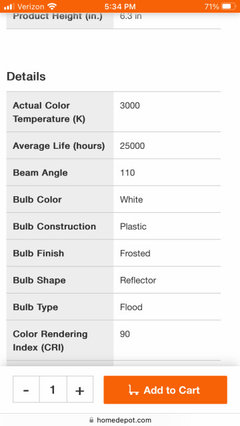
    It is confusing and difficult to find all the information about specific bulbs while you are in the light bulb aisle at the store. If you look on HD or Lowes websites they do provide the details you need. When looking at the individual bulb you need to scroll down to the specification tab and open it up.

    Here is the info provided for a Feit brand bulb

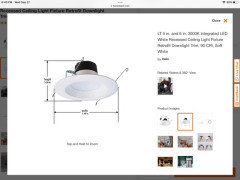
    To make things a little more complicated if you have existing can lights you can replace just the bulb or you can buy retrofit downlight trim that plugd into your existing can.

    These are airtight and no bugs can get in or out of them. Some of these come with the ability to select the color from 2,700 tp 5,000. Additionally, some allow you to adjust the lumens

  • 2 years ago

    wdccruise, thank you! It is very helpful to have specifics. My can lights are a set of 7 on one switch, so getting that to dimmer would be wonderful. Thanks again.

  • 2 years ago

    badgergal, my eyes are blurry from all the reading on Lowe's and HD sites, but it certainly is more info than in the aisle. I wondered about changing to those retrofits, just unsure of the real benefit since it is well over a dozen between the kitchen and den areas. I will need to check further, esp since I can't tell how a bulb is changed in those. Thank you!

  • 2 years ago

    "I will need to check further, esp since I can't tell how a bulb is changed in those."

    Those recessed lights have integrated LEDs, that is, the LEDs are part of the fixture and there is no bulb. When the light fails, the entire fixture must be replaced. There are fixtures whose color temperatures are selectable, that is, there's a switch on the fixture that lets you select the color temperature on the fly. Be sure to measure the diameter of the can (aka housing) in the ceiling before buying.

  • 2 years ago

    What is the color temperature of the Philips bulb? Is it so-called "warm glow"?

  • 2 years ago


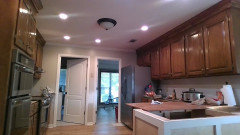
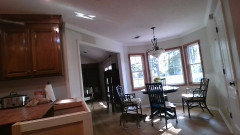
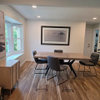
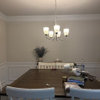
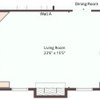
    I have just gotten these rooms back after my natural disaster so still lots and lots for me to do. You can see the can lights I was talking about. The flush mount will be changed out to something - maybe lantern... And the breakfast room is to get a new chandelier. The opening to the den is new so the light is no longer in the right spot either...

  • 2 years ago

    wdccruise Yes it's "warm glow." Which in retrospect is dumb because unless all the bulbs in the room are "warm glow" you end up with different temp light from different sources even if all bulbs are the same temp. But the bulbs also just are not good.

Sponsored
Haus Studio
Average rating: 4.8 out of 5 stars28 Reviews
Franklin County's Preferred Custom Cabinetry & Design Studio