Software
Houzz Logo Print
webuser_40193723

Dangerous Stair Fix?

2 years ago
last modified: 2 years ago

We have a hazardous stairway in our 1940 Cape Cod. All numbers here are in inches. The current rise/run for each step is 7.44/8.07. The "run," or width of each tread, is far too shallow. We are measuring from nosing to nosing. We have room at the bottom to add a step and a raised landing (so basically two extra steps) which would give us a rise/run of 7.44/9.51. Our local Code for run is 10.00. The main hazard is going down the stairs, not up--toes and balls of feet hang over the edge, and your foot is prone to slipping off the tread while you are stepping down to the next tread. (I have to go down the steps "side-saddle.") Instinctively, we feel like the extra one-and-a-half inches would make a world of difference. We appreciate any personal experiences and/or expert input on whether this "almost Code" upgrade would make a meaningful lessening of the hazard and a more comfortable walk down to the first floor.

Comments (36)

  • 2 years ago

    It would help, but I don’t know if a contractor would build steps less than the 10” code requirement for the run, especially if inspections are required.

    I had a 9” run in my previous house and it was steep. I have 9.5” run in my current house and it is still steep.

    I believe the landing needs to be at least 36” deep. There are also ceiling height requirements. The distance from tread to ceiling could change depending on how your house is constructed.

    I have learned to address the steepness issue in my house by going down the steps backward, like a ladder, while holding the handrail. It doesn’t really help for guests, but it makes me feel safer when I have to get up early in the morning to let the dog out, and I’m not quite awake. You have to watch your step behind you, but it feels safer because if you fall, you’re more likely to fall up the stairs.


    HU-40193723 thanked kelli_ga
  • 2 years ago

    I think the problem is that if you don't touch the stairs, the noncompliance is grandfathered, but if you Do touch them, they must be made fully compliant. It's a catch-22 in a way because it prevents you from making them better at least.

  • 2 years ago
    last modified: 2 years ago

    Thanks, kelli_ga. You're in Georgia? We live in ATL, Morningside. This would not be permitted, and I can find quality people to do the job, so inspections are not an issue. I just don't want to pay for it and then find out it is not a significant change. What is the "rise" on your 9.5 inch steps? That would affect how steep they are.

  • 2 years ago
    last modified: 2 years ago

    The rise is 7.5”. The nosing overhang is 2”, so there is a lot of room with toes facing upstairs. The treads are a total depth of 11.5”.

    Even a previous renter was concerned about the steepness of the steps. There was a time when code was OK with this.

    Outside I just had the brick steps modified. They have 6.5” rise (which is awesome) and now about 12” run, without much nosing. It seems almost perfect. I could still go for a slightly longer run.

    We are not near Atlanta. We are in the woods in a rural area.

    HU-40193723 thanked kelli_ga
  • 2 years ago

    You have to be careful about too much nosing because it can create a tripping hazard on the way Up. Code maximum is 1-1/4". I know you aren't permitting, but the standards are based on ergonomic/motion studies, so there is reasoning behind the dimensions

  • 2 years ago

    " I know you aren't permitting, but the standards are based on ergonomic/motion studies, so there is reasoning behind the dimensions "


    Think H.O. Insurance of someone takes a header walking the stairs.

  • 2 years ago
    last modified: 2 years ago

    "Think H.O. Insurance of someone takes a header walking the stairs."

    Well, what we are trying to do is make the situation better. We are moving the needle 75% of the way to Code. If someone is going to sue us and our insurance has to pay, the fact that these are still not within Code won't help. What we are trying to do is stop a guest from ever falling. (If they never fall, they can't sue, right?) And, even though we can't sue ourselves, it would be nice if we did not fall too.

    Wouldn't it? ;-)

    Our goal here is to get feedback about whether going from 2 inches short of Code to one-half inch will make an appreciable difference in the comfort and safety.

  • 2 years ago

    My stairs are 10" tread in my 100yr old house. Not ideal for size 13" feet but I'm so used to it I don't notice anymore. Could I take another half inch off and still not notice? Probably. I use the handrails, I've added lighting to help see the bottom stair/floor. It's made me safer on stairs. I would just make the change without permit to make yourself safer at home.

  • 2 years ago

    I get your intention for sure - This Old House site has some good content on dealing with old stairs. You mentioned having talented people to help, which is great - my only thought is whether the reworked/unpermitted stairs would be flagged as an issue on an inspection report if you choose to sell down the line - not sure, but would be good to confirm with someone knowledgeable


    I used to live in Candler Park - miss the ATL!

  • 2 years ago

    la_la Girl, good point. We bought this 4 years ago, and the stairs were not flagged by our inspector--I suppose because it's so common in this neighborhood, or any pre-Code house. If we sell, and there is an inspection by the buyer, they will catch it either way. Or maybe even less likely to flag it if we get so close to Code they don't notice. I don't think we have to disclose it--it's a patent hazard, not a latent one. My first house was on Clifton Road in Candler Park--many, many years ago!

  • 2 years ago

    " Well, what we are trying to do is make the situation better. "


    But are you really? The existing is pre-existing and grandfathered in, meaning you do not have to do anything and everyone knows it does not meet safety codes. If you change and make it new but still out of code and have zero permits your HO Ins. may not cover you.

  • 2 years ago

    You are just increasing your legal liability, not reducing it.

  • 2 years ago

    I am not saying anything is right or wrong here but the insurance company would have to know that you remodeled the stairs and did it without permits, and how would they know that anything was done to the stairs if there were not permits? A set of stairs is not exactly like an entire kitchen remodel for which there would typically be lots of clues indicating that it was not the original kitchen in the house. A new set of stairs may not look substantially different than a completely refinished old set of stairs. I am not sure the first question an insurance company would ask is "Are these the stairs the house was built with or did you change them?" I don't know, I have never had to deal with a property liability issue.


  • 2 years ago
    last modified: 2 years ago

    Personally, I would not change them unless I could meet code, for the legal and HO insurance reasons stated above. I think that, for sure (but it's my opinion, not based on knowledge), that in any future lawsuit, and/or any future sale of the property, there would be a catch-all question that you'd have to answer truthfully about whether you had made unpermitted changes to the house.

    So, to me, the issue is (1) a moral issue, because I would not want to lie to a direct question, especially one that has so much legal and monetary ramifications; and (2) a huge legal liability issue, because there are people who are gonna know, and they have more incentive than you do to tell the truth. And, by the way, there would be others out there in the world you are expecting to be complicit in your untruth: the stairs designer, the stair contractor, the flooring contractor, any contractors who either work on your stairs and related modifications, OR, contractors who notice your future stairs compared to how they used to be. They're gonna know.

    After all, whoever gets hurt in your house is most likely someone you know. People who know you will know you modified the stairs.

    Think about all the documentation involved in changing stairs. This isn't a handyman job. I've read comments in these forums that a stairs reconstruction is going to run $100K. Wouldn't you want to document and save receipts for a home expenditure of that much money? Someday you may need to sell the house, and would be able to add this expenditure to the basis to avoid capital gains...

    What if the person who does the work can't or won't complete the job?

    People are going to know.

    No one has mentioned that if you feel the stairs are unsafe as is, for you and your guests, that selling the home might be in your best interest. I know this is common in some parts of the country, but dang, people didn't have the life expectancy that they do now, or the same expectation of being able-bodied well into their retirements. I wouldn't live in a house like this (but that's easy for me to say).

  • 2 years ago

    I've been an insurance lawyer for 42 years.


    The only question is whether we will feel an appreciable difference between 8.0 inch run and 9.5" run. We don't need a lawyer. We need an expert in stairs or someone with an actual personal experience of increasing run on stairs by 1-2".

  • PRO
    2 years ago

    Altering stairs is rarely cost effective.

    HU-40193723 thanked Joseph Corlett, LLC
  • 2 years ago

    Probably very few people could answer your question, as stairs are usually either Fine or Noticeably Bad. Maybe you could rig something up with boards to see if it would feel better?

    HU-40193723 thanked acm
  • 2 years ago

    You could get a chair lift.

    Do guests really need to go upstairs?

    What about an exterior door upstairs with new outdoor stair access?

    Or a small addition that lets you have a nice big second staircase, with some other stuff, like maybe storage or a sunroom?

    Then you could replace the existing stairs with an elevator.

    It may be worth pricing all these options out, just so you have the info to compare with staircase renovation.

    An 8” run is like a stepladder. Not really, but it would feel that way to me.

    HU-40193723 thanked kelli_ga
  • 2 years ago
    last modified: 2 years ago

    I believe you will notice a difference with the longer run, moreover, it is relatively easy and inexpensive to check by building a three or four step unit and trying it out.

    Contrary to popular opinion, in most jurisdictions you don’t actually have to bring stairs up to code when you remodel them. The OP’s situation is the exact reason for this. The last thing the building code wants is to keep dangerous stairs because the code itself prevents you from making them safer. Typically, a permit will be approved when you decrease the rise or increase the run towards the code, assuming there are space limitations that make compliance impractical.

    HU-40193723 thanked bry911
  • PRO
    2 years ago

    Have your carpenter build a flight of stairs for you to try.

    HU-40193723 thanked PPF.
  • 2 years ago
    last modified: 2 years ago

    Before you think I’m crazy, I also have a Cape Cod style house with a loft and steep roof. I considered adding an attached garage with rooftop deck to one of the gable sides. The windows in one of the the loft bedrooms would have been replaced by a door to the rooftop deck. There would have been a nice wide staircase from the deck outside to the back yard, possibly with a middle landing.

    I decided against it only because I don’t really need the garage and associated maintenance. I have two other lower ”decks” on the front (porch) and back (deck) of the house.

    If there were a way to enclose the rooftop deck area and put the staircase in the garage, that could be your addition. If your house was similar to mine.

    You might even be able to buy a pre-manufactured staircase instead of doing a custom stair renovation.

    HU-40193723 thanked kelli_ga
  • 2 years ago
    last modified: 2 years ago

    If you do the longer run for the existing staircase, install handrails on both sides of the stairs.

    HU-40193723 thanked kelli_ga
  • PRO
    2 years ago

    You need a staircase pro not a bunch of starngers who are giving advice where there is no real info. Stairs hve codes and where i am if you hcnage the run or anything else the stairs need to now meet code . You will need to rop out what you have and start over so get a pro and get some pricing

  • 2 years ago

    @Patricia Colwell Consulting said, "Stairs hve codes and where i am if you hcnage the run or anything else the stairs need to now meet code ."


    Codes vary by municipality but the most often adopted rule says:

    Alterations to any building or structure shall comply with the requirements of the International Building Code for new construction. Alterations shall be such that the existing building or structure is not less complying with the provisions of the International Building Code than the existing building or structure was prior to the alteration.

    Exceptions:

    1.An existing stairway shall not be required to comply with the requirements of Section 1011 of the International Building Code where the existing space and construction does not allow a reduction in pitch or slope.


    However, there is guidance in the previous section of the code (dealing with additions) that helps interpret, "where the existing space and construction does not allow a reduction in pitch or slope"


    Alterations to the existing building or structure shall be made to ensure that the existing building or structure together with the addition are not less complying with the provisions of the International Building Code than the existing building or structure was prior to the addition.


    Most jurisdictions will approve an exception and issue a permit when to change stairs if they are not less code compliant after the change than they were before the change. The whole don't touch stairs thing is largely just a myth.

    HU-40193723 thanked bry911
  • 2 years ago

    You sound like you’ve considered a landing in the middle with a 180 degree turn, and a landing or turn near the bottom with a 90 degree turn for more steps. (My house did not have room for those without shrinking the living room significantly, moving the front door, blocking traffic flow, etc.)

    I would try to hire a stair guy, even if they have to drive. But there should be some in Atlanta.


  • 2 years ago
    last modified: 2 years ago

    First, check the required dimensions of stair risers and treads; the IRC dimensions are sometimes amended in a separate document.

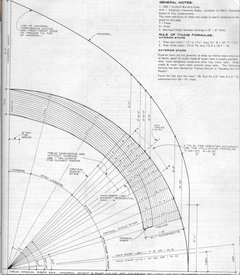
    To redesign the stairs you must determine the total stair run and the floor to floor height. Then determine how much the run can be increased at the top and bottom of the stair. Dimensions should be to the face of risers ignoring nosings.

    Compare the max run to what is needed for code compliant treads.

    If we had the floor to floor height or number of risers we could help you do that.

  • 2 years ago

    Out of the box thoughts that came to mind that I haven't already read here:1) replacing the stairs with an elevator; 2) building an enclosed staircase with good proportions on the exterior of your home; 3) building a first floor addition that would allow you to use your upstairs as just an attic.

    Can you supply house and lot plans if you are interested in 2 or 3? Or just contact a contractor and ask for their architect.

    All are expensive. You have my sympathy. I hope someone else has a magic easy fix.

  • PRO
    2 years ago

    Here in Virginia we have both a residential code (VRC) and an existing building code (VEBC.) The VEBC recognizes that existing construction is a constraint and that it may not be practical or even possible to bring a structure up to present-day code requirements when remodeling. Improving the existing condition of the stairs, albeit--dare I say falling short of compliance with codes applicable to new construction--is something I would pursue. Better may not be perfect, but it's still better.

  • 2 years ago
    last modified: 2 years ago

    The amendments to the IRC in Massachusetts allow a stair with 8.25" risers and 9" treads so, Google the amendments to your building code or call your building department but don't mention your stair.

    What use and floor area does the stair serve on the upper level?


  • 2 years ago
    last modified: 2 years ago

    To be code compliant the new stair riser would remain 7.44" and the tread would be 10".

    If there are 14 Risers, the increase in stair run to meet code will be slightly more than 25" for a total run of 10-10.

    If there are 15 Risers, the increase in stair run to meet code will be slightly more than 27" for a total run of 11-8.

    Measure carefully to see if you can rebuild the stair to code.

    As for just increasing the tread to 9.5" that meets the two most common rules of thumb (R+T = 17 to 17.5 & RxT = 70 to 75) so go for it.

  • 2 years ago
    last modified: 2 years ago

    If the stair is part of the only egress path from an upper level habitible space, it cannot be replaced with an elevator.

    The amendments to the GA code delete the exception that allows the use of an "alternating tread device" but they do not alter the riser and tread dimensional requirements.

    Winders are safer than your small treads but the GA code requires a minimum tread size of 6" at the tight side and 10" at the center walk line so it they don't save any space.

    It might be possible to design a code compliant new stair if we had the floor to floor height and a dimensioned plan sketch. You or your contractor will need to do that even if the new treads are 9 1/2". Please don't use decimal inches.

  • 2 years ago

    My calculator won't take fractions! ;-)

  • 2 years ago
    last modified: 2 years ago

    res2architect, the winder step idea (with 3 winders in a 36" square) could achieve a 10" tread depth on the straight run to the second floor, and the winders would satisfy the 10" rule at the 12" walk line, but the tread depth on the tight side would be only 4 1/2 inches, not 6 inches. So robbing Peter to pay Paul. After hearing some subjective negative thoughts about winders from people posting here, we think the proper trade off is to take the improvement on the tread depth on the long straight run from 8" to 9.5", and keep the added risers down to 2 (instead of 3) and keep them simpler, with one new step and a 36" square landing. Thanks for your encouragement. (PS, maybe I should just convert everything to metric! )

  • 2 years ago

    When asking for design assistance from experienced designers I recommend focusing on defining the problem rather than offering detailed solutions.

    I've been designing stairs for over 50 years but without a floor to floor height or the dimensions of the available footprint, I have no way of knowing if your designs are feasible.

  • last month

    My question is can you add a deeper riser?

    My dog is getting older and she needs more room since they're also steep.