Software
Houzz Logo Print
peyton_montana

Height of Gas Range / Quartz

2 years ago
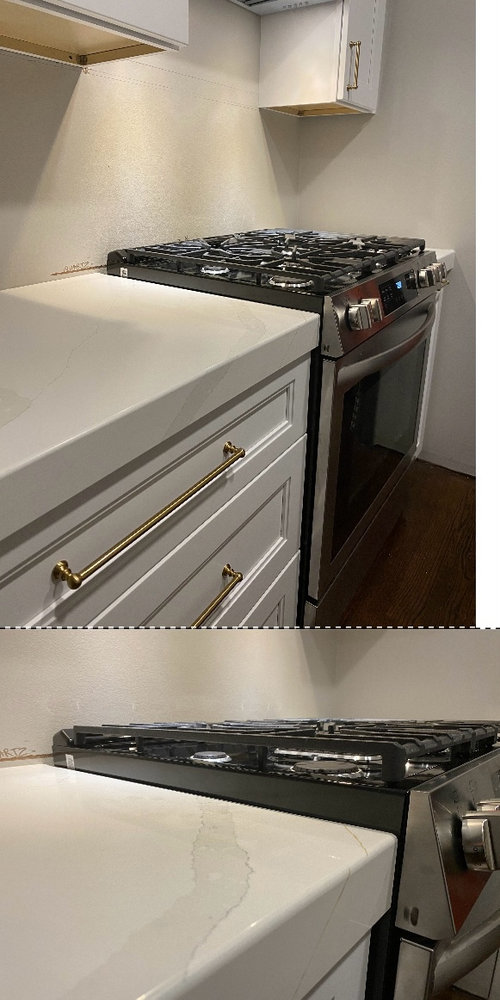
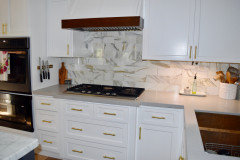
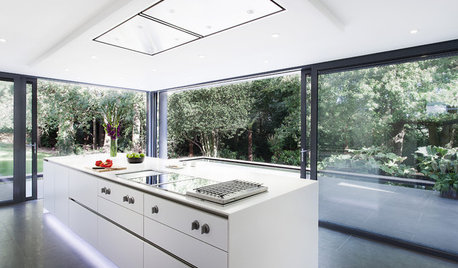
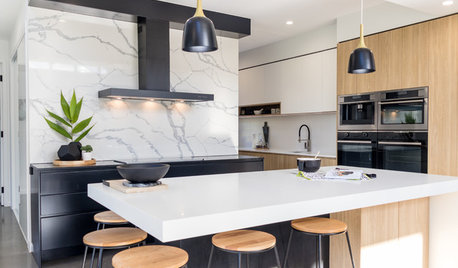
Finishing up remodel. Trying to figure out what range height to have? Right now it is 1” above counters, not including grates. Should it be lower, even with the countertop? I’d like it to be lower, I’m 5’ tall and it feels too high, but I don’t want to mess up the quartz from the heat. When you’re short, every inch makes a difference :/

Manufacturer does not specify, stating that it depends on material of countertop (quartz) and to ask fabricator. I ask fabricator and he says, ask manufacturer…so it’s a loop of non-advice.

Thanks for any input.

Comments (22)

  • 2 years ago

    I have a stove top, and quartz, and this is how I have mine. no issues. just under an inch I'd say


    I think you could lower yours an inch or two and still be fine

  • 2 years ago

    Wow. The spec should fall on the manufacturer of the range and not the fabricator of the counter. What brand is the range? Maybe others who have it will chime in. The grates should definitely be higher than the counter, otherwise the heat from them will scorch the counters. We have quartz and have been so hesitant to use the outside burners even though I know it's installed per spec. Luckily we haven't had a need to use them yet.

  • 2 years ago

    mine is even with the counter, grates (and burners) being higher than that. I think you'll be ok -- we use the huge fast-boiler burner with no impact on our quartz.

  • 2 years ago

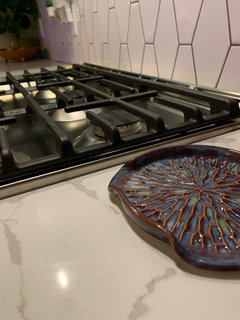
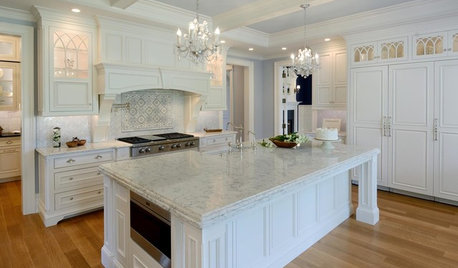
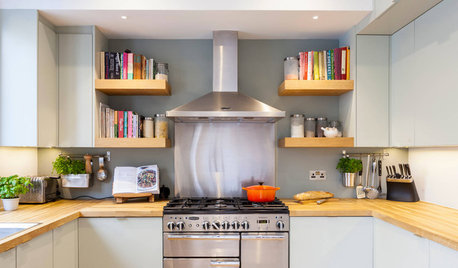
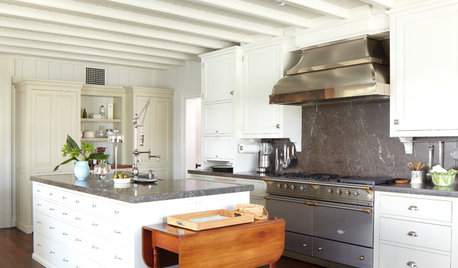
    here is ours…looks to be around 1/2”

  • 2 years ago

    Oddly, the OP didn't state the height of the countertop.

    The range looks similar to the Frigidaire GCFG3060BD whose height is adjustable from 35-5/8" to 36-3/8" which would include the standard 36" countertop height.

  • 2 years ago

    @Beth H. @acm @ S M
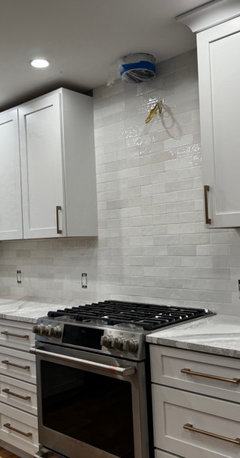
    Thank you! That makes me feel a lot better. The pics are so helpful. I think I’ll reduce down to 1/2” above tops.

    @wdccruise
    It is a Frigidaire all gas range, not air fry, 5 burner, different model but don’t know the number. The counters are not standard. They are custom at 35”. The range height is from 35 to 36”. It’s sitting at 36” in photos. My main concern is how close the cooktop can be to the quartz since ‘direct’ high temps can scorch it. I just want to be careful with adjacent flames.

    @Lynn Lou
    I’m hesitant as well! I had a cutting board made with the scrap from the sink cutout, so I may use that to test with high temps, by placing a heated pot on the board…but I don’t want to mess that up either.

  • 2 years ago
    last modified: 2 years ago

    "The counters are not standard. They are custom at 35”."

    I know that one should use a hot pad or trivet to protect quartz countertops from hot pots and pans but it seems odd that one would deliberately install a countertop below standard height -- 36" -- so any range would stick up above it. Looking at the result, I'd always assume a mistake had been made.

  • PRO
    2 years ago

    Lower the leveling feet on the range as much as possible please. To avoid scorching your engineered stone, avoid using any pots that are larger than the grate/burner.

  • 2 years ago

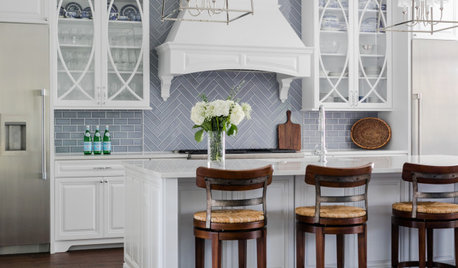
    I hear ya on being short! I’m barely 5’ tall. Our counters are standard height. Here’s a pic of our range.

    Oh and hubby informed me last night that he has used the outside burners several times and no issues. I inspected the counters this morning to make sure lol! Great advice from Joseph not to use pots larger than the grate. Enjoy your new kitchen!

  • 2 years ago

    As a point of interest: What is the back wall made of, and what do the installation directions say about distance from combustibles when not using a riser/back-guard?

  • PRO
    2 years ago

    " Great advice from Joseph not to use pots larger than the grate."


    It's not just my idea. Many appliance manufacturer operational instructions make this requirement.

  • 2 years ago

    In other posts about heat and quartz, there are points made that not all quartz are (is?) equal.

  • PRO
    2 years ago

    That's incorrect; engineered stone is virtually all the same stuff. 66% quartz and 33% resin.

  • 2 years ago

    In this youtube video, its explained while quartz countertops from all major manufacturers are of the same material and quality.

  • 2 years ago

    @J Mig: The confusion may lie in the poor choice (from a technical point of view, not sales point of view) of calling engineered stone made with quartz (rock) fill and resin 'quartz.' Actual quartz is a crystalline mineral made mainly from silicon dioxide (SiO2). Calling the resin-gravel product 'quartz' is akin to calling Corian 'sapphire' (Al2O3) on the basis that sapphire constitutes its fill.

    Quartz sand that becomes sandstone and later, under tectonic compression, becomes denser and stronger is called quartzite. A quartzite counter, like a granite counter (compressed feldspar and quartz) is properly a stone counter, as are also marble and soapstone.

    Corian (which I have a lot of, but not in the kitchen) and engineered "quartz" counters are what I prefer to call "plastic" counters. One can look up the properties and see that for many applications their properties may make them more suitable than stone for counters, so I don't want to be understood as anti-'quartz.'

    I notice that the polymer resin used for 'quartz' is reacted using peroxide, just as Bondo and related products are, for those of you who work with car repairs, or wood repairs. I believe Corian is fabricated with 'Lucite' / 'Plexiglass' resin (poly methyl methacrylate) which may itself be polymerized using peroxide type initiators (there are options). There's more to a quality product than applying Bondo, so consider this a simplification.

  • 2 years ago

    My quartz for this build is a 90/10 ratio.

  • 2 years ago

    "My quartz for this build is a 90/10 ratio."

    If the quartz countertop was created using the Breton method as described in the linked video, then it is 94% quartz mineral by weight.

  • PRO
    2 years ago

    "...then it is 94% quartz mineral by weight."


    And weight is a meaningless measurement. This 94% nonsense is industry sales pap. No matter the brand or process, engineered stone is 66% quartz and 33% resin. Not up for debate.

  • 2 years ago

    Yes, one can't have the benefits of plastic, particularly lack of brittleness, unless there is enough resin to be interconnected throughout the slab volume.

  • 2 years ago
    last modified: 2 years ago

    I’m looking, without success, for appliances with manuals disallowing use of pans larger than the grate. GE specifically allows it, as long as the controls aren’t overlapped:

    • Larger pots can be used, but heat is generated only above the burner's cooking circle. The further the pan extends beyond the cooking circle the less the burner will perform. Using a larger pot will not damage the burner or cooktop surface.
    • DO NOT allow the bottom of the cookware to touch the metal cooktop trim or overlap the controls.

    Install manuals I’m finding say side surfaces should be at or lower than the cooking surface. I’m not denying the potential for damage, just questioning the assertion that it would be addressed in the appliance manuals.

  • 2 years ago

    “No matter the brand or process, engineered stone is 66% quartz and 33% resin. Not up for debate.”

    Joseph Corlett, LLC

    Could you please provide a written source for this information? Thanks