Software
Houzz Logo Print
kelli_ga

Let’s talk about kitchen linens!

2 years ago
last modified: 2 years ago
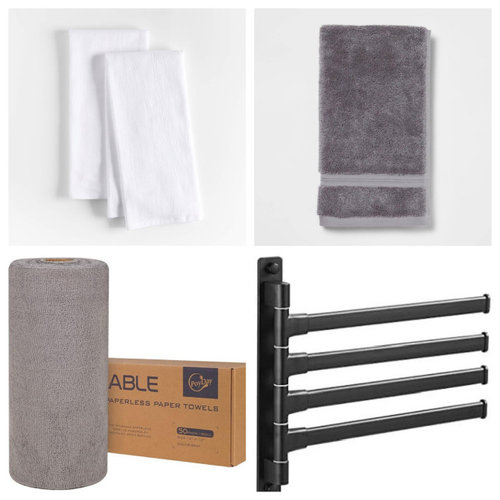
A family member introduced me to the microfiber “paper” towel rolls over the holidays. With the new year, I placed a bunch of orders on Amazon and now I’m stressing about how to organize the whole kitchen linen display and laundry cycle.

The objective is to change out the kitchen linens everyday, and keep them separate in the laundry.

(And right on cue, I just spilled coffee, and became a fan of the new flour sack cloth napkin I had handy which easily sopped up the mess, but may never be white again.)

What tips do you have for choosing, using, drying, storing and cleaning your kitchen linens?

Do you have some fun or artistic kitchen linens or storage solutions that you want to show off?

Here is my tentative plan:

  • Microfiber paper towels for counter cleanup (grey) and dish drying mats (white)
  • Plush cotton terrycloth towels for drying hands (not white)
  • White Flour sack towels for drying dishes (new to me, not sure about it yet)
  • White Flour sack cloth napkins (also new to me)
  • Small dish cloths (5” square) for washing dishes

Also for the bathrooms, plush hand towels and microfiber paper towels for cleaning counters daily.


The black drying rack(s) will be installed in the pantry so linens can dry before being stored for laundry.

Do you like the flour sack cloth towels and napkins? Those are cheap enough to order in bulk. I’m not sure how to feel about those yet.

Here are a few tips to get the discussion started:

https://www.southernliving.com/how-to-store-kitchen-towels-7104333

https://www.houzz.com/discussions/2698699/where-do-you-put-dirty-kitchen-linens-in-small-kitchen

https://www.houzz.com/discussions/2688413/does-anybody-have-a-laundry-basket-in-their-kitchen-dishclothes

Comments (15)

  • 2 years ago
    last modified: 2 years ago

    I store a stack of grey dishrags and a few colorful-decorative drying towels in a drawer. One dishrag is always in use on the upper rack in my workstation sink, and one or two drying towels floats around the kitchen either lying on the counter or hanging on the range or DW handles. I keep a Rubbermaid bin under my sink filled with an assorted of old rags for cleaning up dirty spills (that are more than what the gray dishrags could handle) or rags for washing windows, mirrors, floors and other surfaces. Since I live in a small ranch house, it's an easy walk to the bedroom where a laundry basket sits on the floor inside my closet. If a dirty rag might stain the other items in the laundry basket, I walk the rag to the basement.

    I use common sense deciding what to wash with what when I'm doing laundry.

    kelli_ga thanked theresa21
  • 2 years ago

    The microfiber towels are not good for the environment — they apparently release millions of microplastic pieces every time they are washed. And they should be washed separately from cotton. I have found that I like the Swedish dishcloths as much as microfiber.

    So, here is what I do: Swedish dishcloths for cleaning counters/faucets/cabinets/hardware. Flour sack towels for drying dishes and washed food. Non-white terry for hands. Then I have a bunch of gray towels that are terry on one side and flat on the other that I use as chef’s towels when cooking. For dirty cleaning I use orange waffle-weave and then for really dirty I use rags.

    kelli_ga thanked blueskysunnyday
  • 2 years ago

    I am trying to move away from plastic sponges and paper towels too. But how do you all deal with the tough stuff on dishes (dried-on things, pots with hard, cooked material)? Nothing seems to be as good as the rough side of a blue scrubbie sponge. Eco-friendly alternatives?


    That's good to know about the microfiber cloths. Don't use them much, just for waxing off the butcherblock.

    kelli_ga thanked gardengrl66 z5
  • 2 years ago

    To clean tough dishes, I use a nylon scraper (it’s a flat, handheld thing) and/or a scotchbrite pad (like the scrubby side of a scrub sponge but without the sponge — they don’t hold on to water and can be used longer —clean them both and the Swedish dishcloths in the DW).

    kelli_ga thanked blueskysunnyday
  • kelli_ga thanked lat62
  • 2 years ago

    The microfiber towels are not good for the environment — they apparently release millions of microplastic pieces every time they are washed. And they should be washed separately from cotton.

    Yes, same thing is true of "performance" materials in sporting goods.

    I had a bunch of microfiber cleaning cloths, and I hated them! Hair clung to them and was just yucky. I think I had cheap ones, but I won't be bothering with them again. It's cotton washcloths for me.

  • 2 years ago
    last modified: 2 years ago

    Sponge. Doobie plastic scrubbie. Regular paper towels. William-Sonoma cotton dish towels.

    Change when they get dirty. Wash towels with other towels or whites.

    The black drying rack(s) will be installed in the pantry so linens can dry before being stored for laundry.

    You dry them and "store" them BEFORE you wash them?

    And OMG,,,,wash them every day????????? You're kidding. Waste of water and soap into the system. Not to mention total OCD. No wonder you're stressing. Get a life!

  • 2 years ago

    I dry my kitchen linens before "storing" for laundry too. Putting a damp dishcloth in the hamper can mean a pile of moldy linens. So it's either dry them (we drape over the laundry sink) or do as Patricia Colwell does and wash linens every day.

  • 2 years ago

    Yes well Patricia owns a catering business so I can understand that she would wash things every day. I'm sure she uses a lot.

    I do'nt have a hamper. My washing machine is right off my kitchen so dirty things go right into the washer.

  • 2 years ago

    I have a kind of shelf that fits on top of the raised back portion dryer( the dryer model has the controls there) and I put used kitchen towels & dishrags there. Yes, they are damp, but not in amongst other laundry, and actually a small pile starts drying out. Will add to that dust cloths or other cleaning cloths and even some other towels, ( which aren’t kept here) depending on what is reasonable combine with what. We usually wash what’s there twice a week or so, so haven’t had any problems with their getting gross. But, having a specific small basket or other designated holding area for kitchen linens is part of my system, making it easy to just take a used towel there whenever.

  • PRO
    2 years ago

    Even when I am not busy with catering I still do laundry very often I have a small pretty bucket and when it is full I do laundry . I hate to admit it but I have tons of micro fiber clths and I am not sure how soon I will not have them. I have different colors for differnt uses and fod them neatly in a drawer in my kitchen along with my tea towels which I happen to iron. I think do what you need to clean your space . I am aclean freak of course a must when catering but it is how I live day to day anyway. If my cloths are not going to be washed with in 24 hrs I dry them hanging over the washer and dryer in my closet laundry room.

  • 2 years ago

    We use a sponge to wash dishes, paper towels to clean counters, William Sonoma Pantry towels to dry clean dishes, microfiber cloths for dusting and cleaning glass and older cotton towels to dry cleaned fruit and veggies. The sponge sits on top of the sink grid. Microfiber are used and put in hamper. Pantry towels hang on range handle. Older cotton towels go into the hamper. Pantry towels, microfiber cloths and cotton towels get washed with the rest of the towels.

  • 2 years ago

    I've tried so many dishtowels and dish cloths, expensive and inexpensive, and have finally settled on a cotton waffle brand from Target. They're absorbent, textured enough to clean countertops and dishes, the size is good, plus having dark wash cloths that don't show stains so easily helps them last longer in the kitchen.


    They're stored in a kitchen drawer, and the wet dish cloth at the sink is rotated out daily. Wet linens are draped over the side of a plastic laundry basket tucked away in the laundry room until they dry so they don't get stinky which then require multiple washings or extra laundry additives. They're usually washed with our bath towels.


    I like the linens to match the color scheme of the kitchen. When they get worn or heavily stained, they're either moved to the outdoor kitchen or to a rag bin under the laundry sink.

  • 2 years ago

    Minimizing the amount of synthetic microfibers that get into us is a priority for some of us.


    Cotton and linen towels work well. The thickness and weave that work best depends on your house's humidity and how you use the towels. In our area, we use quick-dry cotton towels, easy to machine wash and dry. Frequently washed kitchen towels that no longer shed dye can be thrown in with almost any color washload.


    Old fashioned cotton kitchen washcloths for most washing up and good old paper towels for greasy spots or staining spills work just fine.


    A couple of coffee-colored cotton washcloths mop up drips around the coffee pot.