Software
Houzz Logo Print
hzdeleted_60638948

Out of curiosity...

2 years ago

In another current thread on this forum, I've read that a nursery decided to compensate for the very small size of their own-root roses by planting 2-3 rooted cuttings together,stating that subsequently the cuttings will grow together to form one substantial plant, that, according to them, would grow faster, stronger, etc. My question: is that a real thing? To me, it just sounds like what they do for "supermarket roses", that are sold in bloom ,meant to be like gifts of a bouquet of flowers, lasting longer than cut flowers but not destined for a long life. Wouldn't the 2-3 little cuttings just compete amongst themselves? How could they ever morph into one plant? Could that actually happen?

Comments (8)

  • 2 years ago

    Sometimes they do callus together way far into maturity. More often, they grow a butted to one another, competing, and form a plant relatively the same size as one mature plant.


    The only way I would recommend this is if you plan on digging them up 3 years after planting, splitting them, and having 2. Otherwise, its kinda bs swift sales sort of deal.

    User thanked User
  • 2 years ago

    Thank you, Jadae. That's what I thought.

  • 2 years ago

    I think the real reason it's done is that is one little plant dies, the customer still has a plant.

    User thanked mad_gallica (z5 Eastern NY)
  • 2 years ago

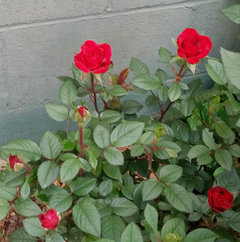
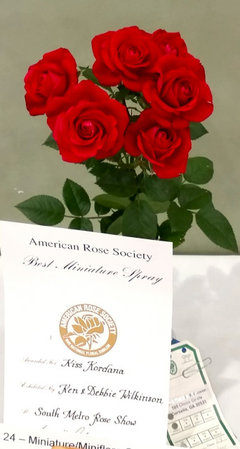
    The reason that the nursery give for this practice is a croc of crap. BUT, I would be tickled to death to get 2 or 3 rooted twigs in a pot. To me, that is 2 or 3 plants for the price of 1. Perfect example. Grocery store mini's. 3 cuttings per pot. After they bloom, I take them out of the pot and gently separate the 3 rooted cuttings and repot them into 1 gal. pots and put them into a shaded (and NO fertilizer. Just water) area until they start to put out new growth, then move them into the garden area where I want them to grow and mature. Here is my red (Kiss Kordana) grocery store mini I received in 2012. They grow and bloom quite well.


  • 2 years ago

    It's a long used practice, originally employed to increase the number of successfully produced plants for sale. MANY nurseries have done it for many decades. If you strike two or three small cuttings in one pot, the theory is at least one will succeed so you won't have empty pots in flats of product. I'm not aware of any of the old mini nurseries which didn't use it. Sequoia did for many decades until Mr. Moore determined it wasted cuttings and declared that practice should stop. I remember him speaking about it on a visit decades ago. Yes, the wrapped, bud and bloom market producers use it also and not just for mini roses. Often the flowering azaleas and hydrangeas in markets are three cutting grown plants per pot. It makes a fuller, more attractive flowering plant in a small pot, in less time than otherwise would be possible.


    Could they "morph" into one plant? As has been written, sometimes their calluses can grow together and literally knit (it's what callus does and how budding/grafting works), so SOMETIMES it may work that way. Not always, but sometimes. Can/will the individual plants compete, leading to some failing? Could be. It doesn't have to happen but it sometimes does. Remember Austin recommending you plant some of his weaker types together so they make a better looking plant? Yet, the "common knowledge" is you don't crowd roses together, so... Is that a "deceptive practice"? Perhaps, it IS a marketing practice. Such things happen all the time. Eons ago, shampoo sales plateaued so some marketing genius came up with the pitch, "lather, rinse, repeat" and MAGICALLY shampoo sale literally doubled over night. If it didn't clean your hair the first time, it isn't going to clean it any better the second time but WE bought twice the amount of shampoo than we did before that went on the bottles.


    If you are producing a foil wrapped flowering gift plant, you need FAST development so you can supply many orders for mass quantities, quickly. The best way is to put three or four cuttings of whatever plant type being produced in a three, six or eight inch pots. Those varieties chosen for such work have been specifically selected to root easily, develop into flowering size plants quickly and at smaller sizes than many "garden" types.


    Nurseries often do it so when one or two fail, they still have a pot with a growing plant in it. If the nursery from whom you are purchasing the plant in question resorts to employing the method and they are SUPPOSEDLY not a producer of disposable, flowering, potted "gift plants", perhaps they are being a bit deceptive in that they are hoping you will view that fuller looking pot for a too-high price, as having "value". Some will look at being sold multiple smaller plants potted together as being duped. Some will view it as an opportunity. "Wow! I got THREE of whatever for the price of ONE!" Is it disingenuous for them to proclaim 'your warranty is void if you separate them"? That's likely open to the individual who purchased the pretty plant in a pot and discovered it wasn't a large plant of the variety desired and likely not really the stated age and stage of maturity. If I had purchased it at a high price because it was stated it was a mature plant of a variety I wanted, I would have expected a plant which represented the amount of time and care was given it as advertised. Had I received multiple younger cuttings crammed in the pot for that price and that advertised age and care given, yes, I would resent being lied to and I would definitely not consider purchasing from them a second time. The method isn't unethical. Using a mass production method to make a CHEAP product, quickly to produce a limited production, high-priced product is, perhaps, unwise. If you wish to maintain your reputation as a "luxury product", you very likely should NOT employ mass production methods to produce a product that very much appears as a cheap, disposable one. Employing the method isn't deceptive. Advertising a two year old plant, even "grafted", then delivering a pot of "cheap, grocery store" potted plants, even if they ARE the "exclusive", is.

    User thanked roseseek
  • 2 years ago

    The plants we got from Mr. Moore often made 2-3 plants, which was a bonus for us.

    User thanked jerijen
  • 2 years ago

    @jerijen yes ma'am and they weren't advertised as anything but what you received. And, for anyone 'local', you got to select the plants you wanted off the tables. For anyone using mail order, they selected the oldest, most vigorous plants they had on the table to send you because they grew so quickly and very quickly became root bound in those two to four inch pots, making them more difficult to maintain in retail condition as time wore on. Most importantly, they were PRICED as what they were. I agree, I often sought the ones with multiples as I wanted multiples to provide enough pollen and enough blooms to work with. They put multiples in the pots, why not select for the multiples? Had I spent $60 and up for what was supposed to be a mature plant of that type, I agree. I would feel, at the very least, "misled".

    User thanked roseseek
Sponsored
Peabody Landscape Group
Average rating: 3.5 out of 5 stars8 Reviews
Columbus' Reliable Landscape Design & Contracting