Software
Houzz Logo Print
mxk3

Anything I can do to save my squash vines?

2 years ago

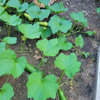
All was going swimmingly -- healthy, vigorous kabocha squash vines, good fruit set -- couple days later BAM! wilting despairingly. It's the dreaded squash vine borers....


Since the vines are already wilting, is there anything I can do to help the vines hang on? A few more weeks and the larger fruit should be ready to harvest, I really hate to lose them. Any suggestions?

Comments (14)

  • 2 years ago

    The borers have sliced your stems. That's why the vines are wilting. Reattaching limbs is called replantation. Not clear you can do that with plants. That's the lesson we all learn about the threat of SVBs. Time to think about mitigation strategies for next year.

  • 2 years ago

    I thought I read somewhere you can dig them out with a paperclip or something. ??

  • 2 years ago

    You can dig them out with a pin. The moth tends to lay one egg, meaning there is likely only one borer in each plant. If you get them quickly, they haven't moved far and are easier to remove. You can then wrap your stem or cover it with soil. It may recover.


    I've tried tin foil under my squashes, because it was supposed to deter the squash bugs and vine borers. It was a pain. I tried nasturtiums, which didn't work. Now, I have wormwood growing around my zucchini (something ate the squash and melon seeds). It's working so far.

  • 2 years ago

    Once your plants are wilting, the damage has been done. Pulling the SVBs out won't fix the damage. True that burying the vine might allow it to reroot, though that's pretty chancey.

  • 2 years ago

    I heard you can inject sevin into the vine I do not see why that would not work. Like Dan said damage is done - but I have had plants come back from some really bad damage if stuff will not ripen in a day or two I would risk killing the plant attempting a fix - what do you have to lose?

  • 2 years ago

    Destroy plants and start new ones,there won't be another svb generation until next year.

  • 2 years ago

    FWIW, immature squashes can be eaten - so perhaps not a complete loss? 😁

  • 2 years ago

    Just FYI, convenient SVB mitigation usually involves netting as protection. But you'd be wise to move your bed next year. The larvae that destroy your plants will exit the stems and burrow about into the soil to pupate, where they'll come out the following summer. So if you put netting over a site where there was SVB damage one year, you'll be locking in the new ones that come out next year.


  • 2 years ago

    Would it be easier to take a little spray bottle with Permethrin in it and spray on the base of the plants every week? Just a thought.

  • 2 years ago

    I went out there today and many of them look like they're past the point of no return. I'm now debating whether to leave them as long as I can in hopes of harvesting something or destroy them now. What do you guys think?

    I took another look at the days to maturity on the "Winter Sweet" that I like, and it says 95 days. I usually get them to harvest sooner than that, maybe 80-ish days until the stems turn corky. I wonder if I plant out in early July next year if I'd get a harvest before the frost hits and takes down the vines That's usually October, but a couple years ago we had a frost in middle of September - ! . Maybe I'll try an experiment next year to see what happens with planting some at regular time and some later.

    I do rotate where I plant them every year, and I turn over the soil in late fall right before freezing temps hit in order to expose the over-wintering ones to freezing temps. And yet I still have them. Does wrapping the lower part of the main stem where it enters the ground with foil help at all?

    IDK if spraying the stems w/permethrin would help; I suppose it couldn't hurt to try next year.

    Honestly, my biggest problem is lack of time -- I just don't have the time to be out there every day checking on things to nip them in the bud. I work full time, leave before the sun comes up and don't get home until evening, and I'm just too pooped to be bothered then. Pretty much the only time (and energy) I have is on the weekends, and as we all know things can really get out of hand in just a couple of days with the fruit and vegetables.

    In preparation for moving the whole shebang to raised beds in the next couple years I've experimented this year with planting things closer together and only in certain areas, kind of a half-*ss square foot gardening approach. This is a new concept for me, so baby steps... LOL! I have to say, overall things seem to be growing better and with fewer weeds to keep up with...in the planting areas -- the rest of the area is a mess -- but so far seems to be easier to keep up with in terms of general maintenance. So far so good on that front. But those *&!^# SVB's get me every year. BEASTS!

  • 2 years ago
    last modified: 2 years ago

    The larvae don't come out of the soil. They hatch moths that lay eggs on the stem in the spring. Might be near the soil line, might be higher. Understand about lack of time. That's why netting is useful. Some people inspect every day, and surgically extract the larvae they see forming. But that requires attention and effort. But of course with netting, you may end up having to do manual fertilization. That is, the netting will keep SVBs out, and it will also keep bees out. That would be done first thing in the morning, when the flowers are open. I happen to have ants that do the job. You may, or may not have them do that job.

    Planting out later is a possible strategy. Down here, the SVBs are gone by June. Netting comes off then. But up north they hang on longer. So you're then up against the end of the growing season.

  • 2 years ago

    "The larvae don't come out of the soil. They hatch moths that lay eggs on the stem in the spring."


    But if the larvae are dead, they can't hatch moths...hence the strategy to turn over the soil (deeply) to expose them to the winter's freezing temps and off them. IDK the extent to which it helps, but it can't hurt.


  • 2 years ago

    I was referring to putting insecticide on the stems near the soil line. But yes, turning over the soil and allowing it to freeze might be a good strategy. Your local extension should have guidance on that. Not sure what your freeze line is, and compost in the soil will tend to keep the soil a bit warmer.

  • 2 years ago

    Well, I did the deed -- I removed the plants.


    I had three nice-looking squash that if they would have another 10-14 days would have probably ripened, their stems were just starting to turn corky. I kept them, maybe they'll taste ok if I cook them up. Any suggestions for that?