Software
Houzz Logo Print
jean_hur

Hardwood refinish HELP needed!

2 years ago
last modified: 2 years ago
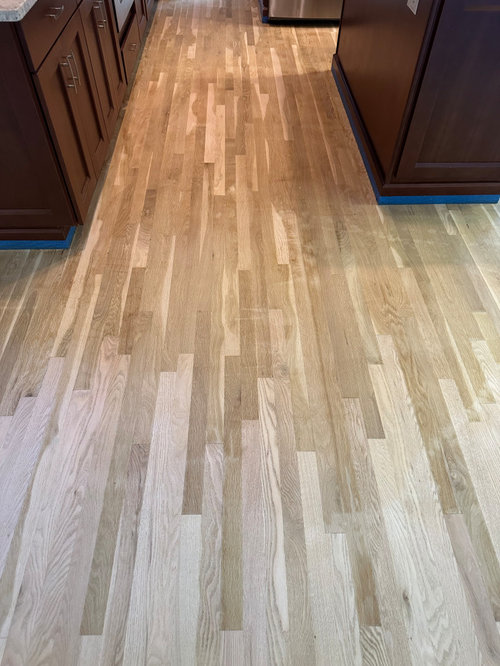
Hello, any and all input and advice is appreciated.

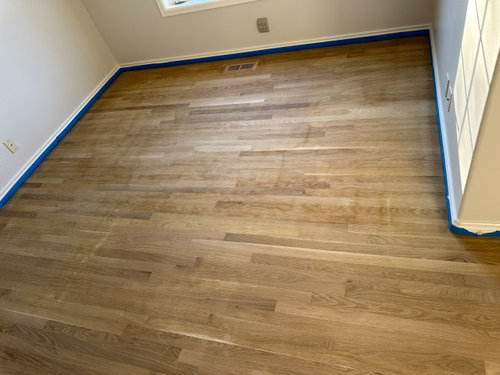
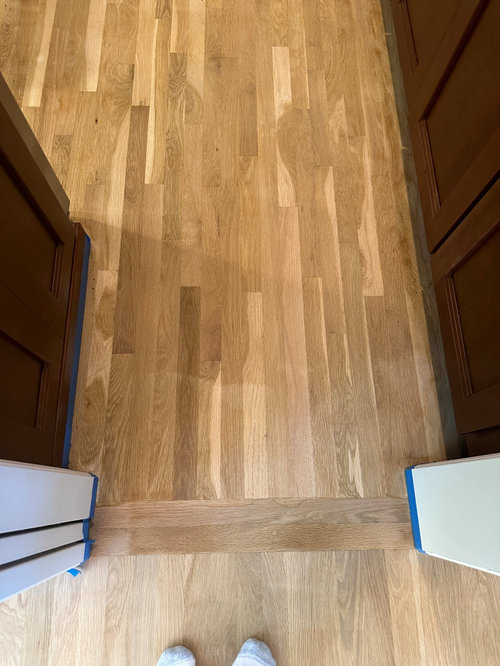
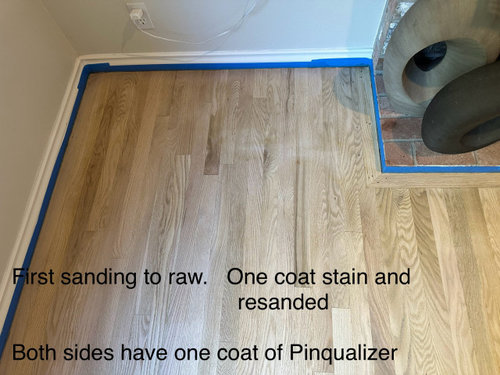
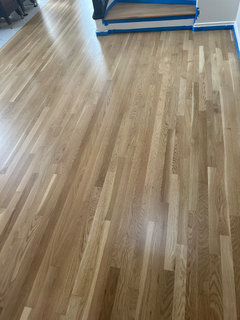
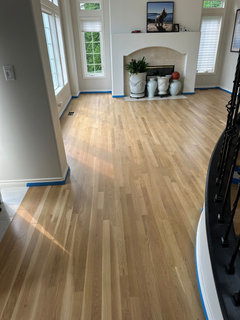
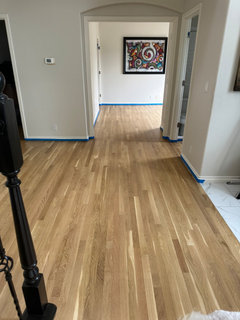
Refinishing red oak floors. The first coat of atain was applied and we didnt like the color and changed to natural. However, he sanded with 120 grit to remove the color and it didnt look to be completely gone though presumed he is the professional. Next we used Berger Seidle Pinkqualizer and the results are inconsistent throughout, drip marks, wavy or striped areas and sanding marks visible as well as visible nailheads. The second photo shows an area where stain was removed adjacent to an area that wasnt stained. How is this resolved and how to proceed?! Thank you in advance!!


Comments (17)

  • PRO
    2 years ago

    Resand below the penetration of the products. Leave off the witches brew and just clear coat.

  • 2 years ago

    Thank you for your comment! Do you have any recommendations to obtain a light natural color without red/pink undertones?

  • PRO
    2 years ago

    This looks like two very different grades of oak were used. Was the same professional engaged to lay and sand? Did they know the whole time the end goal? None of this looks good. Sand it off and stain it provincial…

  • 2 years ago

    Thank you for your time and advice. It is a refinish, the different wood was put in at a later date to have hardwood throughout (all red oak).


    We originally wanted Fruitwood but the color was too red and nothing close to the sample put down. So we changed to natural. The contractor sanded the Fruitwood off (though it appeared to have residual color remaining) and only sanded the parts with the stain not the entire floor. Applied pinqualizer and the floors look bicolored and like the photos above.


    The plan: Berger Seidle pinqualizer to remove the red tones Berger natural white and satin finish.


    The concerns were addressed and set to meet at site today. His plans are to apply a second coat of pinqualizer.


    Do you have experience with Berger? We would really like to have a neutral natural light look, is it doable? How would you proceed? What do you recommend? Thank you, your time and expertise is appreciated!

  • PRO
    2 years ago

    A mess to be sure but all this work to make a floor look like something it is not is never good . If you do not like natural ( not manipulated) red oak stain it dark or learn to live with the look you are insisting on which is what you have.

  • PRO
    2 years ago

    You have a mix of clear and character oak. Those streaks parallel to the boards are natural in the wood (the chatter marks and unsanded areas are poor prep by the professional) A medium tone stain will help blend everything together. I have no advice for bleached look.

    Jean A thanked HALLETT & Co.
  • 2 years ago

    " The contractor sanded the Fruitwood off (though it appeared to have residual color remaining) and only sanded the parts with the stain not the entire floor. "


    Needed to ALL be sanded again, even the areas that were not stained. The stain may in fact never come all off, it may be too far into the wood. All noted above you may have to go to a medium stain to get an even finish coat.

    Jean A thanked millworkman
  • 2 years ago

    You really do not like the red oak floors, so you might as well replace them. They will never be what you want them to be.

  • 2 years ago

    Not sure how nobody commenting noticed the obvious.

    Did you have new flooring added? It sounds like it.

    Pic 1: The top is obviously WHITE Oak and the bottom appears to be Red Oak/

    Pic 2: Appears to be ALL RED Oak.

    Pic 3: Appears to be ALL WHITE Oak.

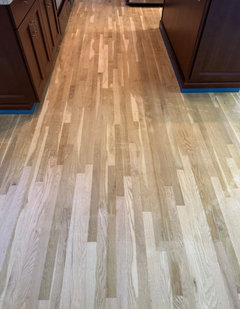
    Pic 4: Appears to be White Oak at the top and POSSIBLY Red Oak at the bottom, butting into the header.

    Pic 5: Appears to be all RED Oak.

    Closer pictures could verify which is which, showing the surface exposure of the medullary rays, with those on Red Oak being short (1/4" to 1/2") and White Oak being longer (Up to 1-1/2_ to 2").

    Considering this, it would be foolish to waste time speculating what to do with your color, because you'll need to take into account the different types of wood, and their inherent characteristics.

    I suppose it could all be Red or White, but that would mean the flooring in your kitchen, with all of the sapwood color variation inherent to White Oak, is the same as the other flooring that is fairly consistent in color, exactly like Red Oak.

    Jean A thanked Timothy Winzell
  • 2 years ago

    I don't understand how your contractor thought it would be okay to only partially sand the floors before redoing them. All of the new stain would need to be completely removed in order for the stained and non-stained sections to look the same once a new stain was used. I assume that since the reason for restaining them is due to you not liking the stain color you selected (did they do a decent sized sample of the stain on your actual floor before you finalized your initial selection?) - you are paying to have the floors sanded back down in order to use a different stain. Why would he/she/they cut corners on the process?


    The least experimental way to help neutralize the pink in red oak flooring is to use a stain that has some green in it. I can't remember what is typically is recommended - I'd have to look. You can do a search and will find options. I think Rubio has some type of product that has a green tint to it that is applied to the floor in order to help neutralize the red/pink.


    I've never heard of the pink neutralizer that your contractor is using. Did you select it or did he?


    I've actually done quite a bit of research about this a few years ago. I purchased Ciranova Pink Blocker (it's a two part liquid reactive stain - I think that's correct). I had an older red oak 12" board in my basement, and decided to try it out. I sanded it with an orbital sander (in order to remove the outside layer of wood that had aged over the years) - and then applied the Ciranova Pink Blocker (on one half of the board). You could easily tell where the Pink Blocker was used - the board did not look pink.


    I learned about Ciranova Pink Blocker from a user here on Houzz. She had posted some photos of her renovated kitchen - and I asked her what stain she had used when she refinished her red oak flooring. She explained about the pink blocker + she used one of Ciranova's oil finishes. Her floors looked really nice in the photos.


    I also discussed Ciranova Pink Blocker with a pro that was pretty active on here back then -

    G & S Flooring (or something similar). He spoke highly about Ciranova's products - and actually said that he would use the Pink Blocker over bleaching red oak floors.


    I think that if you use Ciranova Pink Blocker, you have to be careful of what you use as a finish coat (or the Pink Blocker can be reactivated - and you lose the benefit of using it).


    I've not used it on my red oak floors. I am finally getting ready to refinish them soon - but I've decided to go with a medium brown color (a neutral looking color) that will work with cool or warm tones on the walls/trim/cabinets/etc.


    While I am certainly not anywhere close to an expert re: red oak floors - after seeing your photos, the first thing I wondered was if new boards had been added. My red oak floor is select grade - and it looks like yours has had lower grades added in with some nicer boards (not sure what the grade was on your original boards - but they weren't character grade - and it appears that some of them are now).

  • 2 years ago

    Thank you, Dani, for your input. The contractor recommended Berger Seidle Pinkqualizer that was appliedmon Friday and the results above photos Saturday morning. i saw the floors today and looks much better although still noticeable. He is waiting for a Berger rep for tips. keeping my fingers crossed


    I appreciate everyone’s insight and suggestions to remedy.

  • PRO
    2 years ago
    last modified: 2 years ago
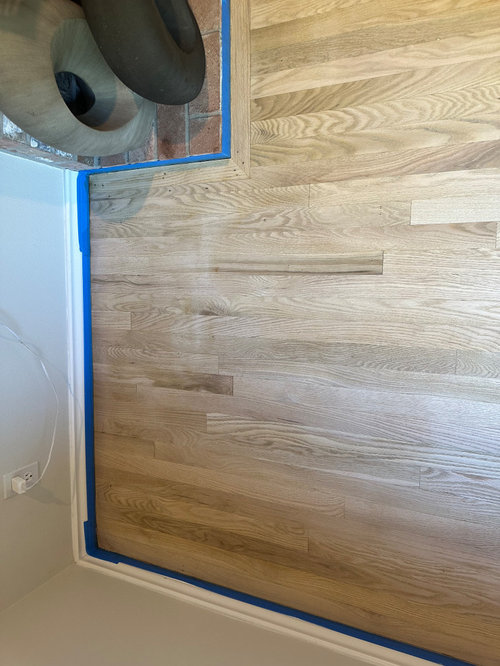
    Timothy Has it right. The photo that Hallet replied to shows new red oak laced into existing white oak. The error here is specie identification. You will have to stain dark to get the two species to blend. Either that or replace the red oak with white oak.

    Jean A thanked G & S Floor Service
  • 2 years ago

    If your goal is to have a light/natural colored floor, expect to see the significant differences between your wood types and color variations. If I were trying to make a small patch of Red Oak look like White, it could be done, but not with your situation.

    G&S is probably right in that the Red needs to be replaced with White.

    Jean A thanked Timothy Winzell
  • last year

    Thank you kindly, G&S and Timothy Winzell! G&S, your advice on moving forward with the Berger application was very helpful and effective. We are quite happy with the final results. It was a long 2+ weeks.


  • PRO
    last year

    Looks great! What happen with the red oak floors? I only see white oak here.

  • PRO
    last year

    Looks great! What happen with the red oak floors? I only see white oak here.