Software
Houzz Logo Print
upperbaygardener

Gardening Concepts Explored and Discussed: Watering and Wetting Agents

2 years ago
last modified: 2 years ago

This is second part in the series I'd started here

https://www.gardenweb.com/discussions/6410966/gardening-concepts-explored-and-discussed-overstory-protection

I'm staring down the barrel of what could be a very serious drought. Something going on in the tropics with the ITCZ is apparently hampering the development of hurricanes, which are often the mechanism by which the east coast gets out of dry patterns and droughts. The CPC is not looking promising https://www.cpc.ncep.noaa.gov/

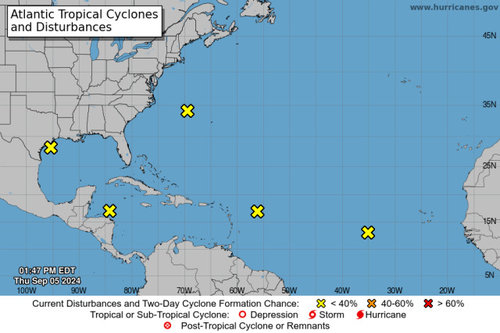
Nor is the tropics: https://www.nhc.noaa.gov/


Several 'areas' all rated 0-10% chance of development. What was predicted to be a strong hurricane season - something I took solace in back in May when the dry spell started - has almost completely fizzled out. Thank goodness for Debby, that at least made a dent back in early August.

The last time I had a late summer dry spell was all the way back in 2007! Although 2010, 2011 and 2012 had very hot, dry starts to summer, the all went into a wet pattern. Especially 2011 - late August to early October was the wettest period I'd ever had with over 30 inches of rain in 40 days! It killed a Rhododendron rex I bought in Washington State, that otherwise had survived the heat earlier in summer.

So getting the most out of my watering is important. If you water something and the water just runs off to spread on the surface of nearby soil or mulch, you're wasting your time. It's just going to evaporate before it reaches the plant's roots. For at least 10 years, I have been judiciously using the very mild surfactants called 'decyl glucosides' or 'coco glucosides' for this purpose. Both on plants in the ground and in pots. This was after a brief study to determine what would likely have the smallest ecological impact on the garden as a whole. They're very safe, having the EWG's best rating for use in cosmetics. Although they are not used in food, they are chemically very similar to the sucrose esters of fatty acids that are.

https://en.wikipedia.org/wiki/Sucrose_esters

https://en.wikipedia.org/wiki/Decyl_glucoside

There are commercially available products for this purpose, but I can guarantee you that they are more expensive than just buying the surfactants sold for use in personal care products. And, for example, one of them uses this chemical: https://en.wikipedia.org/wiki/Cocamide_DEA which is now a suspected carcinogen. (although, for various reasons I wouldn't take the IARC too seriously) In my general study of surfactants, I'd rather avoid the ones that contain nitrogen molecules like Cocamide DEA, and ones that contain aryl/phenyl moieties (related to the the aromatic hydrocarbons like benzene). These chemical structures are more often associated with toxic or endocrine disrupting side effects. Decyl glucoside, and laureth-3 that I've also experimented with but is somewhat unsettling to use because it is just soooo slick and slimy in its un-diluted form, do not. There's a theory I find compelling that, to the degree glyphosate has a toxic effect at all, it's actually the cheap amidated (i.e., nitrogen containing) surfactant that they added to the original "RoundUp" formulation. I have literally never used that. For years I've used the "Rodeo" brand of glyphosate, intended for wetlands, since my property does have wetlands, that has *no* added surfactant. I add my own that I know are safe and mild like methylated seed oil, sometimes adding a bit of decyl glucoside - not too much because it will foam. My yard still has scads of toads and frogs! (although, sadly, the dryness this year has caused them to retreat somewhat from the main areas of the garden, allowing slugs to proliferate) Clearly amphibian life hasn't been impacted by either the glyphosate or the mild oil and coconut based surfactants, but that's an unnecessary digression.

Some of you will say, "well, you could just use dish soap" or washing-up liquid as the Brits call it. And, sure you could. But then you're going to have all sorts of other things you might not want to be adding, that are diluting the product for your intended use, like preservatives, harsher sodium containing anionic detergents, skin moisturizers, denatured alcohol, etc. I suspect the economies of scale are such that if you quantify the per unit non-ionic surfactant 'wetting power', there's going to be no actual difference in cost. I have bought one gallon of this stuff about every 3-4 years, AND used it for other purposes around the house, too, like laundry. I once used a huge amount to clear my drain pipes when they became clogged with sand and soil. I think the average gardener could buy 16oz from cocojojo on amazon or wherever and get YEARS of use out of it. For a 2.5 gallon watering can filled about 70% full, I use one squirt from an old reused detergent bottle, which is about 5ml. JUST spraying a pint or two of this with the watering can, onto the root zone of the plants, means whatever the subsequent methods I use to drip irrigate (nowadays, often a 5 gallon pail with a tiny hole) goes right into the rootzone, without running off. BTW yes, mulch helps, but you have to be careful. I have done the drip on mulch, assumed it was going in, dug down and saw that the water was hitting the dry soil, and still running off under the mulch! Spreading, rather than soaking in!

Here's an interesting overview article of the topic.

https://jerry-coleby-williams.net/2007/02/27/wetting-agents-are-you-buying-trouble/

Although I'm not sure his recommendation of agar agar is very practical. Chemically, I would assume it's similar to the surfactant from yucca. If you really want something arguably more 'natural', I think that would be a better choice. Something like this.

https://www.amazon.com/Extract-Organic-wetting-surfactant-Concentrate/dp/B07TVKCLSG

Decyl glucoside is in the category he mentions of 'non-ionic surfactants'. They work fine but if you have experience with another category of surfactant like yucca, do share it!

It goes without saying, that even at higher use rates in some cases, I have never experienced even a scintilla of evidence that this chemical negatively impacted plant growth. In fact some plants seemed to 'take off' as I suspect hydrophobic soil was making it hard for even rain to penetrate the soil in some areas.

#originaldavidrt28posts

Comments (11)

  • PRO
    2 years ago

    I tend to do waffle gardening with mulch. Sometimes I use ollas or drip buckets. Even in dry spells, can't rightly say I've ever needed to use a surfactant.

  • 2 years ago

    Yes, well, YMMV, that's why I said it was to be discussed, and not that it was a lecture!

    If you don't need them, great.


    But I go back to what I said in arguments we'd have over a decade ago about physical soil conditioners like Turface or Permatill. If these things weren't useful they wouldn't exist as products used in 'industrial' level horticulture. The US Mall in DC was treated with one of those synthetic aggregates, which is one reason it can withstand such insane amounts of foot traffic compared to most people's lawns. Likewise there is at least one company that's been around for decades selling these type of surfactant products to commercial users. However they have a preference for using the cheaper petrochemical based detergents I alluded to. (aryl functional groups don't come from coconut oil, that's for sure!) In fact, apparently out west, Scotts now markets a surfactant add-on to home users. I haven't been able to track down what the actual chemical is.

    https://scotts.com/en-us/shop/mulch-soil-garden/scotts-liquid-everydrop-water-maximizer-for-lawns-landscapes/52401.html


  • 2 years ago

    I don't know what surfactants are being used, but common soap/detergents are one -- you can look it up of course. And I think only small amounts would do the job. Not sure if I'd do it myself w/o seeing what others have done in this regard and the results.

    UpperBayGardener (zone 7) thanked bengz6westmd
  • 2 years ago

    ' Synthetic aggregates '

    There's the key right there. Soil type would have to be greatly understood to know how various materials react to the water/surfactants mix once it's very dry. And which surfactants do what with varying amounts needed for each type to know maximum efficiency for each product.


    It might just be a 'good enough' end result, I just can't say without knowing more.

    Like beng said, other people using a product can be a great source of information when it comes to these types of things.


    All that aside, my soil can become hydrophobic when very dry, to the point water will pool on top, but its content is considered coarse (fine to coarse sand with some level of OM, considerable silt and minute amount of clay),

    the pooled water will sit there for a minute or two, slowly penetrating the dry layer but as soon as it reaches the layer of moisture underneath, I can stand there and literally watch the water soaking away and disappear in a matter of 20-30 seconds. So personally, I have no need for anything to speed water absorption in my soil. :-)


    UpperBayGardener (zone 7) thanked BillMN-z4a
  • last year

    What is the effect of this on the soil ecosystem?

  • last year

    Congratulations david!

    Are you saying that without the surfactant, the untreated soil didn't absorb rain?

    I know in my area, people with clay-based soils tell me that once dry, it takes at least few slow soaking rains to restore soil moisture.

  • last year

    " Are you saying that without the surfactant, the untreated soil didn't absorb rain?" Yes.


    "What is the effect of this on the soil ecosystem?" That's a reasonable question, but, as a reminder, I screened (investigationally, not experimentally!) various compounds for having the absolute minimum environmental impact and being 'biodegradable'. I put that in quotes because, just because something bio-degrades, it wouldn't necessarily mean that what it degrades into is harmless. But these surfactants are made by combining glucose and a fatty acid, and they breakdown back into said components. Glucose, for example, naturally occurs in fruits, and we wouldn't worry about apples falling on the ground impacting the soil ecosystem!

    https://www.ewg.org/skindeep/ingredients/701883-DECYL_GLUCOSIDE/

    https://pubmed.ncbi.nlm.nih.gov/24174472/


  • last year

    This will probably be the last time I bump this thread, but I wanted to share something. It's understandable that there might be some skepticism; one appreciates that 'extraordinary claims require extraordinary evidence'.


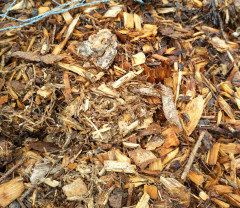
    I just planted a rare and desirable broadleaved evergreen. When I grabbed a load of mulch with my FEL, I noticed that, once spread around, much of it had the dusty dry look. The chippings came from a spruce tree btw, I suspect the chemical composition of spruce bark and wood could make a difference, maybe being extra water repellent. I went to get a 2 gallon watering can filled with water and a pittance of decyl glucoside, maybe 2 or 3 ml. As I circled the 5' diameter mulch ring, I ran out just as I was finishing.

    Well, here's the spot I missed. Everyone else that was dusty and dry looking got saturated by the well over 1 inch of rain we got last night. This spot, STILL DRY!


  • PRO
    last year

    How big was the chip pile? It can happen in a big pile that the center gets dried out faster because of the activity in the pile. Spores, the heat build of a pile, gas release. The outside still keeps moisture and breaking down. But the center can just toast out, akin to kiln drying wood. It becomes more water resistant. If you turn your chip pile, it will be less likely to make spots like that.

    If it's fresh grind, it's even more likely to happen. Fresh grind has a mix of the brown and green parts of the wood. It doesn't happen as much with just wood chip because the green is gone from it. The fact that it is spruce isn't likely to be causing the effect as much as the grind it is. Most woods will behave in the same manner.

    I'm not trying to say anything about your use of decyl glucoside. Just what is the likely cause(s) of those dry spots in your chip pile.

  • last year

    It's all good, I think you're probably correct about why the super dry, dusty sections are forming. Presumably these would have eventually gotten re-wetted by rainwater, but the surfactant just makes it faster. It's like the bank of dry soil I mentioned before. Obviously nothing stays permanently dry in a moist enough climate, but when stuff becomes 'baked' due to a drought, it apparently can take more than one rainstorm to return it to normal, unless you speed things up with a wetting agent. (hhhmmm, it's almost as though that's why they have that name!)