Software
Houzz Logo Print
sarah_cochran82

Flooring choice- butterrum vs butterscotch?

10 months ago

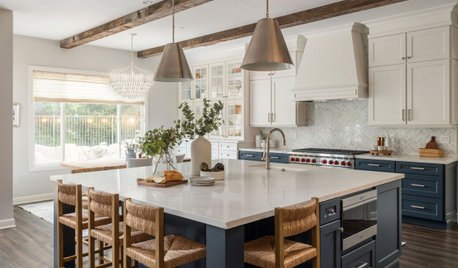
Building our kitchen with hardwood floors, using Bruce flooring brand. I can't decide between butterscotch and butterrum. Neither match our other floors perfectly, so we'll be staining the whole main floor to match. If it helps, we will have white cabinets and miraggio cielo quartz counters, with a hale navy island and a walnut countertop. Gold fixtures. Haven't chosen backsplash yet. Walls throughout the main floor are a light grey (I don't know the shade, but it's very light and very neutral).


I'm probably overthinking it, they seem really similar. But does anyone have a house photo using either of them??

Comments (18)

  • 10 months ago

    You are over-thinking this, and under-thinking at the same time.


    The only way to correctly make a flooring choice is to look at samples in your space. So you need to buy a box of each color and lay them out, both in the space that is getting new flooring, and in the space that you are refinishing. Lay out a big area, so that you have a feel for what the whole box looks like (lets you see the variation), and move it from room to room.


    You want to do this in your space because how either color would look in my space (or anyone else's space) would be impacted by their lighting and decor choices. If your other materials are in process of being installed, use the samples that you have to look at with the sample of the flooring


    I like both of the colors that you are considering (butterscotch and butterrum). From the picture that I saw (Click Here to Compare) I liked butterrum better, but can see why others may prefer butterscotch.


    The last thing to make a decision on is the backsplash.


  • 10 months ago

    This type of constrained renovation choice comes up a lot. How do I choose a flooring that matches or blends with what is already down in other areas of the house? I ask if this was new construction what would be the choice? In 100% of new construction examples, 3.25" solid hardwood is not a choice today. Engineered hardwood or lvp are preferred. For engineered , it's wide plank with matte finish. At the site linked above there are 507 choices for European Oak engineered flooring. Search | Online Flooring Store | Get Floors Online

    Replacing all the flooring will be an investment that upgrades your house similar to replacing vinyl or aluminum windows with high performance fiberglass units.

  • 10 months ago

    Why wouldn't you install unfinished hardwood and have it stained to match the existing? Is it the wrong color currently?

  • 10 months ago

    kind of bright and orangey. Id pick the fawn shade. i think the walnut top will coincide better with fawn.....yet not too dark so the entire areas will look good with that.....its more subdued and richer in my opinion..... watch out for that orange tilt .

  • 10 months ago

    I think they both taste good. (Just for laughs 😉).

  • PRO
    10 months ago

    Thanks guys! Yes, I did have the contractor come over with samples and laid them out, in person the butterscotch definitely looks more orangey than the butterrum, and I was leaning towards butterrum so I'll probably go with that. I don't mind some orangey look- our house is 100 years old and the original hardwood throughout the rest of the downstairs is a little orangey anyways. The reason I'm doing it this way as opposed to staining the kitchen to match the rest of the house is that the rest of the main floor needs to be refinished anyways, especially because we are opening the kitchen into the dining area and will therefore need to repair and refinish the dining room floor where the wall is coming down.... and honestly, both of these colors are SO SIMILAR to the current floor, just not 100000% exact, and I know it will bug me to see the slight difference going from the open kitchen into the dining area.


    Another commenter suggested I tear out the original hardwood and replace with engineered hardwood or lvp, that would be a really odd choice for our historic home. So that is why we are sticking with hardwood.

  • 10 months ago
    last modified: 10 months ago

    have you looked at adding unfinished hardwood to your space and then refinishing the whole space including existing hardwood? we did that and you have to know exactly where to look to see the new wood vs old.


  • 10 months ago

    WSEA is giving you good advice to go with unfinished hardwood in the new areas and then strip/stain everything to match. Since your existing floors need to be refinished, you might as well do it all at once and be sure it's all the same.


    A word of warning: the new floor will take stain differently than the old floor. So your contractor will need to adjust his process accordingly. A good contractor will know that already.

  • PRO
    10 months ago

    Thanks kempek 01 and wsea- would this be different than installing the finished hardwood in the new kitchen area and then stripping and staining the rest of the main floor to match? becauses this is our plan currently. I was under the assumption that this would make the entire main floor look the same. I guess I don't see how putting in unfinished hardwood, and then staining it after the fact, would be different than installing it already stained? Since are stripping/ staining the rest of the main floor anyways. The contractor made it seem like this way everything would flow/ match better, since they did mention the old floor would stain differently than new floor. But I'm obviously a newbie.

  • PRO
    10 months ago

    Also, I just used the Bruce "visualize in my space" tool and the Fawn definitely looks better than either butterrum or butterscotch. Interesting. Thanks to the person who suggested that!


  • 10 months ago

    @kitchen the finished on engineered floors is not going to be matched to site finish. you might get close but engineered floors have their own stain and finish process that is likely not easy to replicate onsite. plus you will have a very definitive line of old vs new. if you patch in unfinished flooring to your existing you lace the old and new so there is a blending, sand and finish with all the same products.

    one other benefit, engineered wood varies in how many times it can be refinished ( some are only 1 time) where as site finished will typically give you many more .


  • 10 months ago

    Back to add. i just looked up the floors you are considering. i see they are solid hardwood not engineered so the refinishing times becomes less important, but the ability to match their finishes, sheen etc still exists as a problem.


    kitchen thanked wsea
  • 10 months ago
    last modified: 10 months ago

    If you want a continuous hardwood floor flowing from kitchen to the other rooms, which in my opinion is a lovely and increasingly rare look, then I think you’re better off having the kitchen done with the same species, width, grain of unfinished hardwood as the rest of the house, sanding the rest of the floor to unfinished state, then finishing them together with the same finish.

    If you are going to go the extra mile and lace the floors together, you pretty much have to do this. Otherwise, how is your contractor proposing to handle where the floors meet?

    If you want to avoid even a slight difference in finish or tone or grain between the rooms, you have to do this. The finish applied to the pre-finished boards is different than the finish applied when existing floors are refinished.

    If the original floors have been sanded a couple times and thus thinned, then to match level between the old and new floors, part of the new floor may have to be sanded down anyway.

    I’d make sure, like insistently and borderline obnoxiously and ”put in writing” sure, your contractor understands and commits that the kitchen floor will look exactly like it is the same original floor as the rest of the house. I’d want to see his flooring expert at the house and making that commitment too.

    Hard no to LVP or engineered, in a historic house.

    Have the wood go from wall to wall. No stopping at the island and cabinets. And have drain pans made for sink, fridge and D/W, with drain lines to basement or wherever. Shame to have all this work ruined by some $0.002 washer that the appliance company’s accounts made into a $0.001 washer to save money.

  • PRO
    10 months ago

    Thank you everyone!! I'm going to talk to the contractor next week to outline all of this advice re: the way the floors will be stained.

    The floors theyre putting down are going to be the same width and same type of oak that's in the rest of the house but I want to make sure everything will flow perfectly, I really appreciate the advice!

  • 10 months ago
    last modified: 10 months ago

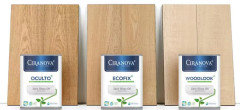
    There have been areas of progress in the last 100 years. Your hvac and electrical systems are not historic. Windows also. Lighting too, along with appliances. What is available and logically very popular today in engineered flooring is no different. Water-based poly with hardener like Eco-Fix Ciranova Ultramatte allows a non yellow finish. Blanchon is the French parent of Ciranova, around way before your home was built.

    Watching an episode of Unsellable Houses. Instead of refinishing the yellow hardwood, they replaced all of it when walls came down. The Bruce site has 500_ European Oak engineered flooring choices. Use the Visualizer to see what's possible. Rustic or Prime.


    3.25" wide open grain white oak is much choppier than 8-11" wide closed grain European oak. You get a better view of the wood structure.

  • 10 months ago

    " The reason I'm doing it this way as opposed to staining the kitchen to match the rest of the house is that the rest of the main floor needs to be refinished anyways, "


    You will never get your site refinished wood to match a prefinished factory finished wood, no way no how. Unfinished in the kitchen and finish all the exact same way.

  • 10 months ago

    We were in a similar position when we bought this house. We went with unfinished oak that was laced with the existing one, sanded the old part, and then finished them together. The color was subtly different, as was the grain, since 100 year old growth was much denser. Still, it was only noticeable when you were looking for that. The actual problem with this method, as we found out a bit later, was that our 100 yo floor was refinished one too many times. It started splintering, so now we are replacing everything with very similar prefinished oak, the only concession I am making to modern technology, because no way I am putting wide engineered wood planks in my house. I don't care what other people want or don't want in their new construction. Still, prefinished floor looks different. Every plank is slightly beveled, as opposed to the straight edges of the unfinished wood that get sanded together later. I've heard that there are some companies that make them without the bevel, but I wanted something cheaper.