Software
Houzz Logo Print
marilyn_carolan61

What’s happening to our shower?

We recently put on an addition. The anti microbial grout became discolored in spots almost immediately and roughly 18 months since it was tiled we had our first flood with water pouring out from the light fixture underneath.
The GC thinks it is ok to caulk where we believe the crack is that caused the flood - but other people in the industry are telling us the shower was never properly waterproofed (water should never make it to the floor below if so) and the whole thing should be redone.
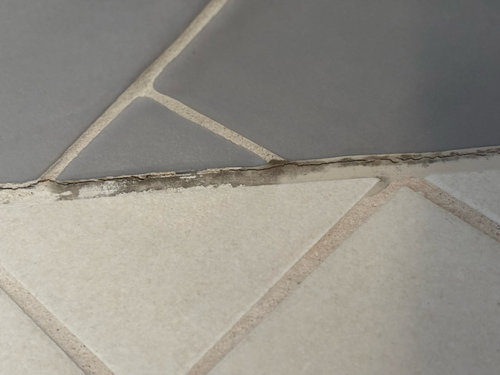
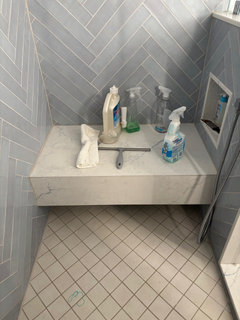
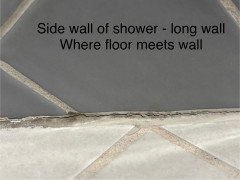
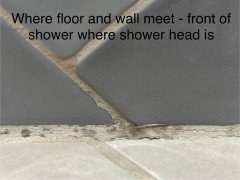
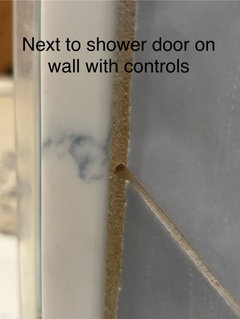
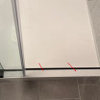
Here are photos of the discoloration and cracks. The GC believes the water escaped from the corner of the bench.

Comments (22)

  • last year

    More photos

  • last year

    More photos

  • last year

    "Other people in the industry" are being more candid than your GC,need I say more? Showers are "supposed to be" waterproofed behind tile and caulking is not how professionals remedy leaky showers.

    Marilyn Carolan thanked klem1
  • PRO
    last year

    If you've got water coming from a light fixture from a second floor shower, it's probably tear-out time.

    Marilyn Carolan thanked Joseph Corlett, LLC
  • last year
    last modified: last year

    "The GC thinks it is ok to caulk where we believe the crack is that caused the flood"


    Peeing into the wind. Might last until he backs out of the driveway. As Joseph says most likely gut time with a different contractor.


    "The GC believes the water escaped from the corner of the bench."


    Then that is just further proof that the waterproofing / pan was not built properly and the entire shower needs a do over.

  • last year

    Thanks all. Follow up questions…

    • what do you think think is causing the tile discoloration? The person at the tile store thinks the grout is never drying because water is getting to it from behind. The shower was bone dry when I took the close up photos of the dark, cracked grout.
    • the plumber (subcontractor, but not the one who did the job at first) said to my husband that “the code is only 2” “. He didn’t clarify. Does that mean above the water source or just the pan (and not the bench?
  • last year
    last modified: last year

    There is no code that " is only 2". I don't even know what that means. It sounds like he's trying to baffle you with BS. What is code, virtually everywhere, is that you must follow the manufacturer's instructions.

    In addition, there are published trade guidelines for tile installation (TCNA Handbook). While not "code" an installer who fails to install to these published guidelines has very little recourse if it fails.

    The entire installation below the height of the showerhead has to be waterproof. Since there are several different systems from different manufacturers, they are required to follow manufacturers instructions for installing a product. The details matter a lot - there's no room for improvising or "I've always done it this way". The best source of information for the system that you are using is from the manufacturer - they often have videos explaining how it works in detail.

    Just for reference, the standard code test for a custom built shower pan before any tile gets installed, is that the drain is plugged and it's filled with water to near the top of the threshold. The water line is marked on the wall and it sits 24 hours. If there's any water leakage, it fails.

    The point here is that the waterproofing happens before any tile / grout / caulk.

    The walls and all seams, including the connection to the pan, the corners, the niche and around the valve all have to be made water tight. They all need to be constructed so they shed water to the pan. All horizontal surfaces such as thresholds, benches, niches, etc. must have a slight slope on them so they drain into the pan.

    The structural material under the waterproofing must be stable if it gets a little wet. Concrete board, for example, is common. Other materials now include foam backer board that's waterproof all the way through.

    Drywall or moisture resistant drywall is not acceptable in wet areas - although some systems make the claim that they can be applied over such materials.

  • last year
    last modified: last year

    RE: Discolored grout:

    Much of that just looks like mold to me. If a little bleach water on a sponge removes it after a few minutes, then I'd guess I'm right.

    Sealing grout can help it look good for longer - but if the waterproofing behind the tile is bad (say concrete board with no water barrier) then yes - it can become saturated and never properly dry out and show up on the grout.

    Every change in plane (wall meets floor, wall meets wall, etc.) should have been caulked with 100% silicone caulk, not grout and not latex tub and tile caulk as was used on your installation.

    Here's the thing: your shower has to be torn out - all the way. All of the things under this have to be made right first.

  • last year

    @jake Thanks. We’ve bleached and used mold remover. Nothing budges it, sadly.

  • last year

    Marilyn -


    First, the following is for informational purposes only - there is no attorney/client relationship created by this post.


    I don't know what state you reside in - but most (if not all - I haven't researched all 50 states) have enacted statute(s) that cover residential renovations/services. These statutes vary from state to state - however, they protect homeowners re: issues like what you're experiencing.


    Many contracts for residential renovations have a one year warranty period stated in the contract. This has absolutely no bearing on whether you have recourse against your contractor to address the deficiencies with the waterproofing (or more accurately, the lack thereof) even though it has been over a year since your shower was constructed.


    Your contractor is responsible for fixing your shower - and "fixing" does not = re-caulking the shower. As has already been stated in previous comments, tile/grout/caulk has NOTHING to do with the waterproofing of your shower. If a shower has been constructed correctly, it can be used BEFORE a single tile has been installed on the walls/shower pan.


    In my state, contractors are required to complete their work in a "good and workmanlike manner." This has been interpreted by the courts to = in accordance with codes/laws/ordinances/regulations/industry standards/manufacturers' specifications. I assume that the statute in your state will have similar language/requirements.


    My state also requires homeowners to provide contractors with a right of remediation. This means that the homeowner has to provide written notice to the contractor providing thirty days for the contractor to address the issue(s). If the contractor fails to do so (or simply fails to respond) the homeowner has the right to bring suit against the contractor.


    Many states also provide for a homeowner to recover attorneys fees in the event that the homeowner is forced to file a lawsuit (and is successful in such lawsuit).


    If you would like for me to point you in the right direction re: this statute in your jurisdiction, you can either let me know which state you reside in - either in a comment or by sending me a private message.

    Marilyn Carolan thanked dani_m08
  • last year

    Jake said " Here's the thing: your shower has to be torn out - all the way. All of the things under this have to be made right first."

    and

    Marilyn replied " Thanks. We’ve bleached and used mold remover. Nothing budges it, sadly."


    Jake you couldn't make it any clearer what has to be done but obviously it went right over her head. Marilyn do you believe if stain is removed the leak will stop?

    Marilyn Carolan thanked klem1
  • last year

    @klem1 - that's a little unfair.

    They specifically used "anti-microbial grout".

    She may be asking so she understands if she needs to avoid that grout when this gets redone.


    Marilyn Carolan thanked Jake The Wonderdog
  • last year

    Klem1 and Jake,
    Thanks so much for your help.
    I completely understood the discolored grout has nothing to do with the leak. I was asking because we have been speculating since the first month the shower was installed that the immediate discoloration was coming from moisture behind the tile - to which the GC blew us off.
    In my mind, .It is a different issue but correlates to the overarching problem of improper installation.
    As a side note, I took Jake’s advice and soaked the bleach for an extended period against the grout and it did lighten - which again makes me believe it is coming from behind the tile.

  • last year

    Considering that your gc blowed smoke about other things,what are the odds he used the cheapest grout he could find and charged for anti microbial? I point this out because you keep asking if you should avoid anti microbial grout next time.

    Marilyn Carolan thanked klem1
  • last year

    klem1,

    I was trying ask how the grout could look so discolored/moldy/mildewy based on the fact that it was anti-microbial. My expectation was that it couldn't possibly look this bad so fast.

    It definitely was anti-microbial, because we bought the grout directly from the tile store. Sorry if I confused you to think I was asking if I should avoid it. That was never my question.

  • last year

    @Marilyn Carolan


    Mostly what I see is the caulk that's discolored - not the grout.

    I've stripped out and recalked more tub/showers than I care to count. Most of them look like your photos - dried and cracked latex caulk that was discolored with mold/mildew. None of it strikes me as unusual other than how new it is. And none of that should have been latex caulk.


  • last year

    @Jake - what about the vertical grout that turned yellow?

  • last year
    last modified: last year

    That's a good question - I couldn't tell if that was grout or caulk.

    Grout is inherently pretty stable. I have seen colored grout fade. I haven't seen it change colors unless it's something on top of the grout such as hard water / iron or something that penetrates and stains the grout, such as hair dyes, purple PVC primer (don't ask) and that sort of thing.

    I have seen various caulks/sealants oxidize and turn yellow like that.

    Is there anything metal above it?

  • last year

    @Marilyn Carolan is the only place you see yellow grout where it meets marble?


  • last year

    @jake Yes, just by the quartz

  • PRO
    last year

    Looks like to OP has all the answer she needs. This is obviously a contractor screw up and will need to be completely replaced.

    I will only add that ordinary cemetitious grout is the wrong product for a shower or even a bathroom floor. It is porous and even when carefully sealed is not completely waterproof.

    Use urethane grout for the best result. It is a plastic and thus cannot stain, and it remains resilient so that expansion and contraction over the years does not open up micro-cracks that harbor dirt and germs. Epoxy grout is also good, but a PITA to install.