Software
Houzz Logo Print
upperbaygardener

(sorta) New (sorta) Official Zone Map for Europe

last year
last modified: last year
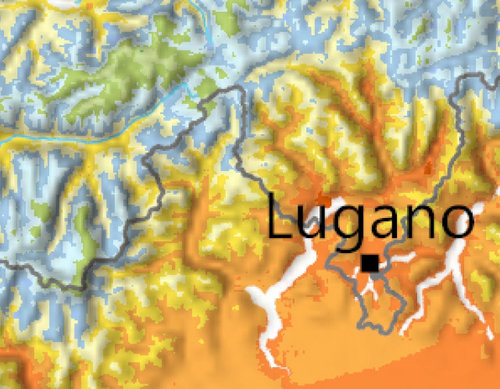
I stumbled upon this at the Jelitto seeds website, browsing for seeds I should really say no to trying to grow ;-). We gardenweb users have tracked the updates to the official USDA maps over the years, but I didn't realize there was a European one made by the German weather office, and that it was updated a few years ago.

https://ddg-web.de/whz.html

Looks well researched and I'm sure it was, though I'm struck by there being so little 9a around the Italian Lakes, and even more baffling, an incongruous patch of it many miles from the lakes in the Mesolcina Valley around Grono. Makes no sense at all. Multiple towns around the lakes had huge bougainvillea vines, which, even if the hardiest cultivar, really indicates 9a to me. If you're literally IN the lake, it's 9b, that's why there's a Norfolk Island pine on Isola Brissago, that even survived the big 2010 Euro-freeze. (but, who knows, maybe someday I'll make it to Grono and find mature Phoenix canariensis growing there 🤣)

The UK and Ireland look about as I expect. The fellow at the now dead growing on the edge UK gardening forum, Michael, who gardens on the far west coast of County Cork, said it was 10a...and so this might be another case where the map is a little off. It does correctly show Tresco as 10a, if you look really closely! It's impressive that parts of Lisbon are 11a, but I remember reading of crazy stuff like tropical orchids being able to stay outside all year there. The all time record low for central Lisbon is 30F, but the 30 year low is 32.7F. Amazing. Even LA's all time record low is lower at 28F.

Oh well, still might be useful for people, either Europeans in their gardening, or Americans in understanding the climate there.


Comments (12)

  • last year

    Mountains to the north shield from the coldest air.

    UpperBayGardener (zone 7) thanked bengz6westmd
  • PRO
    last year

    I'm not surprised by the map. It includes mesoclimatic effects. U.S. map does not do that too much. It did also say there are model uncertainties due to uneven data distribution and the complexity of the climate regime in some areas.

    UpperBayGardener (zone 7) thanked beesneeds
  • last year

    "Mountains to the north shield from the coldest air."


    Yeah the Alps are perfectly shaped, in a place that is already overall marine influenced, to protect their south slopes from cold. That's why the Italian Lakes are so mild, and that there isn't an equivalently mild climate, at say, Lake Tahoe.


    They also cause other interesting effects. Because they are where the chilly northern European air meets the warm Mediterranean air, even though the Med. basin itself is summer dry - though not as dry as California for the most part - the area on the south slopes of of the Alps, and around the lakes, are incredibly wet in summer. As those air masses compete, it leads to convection and thunderstorms.* So they are incredibly lush looking, even in summer. On my 2010 trip where I spent time on Maggiore and at least took the train past Como (the one most Americans know about because of the celebrities LOL) there was a striking difference between Zurich - already chilly and misty in mid-September, as you might expect for England to possibly be at that type of year, to the south side of the Alps, where Tirano, Milan, and Maggiore were still warm and sunny.


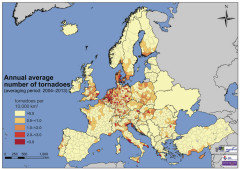
    * but that battle of air masses also means tornadoes can occur there. One, a couple years after I visited destroyed a *massive* tricolor beech at Villa Taranto that was considered one of the finest of that type in the world...and only planted after WWII!!! Imagine - a tricolor beech growing at least a couple feet per year! An example of how perfect that climate is. While tornadoes are almost unheard of in California, along a line in Europe from the UK to the Balkans, they do occur, as the wet, mild Atlantic air clashes with colder air from Siberia. The waters off California are just too chilly to encourage such atmospheric energetics.


  • last year
    last modified: last year

    Wow, that map is interesting. France repels tornadoes, but hands them over to The Netherlands, Germany, Denmark & east. Can't figure that other than stronger continental cold-fronts there......

    UpperBayGardener (zone 7) thanked bengz6westmd
  • last year
    last modified: last year

    It's so interesting you picked up on that; I had a theory I had to immediately investigate. I was proven right, to the extent I'm able to break this down with rainfall figures. TLDR: "Can't figure that other than stronger continental cold-fronts there...." yes, exactly!

    Most of France, Spain and Portugal are very dominated by the airmasses of the Atlantic or western Mediterranean. OTOH, I suspect there's almost the European equivalent of Texas's 'dry line' that sets up along that axis from northern France to Northern Italy. When cold air from northern Russia and Scandinavia pushes down towards central Europe. The areas with a lot of tornadoes are to the east of that line, and would have at least a slight summer peak of rainfall because of the enhanced summer convection - and guess what, they do. That map actually does a really good job showing it. Anywhere in western (and obviously southern) France has a winter rainfall peak. Paris is kind of a weird transition zone, and has a very slight spring rainfall peak...and surprisingly low rainfall overall, just 24 inches a year. OTOH, Amsterdam's rainiest month is August, and has much more rain than Paris - 33 inches per annum. Most, if not all of Germany has a slight summer peak. Even Hamburg, so close to the North Sea, still has a rainiest month of July - just barely. So tornadoes can't develop over most of France because there's just too much calming from the marine influence. Sure it can get hot in France in summer, but that air is coming from the western Med or North Africa and isn't usually humid enough to trigger huge storms (or tornadoes) when it gets pushed back down.

    I do remember when I visited Nice in July 1993, there was a cold front that brought substantial rains - maybe 0.5 to 1 inch based on my memory of how long it rained - and some distant rumbles of thunder at night. My host told me it was unusual for that time of year, but not unprecedented. (I contrasted in my mind with California, that I had visited the summer before...and our family friends told us raining in summer would be absolutely unheard of) So the 'Siberian' cold fronts can penetrate that far south in France, once in a while. Even in summer. I remember the next day was very crisp and cool and she told me I got lucky, it would normally be a bit muggy by that time of year. (She was the Dutch widow of a Pan Am and KLM pilot who had lived for a time in the states, so she knew humid weather!)

  • last year
    last modified: last year

    The tiny spot of tornadic activity near Lisbon is mysterious, especially since it's bone dry there in summer.

    https://en.wikipedia.org/wiki/Lisbon#Climate

    I can only imagine maybe those tornadoes happen at other times of year and are based on different mechanisms, maybe a battle between airmasses from North Africa and the Bay of Biscay, in spring or fall? Maybe an urban heat island even contributes.

    It's worth mentioning that of course, Europe's tornadoes generally aren't as large or destructive as ours.

    having terrible insomnia so, picture time!

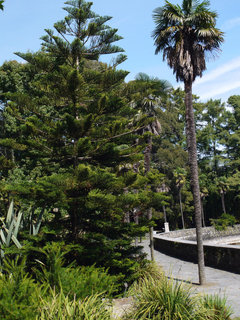
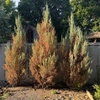
    The Norfolk Island Pine at Isole di Brissago. Pic taken Sept 2010. I read a report on GOTE that it survived the big freeze that winter...but who knows what's happened to it since.


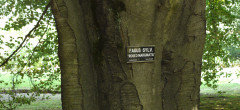
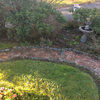
    The trunk of the huge tricolor beech at Villa Taranto that was destroyed by a tornado in 2012 or so. (Those labels were huge btw, the biggest I'd ever seen) I can't find my NALT but Jacobson listed it as one of the biggest known in the world, it was roughly 100' IIRC. I didn't even bother trying to photograph the whole tree! https://www.telegraph.co.uk/news/worldnews/europe/italy/9503858/Famed-Italian-botanic-garden-devastated-by-tornado.html


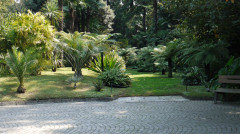
    cordylines, trachys of course*, tree ferns, various pinnate palms, maybe a furcraea or even a doryanthes, and platycerium ferns in the dell that was shaded by that beech. I wonder what happened to this stuff. If the tree ferns were ripped out of the ground, they look like Dicksonias so they could have just been replanted.


    * Anywhere Trachys are planted in the Italian Lakes, the seedlings will grow so thick that underneath them they were sometimes trimmed as a very spiky lawn!!! Makes sense, palms are giant grasses after all!

  • last year

    "chilly and misty in mid-September, as you might expect for England to possibly be at that type of year"


    Not really. That's more like November and December. September is often mild and relatively sunny. But our weather is hugely variable so although there are patterns you can't rely on them. Before I started on Garden Web I'd not even heard of climate zones. I had to look up what mine would be. They're little used here and the RHS has its own system for the UK called Hardiness Ratings https://www.rhs.org.uk/advice/rhs-hardiness-rating

    UpperBayGardener (zone 7) thanked floral_uk z.8/9 SW UK
  • last year
    last modified: last year

    Thanks floral! Obviously, I would not argue w/an English...person about their climate. I would just say that, even in your sunniest months, you can still have pretty dreary weather. I did say 'as you might expect for England to possibly be'. Minor correction: my trip was actually in the last couple days of August and first couple weeks of September.

    Compare the % possible sunshine for London, vs. Baltimore, which is considered a dreary US city by some Americans.

    https://en.wikipedia.org/wiki/Baltimore#Climate

    https://en.wikipedia.org/wiki/London#Climate

    You will see that Balto's *worst* month, still beats London's best!

    My overall point was the Alps and central France...maybe the Massif Centrale - separate the chilly, wetter parts of North Europe from the sunnier, warmer southern parts.

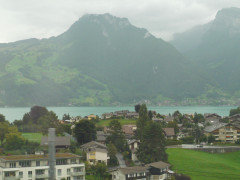
    Here was a view from my train on August 30th, passing what I'm pretty sure is Lake Thun, SW of Zurich. There was light rain and overcast skies. (Google images funny enough thinks it is somewhere else, but I know I went through the Lötschberg base tunnel because that was one of the whole points of this part of the trip! I am also a railfan...davidrt28 secrets revealed! At that time, it was the longest tunnel of any kind in the world.)


    (yes, Thunersee, and the mountain is Sigriswiler Rothorn)

    Once I got to St. Moritz, I was on the drier side of the Alps, so it cleared up, and the rest of my trip would be sunny. Even when I got to the UK a few days later, the south coast was fine and sunny.

    Here is the totality of my UK weather experiences:

    July 1993: several days of drizzle

    summer 1996 at U Edinburgh: unusually fine, only a couple days of rain! People said I got very lucky. Took train to Mallaig and it was drizzly once we got near the famous Glenfinnan viaduct.

    Oct. 1999 - several days of drizzle, would be next to unheard of in mid-Atlantic US at that time of year. I came away wondering why people don't break their necks slipping on the grimy and wet sidewalks of London.

    Sept 2010: A couple mostly sunny days along the south coast. I've mentioned before being surprised by the slight mugginess.

    Spring 2025 was supposed to happen, a year ago, but, alas, I decided to put that off for a few more years!

  • last year
    last modified: last year

    Back to zones for a moment; with almost everyone in the UK living in USDA 8 or 9, of course it doesn't make sense for them to use that system. The same would be true of Australia, although they at least get a little more out of the system because they have people living in 10, 11, 12 or even 13! (Darwin, probably)

    I feel like, as much as the rest of world might rightfully poo poo the Fahrenheit scale, plants really do seem to group in logical ways along USDA zones...but that would be a digression for another thread.

  • last year
    last modified: last year

    David, if you're a railfan, I know it's a long way from you, but the Western MD Scenic RR centered in Cumberland operates the 1309 steam engine which is a treat to watch and chase (better than riding on it). Here's a nice profile pic. I've actually heard its whistle from my place 12.5 miles away!


    UpperBayGardener (zone 7) thanked bengz6westmd
  • last year
    last modified: last year

    It's the climate here which lets us grow a huge range of species. It sometimes annoys the humans but plants love it.

    It also stops us getting bored and provides an endless topic of conversation.

    UpperBayGardener (zone 7) thanked floral_uk z.8/9 SW UK