

2ton or 3ton diff?
So, a 3 ton system removes more heat from air. so outlet air is colder? or there is ”more” cold air? higher air velocity? as in more cold air? my 2 yr old 2 ton setup cools house. but our room air temp rises in afternoon from set point of 71f and goes up to 73 and sometimes 75f. lousy house design. west side bakes. no shade. lousy insulation. and so on. can a higher cap system, say 3 ton achieve 71f at all times?
Comments (45)
 last yearlast modified: last year
"lousy house design. west side bakes. no shade. lousy insulation"
Instead of jacking up the capacity of the AC, have you considered considered ways to reduce solar heat gain?
Are the west-facing windows? Close blinds, install insulated blinds (e.g., cellular), consider window film or awnings; caulk windows to reduce air infiltration..
West-facing walls: Shade with shrubbery, fence, awnings; add insulation; paint the wall a light color; caulk gaps between wall and floor; add wall plate foam gaskets.
Install ceiling fans which can increase comfort at higher room temperatures.
- last year
Are you seriously considering replacing your two year old AC because on very hot days the temperate goes up to 73 °F and sometimes 75 °F?
...can a higher cap(acity) system, say 3 ton achieve 71f at all times?
Possibly if the duct work can handle the increase in air flow.
Related Professionals
Augusta General Contractors · Lima General Contractors · Flagstaff General Contractors · Carlsbad General Contractors · Fort Collins General Contractors · Logan General Contractors · Vernal General Contractors · Portsmouth Home Remodeling · Jackson Home Remodeling · Kingman Home Remodeling · Gillette Home Remodeling · Richmond Bathroom Remodelers · Syracuse Bathroom Remodelers · Leamington Bathroom Remodelers · Bronx Bathroom Remodelers- last yearlast modified: last year
Set your thermostat to lower the air temp to 69 by 1pm. Take the siding off the west side and add 1" foamboard. Reinstall the siding. Redo trim. Less than a new AC.
 PROlast year
Diagnosis before prescription. I suggest you have a blower door test and a duct blaster test performed before deciding what the best remedy is.
 last year
What you're saying is, your 2 ton AC condenser (plus coil, plus air handler) can't keep pace with the heat gain in your house. Two options - reduce heat gain, increase condenser (plus coil, plus air handler) size. I would look to the first option before considering the second.
- PROlast year
Poor performance of an otherwise properly-sized HVAC system can be a consequence of leaky ductwork. Where leaky ductwork is the culprit, duct sealing may be able to boost air flow and achieve the desired comfort level without changing any existing components of the system. A duct blaster test will determine the leakage rate and identify the opportunity for system improvement from improved duct sealing. I'd start there.
 last year
Or a dirty filter. Or partially closed zone valves. Or partially closed supply grills. Or closed doors for rooms without their own return or jump ducts. Or, or, or.
I agree with assessment before doing any work. It could be a lot of things.
- PROlast year
"Any system regardless of cap (capacity for short), will be brought to it's knees under heavy heat load (high outdoor ambient temps typically once 95F outdoor is breached)"
Not exactly. Well, make that a definitive "no." Higher outdoor temperatures will increase the cooling load an air conditioning system needs to meet. The extent to which the cooling load increases depends on the properties of the building's thermal and pressure envelopes (insulation, air sealing, type of windows, etc.) A super-insulated home's cooling load may increase very little with increasing outdoor temperature while a poorly-insulated home's cooling load may increase a lot.
Higher outdoor temperatures make it more difficult to reject heat to the environment, but that is compensated for by increasing the heat transfer area of the condenser. It's called "HVAC system design." So, a properly-designed air conditioning system in say, Yuma Arizona (where the 2 1/2% summer outdoor design temperature is 109F,) will be capable of producing comfortable indoor conditions (75F minimum indoor design temperature) for 97 1/2% of the cooling season. It won't be "brought to its knees" at 95F provided it's been designed by a competent design professional.
 PROlast year
So, a properly-designed air conditioning system in say, Yuma Arizona (where the 2 1/2% summer outdoor design temperature is 109F,)
Charles, it's a desert out there. One could use one of those fandangled evaporative coolers out there / or install a swamp cooler. -- Completely different climate to be considered from bringing an AC to it's knees in a humid laced environment. (let's ignore context, good one Charles.)
Humid laced environment using a swamp cooler won't work. So just arguing temp alone is a foolish endeavor. Specifically Other problems that could develop?: Yeah I did mention that. HVAC isn't a end all be all thing... because no two climates are exactly alike... comparing a desert to another area laced with humidity ?? a loser of an argument if I ever heard one.
But Charles has never been one to make an apple to apple comparison. He's a builder, not an HVAC guy. I suppose he's trying to make up his major fopaw in the other thread about mold growth, darkness criteria and "moisture" being in the damp form, condensed from rampant humidity. Hey Charles, you won't find those kinds of problems in the desert... unless maybe it's a plumbing leak that's been ignored.
Well at least in the desert, it's a dry heat. Yes, that poses a new set of problems well over the pay grade of Charles the builder. Our take everything out of context leader here on Houzz.- PROlast year
Air conditioning systems can be, and are, designed to provide comfortable indoor conditions in a variety of climate zones and temperature extremes. You've described your area of Katy, TX as "the gates of hell," and suggested that designing air conditioning systems there is a unique climate challenge.
The reality is that the summer design temperature in Houston, TX is less than lots of other locales in Texas. The 2 1/2% summer design d.b. temperature for Houston is 94F. It's 97F for San Antonio; 98F for El Paso, Midland, and Austin; 99F for San Angelo and Waco, and 101F for Wichita Falls.
Air conditioning systems aren't expected to hold setpoint when operating above their design temperatures, so an outdoor temperature of greater than 94F, say 95F, would limit most systems in Houston. But that's not the case for air conditioning systems in Waco or Wichita Falls which would be expected to hold setpoint at 99F, and 101F, respectively. Stated otherwise, they're not "brought to their knees at 95F.
stoveguyy
Original Authorlast yearlast modified: last yearHouse is multilevel. or 4 level. 1975. 2x4 walls. i have no access to west side attic space. no closet i can go thru ”hatch”. i do not know how much attic insulation i have. yes, wifey tries the 69f noon trick. kitchen and living room are on west side. the 2 lower levels are cool. i have thought of somehow adding door/barrier to lower levels to trap more cool are in #3 living room area.
for 10+ yrs we never used living room. always used #2 lower level family room. which was cold in winter. such a hard life.
- last yearlast modified: last year
"kitchen and living room are on west side... for 10+ yrs we never used living room"
Assuming these rooms have west-facing windows, I would definitely consider window film. I have a skylight and adding window film made all the difference in the comfort of my condo during the summer.
- DIY: G-Cling 70 Static Cling Window Tint (CR-recommended)
Installed:
- PROlast yearlast modified: last year
Stated otherwise, they're not "brought to their knees at 95F.
If your set point is 72F and in the heat of the day the indoor temp climbs to 75F -78F in the heat of the day?
What term or terms could I use to describe this so everyone "OTHER THAN CHARLES ROSS HOMES CAN UNDERSTAND IT WITHOUT GOING INTO A DIATRIBE?"
What term or terms could I use that would get under the skin of Charles Ross the builder?
The AC is being brought to it's knees because obviously to everyone but Charles, it cannot keep up. ~ yeah I'm gonna use that. (too bad Charles) ha, ha.
If you're a nail today, you better hide.
To be clear (something Charles is not) I don't live in the gates of hell, I live about 3 clicks to the west of it. - last yearlast modified: last year
Yes, wifey tries the 69f noon trick. kitchen and living room are on west side. the 2 lower levels are cool.
That zone temperature difference info suggests she try the next step. Set your fan to run continuously in conjunction with the 69-degree setting. Start about 11am. This will use your whole house as a cool air source for the hot part of the day. This could be improved with duct balancing to send more airflow to the kitchen living room.
- PROlast yearlast modified: last year
Ray,
You stated as a general case that "Any system regardless of cap (capacity for short), will be brought to it's knees under heavy heat load (high outdoor ambient temps typically once 95F outdoor is breached)"
So, I guess the people of Yuma, AZ don't get air conditioning in their homes if the outdoor temperature is greater than 95F. Ah, no, Ray.
Although the summer design d.b. temperature for Houston, TX is a mere 94F, lots of systems provide adequate air conditioning when the outdoor (ambient) temperature is 95F or greater. Indeed, with proper design, people in desert climate zones (i.e., with outdoor daytime temperatures that average 100F to 110F) enjoy comfortable indoor conditions in their homes. Their systems aren't "brought to their knees once 95F outdoor temperature is breached." It's just a matter of proper design.
There's a wide, wide world outside of Katy, TX, Ray, and people are comfortable even in climate zones and/or areas with higher-than-Katy-TX temperatures. That would include folks in Abilene, TX where the summer d.b. design temperature is 99F, Austin, TX. where the summer design d.b. temperature is 98F; Dallas, TX, where the summer design d.b. temperature is 100F; El Paso, TX where the summer design d.b. temperature is 98F; San Angelo, TX, where the summer design d.b. temperature is 99F; San Antonio, TX , where the summer design d.b. temperature is 97F, Waco, TX (where I lived for three years and) where the summer design d.b. temperature is 99F, and Wichita Falls, TX, where the summer design d.b. temperature is 101F.
- PROlast yearlast modified: last year
Charles twisting my words doesn't do you any favors. I don't service Yuma, Az. Just as much I don't service your area in Virginia... so why you care so much about Yuma, Az? Probably to argue.
I like to focus on the area I service which is Katy, Texas. To help you locate this area on a map-- it's about 3 clicks due west of the gates of hell.
General view: when heat loads go up, it will make any AC work harder Charles. As you often like to say it's not rocket science. If there are any problems with the AC, they will be more pronounced under "heavy heat load". (something Charles has yet to understand? yeah he a builder not an HVAC guy)
You are a builder aren't you Charles? (asked him many times yet he still won't admit it.)
If your AC can't keep up with design set point, it has been brought to it's knees. For Katy, Tx it's 75F indoor with 95F outdoor.If your AC can't get down to 75F during heat of the day, it maybe down on bended knee. == Pleading with you for help. If this is your problem in the desert? I don't service those kinds of areas. I know Charles doesn't either, even though he likes to argue about things like this.
stoveguyy
Original Authorlast yearlast modified: last yearhouse is in mpls mn
My return air is 66f and outflow is 58f. i cleaned my exterior ac coil yesterday as it was somewhat clogged. its 87f outside now and house is 72f and thermo is set to 70 at noon. the ac was set to 71 at 8am and it was cycling on/off
this is duct temp 2’ above furnace.
furnace is 105kbtu approx. 1975 era but ac is 2 yrs old. i know. mismatch.- last year
8 degree differential is pretty low. If the system is only 2 years old, it should be much better than that. It's still under the manufacturer parts warranty. Get a reliable HVAC guy in to check the charge and other potential issues.
- PROlast year
its 87f outside now and house is 72f and thermo is set to 70 at noon. the ac was set to 71 at 8am and it was cycling on/off
Sounds like low on refrigerant, if low she's a leaker. So find the leak, fix it or it will just leak again. Probably the indoor coil or maybe the service caps?
While not common for coils to leak that quick, it does happen. I had an install a few years ago the indoor coil didn't even last 6 months.
It brought the AC to it's knees. - last year
I don’t understand if supply is 58F and the return is 66F degrees then why is the thermostat cycling on and off at 71F degrees?
Why do you think the refrigerant is low if the supply is 58F? Do you expect it be lower on a very hot day?
stoveguyy
Original Authorlast yearlast modified: last yearOutside unit and inside coil were replaced in 2012. in 2015 system was low. recharged. 2016 low again and evap coil changed. Under warranty. compressor died in 2022. locked rotor. outside unit replaced.
- PROlast yearlast modified: last year
Ray,
I don't live in TX and haven't for a number of years. I'm trying to understand whether folks in Wichita Falls, TX need to expect their air conditioning will be "brought to its knees at 95F" or whether they can expect it to perform as designed based on their summer d.b. temperature of 101F. Do you give your customers something that helps them understand their a/c is limited to only 94F and they're on their own after that? Thanks in advance for clarifying.
- PROlast year
Outside unit and inside coil were replaced in 2012. in 2015 system was low. recharged. 2016 low again and evap coil changed. Under warranty. compressor died in 2022. locked rotor. outside unit replaced.
So the 2016 coil is leaking again, but because that was originally from 2012, no longer under warranty. If the leak is coming from the E-coil? Probably but, ya never know until you check.
It's also possible the outdoor unit service caps may have started leaking, although a now nearly 9 year old Evap coil could be the problem too.
------------------ A builder trying to understand HVAC -----------
Charles I know you're trying to understand the basic of things, as far as I know you're a builder right?
So whether it's 95F or 101F or 80F doesn't matter, Charles. Problems occur as an AC unit ages and in many different ways due to what?
What was done previously, what wasn't done that should have been done, what shouldn't have been done but was done anyway OR just prescribed wear and tear when an AC breaks it doesn't always mean 100% no bueno. Refrigerant problems directly effect capacity of the machine? yes. Heat also effects capacity? Yes. A combination of those two? Yes. A unit that cycles on and off? Yes. Why is the unit cycling on and off?
If you're not testing you're guessing. Well it's not rocket science? Good thing it's not. LOL.
What happens in Vegas (desert by the way) should stay in Vegas... the odds game. Place your bets, those of you who like to guess but with statistical advantage? maybe? a little?
If the set point temperature with in the house is not being reached... the system is being brought to it's knees. The hotter it is outside, the greater the odds the home owner notices it? Yes, but an AC can break at any time. While odds are really great in hot weather, this symptom is not the end all be all.(When I use higher outdoor temps I use them as an odds forecaster, meaning greater chance of being probable. However, HVAC is not something that can be crammed in to very specific things like Charles is trying to do with outdoor temps or the variation thereof.)
Because the occupants inside become uncomfortable. The greater the temp outside merely increases the odds people inside will notice that something is wrong. But the temp outside is only a single thing, not the only thing that can and will cause issues with your AC.
Which is why I tell people all the time, the unit does not produce cool Charles. It is a science box that transfers heat. The more heat it has to transfer, the more likely the problems the machine has will bring the AC system to it's knees. (You'll notice that typically only via the difference from what you are trying to reach indoors vs what indoor temp the system is able to achieve.)
The OP stated he had an outdoor temp of 87F -- clearly shows the AC can be brought to it's knees at just about any outdoor temp that the home owner is attempting to operate the unit in. - last year
I didn't graduate from HVAC tech school so perhaps someone can explain this to me. How can the air supply temperature be 58 °F when he outdoor temperature is 87 °F if the refrigerant charge is low?
The outdoor summer design temperature for Minneapolis, Mn is 88 °F. The typical indoor design temperature is 75 °F. Stoveguyy wants the indoor temperature to be 71 °F under outdoor design conditions. However the temperature is rising up to 73 °F at the hottest time of the day. This is a 4-level house built in 1975. Insulation is not up to today's standards and I suspect the duct work routing and sizing is not optimal. Given what has been described the AC is doing what it was designed to do in my untrained opinion.
- last year
"mike_home: How can the air supply temperature be 58 °F when he outdoor temperature is 87 °F if the refrigerant charge is low?"
Supply temperature is after cooling the intake/return. Intake/return is room air, not outdoor air.
stoveguy: "My return air is 66f and outflow is 58f."Intake/return is referenced as 66°F. Outflow/supply (after cooling) is referenced as 58°F. That's an 8°F drop. Per Google AI, the delta T (drop) between intake/return and outflow/supply should be between 14°F and 22°F. I recall the industry typically references 16°F to 20°F.
I can't imagine anyone complaining about 66°F room temperature at 87°F ambient. My neighbor has several rental properties. Two of the tenants want 65°F for cooling. One in a 103yo 2-story woodframe house (that has had a few additions, and two HVAC systems, upstairs and down), the other in a 1954 1-story woodframe house (they added a window unit to the master BR). That's insane and far outside design temperatures ... in TX, within Ray's greater Houston regional area.I'm sitting in my office room, at the computer, with a ceiling fan at low, setpoint 77°F, and I'm perfectly comfortable, even a slight hint of a chill on my bare feet.
- PROlast year
click to enlarge
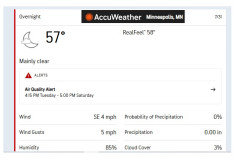
The effects the weather has can also be chilling... but what Stove guy is shooting for 71F is not all entirely out of the question for that area.
For one, when you live in a colder area for so long the body becomes acclimated to a cooler temp in the summer, with over night temps in the high 50's (F) one could argue what do you need mechanical cooling for? Until you focus lower and see those humidity numbers. (That's probably why you would want mechanical cooling)
I sleep at 72F here in Katy, Texas I know people here who sleep at 70 even though that it out of design parameters by a good margin. (If heat wave comes that can and will have a negative impact which is completely different than having over night lows in the high 50f's)
Most air conditioners they tell you to not run the outdoor unit at temps below 55F so you can see how close it can sometimes get to a number of problems with outdoor weather.
Also running an AC over night with lower temps & low on refrigerant is more likely to cause the indoor coil to freeze which very well may explain why the unit was short cycling.
HVAC isn't about what others think or what makes them comfortable. It is only about what makes the home owner comfortable. Then coming up with a plan to deliver that comfort.
I service the Katy, Texas area ( I am from the Chicago area but that was nearly a different life time ago now 1999) - last yearlast modified: last year
....87f outside now and house is 72f and thermo is set to 70 at noon. the ac was set to 71 at 8am and it was cycling on/off
Stoveguyy states at 8am the thermostat was set to 71 °F and the AC was cycling on and off to maintain the desired temperature set point. At 12 noon the setting was lowered to 70 °F, but temperature in the house began to rise to 72 - 73 °F. I assume the AC ran continuously at this point until the outdoor temperature began to drop and reduce the heat load.
Can someone explain why this would be a sign of short cycling?
- PROlast yearlast modified: last year
"HVAC isn't about what others think or what makes them comfortable. It is only about what makes the home owner comfortable." Well, you'd score 1 out of 3 on that one, Ray. The design objectives for a residential HVAC system are 1.) to provide comfortable indoor conditions, 2.) to provide healthy indoor air quality, and 3.) to achieve 1.) and 2.) in an energy-efficient manner--all while respecting the homeowners' budget and applicable code requirements.
"....with over night temps in the high 50's (F) one could argue what do you need mechanical cooling for? Until you focus lower and see those humidity numbers. (That's probably why you would want mechanical cooling)" Really? I don't think any intelligent person would be arguing for mechanical cooling to control relative humidity given those outdoor conditions. The OP's desired indoor temperature is 71F +/- if you heat outdoor air at 57F and 85% relative humidity to 71F it drops the relative humidity to 52%
- PROlast year
I don't think any intelligent person would be arguing for mechanical cooling to control relative humidity given those outdoor conditions.
Charles I am not the OP. I didn't start the thread. Why did he start the thread given over night temps as to what they are?
Charles is a builder who gives little thought to such things?
---------------Stoveguyy states at 8am the thermostat was set to 71 °F and the AC was cycling on and off to maintain the desired temperature set point. At 12 noon the setting was lowered to 70 °F, but temperature in the house began to rise to 72 - 73 °F. I assume the AC ran continuously at this point until the outdoor temperature began to drop and reduce the heat load.
Can someone explain why this would be a sign of short cycling?
He said the unit was cycling on and off to maintain, but was this to maintain or ??
We don't know Mike. Hitting those lows over night / showing signs of possibly low on refrigerant issues / knowing first hand what causes indoor coil to ice over / not to mention demonstrating performance issues with a not so hot outdoor temp of 87F.
A system that is marginally low on refrigerant is much more likely to freeze with over night temps that dip below 60F.
If the AC was shut off and windows opened? no, the coils would not freeze under that scenario.
Why would someone want to keep the windows closed? allergies.
----Ah so it's all about COMFORT.
uh, yeah. - last year
He said the unit was cycling on and off to maintain, but was this to maintain or ??
Yes at 8am the AC is able to maintain the a temperature set point of 71 °F degrees.
Hitting those lows over night / showing signs of possibly low on refrigerant issues / knowing first hand what causes indoor coil to ice over / not to mention demonstrating performance issues with a not so hot outdoor temp of 87F.
A temperature of 87 °F is considered hot in Minneapolis, Mn. The condenser is 2 tons which is probably the size installed when the house was built and the capacity of the supply and return ducts. I still don't understand if an AC can't maintain a 71 °C at outdoor temperature conditions that it could be due to a frozen coil.
If the AC was shut off and windows opened? no, the coils would not freeze under that scenario.
Why would someone want to keep the windows closed? allergies.
There has been no mention of opening windows by the original poster. Do you think that is what is causing the AC to not reach the desired set point?
- PROlast yearlast modified: last year
"Charles is a builder who gives little thought to such things?" I'm both a homebuilder and a licensed P.E. I had more than 18 years of industrial HVACR experience before becoming a homebuilder 26 years ago. Comfort and energy efficiency of our homes are marketable points of difference--both get a lot of my attention during design as well as construction. I have to warranty my homes and my clients have my cell phone number so you can bet I have a vested interest in ensuring the systems work as designed.
Ray, you implied the nighttime relative humidity of 85% at 57F required dehumidification. It doesn't need any type of mechanical dehumidification, it just needs to be heated to the indoor temperature of 71F to drop it to 52% In this, and numerous other threads you have made clear that you don't understand psychrometrics. It's no wonder the trade school you graduated from couldn't meet the VA's minimum curriculum standard for veterans education programs and closed their doors.
- PROlast year
I still don't understand if an AC can't maintain a 71 °C at outdoor temperature conditions that it could be due to a frozen coil.
Yes, Mike I know. I am an HVAC contractor discussing what if's / with rude mix of guessing based upon over 30 years of HVAC in person experience dealing with such issues. (about as varied as anyone can fully imagine from a discussion board just speaking "generally about such things" filed under just an educated experience related guess). -- How does one gain experience? doing it, not taking just guesses at it. So I am clear here.
Frozen coil is a subset of a unit that is low on refrigerant charge. Low on refrigerant charge is a capacity issue, throw in very cool temps over night -- low capacity issue + heat of the day the AC unit runs longer because of low cap issue AND drop of over night temps (outdoor) causes coil to freeze over night. When I say frozen coil it doesn't necessarily mean the whole coil is a block of ice. So realize there are degrees of "frozen". If the unit makes set point and shuts off? What do you think happens to the ice?
Another day comes and the cycle repeats? yeah pretty much. Some refrigerant leaks start at micro leak level.
Do we know this for certainty? No. But I do see this quite often even here when the stars align and over night temps dip beyond 60F / sometimes enough day time heat and even only a dip into the mid to low 60F's over night can set things in motion.
Once ice forms on the coil? it's all over, It will continue to make ice at that point.
71F inside in the morning? temps outside fell over night lower than 60F. So certainly possible over night there was just enough capacity to drop the temp inside the house... even still this is just a guess. (This is an in person job, not really a magic 8 ball job)
-------Charles I didn't imply anything other than to provide reasons why OP "may have" wanted to run the AC as opposed to just opening a window with over night temps dipping below 60F.
All of this discussion is elaborate guesses as to why the home owner / the person operating the thermostat chose what they chose to provide the comfort they are looking for.
But Charles can't understand this? Charles, again I didn't start the thread, I have no relation to the OP.
The moral of the story -- you need someone in person to investigate the problem, not just providing elaborate guesses... all of which could be wrong.
The unit in question in this thread may not be low on refrigerant at all, may have some other problem? yes, all entirely possible. - PROlast year
"Charles I didn't imply anything other than to provide reasons why OP "may have" wanted to run the AC as opposed to just opening a window with over night temps dipping below 60F." That's both silly and counter to what folks in mild climates know to do in order to lower indoor temperatures in summer--open the windows! Doing so doesn't create an excessive indoor relative humidity. If the outdoor air at 57F and 85% r.h. gets heated to 71F the resulting relative humidity is 51%. Simple psychrometrics.
- PROlast year
Charles then why was the thread started?
A problem was detected, suggested and questioned...
It's not my position to question how a home owner decided to operate their own system, what - how - why - when and what for.
You claim simple, yet here we are miles deep into a thread that you still can not understand and want to argue for reasons as to why a home owner has detected problems with their AC unit.
I'm in the business of fixing AC's, not really dictating to someone on whether to open a window or not.
I understand the new build world to be this: Build a house with no one in it, put strict limitations on how long that HVAC system will be warrantied often times a year, maybe 2 years?
Then someone moves in and discovers trouble because the builder "thought" -- xyz would work under all USE scenarios.
I don't fix builder's opinions. I don't fix flat wallet problems.
I fix HVAC systems and I service the Katy, Texas area. (This post isn't really for you Charles) stoveguyy
Original Authorlast yearlast modified: last yearHa. capacitor died few weeks ago. i put in new one. cap is warrantied but install or service call is not covered. i said temp at top of furnace is 66f. the temp at floor vents is higher. unit has actually been cycling on/off at 71f (house temp) the past week. old cap was mushroomed. would that have any affect on units performance? before it stopped running that is.
- PROlast year
yeah capacitor can cause a lot of weird performance related issues if it doesn't completely fail all at once.
Most of the time they fail and the unit won't run at all. But I had a call maybe a couple of weeks ago where the complaint was that the unit is not keeping up in heat of the day.
Thought it was low on freon was the initial thought, but nope (the little reason guessing is dangerous in this business -- some companies may play off this? who knows).
I actually started the unit, the compressor, fan, everything ran. But digging deeper that cap was shot, compressor was over amping about 6 amps higher even though under data plate run ratings. So after changing and rechecking, everything looked much better (although the unit is close to the end of it's life around 15 years old or so -- some don't make it that long)
Moral of the story, never assume anything and try to avoid guessing. Start with tests.
(It's not always perfect though, I had another odd one a few weeks ago that has defied all logic thus far as low on freon, recharged -- making weird noises, erratic pressures -- came back as it was a late call--- leak sniff for leak, none found, made minor change to blower speed (someone put blower on med speed)Blower seemed to be over amping, but customer decided to leave it and so far it's been running fine, no noises etc. Keeping temp and so on. It might work like this for a few months and it might not? all possible in my experience. Stuff sometimes doesn't fail all at once.
- last year
The diagnosis of low refrigerant and a frozen coil does not seem to have caused the HVAC system to be brought to its knees. The AC was working but not operating at its maximum potential. If the capacitor was bulging, then the capacitance likely dropped and the resistance probably increased. This may have caused the fan to not rotate at maximum speed and prevented the condenser from dissipating enough heat during the hottest part of the day.
I learned something new today. This is better than attending HVAC school.
- PROlast year
"This is better than attending HVAC school." It's certainly better than attending a trade school that is forced to shut down because its curriculum doesn't meet the minimum standards for veterans programs under the G.I. bill.
- PROlast year
The diagnosis of low refrigerant and a frozen coil does not seem to have caused the HVAC system to be brought to its knees.
Mike that wasn't a diagnosis, that was a GUESS.
To diagnose something requires someone to physically go there and check it.
Common sense? Ah, we have learned even more now. This HVAC job shouldn't be attempted remotely. - last year
I must agree that it's more fun listening to this bunch than sitting through boring trade school classes. I would suggest trade schools set aside 30 minutes about 2pm every day for -issing contests to break the monotony.
- PROlast year
If the trade school is like Ray's, which was shut down because the curriculum didn't meet the minimum standards for veteran's programs under the G.I. bill, I wouldn't give up any amount of instructional time.
- last year
While serving adjunct duties at trade schools I got the impression majority of students on free rides curtesy of taxpayers and insurance companies weren't putting much effort into learning. The number that never take jobs in the trades could reflect unfavorably on the school.
Were it up to me, I'd use the money to subsidize student's pay while they apprenticed under select professionals. - PROlast year
If the trade school consisted of any of Charles "beat a nail to death rhetoric", I'd be looking into getting a prompt refund. But hey, if you want to drink poison -- who am I to say you shouldn't?
A builder who thinks he knows so much, but consistently works his fingers out with "hopefully" licensed HVAC contractors on speed dial. Will proclaim that mold exists from high humidity that never condenses into liquid form. (It does but it's invisible, you'll need a microscope and a degree in biology to figure that out.. more is more here folks.)
We got touch of the finger service worked out... and that includes fine dining and fine accommodations. (You know someone has to pay for all this invisible mold floating around)
The trade school with any real world merit -- would tell students not to believe any builder blowing smoke where it shouldn't be. ~ Don't believe me? First lesson -- do a search to see how happy people are with new construction builders, especially those pretending to be what they are not.
Yeah around these parts we use the words like PRO, loosely... very loosely. Then we'll throw in terms like PE money. Forget the folklore fodder of bygone eras like: my daddy is bigger than your daddy. We'll also use terms like "it's not rocket science". Good thing, if brains wuz rocket fuel you wouldn't have enough to blow your nose.
Grip the hammer tightly --focus now on the nail head and give it a good smack, c'mon you can do it. - PROlast year
Your trade school closed its doors, Ray, because the curriculum was lacking. We get to see the product of that regularly when you post here on houzz.com



Charles Ross Homes