Software
Houzz Logo Print
rewindtech

Douglas Firs in NE Ohio

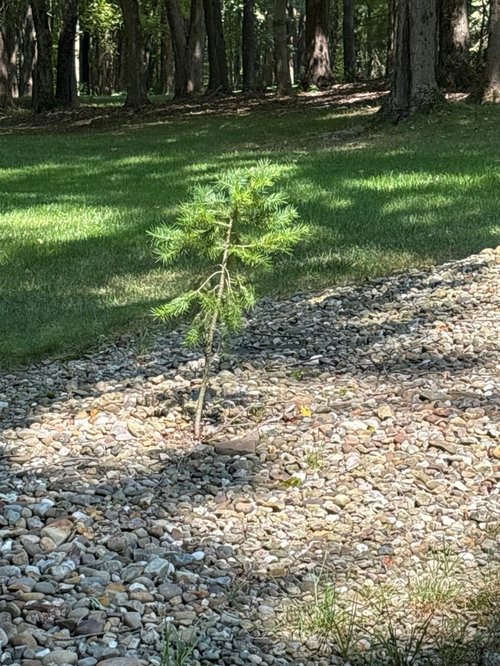
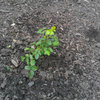
Just came here to share my experience with my little Douglas Fir. This conifer is a tough cookie. It’s survived two winters in the ground here and did great through the -12F we had this winter. It’s down phenomenally through our 93F heatwaves we had earlier this summer and has survived our summer humidity quite well. I think it’s safe to say this conifer does really well in NE Ohio.

Comments (25)

  • last year

    Where is the seed source from? If you know that.

  • last year

    I’m guessing it’s the Rocky Mountain type, only type that will consistently survive the winter. I got it from some local nursery.

  • last year

    "I think it’s safe to say this conifer does really well in NE Ohio."

    You might be a tad premature in this assessment :-) Doug firs can live hundreds of years under the right conditions and grow to considerable heights, even when young. A two year old specimen only a couple feet tall is hardly going to be representative of this tree's ability to thrive in your climate.

    But looking good so far!

  • last year

    There is a cultivar of one planted at a hotel near me and looks pretty healthy, I think it’s a weeping one if I remember correctly

  • last year

    Douglas firs in my area eventually get needlecast, tho not nearly as quickly/severely as Colorado spruce.

  • last year

    The ones I’ve seen here all look relatively healthy even as mature specimens. I’m pretty sure there’s also a large specimen at the Holden arboretum near Kirkland, but I’m not 100% sure.

  • last year

    The Holden Arboretum is in Kirtland Ohio, I was there yesterday but wasn't looking for Douglass Fir. There is a mature healthy Douglass that grows at the end of the street here, the owner is a friend that has let me cut branches with cones from it for Xmas greens. The cones are very interesting and decorative.

  • last year

    I’ve read that there is one 70 foot specimen and another 73 foot specimen at the Holden Arboretum

  • last year

    Douglas Firs in Ohio? That’s pseudo amazing!

  • last year

    My son planted some doug firs north of Brainerd (z4), along his wannabe windbreak.

    He's had trouble getting spruce to take there. Many of the Picea Abies winter burned but there will still be a mix of pine, spruce and hybrid willows from previous attempts, over the last few years.

    Very deep clay loam with heavy sod but well-draining none the less.

    The Pseudos made it through last winter and are looking good so far. Time will tell.


    Thanks for sharing, Henry! ;-)

  • last year
    last modified: last year

    They do awesome here, obviously, and I wish they were planted way more. They are actually very drought tolerant, at leat way more so than a blue spruce

  • last year
    last modified: last year

    Douglas firs are one of the most commonly planted for Christmas trees in my areas.

  • last year
    last modified: last year

    FWIW, Ben said that they get needle cast in his part of MD, but I remember a fairly large one just off Rt. 30, east of Lancaster, PA, that was looking good for the years I was driving up there to buy eggs from the Amish. (just don't have the time anymore, and besides, even they can't be charging so little for them anymore!)

    I'll have to make an excuse to go up there and check on it again. It's also been too long since I've been at Longwood, I need to get back there for an update on their trees. I am pretty sure that have one too. Speaking of western conifers, I do know they finally gave up on their Sequoiadendron.

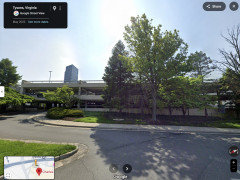
    Also, you couldn't pay me to drive near Tysons Corner these days, but for many years there was a douglas fir, and possibly more than one, planted on a very steep graded slope they created to make an access road for one of the parking garages. If someone wants to go look for it, you'd have my eternal gratitude LOL. I saw it no later than me leaving the DC area though (2005), so that was a long time ago and it could well be gone now. I doubt we are ever going to see a "Tysons Corner Mall plant explorer app", but if they were planting rather visionary stuff like that when the mall got its first face lift in the early 1990s, I wonder what else might be tucked away around it! It actually should have a superb microclimate, as it is the highest point in Fairfax County so cold air drainage would be very good. It seems to me on a south wall, a Trachy these days would survive for years if not indefinitely.


  • last year
    last modified: last year

    I *might* have found it.

    I thought to myself, heck, with Google maps, how long can it take to look for it? So I looked. First of all most of the non-conifer trees look like crap, which is somehow not surprising. It's obviously not what a mall is "about". Now, this isn't my memory of where it was...I remember it behind in a more inaccessible spot. But for all I know, that part of the mall's road network might be gone now.


    What happened was I saw it first in the mid-late 1990s, probably. It was maybe 10-15' at that point, looking fairly recently planted - in the past few years. It caught my eye, so I parked and walked up to it to be sure, the cones of a douglas fir are absolutely unmistakable - at the time, I only knew them from the Melanie Choukas-Bradley book 'City of Trees'. I couldn't believe there was a 'rare tree' at the stupid mall. However I didn't think to collect the cones. I seem to remember then wondering if various other sprucey lookin' trees around the mall were actually douglas firs, too - this might be one of them. I do remember noticing them at least a couple times in later years when I'd be at the mall, but it was just a curiosity to me, since I wasn't super into conifers back then. I never took a picture or collected a cone or 'herbarium specimen' har har.


    At any rate, doug firs were and remain extremely rare in the DC area...when I saw it, I knew I'd never seen another one.

  • last year
    last modified: last year

    So it’s the humidity that gets the doug firs out east? Aren’t certain parts of the PNW where doug firs live quite humid, as well?

  • last year
    last modified: last year

    L Clark, I think it's the combo of humidity and heat that promotes the disease. Yes, San Fran is often humid, but not humid and in the upper 80s or more at the same time.

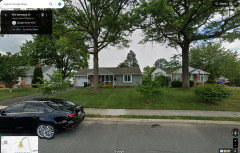
    David, a friend of mine planted a Douglas fir in his parents' back yard around the late 70s. He and I are long gone from that neighborhood, but a street view shows it's still there -- behind the house directly in the center. Not very big, but looks alright. Notice the very well-cared-for Norway maple behind the next house to the left -- I remember a friends father planting that tree dug up from a then-vacant lot across the street in the mid-1960s! The pin oaks there now don't look very good....


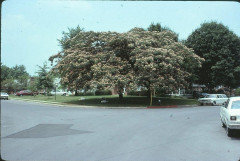
    The house on the right had a huge mimosa when I was growing up. First time to see hummingbirds in action. Notice the size of the pin oak at that time.


  • last year

    The problem is people use the term humidity, when if they wanted to be perfectly clear about what is uncomfortable, the term they should be using is "high dewpoint". High dewpoint = "hot and humid". The dewpoint can never be higher than the current temperature, so a place like Brookings, Oregon is humid year round, but never has a dewpoint above the 50s. https://en.wikipedia.org/wiki/Brookings,_Oregon#Climate

    In most plants it's the potentially heavy rainfall and attendant root rot organisms that take out plants that are evolved for cool or dry summers...but not always. Something like Meconopsis is going to die in hot summers whether Phytophthora is around, or not. I also suspect that's true of South American weirdos like Embothrium...or the alpine South African Protea I've tried. The seedlings would literally keel over a couple days after it gets hot.


    So I don't think Douglas firs are nearly as acutely intolerant of humidity and heat as various other things, which is why they can grow almost down to the Mason Dixon line - it can be plenty hot and humid north of there, too. It's more a matter of, being too hot and humid and rainy in summer, for too long, means pathogens will eventually get established in either their foliage: needlecast/Rhizosphaera, or their roots, like the 'water mold' Phytophthora. There's nothing you can do about the foliar diseases: contrast with something like Abies procera - I have one, but only grafted onto the Japanese Abies firma.

  • last year
    last modified: last year

    The combination of heat and humidity together usually encourages pests and fungal disease, which can take trees out. The Pacific Northwest does not really have heat and humidity at the same time. (While there can be high humidity, that is usually accompanied by very cool to cold temperatures)

    Patches of Douglas fir trees can be taken out by fungal infections even in some places in the Pacific Northwest where Douglas fir trees naturally grow. These tend to be more moist spots in the forest. If anyone knows anything about forest ecology, Douglas fir tends to be a mid succession tree species, meaning that it is not the best suited to grow in the final state of forests. And paradoxically, that is one of the reasons the tree can grow to be so tall, because the Douglas fir trees have to tower above the other succeeding tree species, trying to maintain forest supremacy for as long as possible, because it will be nearly impossible for any new Douglas fir seedlings to become established in that forest. My point is that the Douglas fir species is actually not the most optimally suited to the most moist and most dense mature forest areas in the Pacific Northwest.

  • last year

    Most people plant the Rocky Mountain variety as it’s more cold hardy and heat hardy, the pacific one won’t survive the cold here.

  • last year
    last modified: last year

    But I would imagine the Rocky Mountain variety would probably have even less tolerance to humid conditions than the coast variety would.

    (Ever been to Eastern WA or Idaho? It's fairly dry there, even in the forests. I mean to the point that you will never see green grass in July)


    There is a Chinese "Douglas fir" species (Pseudotsuga sinensis). It doesn't grow as tall, but I imagine it might be more adapted to humid conditions and be much more resistant.

  • last year

    This “humidity” you’re describing isn’t really that humid, our humidity in the summer usually gets down to around 50-55%. Which isn’t too bad. Plus, many Rocky Mountain tree species do great here

  • last year
    last modified: last year

    I've tried 2 of the P. sinensis subspecies (var. wilsoniana and var. sinensis) and they are not hardy enough for the coldest winters here, so they are really only suitable for zone 8. OTOH there are some in central North Carolina that are doing well...the new USDA map puts all the major conurbations of Piedmont NC in zone 8, which I think is correct based on what grows there. A sucky thing about them was the foliage, like Abies firma, had practically no scent. I've actually never sampled one but I presume douglas firs are fragrant...at least that's what Agent Cooper said!

    Presumably the Japanese one would be hardier but it's very hard to come by.

    "The Pacific Northwest does not really have heat and humidity at the same time "

    Yep, when I was a teen we took a west coast vacation and were in Port Angeles and Victoria for a bad heatwave in 91 or 92, but we could still sleep in our un-air-con'd motel rooms because it cooled down just a bit at night. Southern England can probably be a little muggier during some heatwaves because the Channel's water is warmer than the Puget Sound. (one of several reasons they have a bit more summer rainfall) I might have related my story of having to abandon a disgustingly dank and clammy Air BnB one night in Brighton in Sept 2010 because there was no way I was going to sleep in it! It was in a basement and had a window that only opened about a 1/2" for ventilation. Then, in a scene worthy of Fawlty Towers, a very upscale hotel told me their rooms 'had air conditioning' but no windows that opened. What was it? A large machine that had a few trays filled with ICE, and a fan blowing over the ice!!! Utterly laughable! I finally found a hotel that let me open a window if I signed a waiver. Took until well into the wee hours of the night for it cool down enough to sleep. That's one of my favorite "things going wrong during travel" stories, but I have others!

    The most interesting climates are ones that can be a bit muggy during the day, but cool down and dry out at night! That seemed to be my experience when I was in Stresa Italy, on Lago Maggiore. A couple weeks earlier that same September. During the day the air was relatively still and, with the lake being the warmest it gets, you sensed that kind of unmistakable lacustrine humidity at times. However, at night a cool, dry breeze would blow down from the Alps! My room at one of the fanciest hotels there wasn't AC'd either, but I slept just fine.


  • last year

    Around where I live, there are Douglas Fir trees everywhere. The whole region is practically a Douglas Fir forest. I even have a little Douglas fir seedling that popped up all by itself in my front yard, probably from a fallen cone. (It popped up right up against another plant that gets frequently watered)

    Douglas fir does have a fragrance, though I would say it is only moderately strong, and moderately good. If you crush up the needles, it doesn't really smell all that great, but the many trees do emit a nice forest smell after a rain, which wafts all around in the air. On the West Coast, at least, Douglas Fir is a popular option for cut Christmas trees. It does smell a little "Christmas tree" like, but not as nice and rich as Noble fir.

    Trying to accurately describe a smell is difficult, but I'll try. The smell is deep, and kind of dark, and only of medium quality. It's a little pine-like but part of the smell is more cras, foliage-smelling and even a little grass-like. The smell is maybe almost slightly spicy, and smells a little bit like a rich deep moist forest floor. There's also strangely an aspect in the smell that almost has a little bit of the tone of blueberry, but not really so much in a sweet or fruity way, rather in a more pine forest direction.

  • last year
    last modified: last year

    I've thought of starting a thread on the topic of conifer foliar fragrance. (or maybe I did a long time ago and forget!) Thanks for sharing that description. The best I think is Abies grandis, but Conifer Kingdom refuses to graft a plain A. grandis on A. firma for me! ¯\_(ツ)_/¯