Software
Houzz Logo Print
sherrycurrie

I need help from a marble expert

last month

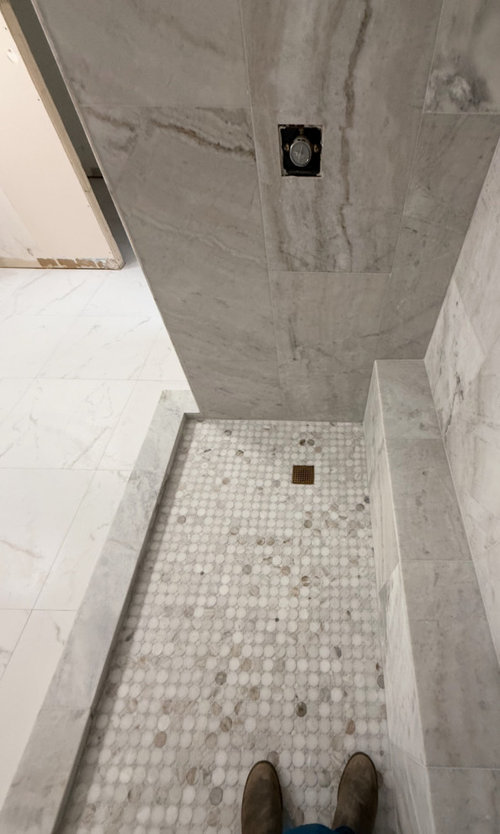
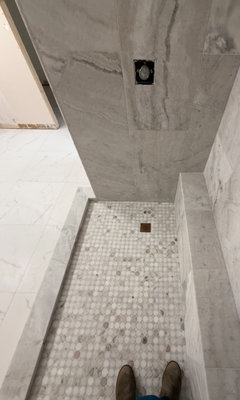
Our company hired an experienced tile contractor to install marble flooring in a master shower. 12x12 ottoman squares.
It all looked great when finished. Client turned on the water before it was sealed. We asked them to let it dry. They said they did for several days. Then sealed it.
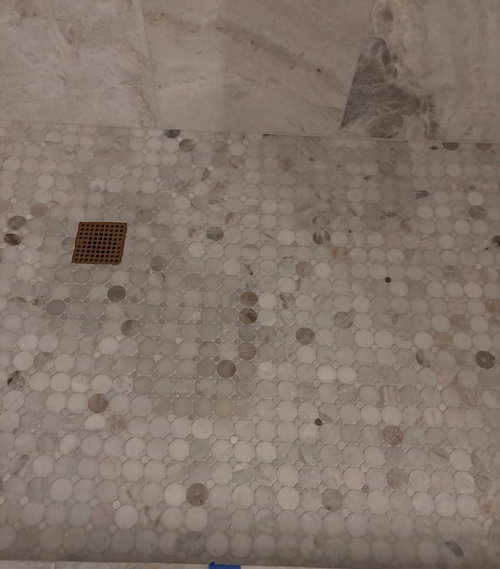
Now there are almost perfect stains or darker shade on two 12x12s.
They read on the back of the marble that the back should be sealed. But our installer said that was before the new grout he uses now was being used. He said it wasn’t installed that way any longer.
Our contractor said it’s just the variation in marble not because it was wet.
Thoughts

Comments (18)

  • last month

    We let it sit for over a week. Everything dried with the exception of these two locations. I’m looking for pics.

  • last month

    If the waterproofing and pan were done correctly is there anything else you could attribute this too?

  • PRO
    last month

    “If the waterproofing and pan were done correctly is there anything else you could attribute this too?”


    It *wasn’t* done correctly. Guaranteed. Buy a TCNA yourself, so you can know the BS that your installer is handling you. Nothing worse than the ”doing it 30 years” WRONG guys.


    https://tcnatile.com/products/publications/2025-tcna-handbook-for-ceramic-glass-and-stone-tile-installation/

  • last month

    Many experts now believe that the best shower pan for marble is a traditional water in-water out pan - not a pan with a waterproof surface membrane (look for an article written by Pavlov Starykov - it's called something like "Don't Blame the Stone or Marble - it's easy to find - it explains the experiments he did with shower pans and marble).


    If a surface waterproof membrane was used + sealer was added, the sealer will make it difficult for the water to evaporate. The sealer allows water vapor to pass through the surface of the tile - and then the water vapor returns to it's liquid state - and can't pass through the surface of the tile - it now has to dry out only through the little grout lines. Also, there may be dips in the pan underneath the areas that are staying wet (birdbaths) - that would cause the tile not to be able to dry out.


    Also, I've never heard about the back of marble being sealed EVER. The sealer would interfere with the adhesion of the tile to the shower pan substrate.

  • last month

    It’s been months and it’s still dark. Is the only solution to remove the tile?

  • last month

    " It’s been months and it’s still dark. Is the only solution to remove the tile? "


    Or live with it as is. Without progress pics and or a detailed method of install impossible to offer much more info. Possibly standing water from the shower pan not being pitched properly or it wicked the grout moisture.

  • last month

    Any way it could have been the marble?

  • last month

    " Any way it could have been the marble? "


    Always a possibility if you bought from a box store or seconds but most often it is not. 95% of the tile it is the install, even with seconds or box store pick outs.

  • PRO
    last month

    The marble is 100% behaving exactly as you would expect marble to behave. It's absorbing water, and that shows as darker. That isn't the issue. Marble will always do that. The issue is where the water in the pan is coming from, why it isn't evaporating, and what particular waterproofing system was used, and was it done correctly. Any waterproofing system can create a "damp floor" appearance, if it is not done correctly. And sometimes if done correctly. Read Pasha Starykov. https://tilepro-usa.com/tile-pro-blog/f/how-to-prevent-marble-moisture-discoloration

  • last month

    As you probably read the homeowner turned the shower on before any sealant was applied. The dark spots came up in two places after that. Almost in perfect squares. They then sealed it with the two places still dark.
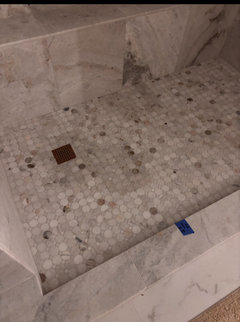
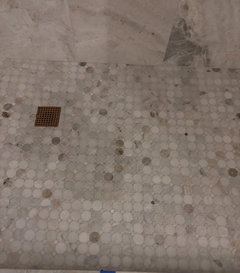
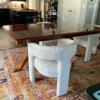
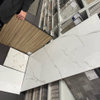
    Just hard to explain as the entire floor was installed the same way using the same product. And the entire shower floor was all wet. I’m not sure if those squares just absorbed water differently and didn’t dry before the sealant so the moisture was trapped. This marble was purchased from floor and decor. The last pic is before the shower water was turned on. The other is a few days after.

  • last month

    Again, the issue will lie beneath the tile most likely. Looking at the tile from above will tell us nothing. Need to know EXACTLY how the entire mess was built and what exactly was used. Every step, long before the tile.

  • last month

    These are the two I have now.

  • PRO
    last month

    The ones you need are the ugly ones with the work being done from 0. THat is what will answer the questions here.

  • last month

    " These are the two I have now. "


    Unfortunately the 2 pictures tells us zero about how the shower was constructed. No way to really know what the root cause is.........................

  • last month
    last modified: last month

    Have you asked your contractor how the shower was constructed??


    Do you have a scope of work attached to your contract that explains the type of shower pan that was to be constructed?

  • last month
    last modified: last month

    " Our company hired an experienced tile contractor to install marble flooring in a master shower "

    This is not the OP's shower, not sure whose it is but sounds like a client. And as the OP surely knows experienced does not always mean correct..................

  • PRO
    last month
    last modified: last month

    After digging into your pocket to replace this, it sounds like someone is purchasing a TCNA Manual to vet any future subs from here on out. This has the link to ANSI and GPTP as well. https://tcnatile.com/product-category/publications/

Sponsored
SK Interiors
Average rating: 5 out of 5 stars55 Reviews
Loudoun County's Top Kitchen & Bath Designer I Best of Houzz 2014-2025