Software
Houzz Logo Print
webuser_56836134677

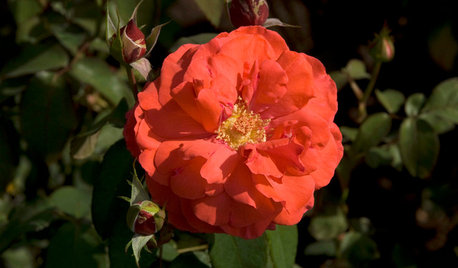
Rose de Rescht vs Mme Isaac Pereire

Rose de Rescht vs Mme Isaac Pereire on:
Health, rebloom, fragrance and anything else!

Comments (21)

  • 24 days ago
    last modified: 24 days ago

    Ian,

    I've had them both, good roses....will report back after a good night's sleep. 😁

    Moses.

  • 24 days ago

    @Moses Nice to see you again! And that is truly amazing, glad to hear so

  • 24 days ago
    last modified: 24 days ago

    Ian, I don’t have that many old roses compared to modern, but you always seem to ask about ones I grow, or have grown!


    These two are like chalk and cheese, so difficult to make comparisons, but here goes..


    Rose de Rescht can be kept fairly compact and bushy, I grew it in a pot for many years, unlike MIP which was an uncontrollable wickedly thorny monster climber that rapidly outgrew a 10ft wide fence. The latter is NOT a rose that can be pot grown!


    RdR has more attractive foliage and is healthier for me, rarely suffering from black spot in my high disease pressure area. MIP was prone to BS. Neither really suffered much from damask crud, as others in this class can.


    RdR is more of a modest but continuous bloomer, so better repeat, but never as spectacular as the first flush of MIP CAN be (in the right conditions).


    MIP blooms balled in heavy rain and fried in my strong summer heat, whereas RdR blooms are far tougher.


    The fragrance of both is fabulous, really strong old rose, but subtly different - RdR slightly sweeter and yet sharper at the same time - that sounds like a contradiction but the best way I have of describing it.


    Big difference in bloom size as well as habit, RdR’s cute little blooms do pack an incredible fragrance punch though.


    I still have RdR but shovel pruned MIP because it was just too much rose for me to manage and it really didn’t suit my climate.


    1/3 of MIP in Spring, before BS and heat stopped play:


    RdR:


  • 24 days ago

    @Nollie, This was soo well said & put together. I must say, it's off topic but I admire the way you've wrote your say kn these two roses.


    Now, to the point which was greatly explained, Rose de Rescht seems right for me, almost a match made in heaven, lol.

    I'm REALLY looking for that fragrance too. I've wanted something that someone could walk past and can't help to point out how wonderful the rose smelled, and RdR seems right for this.


    On top of that it seems quite tidy (besides the suckering which I am quite fond of), nice foliage, nice bushy shape and I love how the old Portlands bloom right on the leaves instead of growing a large long neck.


    I do have a question, perhaps it is silly to ask but what is "Damask Crud"?


    Thank you, Nollie,

  • 24 days ago

    Nollie, your comparison of those two very different roses is spot on. Although in my climate, it’s not the Black Spot that I struggle with. It’s powdery mildew on my MIP that frustrates me. It gets huge here as well.

  • 23 days ago

    As far as Damask Crud, you'll know it when you see it.

  • 23 days ago

    Thanks you guys! I decided to buy Rose de Rescht! Can't wait to smell it!!

  • 23 days ago

    Why thank you both! It’s always a treat to discuss roses and share experiences.


    I had heard that about MIP, Judi. PM is not something I get much of in my humid climate, but perhaps more of an issue in drier climates like yours.


    Ian, I am not entirely sure what (fungal?) issue causes damask crud. It’s kind of like a black mould that spreads on the leaves but it looks and behaves differently to BS. My Rose de Rescht got some in it’s first year, but I just picked off the affected leaves and it grew new, healthy ones in their place. It didn’t return later that season nor in subsequent years.


    RdR can grow large if you let it, I saw a 5x5ft specimen in a garden in England. Mine is in the ground now and has so far remained a compact 3x3ft pleasingly rounded, bushy shape.


    Oh and we discussed Yolande d’Aragón on another thread, mine got crud really badly at the end of this season! It is in a tough spot in horrible soil and I have neglected watering a little of late, so all that might have been contributory factors.

  • 23 days ago

    Good to know then, and to keep an eye out for it!

  • 23 days ago
    last modified: 23 days ago

    Ian,

    Rose de Rescht has a nice, self limiting, rounded bush form. Mine was own root. 3X 3' is the expected mature height and width here by season's end, regular spring prunings accounted for. Disease resistance is pretty good...could possibly be grown no spray. The very heavy petaled, strong but short necked, small blooms (2.5" maximum), come in small clusters mostly three per, and also singly. Winter hardiness here is to the tips. RdR's fragrance is strong, 5 stars out of 5. Bloom is almost continuous, not in flushes. You will always find the bush sporting a few open blooms. RdR is a good bush for a hot climate.

    Now come Rose de Rescht's liabilities.

    The first blooms of spring are not abundant as one would expect. Twice as many open blooms for RdR's first spring statement would be just average for any other rose variety. However, the continuous bloom, no let up all season long until fall, is to be noted. No rests, summer heat seems to have no limiting effect on RdR.

    The bloom petals are delicate and rain turns the open booms into soggy messes. Their continuous supply however, makes this fault less severe.

    Bloom size is small, but made to look even smaller because the too large foliage makes the blooms appear to be out of balance with its foliage, like a rose whose blooms are perhaps nutritionally deficient. This, with the very short necks annoyed me.

    Also, quite a few blooms open below, not above neighboring leaf growth, partially or completely obscuring them.

    I no longer grow Rose de Rescht because of its bloom size to foliage size imbalance.

    My Madame Isaac Periere was own root.

    Madame Isaac Pereire has disease issues. Black spot here, being this climber's in your face, primary susceptibility, except if it's sprayed, makes it a poor choice....many other better climbers are in commerce.

    MIP's blooms, as lovely as they can be, have weak necks. I like a rose to look at me when I am looking at it. Bending necks may be charming to some, but a severe liability to me, any rose variety included. "Face upward, or face the firing squad." is my motto.

    In conclusion, in spite of Madame Isaac Periere's magnificent blooms, and intense fragrance, its disease issues and weak necks gave it poor grades for a climber in my climate.

    MIP was shovel pruned a while back.

    Moses.

  • 23 days ago

    If we have a very wet Spring here, my Grandmother's Hat gets horrible damask crud (can't describe it - every bloom and leaf is AWFUL looking, covered with 3-D yuck.). The good news is that, when it looks as if the rain has finally stopped and it will be fine for 6+ months, I just cut GH about a third all over, and a bit more if that does not take off all of the affected parts. Then she re-grows and makes perfect blooms and leaves for the rest of the Summer - no spraying of anything required.

    Jackie

  • 23 days ago

    @Moses Thank you for the information! And great to know and such. I personally like tge big foliage and no necks but can easily see why other's don't.

  • 23 days ago

    @jacqueline Ah yes, sounds horrific. . .

    Will be definitely looking out for this

  • 23 days ago

    My GH does that too, Jackie, and it carries on blooming and seems in great health anyway so I don't care.

  • 23 days ago

    3D yuck describes damask crud perfectly, Jackie!


    I know what you mean about the short necks, Moses, but don’t find that problematic on RdR. To me the shrub looks like a fat, heathy pudding studded with exquisite jewels, although more jewels at once would be good! I found short necks far more annoying on Indigo and Gloire de Ducher - for me the blooms of those were heat-wizened dumpy midgets seriously sulking amongst the foliage. Neither do I find RdR’s blooms turn to sodden messes after my heavy spring and summer rains like some other heavily petalled roses I could mention, they resist rain and humidity with aplomb. It’s fascinating how roses respond so very differently to climate and growing conditions.

  • 23 days ago

    Is the damask crud everyone is describing actually anthracnose? I tend to see anthracnose crop up during a super wet spring or wet fall, and a few of my roses are particularly susceptible. If I don’t catch it early, it spreads quickly to nearby plants. Unlike blackspot, the affected leaves don’t drop - they stay on the plant and turn more and more brownish black until the whole leaf is like that. But it still hangs on, instead of dropping. It also moves up the canes and even the blooms, which end up looking ugly and weird. Here are a few photos showing the leaves at different stages.


  • 23 days ago

    @Elestrial Perhaps? That certainly seems like what other were describing as Damask Crud. And if so: My old once blooming damask has DC like crazy! It never really affects it though, and when it blooms the DC affected leaves are replaced by fresh ones.

  • 22 days ago

    If it just shows up on those older damask roses, maybe it's not the same thing then

  • 22 days ago

    It does not spread to other roses.

  • 22 days ago
    last modified: 22 days ago

    I think that the Damask Crud is Sooty Mold. It appears that some rose varieties/classes are more prone to it.

    There are two adjacent trees near me that are so close to each other that their canopies coincide. The Catalpa is completely covered in Sooty Mold annually. It is so badly infected by the end of summer that it looks like every square inch of all of the tree's surfaces: leaves, stems, branches, trunk, and fruit pods, have been diligently and heavily covered with black powder. The American Dogwood is pristine and completely clean of any Sooty Mold. It has to be a susceptibility/resistance issue.

    The theory transferred to roses could bear some credibility, since Damask varieties are the target group among roses.

    Moses.

  • 22 days ago

    That makes sense - thank you for sharing Moses