Software
Houzz Logo Print
lepetitmatin

Shower floor grout shrinkage

last month

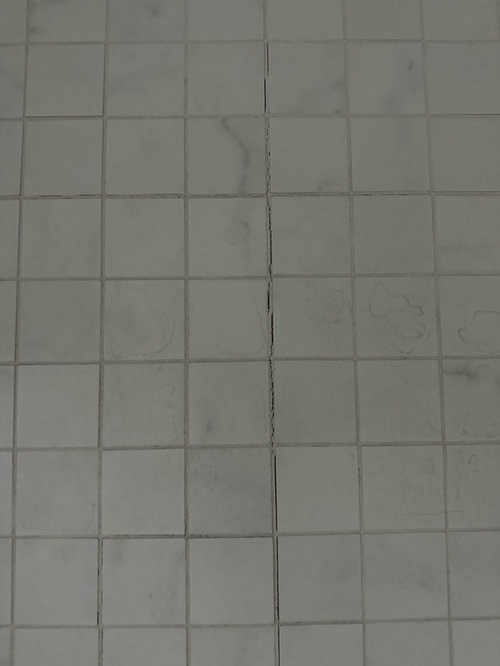
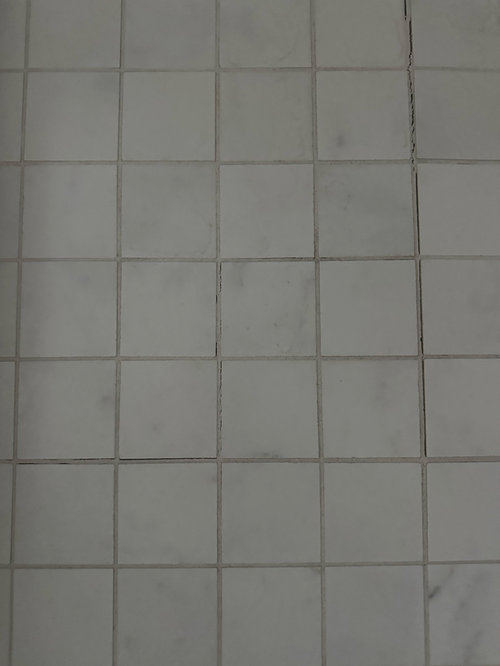
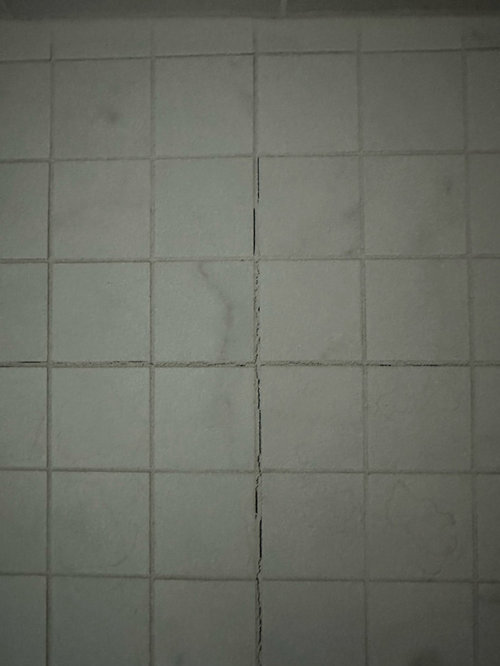
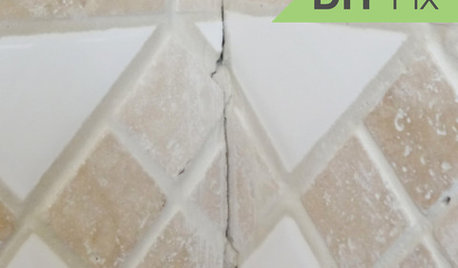
We completed a renovation of our house about a year ago. The grout of the primary shower floor tile (that had mesh backing) as of a few months ago has started to crack/shrink/split. I’m not sure what the construction under the floor is but the contractor says it’s solid cement over the shower pan (which I’m not confident of). Is this issue caused by substrate movement or normal grout shrinkage? I did not think this would be an issue on a flat surface (as opposed to change of plane). He’s offering to dig out the cracked grout and redo it… but if there’s a movement issue underneath this will just happened again. Thoughts?

Comments (20)

  • last month

    " Is this issue caused by substrate movement or normal grout shrinkage? "


    Substrate movement definitely. Removing and replacing it will just happen again.


    This is in a shower? How was the shower constructed? the floor would be "flat" if it were a shower floor.

  • last month

    The floor is flat, but pitched towards the shower drain in the center of the floor. Shower pan, plus concrete, plus thinset (supposedly)

  • PRO
    last month
    last modified: last month

    Unsanded grout when it should be sanded? Forsnt enlarg enough for details.

  • last month
    last modified: last month

    " Unsanded grout when it should be sanded "


    I thought of that but then it would be more widespread not in a straight tile joint line. That's why I say it must be movement.


    I would demand to know how the floor was constructed. What products were used and how. That is where the issue lies.

  • last month

    We need a New to Bathrooms thread (much like the new to kitchens thread) that we can easily point people to when they are at the beginning of a project, or in a situation like this. It should describe the necessary products and methods for shower construction, and other bathroom construction elements. It should include pointers for what should be spelled out in the contract, as well as what pictures should be taken during construction. And it should contain the excellent diagrams that @dani_m08 posted


    Does such a thread already exist here?

  • last month
    last modified: last month

    @Kendrah - I was having the same thought while I was typing up my comment + while I was searching for good diagrams to add.

    I knew more than many people do when having a shower built due to all the posts I read on Houzz. However, I just picked up pieces of info from different posts vs. having all the info in one post.

    I've thought about making one - including what needs to be in the scope of work when a shower is part of the renovation + the types of shower pans available + waterproofing methods + photos that should be taken during the construction + etc. I feel like I've posted many long comments regarding bathroom issues - it would be nice to have one post to link to instead. It would be nice if a professional contractor would be involved in order to double check what I've included + maybe write out the steps for each way of construction a shower pan. I am pretty sure that I know them - but I've never constructed one.

    If a post like this exists already, I don't know about it. Maybe there should be a post asking about whether one exists already?

    I think it would also be helpful to include a link to a post that was made by a user (forgetting name right now) who completely outlined the process she went through when her bathroom renovation went south. It would be helpful for a lay person to know what another lay person did in order to recover against a dishonest contractor. It was well written + didn't contain any legalese (I try not to when I explain something - but I'm sure that I do at times).

    I also would like to add a section re: the home renovation/repair statutes that protect homeowners if they have an issue later. Most homeowners don't know that a contractor's one year warranty does not preclude them from seeking remediation for issues that are discovered after the year has expired (however, this applies to more than bathrooms - so, maybe it should be a separate post - maybe one that contains possible legal issues during home renovations, services, and repairs + a section specific to building a new home).

  • last month

    Thanks for all the help. I’m not sure how it was built exactly and I don’t have photos but what I’ve been told is there was a vinyl shower pan, then cement (maybe mortar?), then thinset, then tile. It also doesn’t make sense to me but I’ve never done this before. I will ask for more detail. The grout used was mapei flexcolor, so premixed.

    The beams underneath the shower area were also replaced as it’s an old home and they had some rot. So would it be what’s directly under the tile that is cracking or moving (ie the thinset or mortar/cement), or the beams / house settling?

  • last month

    " but what I’ve been told is there was a vinyl shower pan, then cement (maybe mortar?), then thinset, then tile. "


    Never heard of that setup but a vinyl pan then cement does not sound correct to me and be the first place to think about. Unfortunately I do not think this is going to be an easy or even possible fix.

  • last month

    ngl a clean split like that usually means the floor’s moving, not the grout having a bad day. I had a bathroom where the grout kept popping in one spot until we found a little flex under the pan, regrouting alone was just a repeat.

  • last month

    I’m actually now seeing tons of comments on Reddit about Mapei Flexcolor CQ being soft and not good for shower fooors… anyone have this experience here?

  • last month
    last modified: last month

    There is a well respected pro on here (Beth H. - she has an incredible amount of expertise re: tile + does renovations with her husband who is a contractor) - she has recommended Mapei Flexcolor CQ several times on various threads. When I asked her about grout for my genuine marble shower walls + shower pan, she again recommended Mapei Flexcolor CQ (in Warm Gray).

    I've never heard of issues regarding it + the best part about this particular grout is that you can add more to fill in grout lines WITHOUT removing the top 2/3rds of the grout first. Mapei Flexcolor CQ grout actually sticks to itself - even after it's completely dried. If Mapie Flexcolor CQ was used on your shower pan, your contractor wouldn't need to dig out the cracked grout - he's simply need to fill in the crack since the grout will stick to itself.

    However, I am not a professional or expert re: grout/tile.

    I'm assuming that Mapei Flexcolor CQ was used for your shower pan. Even if it is not great for shower floors, it still wouldn't have made a crack that extends between the same row of tiles. The way the crack has formed, it still appears to be due to movement of the substrate under the tiles.

    " . . . but the contractor says it’s solid cement over the shower pan. . ."

    Your statement above continues to cause concern - first, "solid cement" is not installed as part of building a shower pan - deck mud is used = cement + sand - NOT solid cement.

    Also, maybe "shower pan" = the pvc waterproof liner that was installed. However, there should be sloped deck mud used both underneath = above the pvc liner. The pvc liner should NOT be installed flat against the subfloor. It has to have a pre-slope of deck mud installed first in order to create the correct slope in order for water to flow towards the drain (and leave the shower pan through the weep holes in the drain).

    You need to ask for a detailed explanation of how the pan has been constructed. I would send an email requesting the explanation in order to receive a written explanation back from your contractor.


    Also - do you have a contract with your contractor? If yes, what does the scope of work list?


    If you don't have a written contract, it doesn't mean that you have no rights/remedies (although people write comments and tell people this all the time). In some states, if a contractor doesn't have a written contract with the homeowner, the contractor cannot recover money owed from the homeowner (plus, it can have a negative effect on the contractor's professional license).

  • last month

    The issue you have has notning to do with the grout. If it were a grout issue it would not be in a straight line it would be all over and not in a particular pattern. This is 100% on the installer because of pan movement and he is continuing to offer to sell you a bridge.

  • last month

    I’m still confused on how there can be pan movement if there’s solid mortar under the tile?

  • last month

    Dani, yes I’m trying to get clarification on the structure. We did have an agreement with no specifics about how the shower area was to be completed. The project was completed about a year ago; he came to fix this within our one year warranty of the work. This was part of a large full house renovation.

    This grout was not used for the shower pan, I know that much. There is a bit of language barrier but I’ll try to figure out more! My concern is what if this is from the house settling (we see evidence of this elsewhere) as opposed to the construction of the shower pan. How would we figure that out?

    Thanks for your help!

  • last month

    " but what I’ve been told is there was a vinyl shower pan, then cement (maybe mortar?), then thinset, then tile. "


    None of that states that there id solid mortar. A vinyl pan is a non-starter in my opinion and the major cause of the issue.

  • last month

    Maybe they mean vinyl liner, not sure.

  • last month

    " Maybe they mean vinyl liner, not sure. "


    Well again this is why you need to know how the shower was constructed. There is movement, plain and simple and the only way to fix it without know exactly what is causing the issue is demo, which means starting over. If your installer cannot show and substantiate exactly how he built this, this is on him if he is capable.

  • 27 days ago

    I have gotten more supposed details about the shower floor construction.

    On top of the subfloor, wooden supports (sort of a frame) were put in around the perimeter of the shower floor to create a pre-slope made of plywood, cut to slope towards the center drain. On top of that is the membrane/liner, then mud, then thinset, then tile and grout. Maybe there’s an issue with the mud, like it was mixed wrong and has started failing somehow (he claims they used Mapei 4:1 but i don’t trust his memory). Maybe the thinset was unevenly applied? The cracks are now pretty reliably along the seams of the sheets of mosaic tile that we have. The tile is almost lifting in those spots, and the grout almost washing away or falling thru.

    I am very concerned about a plywood preslope given potential moisture issues, and potential swelling and movement of plywood. Most tilers I’ve talked to do what’s posted above — a mud preslope then liner then more mud before thinset and tile - though some say plywood isn’t unheard of. Our contractor says he always does a plywood preslope. He is willing to pull up the tile and thinset and retile and regrout (with a different tiler). He doesn’t want to touch the mud for fear of damaging the membrane. If we have to replace the membrane, the curb and shower door would have to come out, as well as more wall tile. I worry if we don’t redo everything from the subfloor up (replace plywood with mud preslope) that this shower will have problems again. I could of course only agree to retiling now if he agrees to redo the whole shower if it fails again but that seems difficult to secure. Thoughts?

    What should I look for in the mud when he pulls up the tile, to see if there’s a problem with the mud or what’s under it?

  • 25 days ago

    " wooden supports (sort of a frame) were put in around the perimeter of the shower floor to create a pre-slope made of plywood "


    lepetit matin "Wooden supports" are completely wrong. "Plywood preslope" is completely wrong. That is where your movement is and where the movement will continue forever or until you rip this mess out. Where did you find this guy? You sure he is a licensed contractor? N self respecting tile setter would install over that mess and honestly a true tile setter would insist on doing the entire shower system.


Sponsored
Ed Ball Designs
Average rating: 4.8 out of 5 stars31 Reviews
Exquisite Landscape Architecture & Design - “Best of Houzz" Winner