Software
Houzz Logo Print
leafnose

Rose Transplanting and Winter in Zone 10A

last month

First, thanks for the discussion of Gracies Roses in another thread and a suggestion to try Otto and Sons.

Second, I am tired of some of the existing roses at the "new" house not thriving. I sense that folks here will toss and move forward after suffering pest ridden, and low performance roses.


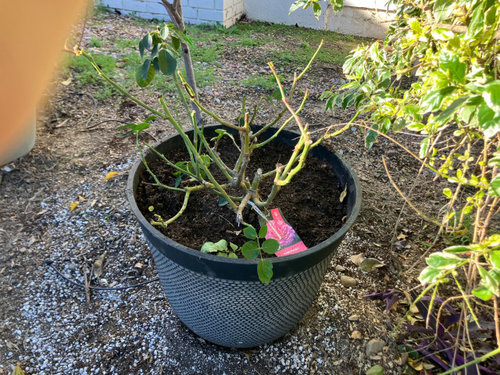
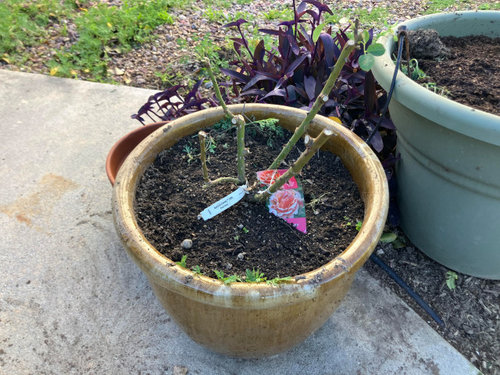
So, came back and found spots for 2 roses (Yves Piaget, Apricot Candy) in 2 unused pots.

I had read (here?) that it can prove useful to strip leaves, and force a winter effect on SoCal plants.

I did remove quite a lot of YP leaves. The AC didn't have a lot growth on it so I kind of let it be.


3rd plant is a Sterling Sliver (I know this a tired 60s popular-no judging, ha) and I haven't quite found a spot for it. The neighbor has one that is so old, and is slammed with rust and other issues: So I have no intention of planting near that area.


With these 5 gallon plants that aren't bare root is there a better way to handle them in transplanting?

And if we're trying to abate the Sawfly larvae is it better this far south to strip a lot of leaves off and treat with Neem now or soonish?


First shot is YP

Second is AC


Sterling Silver is still in nursery container. I have some rose that I think folks here suggested could have reverted to Own Rose. It has only bloomed one offs in the spring. Might wait and see if it does that again. If so, that pot will get the Sterling Silver.


Comments (12)

  • last month

    In terms of the transplanting, your new pots and the canes on the roses look great. I'm not remotely in your zone and can't advise you about transplanting issues, but the roses in pots look happy. Expect them to sulk for the first few weeks after transplanting, and keep them moderately watered but not soaking during the recovery period. Don't feed them - that is mostly a stress - just put them in part shade if possible (or put a shade cover over them) and keep them hydrated.

    Cynthia

  • last month

    I didn’t previously know about your anti-fungal spaying, Moses.

    Did you recently start, or have you been for some time?


    And now back to leafnose’s original questions.

  • last month
    last modified: last month

    Rifis,

    I spray a fungicide along with an insecticide, and mostly succeed at following a good schedule. Although by now, finally arriving at the conclusion of my last, few year's long, removing bad black spotters project, which are replaced with 'clean roses,' there are still some MUST KEEP roses like Apricot Candy that do need minimal but regular spraying. Also, even ADR winners like Bliss and Dee-Lish will get some black spot if summertime heat stress is sufficiently intense, as it has been here for a number of years now.

    I like to see as pristine rose foliage as is possible in my rose garden. Maybe I am excessive in this requirement, but nothing degrades the beauty of a nearly perfect bloom if black spotted foliage surrounds it. It's like being served a delicious looking meal on a dirty plate.

    I have touched on my fungicide spray methodology in previous, recent posts. You brought to my attention in one such post about alternating fungicides so fungicide resistance can be minimized, which has caused me to study up on alternate fungicides. Thank you.

    Moses.

  • last month

    Wow. Yes, that was less than 3 months ago. My sleep score was only 62 last night. I better turn in right now.

  • last month

    Leafnose, can you tell us what city in So. Calif. you're in? Or if you're too shy, a zip code? I'm in So. Calif. and as you probably know, there are a ton of different microclimates here. Are you wanting to plant the roses in the ground soon, or keep them in pots?

  • last month

    @susan9santabarbara

    I'm in Ventura. I hope to eventually put them in the ground. The spot the pots are sitting on is where a large Magnolia was growing. It had to be removed, and even after stumping twice may take a number of seasons more to break down. It's the dream that these will find their way here.


    My location is far enough from the Ocean that it gets warmer, but not as warm as Santa Barabara as a rule.

  • last month
    last modified: last month

    Just a note That Saw fly lives in the soil so either start with completely new soil rinsing your roots, or Use an insecticide Drench granules When you transplant.

  • last month

    Howdy (almost) neighbor! I prune from mid-December until Valentine's Day. If those pictures are current, I'd prune Yves Piaget to get rid of all that twiggy stuff. Apricot Candy sort of looks already pruned. The Sterling Silver might appreciate some pruning, even if it's in a 5 gallon pot. All three of those are great roses. I grow ~175 roses in 15 gallon pots permanently. If you're going to grow them in pots for awhile, 15 gallons is about minimum size for good performance. (I'm elderly, so I can't easily handle more than a 15 gallon!). I don't remove leaves when I prune unless they are diseased. I find that sawfly larvae are a bigger problem with roses close to fences or buildings (I always figured because my many birds don't see them as well?), but they're definitely a problem here. I'm ~2 miles from the ocean.

  • last month

    If your roses are in pots you can also put newspaper or Landscape fabric Down to prevent the sawfly Larva from emerging or falling into the soil. I've done that and it's worked pretty well. of course, they are Elsewhere sometimes so it's not foolproof.

  • last month

    Leafnose, I do strip off any remaining leaves after winter pruning, clear all fallen leaves and weeds around the base and then mulch with fresh compost. Apart from helping to induce a sleep state, I do it to get rid of black spotted foliage and hopefully suppress spores. BS always returns anyway, but I hope it helps a little. Plus I like leaving everything tidy and set up for the season to come.


    Susan, I also find sawfly damage much worse next to walls. I always assumed it was because they liked the warmth and shelter there, but true they are probably less visible to birds .. and to me!


    Vapor, I don’t spray anything, chemical or otherwise, but I really like your idea of inserting a physical barrier in pots (raised beds too) to prevent the sawfly larvae either burrowing down in the first place or emerging later. As you say, it wouldn’t be foolproof, but anything that reduces their unsightly and energy-sapping leaf damage would be welcome. I would think one would have to be careful with young roses tho, so as not to impede any emerging basal shoots.

  • last month

    Nollie, I like your idea that it might be the warmth that causes them to be worse next to walls and fences. Since I have no idea about the behavior of the sawflies, could be we both have a valid hypothesis!