Software
Houzz Logo Print
rewindtech

Crape Myrtles in zone 6

Has anyone experimented with the many zone 6 hardy cultivars of Lagerstroemia in a zone 6 climate? I really wanna try one out but I wanna make sure I get the hardiest cultivar that suffers minimal dieback in the winter. I would prefer a tree forming cultivar if that is possible. I really hope at least one would work.

Comments (37)

  • 4 months ago

    Just to keep in mind, I don’t need a humongous tree, maybe a 6-7 foot tree with a noticeable trunk is OK

  • 4 months ago

    That is a big ask :-)) Most crapes act like dieback perennials in zone 6, dying back to the roots in a hard winter or remain low growing shrubs. Your best bet may be something like Natchez. It is reputed to be very cold hardy as well as assuming a tree-like appearance. White flowers only.

  • 4 months ago

    I was thinking maybe tonto, I could let it die back in a harsh winter and prune it into a multi trunk small tree.

  • 4 months ago

    Yeah, we are in the cooler part of the state but I have surprisingly hot parts of my yard that they might like. We’re getting a very hot heatwave very soon that they might appreciate. I’ll still try and find one though.

  • 4 months ago

    NO PLANT, will appreciate what is coming UP! DO NOT PLANT ANYTHING in this heat or it is DEAD! I have MANY fully tropical plants (bananas, Ficus, etc), NOTHING will appreciate temps around 105F.

  • 4 months ago

    Oh it doesn’t get THAT hot. Only getting to around 96F or so. I’m sure my hedychiums will appreciate it, same with my bananas that still haven’t sprouted. I just know my Ericas and Fuchsia magellanica will hate it though lol.

  • 4 months ago

    What bananas are you sprouting? Bananas do not need 96 F to be happy!


  • 4 months ago

    Musa basjoo. They’ve come back every winter except for this year, it’s been so frustrating. The tubers are still alive but they just don’t want to budge.

  • 4 months ago

    Henry, I have a few neighbors that have overwintered these for YEARS, they are HUGE. I can post a pic tomorrow as I pass by every day. Currently around 15 feet tall. They get to about 20 feet, been there for years! They just mulch them and cover them with a plastic tarp. Tubers are HUGE, like ONE FOOT in diameter. I grow mine in big pots and move them into my garage.

  • 4 months ago

    Yeah that happened with mine too. They survived a few years here and came up every year with no problem. My aunt has been growing them here for forever. They just don’t wanna grow. I have no clue why.

  • 4 months ago
    last modified: 4 months ago

    Not to sound snooty, but it's amazing that those (basjoos) have gone from a highly collectible plant that nurseries in the late 1980s were charging $100 or more a division for (places like PDN, and the original, now defunct but name-sold-to-another-family, Louisiana Nursery) to being something, that I'd say, every county along the US east coast south of NY and north of Florida has at least one, if not many, gas stations with a planting of them!

    I will admit I lost one in a cold winter because it wasn't very established and I didn't mulch it at all. Meanwhile a neighbor of mine has had a patch for many years, maybe as long as I've lived here.


    BTW - basjoos grow in England and as 41 said, definitely don't need 96F to grow!

  • 4 months ago

    After a lifetime of gardening and many, many years exchanging experiences here on GardenWeb, it seems like crape myrtles in particular elicit very different observations depending on location (and what sources one relies on :-)) While they experience no winter dieback in my climate, they are also very reluctant bloomers, as we do not generate the sustained summer heat they prefer.

    How they might work for you, you won't know until you try!! I wouldn't invest a lot of $$ but you might try a couple and see how they do. In a protected siting, it might be exactly what you are looking for.


  • 4 months ago

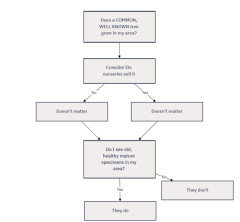
    I would go back to the Occam's razor test of plant viability...


    Enough people would have brought crape myrtles back to NE Ohio over the years that if they did well there, you'd see them around. IIRC, I saw a few in Frankfort, KY, when I had to go to that god forsaken state capital for one of my IT jobs. And certainly, they are all over TN.


    But yeah go ahead and try the hardiest clones you can find. I highly recommend putting them on a south wall or somewhere else, both for summer warmth and a degree of winter protection.


  • 4 months ago

    This doesn’t really work with some trees. Loblolly pines grow very well here but nobody tries them. I think a lot of it is attitude because many people around here think of crape myrtles as “southern plants that won’t grow here” and don’t really bother to research.

  • 4 months ago

    I see them all over here in NE NJ (Zone 7a/b), but that is a good point to consider. Do you see them around you?!

  • 4 months ago

    Not really. Most people don’t plant many ornamental trees besides crabapples, Japanese maples, and tree lilacs in general. People plant the same boring stuff they sell at the nurseries.

  • 4 months ago

    Please post some pics of mature loblollys in NE Ohio. I'm genuinely curious to see how they grow there, if their form looks typical, etc. etc. I can't remember the details now but one of the SE PA arboreta has a southern pine - loblolly I think - which was the ugliest example of the entire sect. Australes of the genus I've ever seen! LOL


  • 4 months ago

    I don’t have pics of mature ones but am growing one and can vouch that they do decently well here. It did get sun burnt during this particularly sunny winter but it’s vigorously regrowing. Last winter was even colder but it suffered very minimal damage, only slight spotting.

  • 4 months ago

    southern plants that won’t grow here

    Not southern necessarily but certainly a warm climate plant. Look at their origins - they are native to the subtropics. I'm sure many plants with more southerly origins can and do grow well 'up north' - they do in my garden - but if they are not often found in area gardens or sold by area nurseries, chances are very good this is not a plant that will thrive in your area.

    fwiw, crapes are not the slightest bit commonplace in area gardens here nor do they have much of a presence in area nurseries. Who wants a shrub known specifically for its flowering that rarely ever blooms?


  • 4 months ago

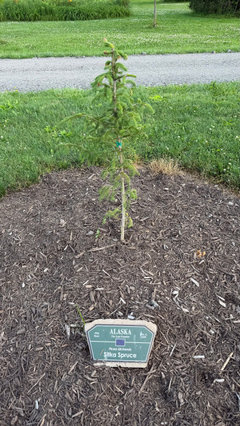
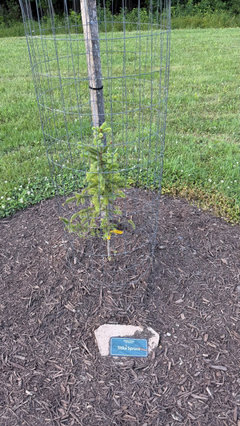
    Some odd things do do well here for some reason. I went to an arboretum today just a mile down the road and saw two healthy Sitka spruce seedlings. You never know.

  • 4 months ago
    last modified: 4 months ago

    This pdf from the Secrest Arboretum is fairly recent and has some good info on crapemyrtles in Ohio: Crapemyrtles for Ohio

    It indicates (p. 11) that even though there are newer cultivars that are more cold tolerant and come into bloom sooner, they may still die back over winter and aren't likely to grow large enough to develop exfoliating bark.

  • 4 months ago

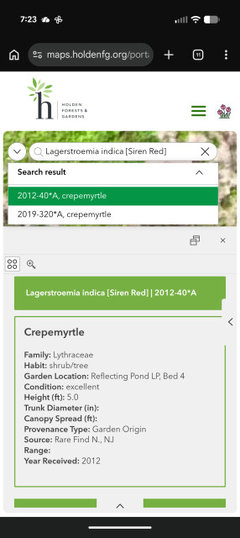
    Holden arboretum has a few, Henry. Perhaps a visit is in order. Here is one, received in 2012 and is 5' tall


  • 4 months ago

    "Perhaps a visit is in order" - or at least try calling or emailing. Holden, Secrest, and Dawes all have very knowledgeable people on staff. Page 44 of the link I referenced above has email addresses you could try.

    Regarding Siren Red Crapemyrtle, this page from the Missouri Botanical Garden says, "in the St. Louis area where winter injury can be a problem, plants will typically grow to 6-10’ tall. In the deep South, it will grow taller" And keep in mind that St Louis has longer, warmer summers than NE Ohio.

  • 4 months ago
    last modified: 4 months ago

    The old-fashioned crapes at my childhood home seemed more cold-hardy than all these shiny-new ones. Those old ones often had much of them surviving the winters, while my new types get killed to the ground most winters. Those re-sprout, but shoots are leggy and not attractive.

    PS the winter temps at the 2 locations are pretty much the same.

  • 4 months ago
    last modified: 4 months ago

    Ben articulates something I've wondered about for a while; yes the new crape myrtles are rated as quite hardy, I think I've seen in the promotional literature for one that it 'survived -12F'. HOWEVER...the original 'hardy' crapes of 50 to 100 years ago, whatever they were called in terms of varietal name, were probably selected in Virginia, DC or Maryland. For example right around when I got into gardening, late 1980s, I remember seeing a HUGE crape myrtle tree flowering in Leesburg, Virginia, that had to somehow survive < 0F temps in 1984-85...I definitely hadn't seen it before then. Likewise, right here, my neighbor who built his house in the early 1980s has one that he assures me was _never_ killed to the ground. That means its branches had to survive well below 0F temps in 1994. (the year you could walk across the Potomac from Virginia to DC) IIRC the National Arboretum started introducing some in the 1960s, the two I mention could have been the very earliest of those, but I feel like it's more likely...especially the very old Leesburg tree, was just one of these 'pre-modern breeding, but selected for hardiness ones' that Ben alludes to. Contrast with my Mom, who, strongly identifying as a southerner, liked to plant things like southern magnolia and crapes. Whatever crape she bought was never fully hardy in our part of western NoVA, about 7 miles from the notoriously cold Dulles Airport as the crow flies. I definitely remember her consternation about it dying to the ground in 85, 94 and 96. So north of Richmond, you always had to buy a hardiness selected one, whether an old cultivar or a newer one. Or maybe the hardy ones were just seedlings people got lucky with - who knows...point is in the outer suburbs of DC back then - and I'm counting my area that way, too, although according to the census I'm actually an outer suburb of Philly - fully hardy ones were rare to see.

    OTOH, the fancy new ones of the last 20 years are mostly being bred in Oklahoma, IIRC. This means if you see a claim about 'hardy to -12F' - which I have seen for one of those - 1) the plant was growing, and likely being irrigated, in a place with blistering hot summers. It might be hard for someone in the Delmarva to think there are hotter summers, but TX/OK summers certainly are! and 2) a dip to -12F there might be followed by a faster warm up...the same thing I've observed as one of reasons Phoenix palms survived 2F in El Paso, but sure as heck aren't going to survive it in the Carolinas or Virginia Beach. (Though with the palms, the fact it's sunnier and drier in El Paso all winter is also a factor, and may be the main one.) So whether these new crapes prove as hardy might depend on whether they are growing in TX/OK type climate. I have one with supposedly pure red flowers from the OK hybridizer. It's been fine to 1F (this winter).

    Final note on this - as I mentioned in erstwhile damage reports about the 2013-2015 winters, I saw damaged crape myrtles in Lancaster County just north of me, since almost all of it went below 0F those years. And based on those being in landscaping of newer tract houses, I'm sure they were the newer cultivars (since older cultivars are not commercially available anymore), whether National Arboretum or Oklahoma bred. I even saw cold damaged leyland cypress up there! I used to buy eggs and dairy from an Amish farm near Gap, PA and both of those winters were cold enough that they were skating on their pond.

  • 4 months ago
    last modified: 4 months ago

    UBG, I'm suspicious that when selecting for, say, color, that that's not all that's affected. I see it in butterfly bushes & coneflowers, the fancy-colored ones (compared to the old standards) look good, but they have almost no scent and actually the pollinators seem less interested in them. Might be the same thing w/crape selections for fancy colors -- inadvertently degrading something else, like cold-tolerance or nectar-attraction.

    PS Most Leyland cypresses around here had cold-damage from this past winter, but not too severe. The badly cold-damaged (again) trees were blue Atlas cedars -- they just can't take -10F w/o severe needle loss -- the ones I see are still alive but an eyesore.

  • 4 months ago

    Ben some of the hardiest deodara cedars like 'Paktia' should be OK at -10F - do you see those out there? They are definitely less common in the marketplace (around VA/MD/PA) than Atlas Cedars.

  • 4 months ago
    last modified: 4 months ago

    No, all I see are the very occasional Atlas cedars (why, because they're BLUUUUUUE!). Of course, some arboretums will have other cedars, but I haven't seen any lately. A good test case would be Dawes Arboretum in OH.

    PS I can't remember if the VA State Arb had cedars or not.

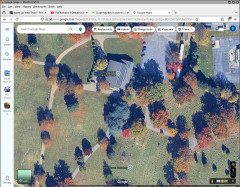
    PPS There are several BACs in the Hagerstown Rest Haven cemetery -- took a screenshot overhead of the spot, and there they were (in the center).


  • 4 months ago

    I occasionally see true cedars here too. Many of them survive well, especially atlas cedars and cedar of Lebanon. Local nurseries sell them as well. They’re nice tough trees.

  • 4 months ago
    last modified: 4 months ago

    " PS I can't remember if the VA State Arb had cedars or not. "

    Definitely some of the most distinctive trees there! There are quite a few and they look to be true cedars of lebanon, and I believe are labeled or alluded to somewhere as such. You might have missed them because they aren't with the main conifers like the Manchurian fir near the old house, they are along drives around the periphery of the facility.

  • 4 months ago
    last modified: 4 months ago

    "I occasionally see true cedars here too. Many of them survive well, especially atlas cedars and cedar of Lebanon. Local nurseries sell them as well. They’re nice tough trees."

    Gorgeous tree, but HUGE growth potention. I believe Blue Atlas (from Atlas Mountains of North Africa, encompassing Morocco, Algeria and Tunisia) is now considered either a subspecies or variant of Cedar of Lebanan, but do recall reading somewhere that the Blue Atlas are relatively tolerant of Eastern heat and humidity, compared to other Cedars. They are one of my favorite conifers but need lots of space, and in suburban NJ, frequently planted on tiny lots or next to a house!

    Blue Atlas

  • 4 months ago

    It’s a shame people don’t plant them more here. Everyone plants Colorado blue spruce which obviously die due to needle cast diseases because it’s too humid here. Cedars don’t suffer with any of that mess here, in fact I’d say it’s a more preferable climate for them than a lot of the east because it’s cooler here in the summer (June averages around 77F, July averages around 81F, and August averages around 79F) and it’s less humid than say the southeast. But we do get colder in the winter, but the cold is generally short lived and we warm up above zero during the day if the temps get bad and they generally come out unscathed.

  • 4 months ago
    last modified: 4 months ago

    Henry, it's probably because it is viewed as a "marginal'" exotic species for your climate, but I bet it would just FINE if you find one at a local nursery. Was just reading on a Southern Conifer site, that they should be more planted in the Southeast. I don't have room for any more trees, in my lifetime, my gardens have "transitioned" from 6B to 7A to 7B. Still always surprises, my huge Southern Magnolias (have several cultivars) sailed though this past winter from HELL, over 3 stories now, Monkey Puzzle was fine, Crape Myrtle tree..., but my FIG really took a hit and that is a deciduous species.


    So a question, is Ficus carica, more cold vulnerable than Southern Magnolias, Monkey Puzzle, and Crape Myrtles?!

  • 4 months ago
    last modified: 4 months ago

    @UBG: "There are quite a few and they look to be true cedars of lebanon".

    Yes, now I do indeed remember the long line of them along a side road. Actually, when I saw them, in autumn IIRC, I noticed they all had a very visible browning/loss of needles that I thought was concerning. This was prb'ly 20 yrs ago.

  • 4 months ago
    last modified: 4 months ago

    " but do recall reading somewhere that the Blue Atlas are relatively tolerant of Eastern heat and humidity, compared to other Cedars. "

    " Yes, now I do indeed remember the long line of them along a side road. Actually, when I saw them, in autumn IIRC, I noticed they all had a very visible browning/loss of needles that I thought was concerning. This was prb'ly 20 yrs ago. "

    I know this thread has looped all over the place but I wanted to gently correct something...if we're saying 'eastern humidity and humidity' in relationship genus Cedrus, is is _undoubtedly_ the Deodar cedar that is more heat and humidity tolerant than the others. I've driven enough of the south now to say that with certainty. (And with there being quite a few in the SW US and central valley of CA, too, they might just be the most heat resistant period...although it could just be that Atlas cedar is far less planted.)

    I feel like when I visited Spruceman (probably deceased - RIP friend) around 2014 or 2015, the Cedars of Lebanon at that arboretum looked OK. Hopefully what you saw they grew out of. Oh wait...a new memory just bubbled up. I visited in spring 2021, on a day I also saw my parents for the first time after COVID started. Again though, my memory is they looked ok at the time. (both the trees and my parents. No child wanted to be the child that brought the virus to them, and they were fine with that. We did video conferences!)

  • 4 months ago

    My zone is similar to yours. I'm in 6b now in Missouri. We planted an 'Acoma' crape myrtle at the southwest corner of our house more than 15 years ago . At the time it was one of the hardier varieties but there may be hardier varieties now. It was a "tree" when we planted it but it's definitely a shrub now and it's been that way for a very long time. I also have a couple standard crape myrtles that I've had for around 20 years and another dwarf variety whose name I can't recall. They all die back pretty close to the ground and return faithfully in the spring even though we get an occasional night in the winter than drops to 10 or 12 below zero. I'm not up to date on the newer varieties but I think it may take only one extra cold winter to turn your crape myrtle tree into a shrub.

Sponsored
Haus Studio
Average rating: 4.8 out of 5 stars28 Reviews
Franklin County's Preferred Custom Cabinetry & Design Studio