Software
Houzz Logo Print
dedtired

Does your house have a sump pump?

yesterday

I get water in my basement when it rains. Not a huge amount, but all along one wall. The walls are crumbly, too.

I had a waterproofing company come have a look at it and they suggest installing a french drain along that wall. Its a messy job that requires jackhammering the concrete floors to install the drain.

The system includes a sump pump to move the water away from the house.

I am concerned about how loud the pump is while running. My house is small, so anything that runs can be heard.

If you have a sump pump, do you hear it? is it annoying? The pump would be in a hole with a cover. Trying to avoid regrets!

Thanks.


Comments (41)

  • yesterday
    last modified: yesterday

    We did in our last house, not this one. Yes it could be heard throughout the 2600 sq ft 2 story house.

    FWIW, see if you can find a waterproofing company that works on the outside. It's a big undertaking, probably disturbing landscaping, but ideally you want to correct the problem by keeping the water from entering the house in the first place. I've never understood actually giving water a place to go inside the house - keep it from getting in. What is your foundation? When you say the walls are crumbly, is it brick or block with a parge coat over it?

    edit - I'm being corrected. DH says we did not hear the pump, what we heard was the check valve when the pump shut down. Not sure he's right, I think I heard the motor noise too.

    dedtired thanked DLM2000-GW
  • yesterday

    We have a pump in our crawlspace for when it really rains a lot. It's a small ranch house, so noise from below should be noticeable. I've never heard it, even when I was looking out the window, watching it drain.

    dedtired thanked aok27502
  • yesterday
    last modified: yesterday

    Our house has a sump pump. It’s in the furnace room in a finished walkout basement.

    I’ve never heard it run.

    We’ve lived here almost 25 years and I know that it has come on a few times as I’ve seen the foliage near the house smashed down from the water.

    But no, I’ve never heard it run.

    Eta A sump pump removes excess ground water from BENEATH the foundation to keep your basement dry. It works BEFORE the water enters your home. We’ve never had water in the basement.

    dedtired thanked roxsolid
  • yesterday

    I have an old stone foundation. The exterior walls were parged years ago and that made a big difference.

    It was explained to me that whats coming in now is ground water. As the ground gets saturated, the ground water rises and comes through the walls. With a french drain, the water rises into the drain and is pumped out. The water never enters the basement. Hope Ive got that right.

    Im encouraged to hear that the pump is mostly quiet. I already have a pump from my utility sink that pumps the water up to the main drain and that thing is loud.

  • yesterday
    last modified: yesterday

    We had a sump pump in previous house, and the homes I grew up in. I remember hearing it in the last house because it discharged under the dining room window…until we had the discharge pipe extended under the ground to a little further downhill. We could also hear it come on and off, but it wasn’t disturbing and was brief.

    It was a reassurance that it was working so not minded at all!

    In our current house, we have had an issue with the pitch around the foundation outside, and water overshooting the gutters in a corner, so water gathers there and a real deluge gets some water in the basement. There was also some seepage in another part of the basement. My solution would be to tend to the grading and roof issue so water does not accumulate around the foundation. DH’s solution is to install a sump pump in the crawl space which is famously dry, but I will admit that the water may be entering below-ground there, and manifesting where the crawl becomes the basement, and coming out on the basement floor.

    Oh, and because of the water accumulating at the foundation, the front porch has been sinking for probably 30+ years. We knew about it when we bought the house, and it has only sunk more in 20 years. Now it is beyond lifting and needs to be replaced.

    EDIT to add, also replacing the cracked service door sill, which involves removing and replacing the brick UNDER the sill.

    If a sump pump will solve your problem, do it. Get a battery backup for it, too. And have the installer show you how to test it annually.

    dedtired thanked bpath
  • yesterday

    I have an unfinished basement (thankfully) and after years of sucking up rainwater with a wet vac (100 gallons at a time), I finally got a sump pump installed and it was a real game changer. No more sucking up water although now that the weather has changed so much and we get deluges as opposed to just thunderstorms, I do still get in a bit of water coming from the corners of my house. The house is almost 90 years old. I would highly recommend getting the sump pump. I've had mine a long time and one time I heard it make a strange noise so I knew something was going wrong. I called my sump pump guy and he came and replaced the pump. He said they last about 7-9 years before needing to be replaced and interestingly enough, it is not the length of time that determines it, it is the amoung of times it "clicks" on that determines when it's life is over. They are good for about 5,000 clicks.

    The rain we get now is so different from any in my lifetime. When it rains, it rains heavy and for long periods of time. A normal summer rain that is lighter and slower will not cause the sump pump to go on. I do hear mine but like the others, it just means it's working and becomes background noise after awhile.

    Actually I noticed my neighbor's sump pump working even after everyone else's had stopped. I told them about it and they discovered a leak in the basement that was causing that to happen so it was a good thing.

    dedtired thanked murraysmom Zone 6a OH
  • yesterday
    last modified: yesterday

    Ded, enter this search term into YouTube and elsewhere:

    < french drain sump pump basement >

    Do you have gutters?

    I think there may be exterior solutions.


    IMO, do a lot of reaearch, reading, viewing. Also read ”Comments” because there is often good info within.

    Good luck.

  • yesterday

    Petal yes, i have gutters. I have them inspected and cleaned regularly. We’re in the midst of the east coast nor’ easter att the moment and the gutters are doing their job.

    I did discuss an outdoor solution but that involves tearing up a lot of landscaping. Pick

    your poison , I guess.

  • yesterday
    last modified: 14 hours ago

    Speaking from 20yrs of experience in our first house, digging up the house does allow you to divert the water from the house. We did that first, even added 8" drains in our yard in two places and a large square one in our driveway. It did divert rain coming down the hill away from our house (large corner lot).

    However, @DLM2000-GW it did not solve the problem of an underground spring's water rising up in the unfinished (crawl space) under the kitchen and dining room. Once we had BDry install the interior drains in the slab part of the basement, and the sump pump go in the crawl space, we did not have any issues. Several cities around that town have underground springs, and they come up wherever they want after a hard rain. fyi, our pump was placed in a sunken barrel that filled with water. Once it was "so high" the pump kicked on, then off when water level lower.

    @dedtired I never heard the pump running, and we would sometimes go open the crawl space door to see if it was running/working.

    fwiw, in case anyone is wondering, our house did not smell musty and there was no mold. But when we were thinking about moving (before adding on instead), some houses did smell wet. It was also an area with septic tanks. I will never forget a beautiful house we went to see, but once downstairs, we smelled sewage. We did not even bother going to the second floor.


    ETA: When we added the exterior french drain, the downspouts were taken underground to the larger pipes. We also had a natural gas whole house generator with an automatic transfer switch. It was purchased after a snowstorm with loss of power for a week and three young children, but a must to keep a sump pump running during power outages.

    dedtired thanked Allison0704
  • yesterday

    We have a sump pump and today it is going continually due to the nor' easter. Yes we can hear it. It has not been able to keep the water out this storm.

    dedtired thanked jck910
  • yesterday
    last modified: yesterday

    The basement in our last home had been finished as a playroom by the previous owners with drywall and vinyl tiles on the floor. Over the years we noticed that the drywall in one corner had softened and the vinyl tiles were loose. We were replacing the roof and siding and our contractor checked the foundation and recommended a french drain and sump pump. Our area did have a fairly high water table and a number of underground streams so we weren't too surprised. When we added the in-ground pool our contractor checked the water table to make sure we wouldn't end up with an unexpected swimming hole. We also had over-sized gutters installed because our roof had a very steep pitch and in a heavy rain there were times the water coming off the roof valley's overshot the gutters. We also had downspout extenders with pop-ups installed to help keep the water away from the house.

    The sump pump was not loud and the only time we heard it was when we were in the dining room which was right above the pump. We were more apt to notice it when it first turned on. We could have covered the sump with a removable insulated box but never did. The cover on the sump was just a heavy duty molded plastic lid.

    You're one step ahead of the game since you have a whole house generator. They were not common when we moved into that home in 1983 so we installed a back-up pump which ran on a marine battery. The downside to that was that it could only run for a limited amount of time - 3 days if intermittent, 8 hours if constant. We had an internal alarm to alert us if the water rose too high and a portable generator that we could use too.

    Fast forward to last month - DS's 70 year old house has a sump pump that decided to turn on one afternoon without any water. The plumber came out and replaced it but also installed a different back-up that runs without electricity. It is connected to his incoming water line and if the power goes out that pump will remove the water via a suction pipe. But it also uses metered water to operate so you end up paying a higher water bill. His area doesn't have too many outages but in the spring he'll install a whole house generator. His basement is finished and the pump is inside a utility closet. He only noticed it had turned on because it was making a lot of mechanical noise.

    dedtired thanked maire_cate
  • yesterday

    This is all such great information. My house only smells musty when neither the furnace nor ac are running, which isnt often.


    Maire cate, you remembered my generator. Yes, that does make a difference!

    Honestly, the number of machines and doodads it takes to keep a house going!

  • yesterday

    Murraysmom, yes, the rains the last 20+ years have delivered more water per hour, and over longer periods. We almost bought the ”perfect house” last year, but it had ravine on two sides, one only about 12’ from the corner of the house. You could see how it had encroached, and after reading the city’s 11-page document on the rights and responsibilities of homeowners on ravines, and seeing what people were doing to shore theirs up, we opted against the house. Too bad, the house and yard and location were perfect, but the site would be a concern forever.

    dedtired thanked bpath
  • yesterday
    last modified: yesterday

    My parents had a sump pump in their first house. It worked well ... except when it didn't! Power outages during a storm were a problem. I'm sure these days there are battery backup options you can purchase.

  • yesterday

    bpath, we have a development of new houses and the backyards all come together downhill. It rains so hard that a lake forms and is eroding the backyards. In our little park, a whole section developed a very big sinkhole, the size of a football field!! Water has made everything so green here but also very hard on the houses and yards.

    dedtired thanked murraysmom Zone 6a OH
  • yesterday
    last modified: yesterday

    Walk around your outside house foundation in the next rainstorm and look for water overpouring gutters, downspouts depositing water near the foundation, puddling around the foundation from bad grading or clay soil, etc.

    Start by addressing the problem from the outside as this is the most effective way to address water intrusion. (1) check your gutters (are they in good condition, wide enough, cleaned out, etc), (2) make sure water from the downspouts is routed at least 10’ away by solid pipes, (3) regrade the land around the foundation to slope away, (4) check the foundation for cracks, (5) dig around the foundation to apply waterproofing, (6) add footing drains, etc.

    You may still need to add a sump pump and basement system especially if you have water rising up from under your basement floor. But addressing the outside issues (there may be more than one) will help reduce the water inside.

    If you add a sump pump, have two for redundancy, battery backup and a generator for outages longer than the battery life. Make sure the sump pump‘s water discharge is piped far from the foundation.

    It can be very hard to sell a house with water intrusion. Better to address it properly now than when you sell.

    dedtired thanked Design Fan (NE z7a)
  • yesterday

    I've had sump pumps in all the houses I've owned. They are very common here. I used to be able to hear the sump at this house, ithe piping not well secured so it kinda rattled, and it was a cheapie loud one. That got taken care of when I had my water system redone -- I don't hear it now unless I'm down there and it goes off. Moral of the story: Cough up the cash for a good one and have it done well. And get a battery back-up on it.

    dedtired thanked porkchop_z5b_MI
  • yesterday
    last modified: yesterday

    Sump pumps are common around here, too. In my current home, it’s below my office, and I can hear it if it runs when I’m in there. But not otherwise. I find it reassuring. When it’s raining, I actively listen for it.

    I’d recommend a battery back-up for one.

    I’m not sure how old mine is, and so I will probably replace it this winter. It’s one of those things you don’t want to wait for to break. They should be replaced at least every 10 years, I think. 7 years if you have above-average rainfall.

    Many homeowner insurance policies do not cover basement water damage from groundwater. So any time a basement is finished around here, a sump pump is installed.

    “Honestly, the number of machines and doodads it takes to keep a house going!” Yes 💯 !

    dedtired thanked Feathers11
  • yesterday

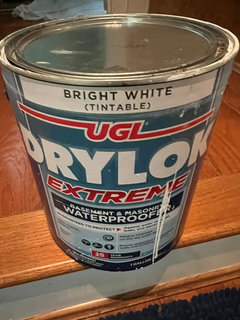
    We have two sump pumps i our lower level. One is in what used to be the closet for our gas meter, but they moved that out and we had unfinished cinderblock walls and one of the sump pumps in there. To be on the safe side, my husband painted the walls with DryLok. He probably did two or three coats. The space is bone dry no matter what storm hits-so far (more than 20 years). Before we did this, we had one of those companies that dug an interior french drain. That didn't do much of anything.


    I think somone from HW tpld us about drylok. I am not sure, but I think it was Tibbrix. I wish she would come back.


    dedtired thanked cyn427 (z. 7, N. VA)
  • yesterday

    Basements and sump pumps are pretty uncommon in my area. The slab on grade style is common for mass produced new construction, and otherwise, houses have raised concrete perimeter foundations with a crawl space.

    dedtired thanked Elmer J Fudd
  • yesterday

    No basement. No crawl space. No sump. So thusly, no pump in a sump ... although I have a discharge pump in the 3rd chamber of the septic tank.

  • yesterday

    All this information is invaluable and one of the reasons I love this site and its regular inhabitants. This is all very reassuring. Thank you!

    We were young and dumb(er) when we bought this house in 1974. Was supposed to be a starter house, but will undoubtedly be my finisher house. Home inspections were not required and there were several undisclosed problems, including a leak from the kitchen sink into the crawl space below.

    I feel as if I have practically had it rebuilt over the years. Fortunately this is a very desirable area and Im sure I could sell in few days, even with a damp basement, although who knows with higher interest rates. I think ours was 9%.

    Cyn, I have heard of Drylok but Im not sure paint would stick to my crumbly walls. That would be a great solution.

    Anyway, guess Ill move forward with this project. Lots of dampness down there today thsnks to the nor’easter.


  • yesterday

    Ded, did you call Mainline Waterproofing? They are honest, everyone else tried to sell us on things we did not need. In our case, after Ida, the water was coming in thru windows, and the window wells were filled with dirt, You may indeed need the sump pump, but these people won't sell you something you don't need. Mainlinewaterproofing dot com.

    The other basement "specialists" didn't even look before starting the sales pitch.

  • yesterday

    Sushi, yes i did and thats who Ill hire. They are highly recommended. Thanks for your vote of confidence.

  • yesterday

    I’m happpy that you feel more informed and settled about this. Water in basements is a drag. Better than a leaking roof, I guess.

    dedtired thanked petalique
  • yesterday

    We have had them in two of the three homes we have owned. Anyone with a full basement finds them a cheap insusrance. We never hear ours run. French drains are not cheap and if you are going to bother there's no debate about the pump. Your walls are crumbly-sooner vs later get the pump installed.

    dedtired thanked arcy_gw
  • 23 hours ago
    last modified: 23 hours ago

    Something else to discuss with your contractor - installing 2 sump pumps, piggy - backed, one above the other. One year during a wild storm one of the kids went downstairs and noticed that the floor was wet. The sump pump was overflowing so DH went over to check the float.

    As soon as he touched it the pump started running again - the float had stuck. So we installed a second pump as a back-up. There are newer pumps that don't have a float but instead have electronic sensors or a pressure switch. Maybe they're more reliable,

    dedtired thanked maire_cate
  • 23 hours ago

    I will have to reread his proposal and see whats included. One more thing to think about but good to know.

  • 14 hours ago

    Ded- I hear you about the "number of machines and doodads" and I have to admit that I am relieved that this house doesn't have a basement - it doesn't even have a real attic except the one over the 2 car garage. Since we downsized I refuse to start storing anything up there.

    After the stuck float incident we added a sensor that would sound an alert if it detected water. It is similar to what you can place under the water heater. Again - more stuff to worry about.


  • 13 hours ago

    Yes sump pumps come with their own issues like when DH ran up against the plug when removing the hose reels from storage-basement flooded....we've never had two pumps but we do now have an alarm on it so we know if it doesn't function. Outside is always the place to begin when fighting water, but I am assuming you have. It's no easier or cheaper to regrade a yard...and frankly the french drain and sump take all the guess work out of it. If you have an unfinished basement it's the way to go. If it mean trashing a living space...I would start with the outside work. We have found keeping the downspouts properly functioning can made a huge differance.

  • 11 hours ago

    My basement is a dingy pit, so it would be hard to make it worse. It does have a good concrete floor but thats all. I think this will improve it.

    I started mentally counting all the ”machines” that keep the house going. Its quite a long list even for my tiny house, especially when you include kitchen appliances and washer/dryer.

  • 10 hours ago
    last modified: 9 hours ago

    In our house in St. Louis we had intermittent trouble with basement damp and the sump pump. When we sold the house we told prospective buyers we were putting in a french drain along three walls but only AFTER we moved out and before they moved in. We did not want to turn the house over to a new owner with a huge potential problem. We paid for the work in advance and had a rider on the contract that the house could not be moved into until the work was completed. I think it was scheduled to take four days. Two couples tried to talk us out of it bc they wanted the house at a lower price (minus the waterproofing work) but we stuck to it. The work came with a lifetime guarantee for the owner at the time the work was completed. An appreciative architect bought the house.

    dedtired thanked Kswl
  • 10 hours ago
    last modified: 5 hours ago

    After my parents were gone and the house was on the market, we had one of those torrential rains. When I went to check on the house in the morning, I could smell it as I came in. Went in the basement, where the carpet sloshed, and sat shimmering on the surface. Not inches, but a lot. And of course only in the finished area! In the end, it was determined that the sump pump had gotten stuck, and the backup one worked, but the discharge pipe had somehow broken outside the wall, so it was basically recirculating the water in and out of the sump.

    Fortunately the two sump pumps in the other end of the basement worked. And the finished area was basically empty, and anything in the unfinished area was off the floor.

    dedtired thanked bpath
  • 9 hours ago

    Kswl, that was very kind of you. Im afraid a lot of sellers would just say its the buyers problem now.

    Bpath, my mom’s house had water intrusion, but thankfully only in the unfinished basement and garage. The house needed so much work, I left it all for the buyers who were planning a big renovation. Every time I drive by it I see contractor trucks in the driveway.

    Id really like to get this house in shape before its sold, however many years away that may be. Its pretty good now but there are a number of things that need to be done. Its just satisfying to take care of what is often your largest investment.

  • 6 hours ago

    Ded, the DryLok is not like regular paint. It is a waterproofing 'paint'. Still , you are probably right since your your walls are crumbly. Hope you can get yours taken care of (Yes, ending with a preposition).


    dedtired thanked cyn427 (z. 7, N. VA)
  • 5 hours ago
    last modified: 5 hours ago

    Dh was almost talked into encapsulation for our crawlspace, but maybe it would be appropriate for your crumbly walls? Or is it only for crawls?

    dedtired thanked bpath
  • 3 hours ago

    Encapsulation, which is covering the ground in a crawl space with plastic sheeting, is done to reduce humidity in the crawlspace where the ground is very damp. In such damp spaces, dehumidifiers are often added too.

    Damp crawl spaces support mold and mildew growth on exposed wood structure that's part of the house and produces unsafe particles in the air that can get into the house. Both are problems that encapsulation helps deal with.

  • 3 hours ago

    thank you captain obvious

    dedtired thanked LoneJack Zn 6a, KC
  • 3 hours ago

    We had a sump pump at our previous house. The house had a partial basement, very small, where the only entrance was cement steps on the outside going down to the "basement" (more like a root cellar). At the bottom of the steps was a drain that led into the cellar where it ended up in a sump pump well. Whenever it rained the sump pump well would collect the water and be pumped upward and through a pipe and through an outside wall. If we lost power during a rain storm we'd be in trouble. The house's water heater and deep freezer were down there mounted on cinder blocks just in case of rising water. I liked hearing the muffled sound of the sump pump, if I didn't hear then it was a problem.

    dedtired thanked vgkg Z-7 Va
  • 52 minutes ago

    " thank you captain obvious "

    She asked a question suggesting she wasn't sure of when they were used, Captain Flyover.