Software
Houzz Logo Print
njpelicanbay

wood burning or gas fireplace?

12 years ago
im building a house at the beach and trying to decide if I should install a wood burning or gas fireplace, and suggestions?

Comments (35)

  • PRO
    12 years ago
    You could always install a wood burning fireplace and use gas logs.
  • 12 years ago
    I live on a beach also and have two wood burning fireplaces. They are nice but have to be cleaned out. We don't have any gas on our street so if I were to change to a gas fireplace, I would have to use propane and the tank would be huge with no place to anchor it without seeing it, so I guess for now I'll stay with wood. It is great when the power goes out during a storm which happens often here in the winter. If I were building, I would go with gas especially if you have gas main in the street, then you could also hook up a gas grill. I'm still thinking about propane, but we don't use the fireplace that often, but if I change over, that is what I will be doing, hooking my grill up also.
  • PRO
    12 years ago
    Fireplaces suck more heat out of your home than they generate. Burning wood is a lot more sophisticated than too many think it is! We have 2 wood stoves and I know from whence I speak because we made the time to learn what was required to burn wood practically and efficiently. It's not as simple as shoving a log into a fireplace, I'm sorry to say.

    www.hearth.com

    Fabulous site that will answer all your questions with more depth that you'll expect/want! Wood heat is great, but if you don't know what you're doing, it will be frustrating beyond belief.
  • 12 years ago
    Agree with building to code for wood...can always convert later.
  • 12 years ago
    Gas!!!!!!!!!!!!!! Plus it is incredibly easy (just push that button) and is much more environmentally friendly. Where I live in San Francisco Bay area no new wood fireplaces are allowed and we have spare-the-air days constantly with no wood burning permitted.
  • 12 years ago
    I would say gas but my husband would say wood! Here's my issue with wood - you need to clean it (and the chimney) and it makes your house smell like smoke, plus I always worried about one of the logs falling out.

    As for the propane that summgardner mentioned - you can have the propane tank buried (we did that at our last house) - but I would recommend that you own the tank - otherwise you are tied to that particular propane company which might not offer the best prices as their competitors.
  • 12 years ago
    Gas always sounds so tempting and many times builder encourage non vented fireplaces when using gas. Absolutely need venting for safety, if you choose gas.
  • PRO
    12 years ago
    last modified: 12 years ago
    Most of our beach house projects use gas (propane) fireplaces, but we have a few diehards that stick with wood.

    There are a couple of downsides to wood in our area. One is that all living areas are at least 14' above grade, so you'd have to carry all of you wood up at least one flight of steps, making it a little more laborious. Also, here in the humid South, it is difficult to keep wood dry and insect free without a fairly serious raised, covered wood storage area.

    if you can't easily hide a propane tank with landscaping, most properties have a small spot where a tank could be buried, which would be more trouble initially, but less obtrusive in the long run.

    Talk to your local fireplace professionals about your project, and they'll be able to help you make the right decision based on what you want/need. There are so many things to consider. Everything else is just opinion, including mine. :-)

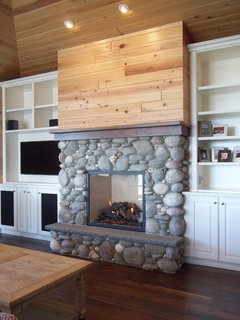
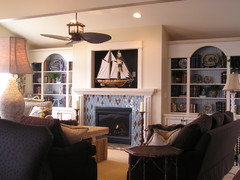
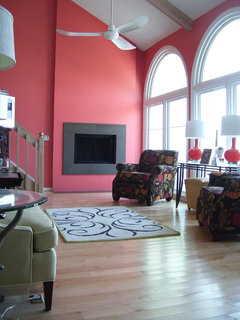
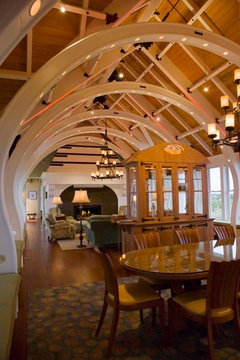
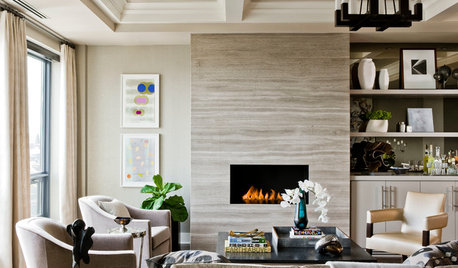
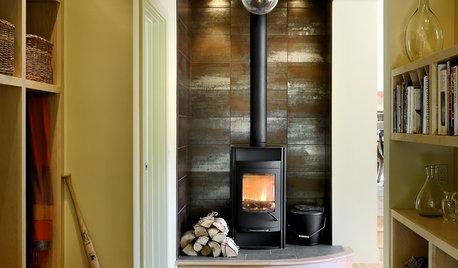
    I threw in a few of our beach house fireplace photos for you . . .
  • PRO
    12 years ago
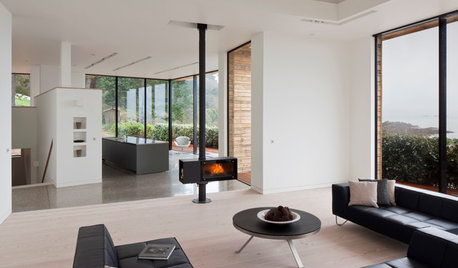
    I just like the feel of a wood fire. They are a pain but I think the ambiance is worth it. Or you could go absolutely crazy and do a hanging wall fireplace with etanol burners that don't need any venting and if you decide you would rather have it somewhere else just hang it there like a picture. Just google ethanol fireplaces and have a look they are very cool.
  • 12 years ago
    COASTROAD- if you were converting a wood burning fireplace to propane, would you recommend vented or vent free?
  • 12 years ago
    Absolutely must have vented. We learned from experience. Humidity, dirty walls and bad smells with no vent
  • 12 years ago
    There is a difference between propane and natural gas.
  • PRO
    12 years ago
    @Margo, it depends on what you want out of your fireplace and whether you are starting out with a manufactured or masonry fireplace.

    There are a number of things to discuss, but generally speaking, vented gas logs are more realistic and less efficient (they will require the damper to be clamped open).

    In some cases, an unvented type gas log can be operated with a damper partially open, which will help to keep some heat in the house while offsetting some of the indoor air quality issues associated with unvented logs.

    If you can afford it, the best thing you can do is a direct vent insert, which offers a combination of the best realism and overall efficiency.

    @dclostboy, you are correct, LP and NG are different, but the differences are negligible if your fireplace/insert/logs are installed and adjusted properly. The biggest difference folks usually notice is when the bill comes - natural gas is usually significantly less costly to use. Even so, heating with propane is usually more cost-effective than heating with electric.
  • 12 years ago
    Thank you COASTROAD;) I was just at a fireplace store and the guy recommended vent free with propane gas logs. He said it was a lot less in BTU's and would actually help heat the house versus sucking the air out of the house. I am so confused lol
  • PRO
    12 years ago
    @Margo, what you heard is essentially correct, but there are other considerations.

    Most gas guys prefer unvented (a.k.a. vent-free, ventless) gas logs because they are easy. Since I don't know everything about your situation, I'm hesitant to suggest anything different.

    If you'd like an unbiased party to bounce ideas off of, you can contact me directly at tom@coastroadonline.com
  • 12 years ago
    How kind of you COASTROAD. We are in the not sure stage. If we go forth with the switch I will contact you for the pros and cons of each. Thank you for the contact. It is much appreciated:)
  • PRO
    12 years ago
    Glad to help . . . the offer goes for anyone that needs a little information.
  • PRO
    12 years ago
    Woodstock Soapstone Co. also builds gas stoves (traditional look) and all of them are direct vented. There is excellent information on why they don't make a "ventless" stove in the information library on their site. They sound like a very nice option.
  • 12 years ago
    Thank you COASTROAD, we are just starting a remodel of a 1930 chalet house in south east England. Your boulder fireplace is just the thing. Unfortunately the boulders have to come 400 miles from Cumbria in the north west. but I think it's worth the effort. At the moment we have red brick with a gas log effect burner, not very seaside, more country pub.
  • 12 years ago
    Please consider the carbon effect of heating choices. Gas is preferred for cleanliness and efficiency.
  • 12 years ago
    Sometimes soberg you do not have the luxury of choice. There is no gas on my street. I have oil heat. I need wood burning or propane;)
  • PRO
    12 years ago
    . . . at the risk of sounding pedantic, propane IS gas.
  • 12 years ago
    LOL- COASTROAD- now can you translate pedantic lol ....
  • PRO
    12 years ago
    Having grown up in a countryside house in France with a wood fireplace, I have to say wood :) I love the convenience of gas (for my bbq!), but the feeling of a nice wood fire on a cold night is unmatched! It is more work though, but I think it's worth it!
    Patrick
  • 12 years ago
    Dear Scott Design, Inc. Your voice has been heard loud and clear by me;) I for one will stay with the wood burning fireplace after your plea for wood burning. Great points all the way around;)
    Thank you for taking the soap box, and your Houzz contributions!!
  • 12 years ago
    On the Ventless conversation, Margo, I would not trust the salesman if they feel that getting you into a cheaper Ventless installation is better than not getting your money at all. With the push for houses to be sealed up as tightly as possible, I would not install a Ventless fireplace without a blower door test and some form of mechanical means to insure that proper make-up air is provided. The btu output should also be limited by the size of the house to not use too much oxygen. Therefore, it becomes more for ambiance than actual heat.
    Did I catch that right? Scott Design likes wood smoke, but not the smell of a good meal? Lol
  • PRO
    12 years ago
    Quality wood burning stoves should never emit any hint of "wood smoke"! If you "smell" the stove it's not burning efficiently or you're burning green wood. And that's not the object of the game. With respect to "wood smoke", it's best to regard it with skepticism and rightful scorn. If you're going to burn wood, then learn how to do it properly and in a way that doesn't dump pollutants into the atmosphere.
  • PRO
    12 years ago
    last modified: 12 years ago
    Funny thing...I knew the moment I talked about smoke someone would jump all over it. I should have omitted it or qualified my quip. I have been known to not check the damper before I start up another fire when there are a few of us that make the fire during the holidays. Then backpuffing of start-up smoke appears for a brief moment along with a few choice words!

    Fred S...rather smoke than stale fish!

    I totally agree with Daybreak Workroom. A smoking fireplace signals something is wrong... poor combustion air, wrong wood, dirty flue, faulty damper, short chimney, failing masonry (to name a few issues). It should be questioned and resolved. Efficient combustion is the goal in burning any fuel to reduce pollutants. Wood burns completely only at very high temperatures with enough oxygen present.

    Over the years, we have followed these 6 steps in building and maintaining a good fire in a fireplace (thanks to the girl and boy scouts! )
    1. Open damper wide.
    2. Be sure there is a thin layer of ash for insulation below the grate.
    3. Crumple a few sheets of newspaper and add some small pieces of kindling, then light up.
    4. Add bigger kindling a few at a time as the fire grows. Get it burning briskly to form a bed of hot coals.
    5. Lay 2-3 seasoned hardwood logs on grate. After they start to burn nicely, we close down the damper a bit for a slower burn being sure not to diminish the required oxygen needed for efficient combustion.
    6. New logs are placed over hot coals ONLY.
    Apart from the half hour after lighting, a properly burning fire should give off only a thin wisp of white steam. If we see smoke coming out of the chimney, we adjust the damper to let in more air. The darker the smoke, the more pollutants it contains and the more wood is being wasted.

    Granted, this is not as convenient as a remote control for a gas fireplace but it's okay for me during the short period of time I use it.
  • PRO
    12 years ago
    I installed a wood burning insert into my fireplace and love it. We get all of the ambience of wood fire with all of the efficiency of a wood stove.
  • 12 years ago
    I love my wood burning fireplace. It's freezing cold here right now and I am sitting by mine right now. It's wonderful. Nothing beats a real wood fire.
  • 12 years ago
    DO NOT buy vent free logs. I've worked in fireplace industry for 15 years and these had by far the most complaints. If all you want is quick heat(5-10 mins of usage at a time) then vent free is an option. If you are looking for extended usage(30-60+mins at a time) then you do not want vent free logs.

    Top 3 complaints:

    1. Odor- don't let any salesman tell you that after the burn in period, vent free logs will not stink. That is false. Any dust, hair, or other objects will be burnt off and guess where those fumes go since there is no vent.

    2. Allergies- if you or any guests have allergies, vent free logs are a nightmare.

    3. Aesthetics- not very realistic looking logs.

    I would suggest a wood burning fireplace with a propane gas starter. This way you can easily start your wood fires and if you ever want to go with vented logs, then it is a simple 15 minute installation.

    Direct vents are nice, but remember that there will be a solid piece of glass that cannot be removed. Some people do not like this feature. For an existing home, direct vents are typically much easier to install as they can be vented straight out the back of the unit (that solid piece of glass in the front is what allows this draw to happen).

    I'll leave you with a story. I tried to to tell my parents to get a vented wood burning insert ,but they went with a vent free instead. Guess what, they hardly use them because they put off odor and are simply too hot to use while they are sitting in room.

    Best of Luck.
  • 12 years ago
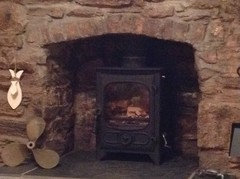
    I would always go with a wood burning stove. In comparison with an open fire there is very little odour and they are much much easier to clean, certainly not needed on a daily basis. I have in fact bought a candle from Anthropologie called fireside to make up for the lack of smell!
    In the UK at least the regulations/codes state that if a stove is above 5kw you need an additional vent to the room. many stoves are directly vented into the stove box, search on Google for direct venting stoves and you should find plenty.
    Ours is not vented, but it is less than 5kw and we in a 300 year old leaky seaside cottage ;-)
  • 12 years ago
    Wood is also a more sustainable fuel than gas as these days more trees are planted for each one than is felled. Be sure to buy dry, seasoned wood or kiln dried wood for maximum efficiency.
  • 12 years ago
    Are you a person who likes extra work on holiday, if so go wood . Do you or yours have Athsma?
Sponsored
Peabody Landscape Group
Average rating: 3.5 out of 5 stars8 Reviews
Columbus' Reliable Landscape Design & Contracting