Software
Houzz Logo Print
valtex

Care and Cleaning of wood cabinets

12 years ago
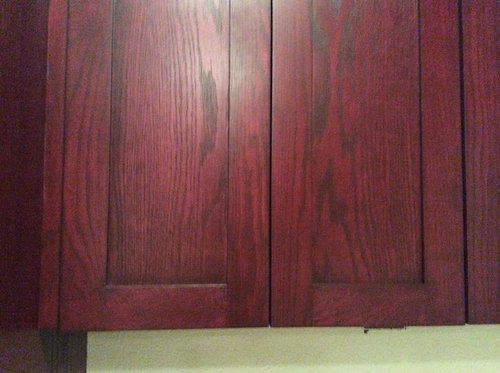
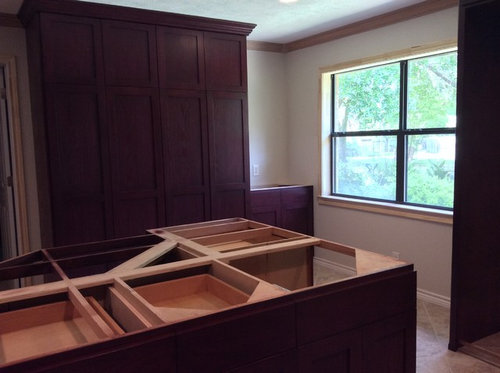
After a near disaster by hiring the wrong finisher, my new red oak cabinets are finished, stain and lacquer. My question is, especially to the pros- what is the best method for care and upkeep? My (final) finisher recommends just a damp cloth. Anyone think polish is needed? Maybe later, or in a few years?

Comments (10)

  • 12 years ago
    Funny, I was just talking about this with someone who came to fix my cabinet finishes today. He recommended using Guardsman cream polish once a year exactly for this purpose. Once yearly is probably to be safe, I'm guessing you can get away with doing it less. He says this works for both wood veneers and solid wood. He specializes in repairing wood finishes so there's your pro!
  • PRO
    12 years ago
    I would contact the manufacturer to find out the finish on the cabinets. Once you know what they used, you can aks for/find an appropriate product. So long as Guardsman is allowed with the finish you have on there, you could go that way.

    Remember, anything you apply now will have to come off later if you wish to refinish the cabinets at a later date.
  • 12 years ago
    Remember red oak is porous. Personally I'd wipe them twice a year with linseed oil, they will absorb it and be protected.
  • 12 years ago
    Thanks Sophie for the pro advise. My cabinets were not "manufactured", but made by a father and son in their shop and delivered in an antique truck. The drawer joints are all dovetailed and they were built in very large sections instead of separate small individual boxes. I am quite proud of the craftsmanship that went into them. The finisher applied gel stain, sanding sealer, and sprayed lacquer. His advice conquers with yours and he cautioned me against too much water next to them when mopping. I guess I shall have to suppress my urge to polish the wood. They look like furniture and I do love the smell of Guardsman. We will have a large vent hood and decorative hardware. Again, thanks.
  • 12 years ago
    @Sophie ..I simply stated to keep in mind Red Oak is highly porous, I.e. vs. white oak. Having a good sealant does not totally overcome this problem, you can't even with the best sealant use red oak to build a ship. Little known fact about red oak is..you can actually drink through it, it's that porous.
  • 12 years ago
    Wisecarverwright I have not had good luck using linseed oil on any wood, inside or out down here in the South. Moisture from the humidity causes it to mildew. Did live on a 44 ft boat once that was made of white oak (hull) and mahogany. I love exotic woods, but red oak is kinda new for me.
  • 10 years ago

    I know this is an old thread but I have the same questions so thought I'd hop on to this one rather than start a new one. Hope that's OK!

    I'm exploring the idea of getting real wood cabinets vs painted white cabinets. I currently have oak cabinets that are showing wear around areas that get a lot of contact with steam or water splashing (above the range, and below the sink).

    I haven't made any effort to protect or maintain my cabinets, though. I never loved these 90s style orangey-oak cabinets! But in my new kitchen, I will be getting cabinets that I love and I want to be sure I know how to care for them before I feel comfortable going ahead with wood cabinets.

    How do I care for and protect the wood that is prone to be in contact with steam and water?

  • 10 years ago
    last modified: 10 years ago

    Protect cabinets from steam, and water, and touches from your bare hands. Get serious about kitchen ventilation ducted to the exterior, and use it every single time you turn on a burner. That takes care of the steam, and grease buildup. As for water, why would you slop water all over a wood product anyway? You wouldn't do that with your grandmother's breakfront. Kitchen towels should be hung where they are easy to grab if you have wet hands. Floors shouldn't have buckets of water sloshed on them. Damp mopping uses a mop that is so wrung out that you have no drips. Put correct sized, functional, hardware on your cabinet and have hour hands grasp it instead of touching the wood. Kitchens are functional workrooms FIRST, and pretty extensions of your living space a distant second.

    The other part of the equation after you learn correct care behavior is the finish on the cabinets themselves. You don't touch the wood, you touch the finish. It is what keeps the wood looking good year after year, and most pay zero attention to that part of the equation. Old nitrocellulose lacquers and varnishes that a lot of ''custom'' makers still use get dissolved or gummy fairly easily by grease and hand contact. You want high quality factory finish on your cabinets, or a true custom maker who uses a catalyzed conversion finish in a clean room, generally with supplied air. That won't be the cheap, parts assembler who sprays sawdust and bugs into your finish by doing it in your home. You have to have a clean room if you want a clean and durable finish. Finishing a cabinet properly is easily 50% of the cost of cabinets. Only a hack lets unfinished cabinets out of his workshop. Know the difference between finishes, and where they are done, and know what is behind the superficial look that is all most people care about. All cabinets are hardly created equal.

    And despite the SPAM touting the use of patent medicine wood creams and cure all unguents, nothing should touch the high quality factory finish on your cabinets but a dry dusting cloth, or a damp microfiber with a bit of detergent to handle spills. Then ''rinse'' with a water only dampened microfiber, so that the detergent residue doesn't accumulate dirt sticking to it. It is the residue of those ''care'' products that ruins cabinets. No Murphy's. That stuff is evil incarnate. No orange glop cleaners. No anything but dry dusting 98% of the time. If you have followed the above, you won't have anything on the cabinets that needs anything else. And that goes for stained wood or ''painted'' cabinets both. "Paint'' is a misnomer with modern cabinets. Modern opaque coatings have almost nothing in common with house paint.

  • 9 years ago

    Thanks for offering your advice. My re-finisher (stain, lacquer) just gave me the same info - dust only, no oils, orange products, waxes or wood soap. Sounded strange to me, I feel better about it now.