
6 Ways to Add Style to a Basic Tile Backsplash
Bold grout lines, bright colors and unusual layouts can turn rectanglular tiles into an eye-catching focal point

One way to make a kitchen backsplash stand out is with beautiful, customized patterned tile — a popular option these days, but one that tends to be on the pricier side. If you’d like to have a visually interesting backsplash, you might consider simple rectangular tiles instead. By paying special attention to your tile’s color and the way it is laid out, you can create a backsplash high on style. Here are six tile and pattern combinations to consider.
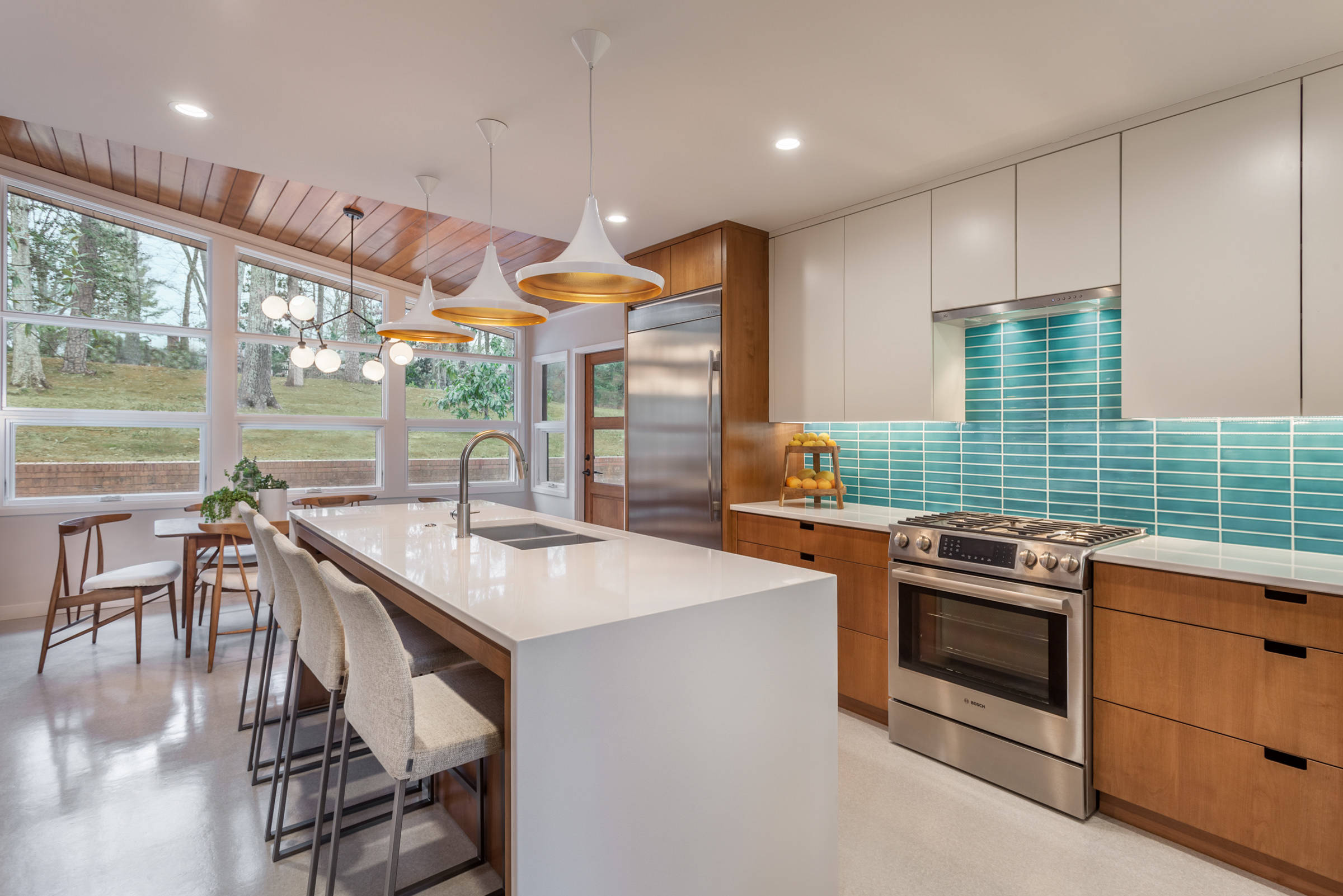
1. Stacked bond pattern with boldly colored tile. In a stacked bond pattern, vertical and horizontal grout seams all line up, like the pattern on a piece of grid paper. This simple, fresh look works particularly well with brightly colored tile and clean-lined cabinetry. In this kitchen, the seams between the flat-front, or slab, cabinets mimic the clean, orderly grout lines of the tile’s stacked bond pattern. And because the cabinet colors are neutral white and wood, the bold tile color offers contrast and creates a vibrant focal point for the room.
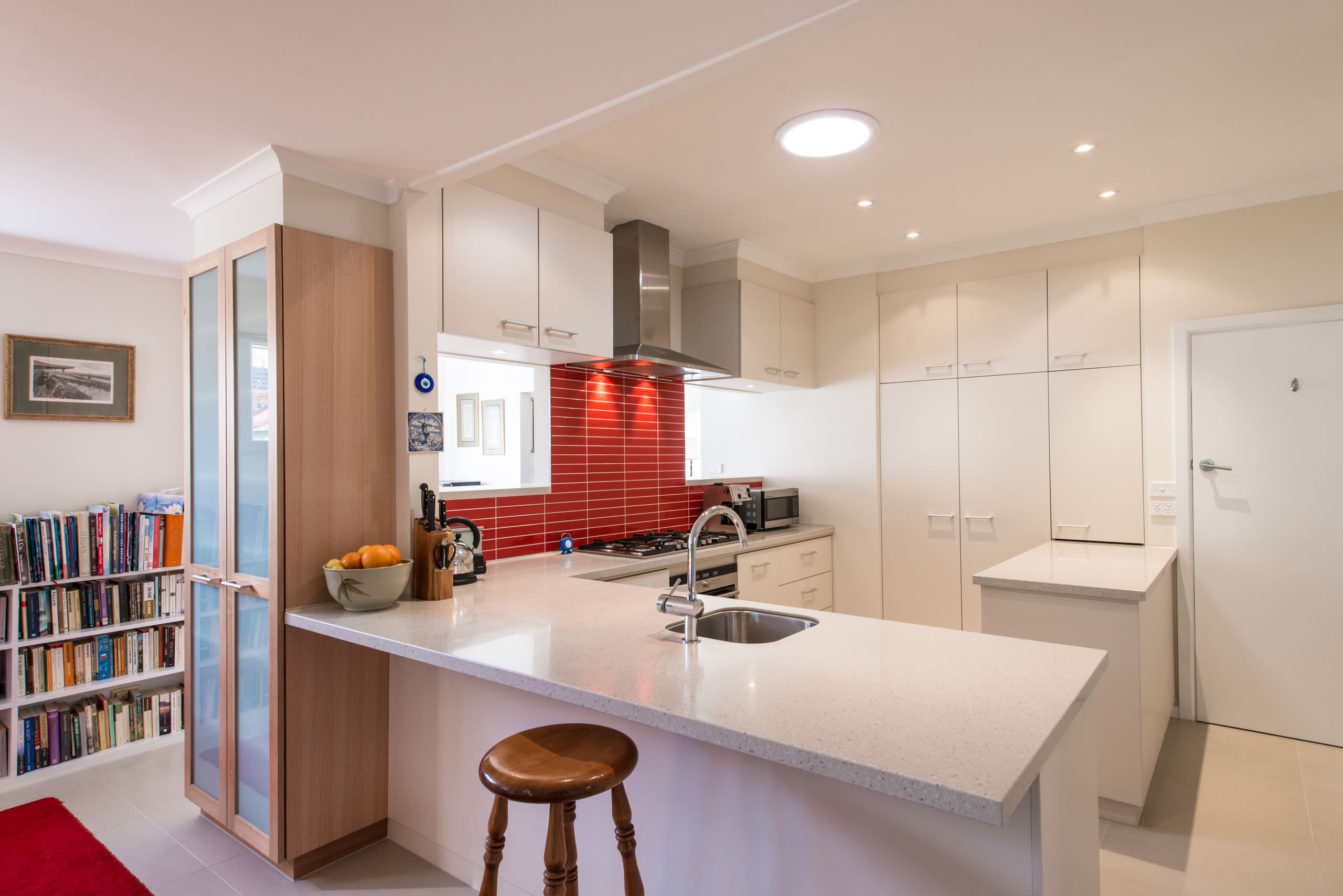
This kitchen also uses slab cabinets and colorful tile with a stacked bond pattern. The cabinetry, counters, walls and floors have minimal pattern. This smooth, calm backdrop offers a nice contrast to the bold color and stacked bond pattern of the tile backsplash. You can work with your kitchen designer to choose inexpensive slab cabinets and standard rectangular tile to create a modern look similar to this kitchen.
Find more red tile
Find more red tile
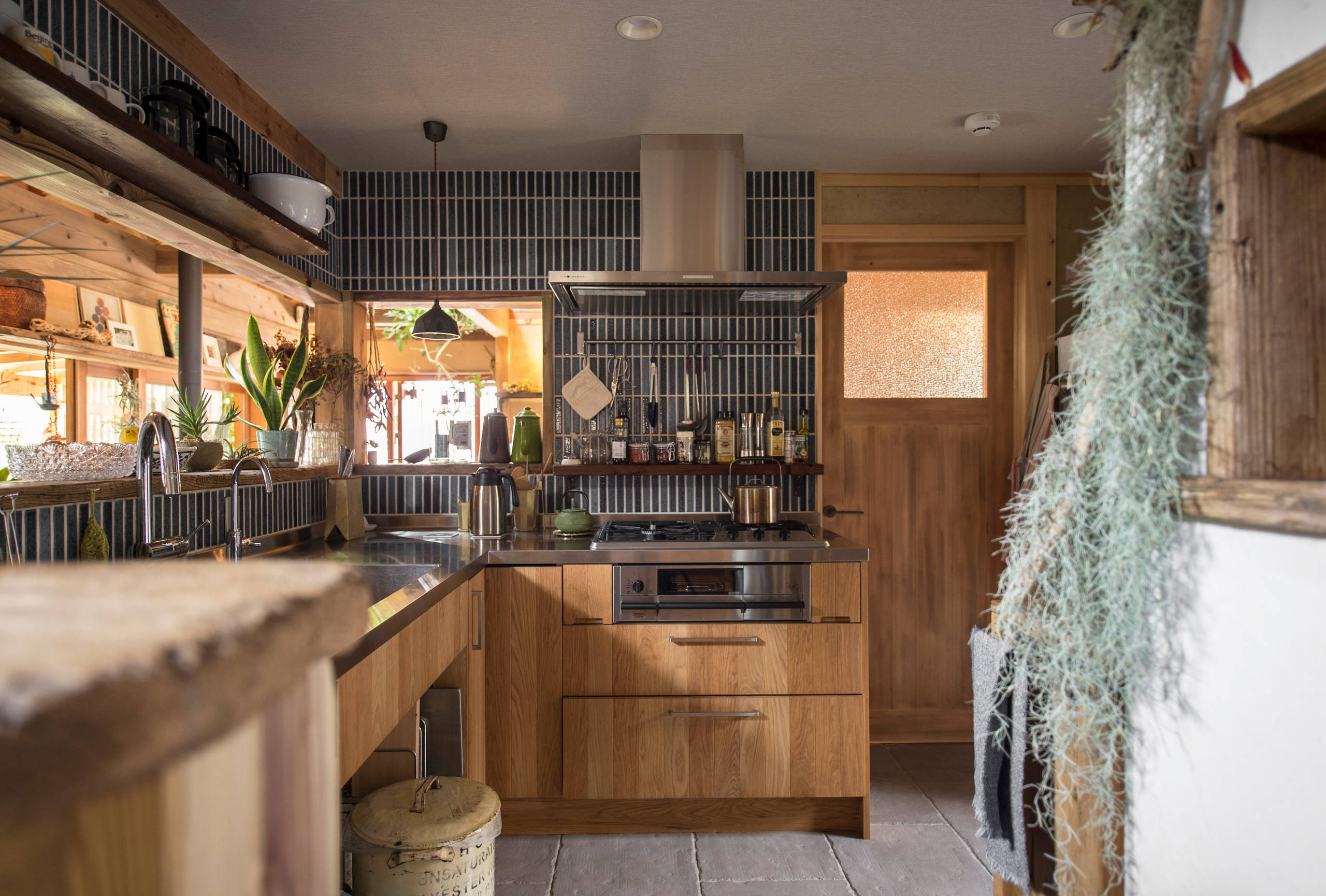
2. Vertical stacked bond pattern with any color tile. Now take the stacked bond pattern and stand it on its side. Vertical stacked bond also works well with simple, sparse cabinets, but it feels more playful than the horizontal version — perhaps because of the unusual orientation of the tiles, or the stronger sense of repetition from this layout’s many vertical seams. In this kitchen, light wood cabinetry and large sliding doors give the room an Asian feel. The vertical stacked bond tiles seem to mimic the lines of the doors, almost like shoji screens.

3. Running bond pattern with vertical subway tile. Placing traditional subway tiles in a vertical arrangement is another way to add visual interest and bold design detail to your kitchen. Here, the tile layout is the typical running bond pattern seen with subway tiles, except turned on its side. Similar to the idea of slimming vertical stripes on your clothes, vertical grout seams draw your eye upward, making your counter space and ceilings feel taller. Consider installing the backsplash all the way to the ceiling, as pictured here, to take advantage of this visual trick.

Using multiple colors in vertically laid out tile can add even more visual interest. Here, the oranges and reds warm this kitchen, adding depth and coziness to a space with modern, flat cabinetry surfaces. Again, the vertical lines of the tile and grout make the space feel taller and help balance the long, horizontal window. A wide, long window can make a room appear longer and its ceilings lower, but strong vertical lines in the tile layout counteract that.
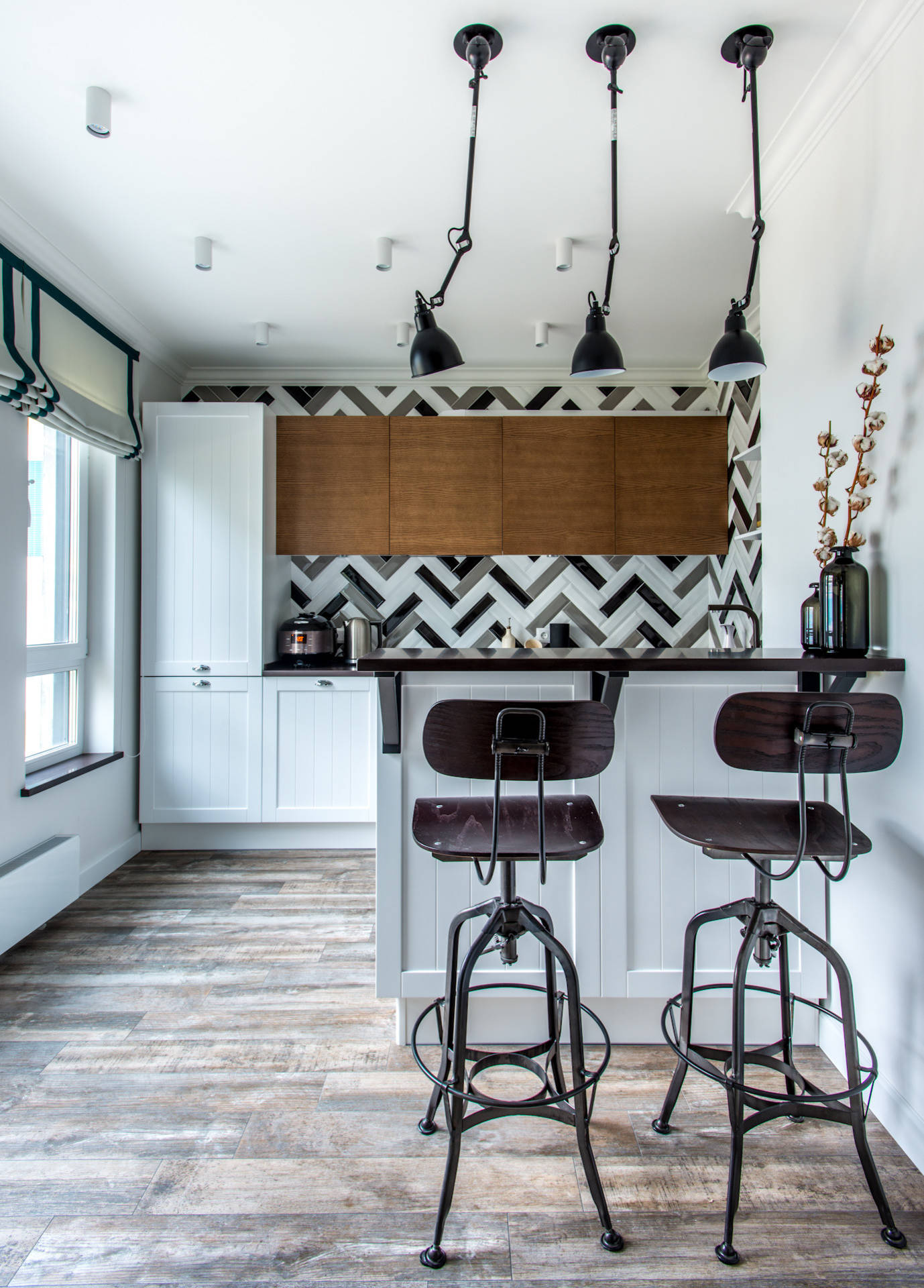
4. Herringbone pattern with bold use of color. Herringbone uses standard rectangular tile, turned 45 degrees and stacked in a diagonal layout to create a classic pattern. This arrangement really shines when bold color is added. This kitchen mixes black, gray and white rectangular tiles for an expensive-looking herringbone layout.
Find more rectangular tile
Find more rectangular tile
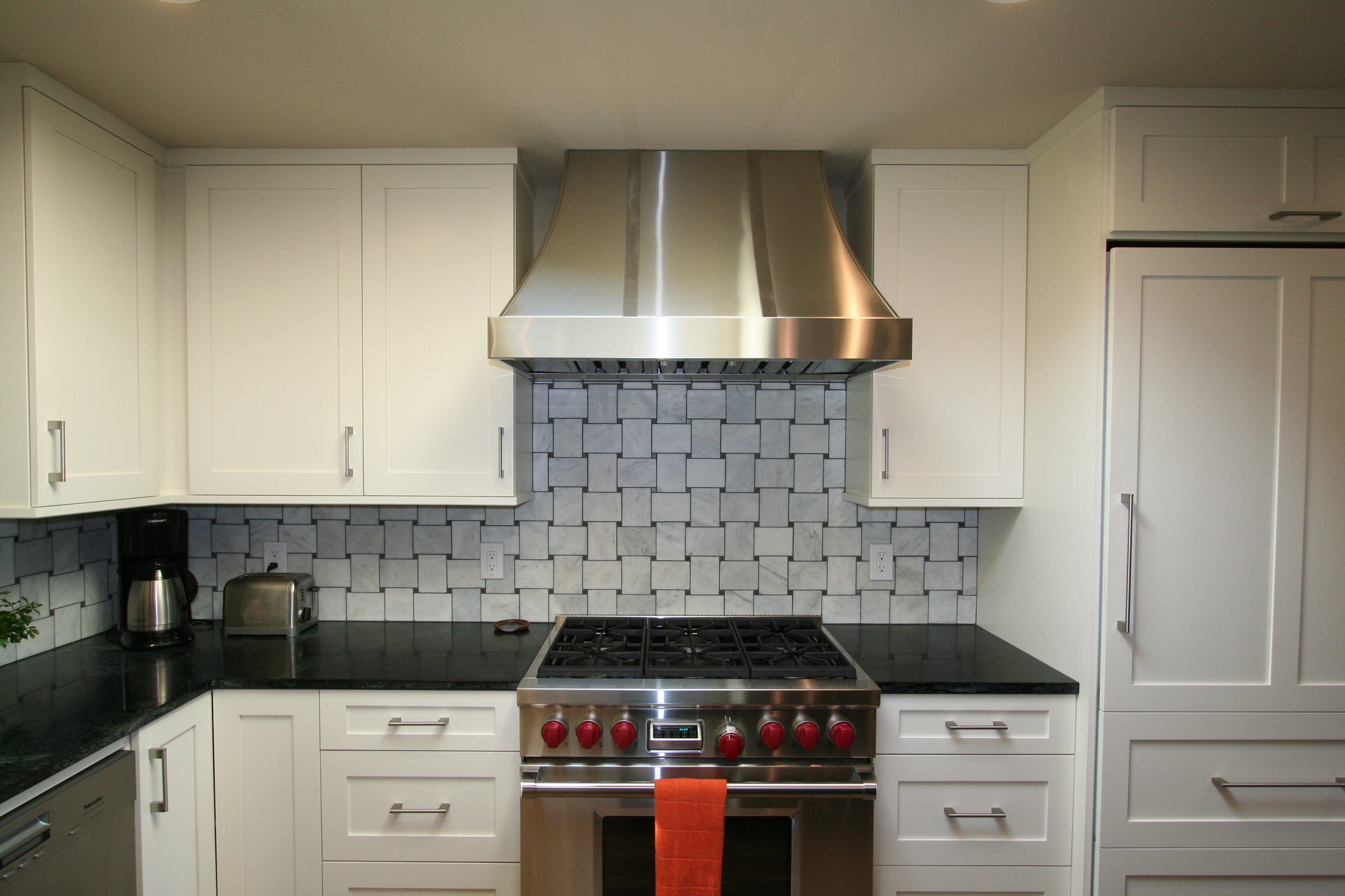
5. Basket-weave pattern plus bold color. This photo shows a clear example of the basic basket-weave pattern, which uses rectangular tile both horizontally and vertically, with smaller square tiles filling in the gaps. This pattern feels traditional and is often found in Tuscan and French country kitchens.
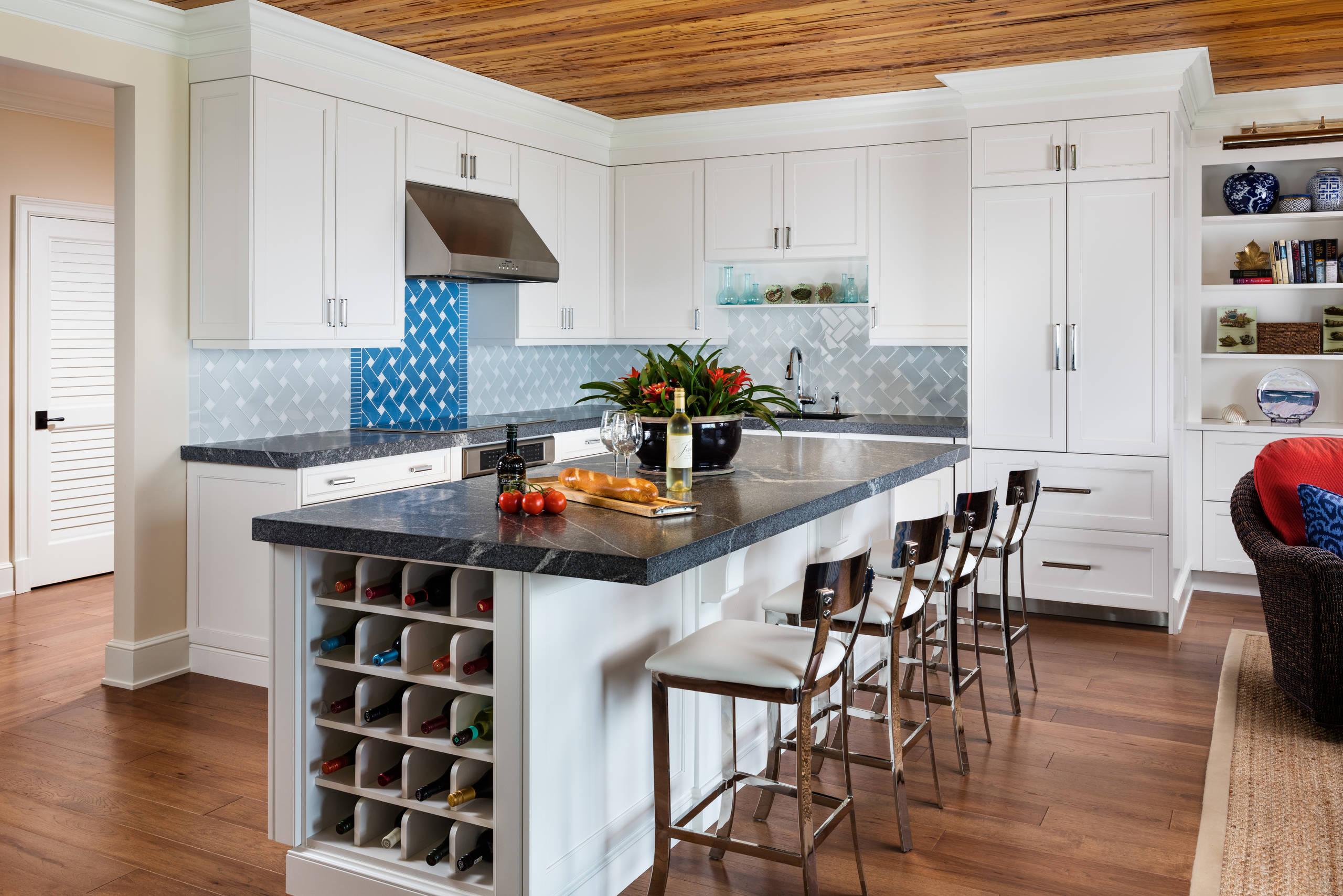
A basket-weave pattern avoids long grout seams that draw your eye horizontally or vertically; instead, basket weave offers a comfortable, quilt-like look. Using white or bright colors can make basket weave look more contemporary and custom. In this kitchen, the brightly colored tile and two-tone color scheme — pale for most of the backsplash, bold beneath the range hood — creates a transitional basket-weave look.
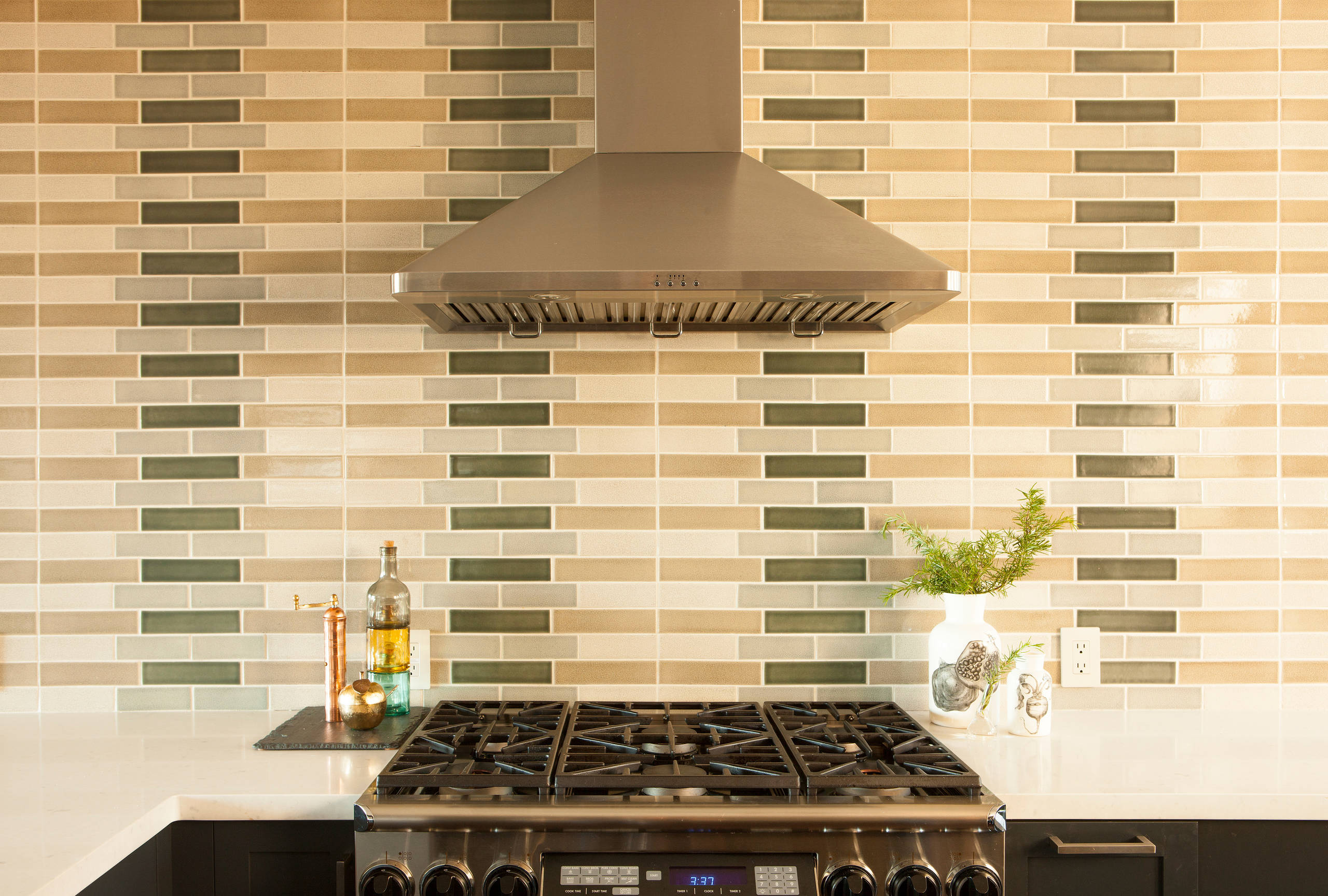
6. Invent your own pattern with your favorite color tile. This kitchen backsplash contains sage green, dark green, tan and cream tiles, and both the colors of the tile and the lines of the grout repeat. See how the grout lines between each sage green tile are centered on the dark green tiles? This design repeats both horizontally and from the top of the wall to the bottom. The backsplash adds warm colors to the kitchen, but the pattern offers a more rigid, architectural look.
To try your hand at designing a backsplash pattern of your own, you might start by purchasing colorful sample tiles to play with, or you could use paper and pencil to draft up a design. The key to creating a successful pattern is deliberate repetition. Either the colors or the lines should repeat to create a rhythm that looks intentional.
To try your hand at designing a backsplash pattern of your own, you might start by purchasing colorful sample tiles to play with, or you could use paper and pencil to draft up a design. The key to creating a successful pattern is deliberate repetition. Either the colors or the lines should repeat to create a rhythm that looks intentional.
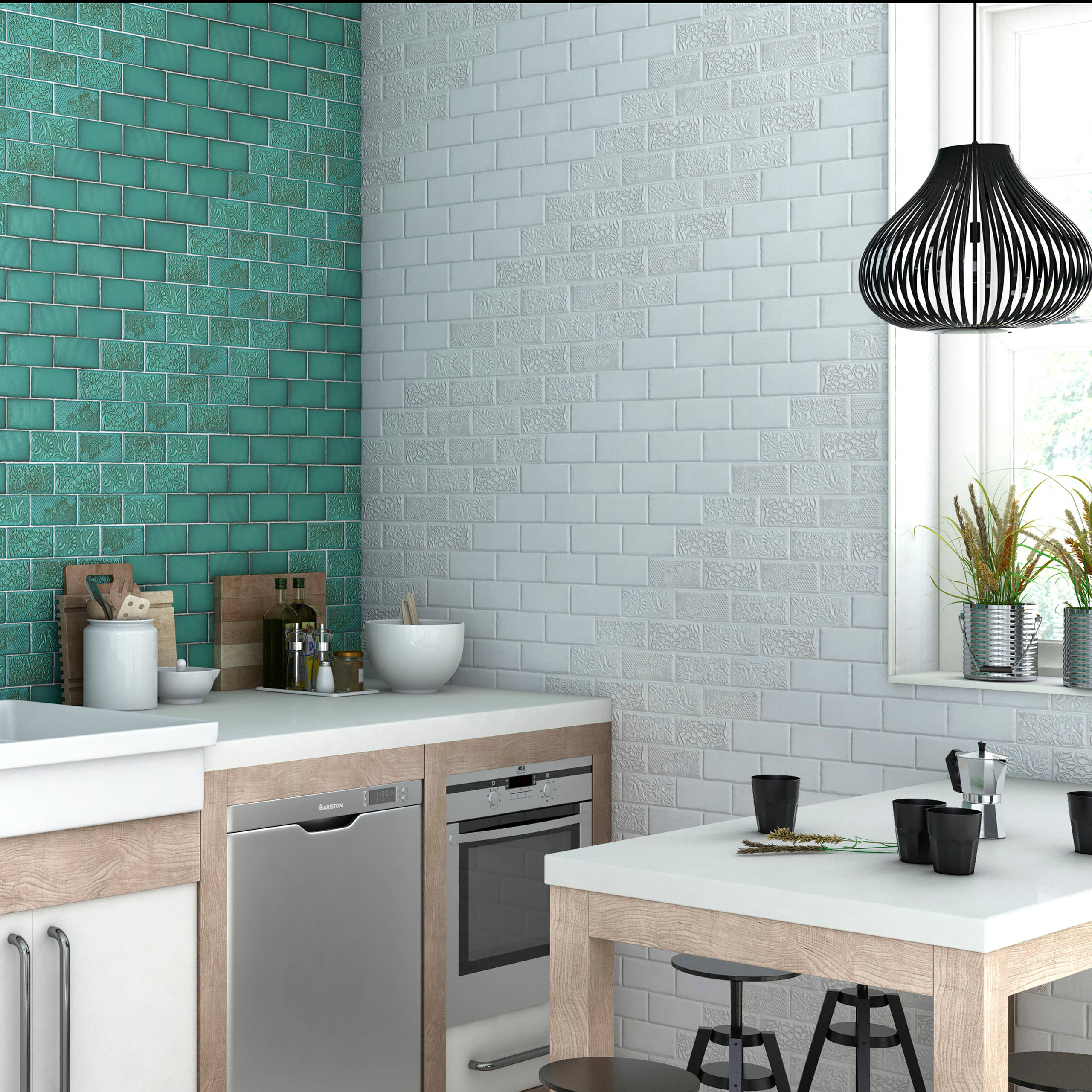
This kitchen uses simple subway tiles with a running bond pattern (mentioned above), the typical pattern seen with subway tiles. With running bond, the tiles stack like bricks, with every vertical seam centered on the tile below.
However, this backsplash also has tiles with a subtle color difference placed in large diagonal bands, creating a diagonal striped effect. The stripes even wrap the corner and become two other colors with subtle differences.
Using color to create a pattern adds movement to the visual design. This means when you look at the backsplash, your eye will want to look around to take in the multiple patterns. It’s a dynamic look for sure.
More
How to Add a Kitchen Backsplash
Kitchen Ideas: How to Choose the Perfect Backsplash
Find a kitchen and bath designer to help you create a custom tile layout
However, this backsplash also has tiles with a subtle color difference placed in large diagonal bands, creating a diagonal striped effect. The stripes even wrap the corner and become two other colors with subtle differences.
Using color to create a pattern adds movement to the visual design. This means when you look at the backsplash, your eye will want to look around to take in the multiple patterns. It’s a dynamic look for sure.
More
How to Add a Kitchen Backsplash
Kitchen Ideas: How to Choose the Perfect Backsplash
Find a kitchen and bath designer to help you create a custom tile layout

