
Tambour
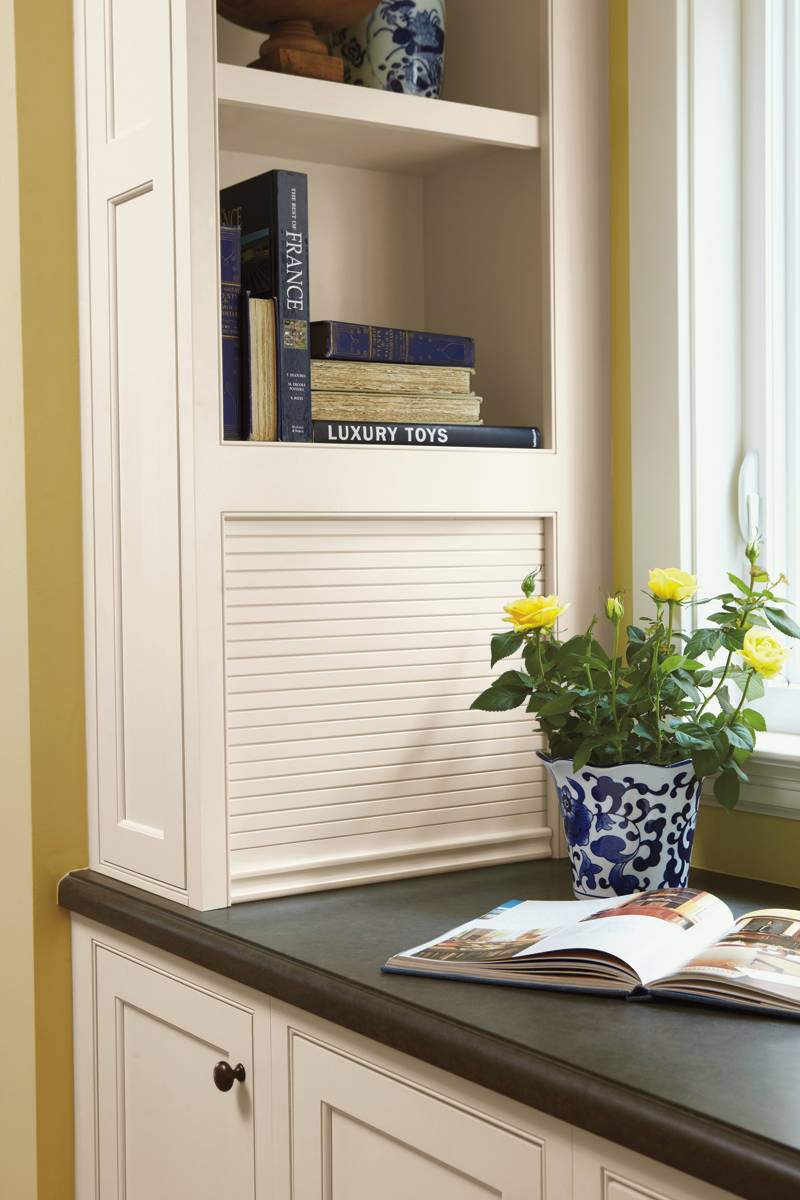
Think of a rolltop desk to picture this flexible door that rolls up and away on a curved track

"Tambour" has a few definitions. It is a drum or drummer, or the wood rings of a small embroidery hoop. In architecture a tambour is a sliding door that rolls on a track, up and out of the way when open.
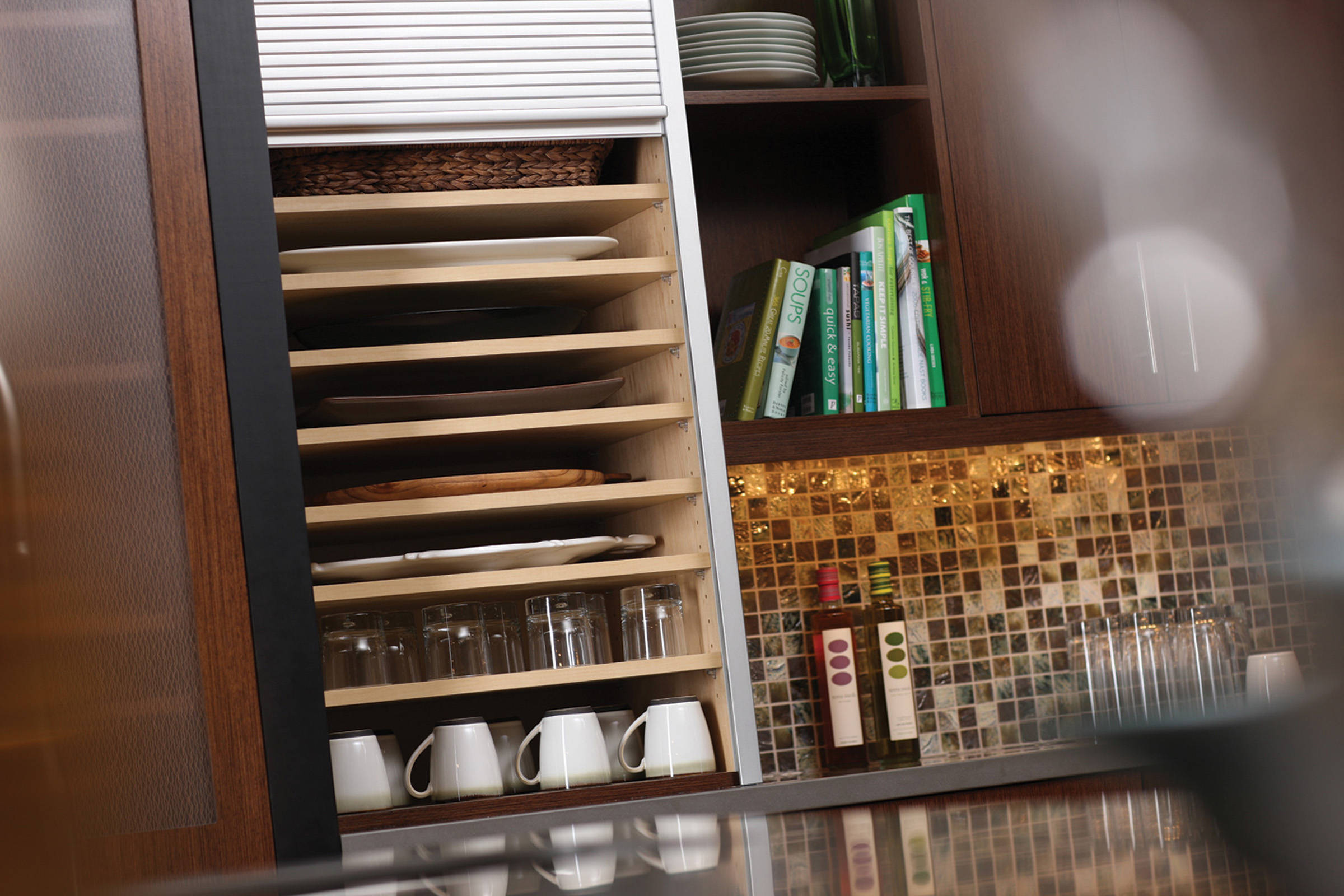
Here the tambour door is open. Since it doesn't swing out like a normal cabinet door, its footprint is very small.
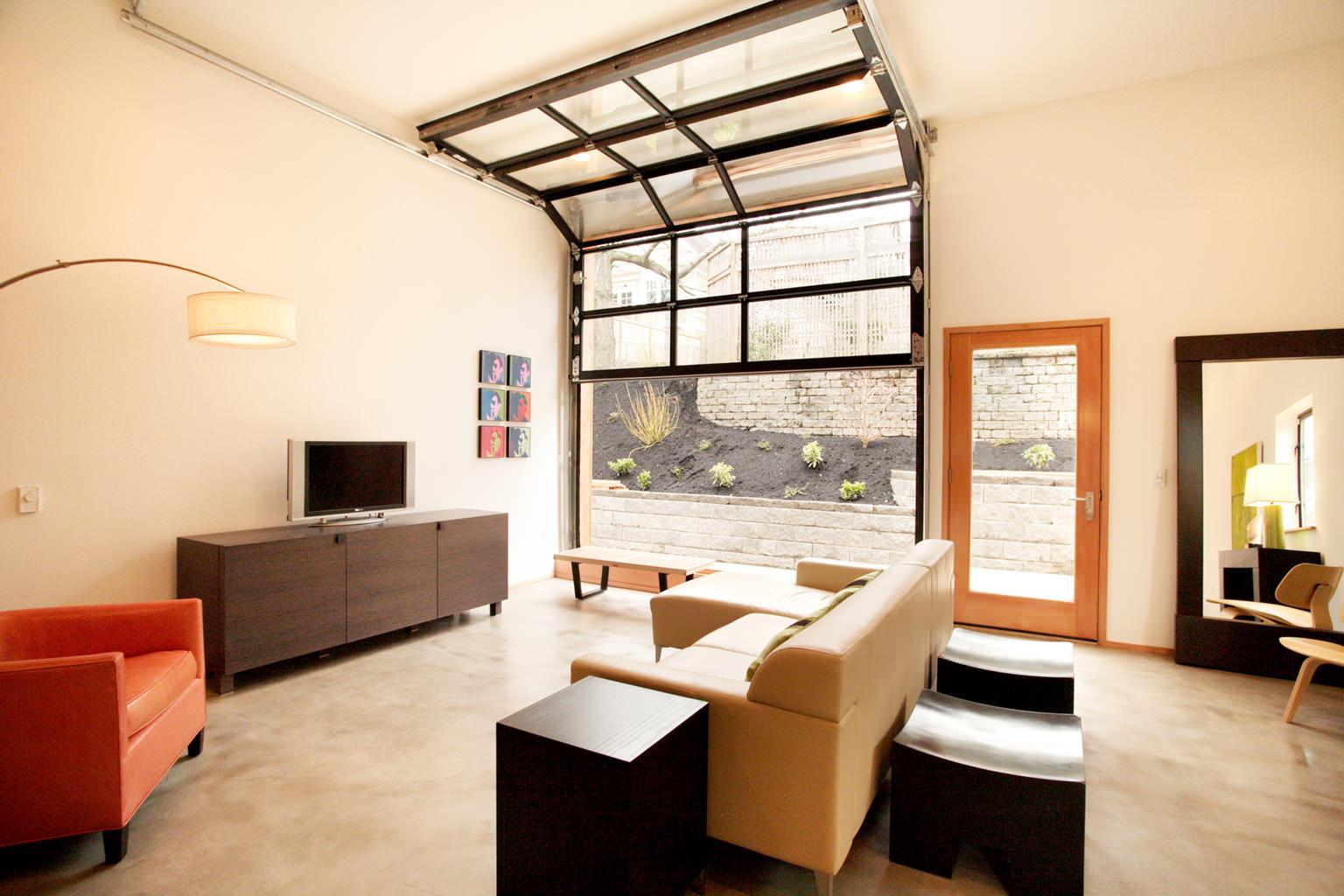
The tambour's mechanism is like that of an overhead garage door, for which hinged panels slide on a curved track up and overhead.
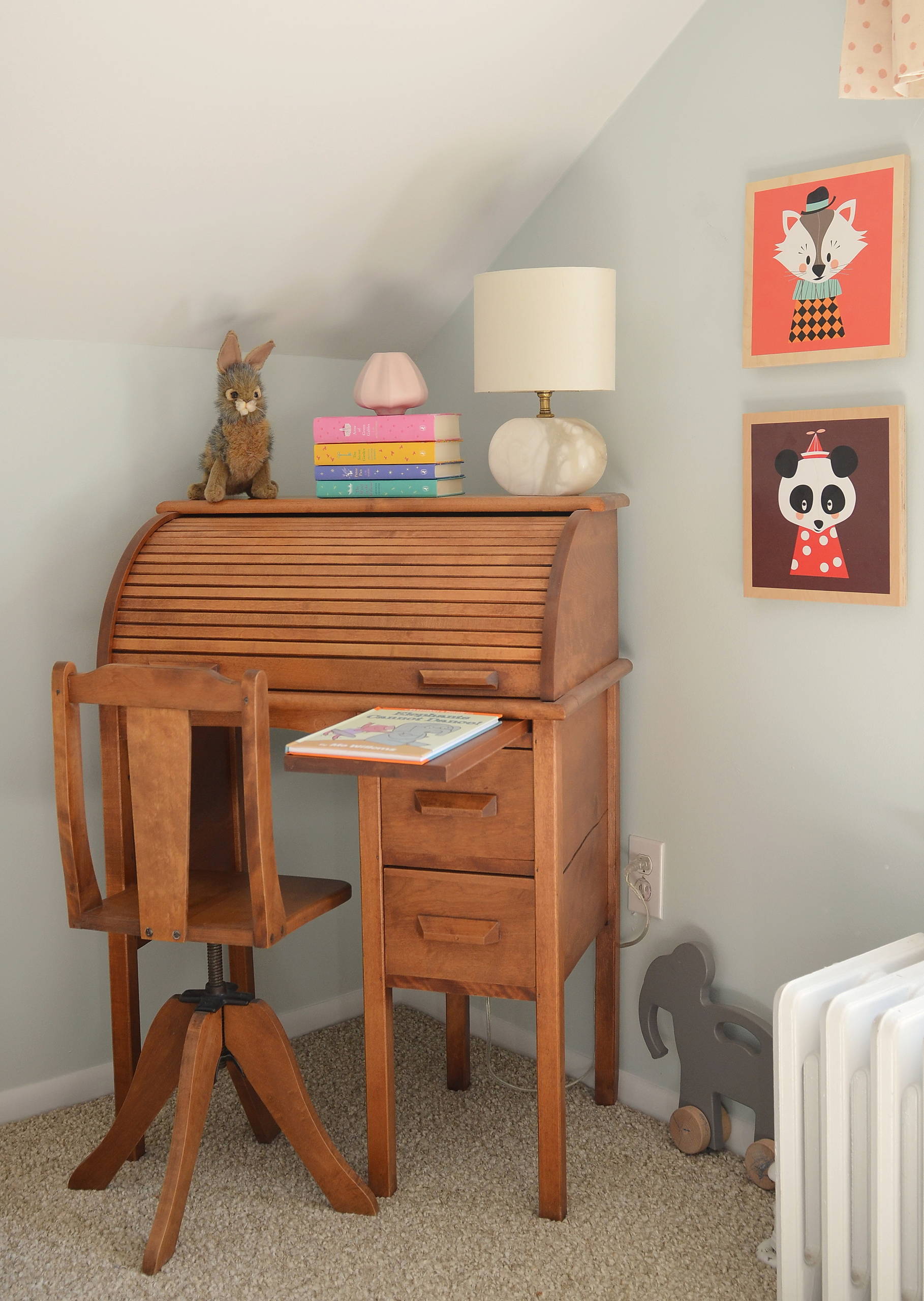
Tambours were first used in rolltop desks, and were made of wood slats connected with fabric or leather strips.
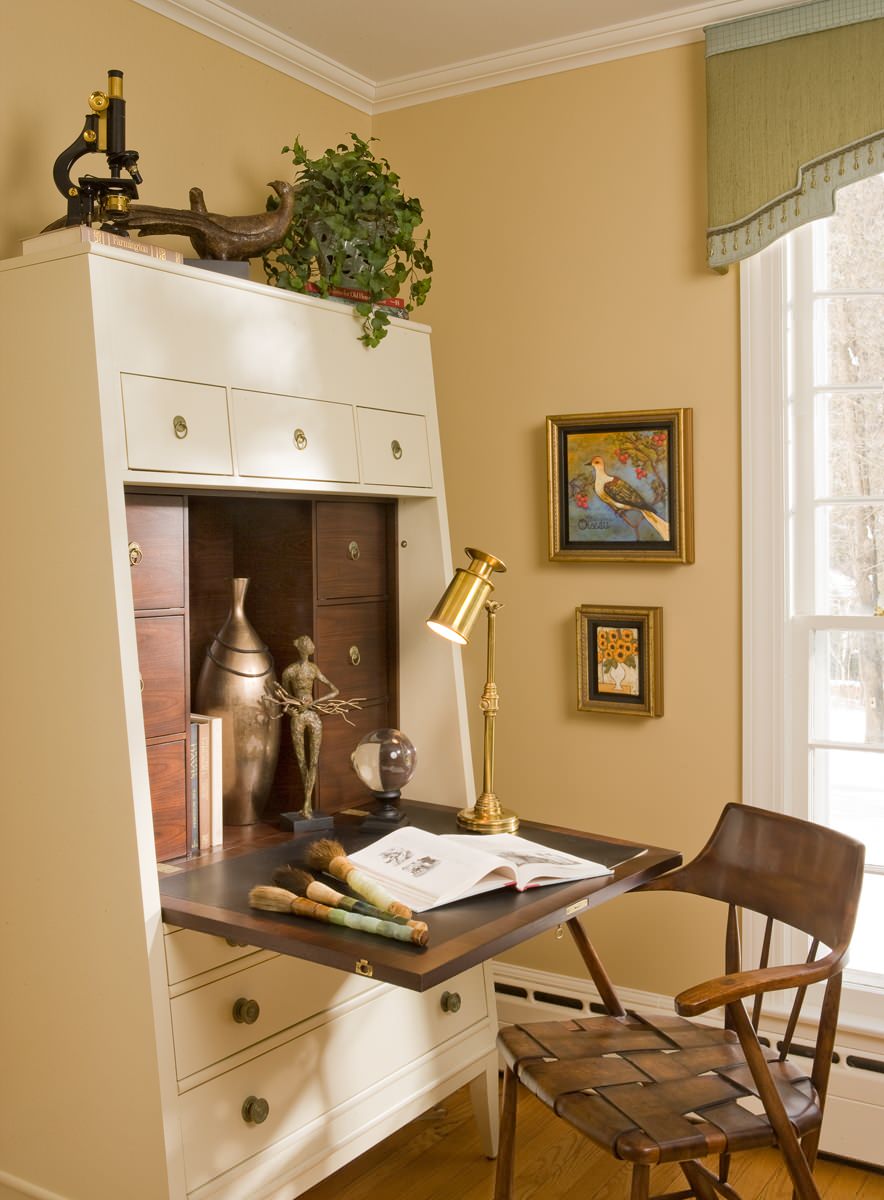
Before tambours were invented, desks often had a panel that lowered to become the writing surface. Moving private paperwork and clutter to close up the desk was inconvenient, so a cylindrical desk was created. It had a curved lid that slid into the top of the desk. Cylindrical desks were expensive and hard to make, and the wood would warp and not close.
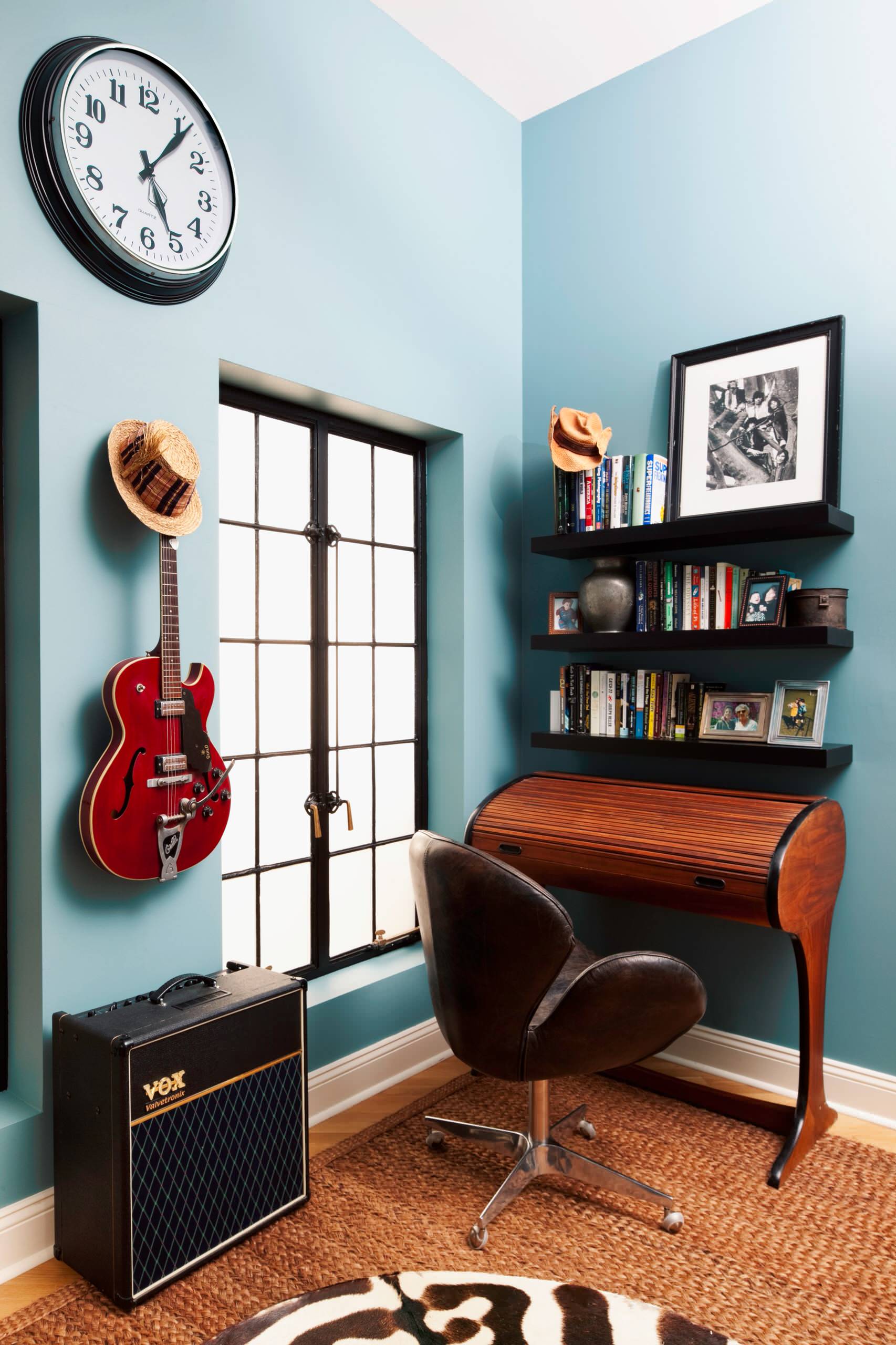
Tambours were invented long after the cylindrical desk. They solved the problem of wood warp, and less-expensive wood and carpentry methods were used. Wood strips could be mass produced far more easily than custom-made curved lids.
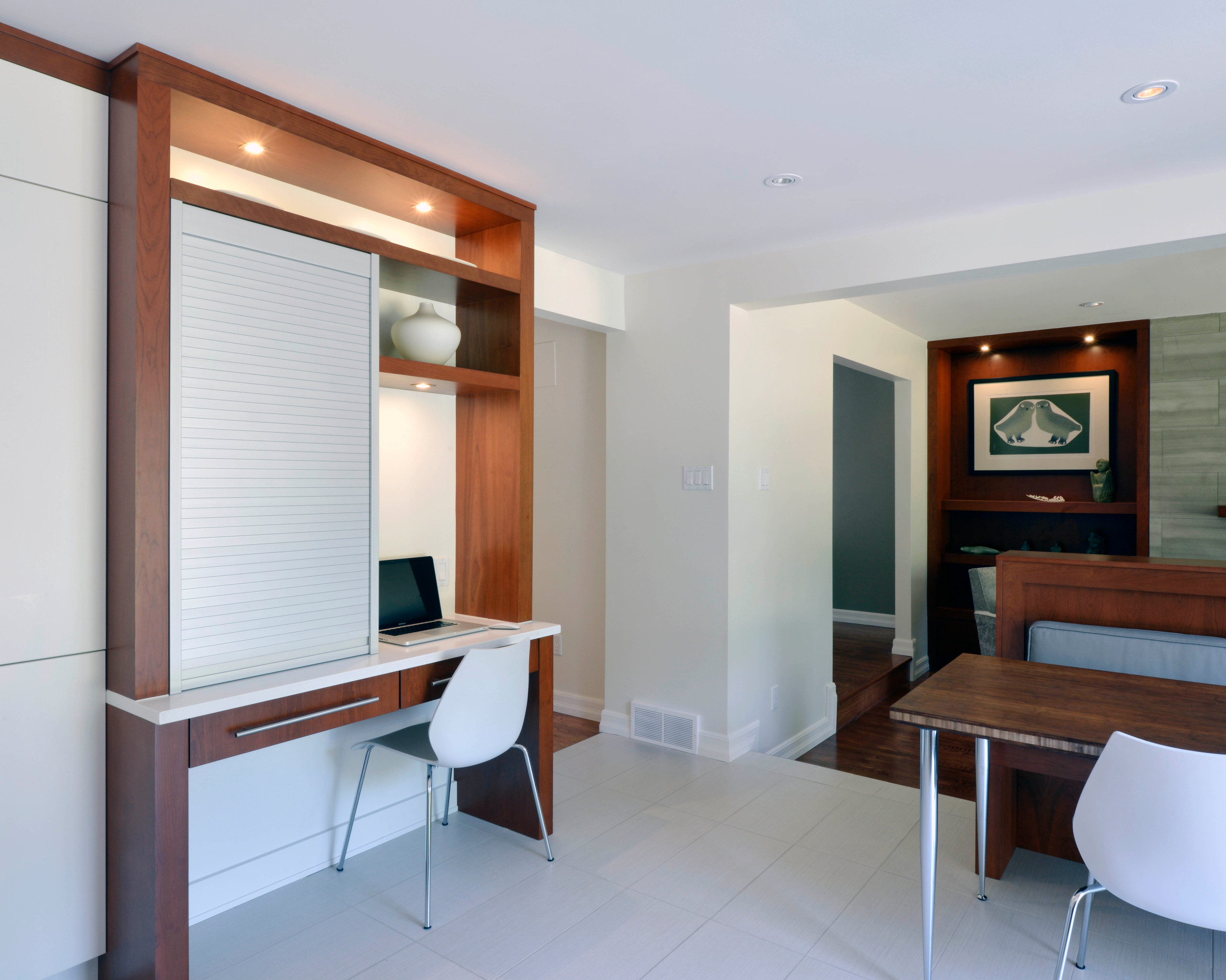
Tambours can be made of wood or metal. They're a great small-space solution often found in offices and kitchens.

Sponsored

When a tambour door, like this one, is closed, you'd never guess that it can slide out of view.