
Search results for "Accepting" in Home Design Ideas
 Floor & Decor
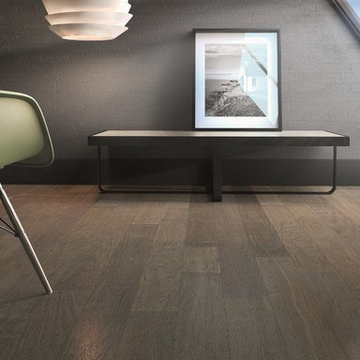
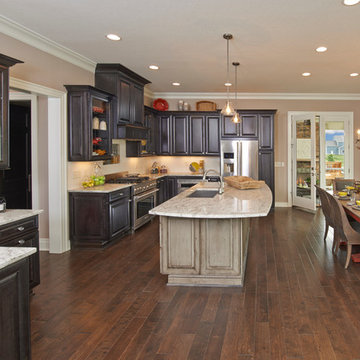
Sucupira Vern Wirebrushed Solid Hardwood | This Sucupira Vern Wirebrushed Solid Hardwood is 3/4in. x 4in. and has a 50 year residential warranty.
Install this solid hardwood flooring by nailing-down or gluing-down.
Use this solid hardwood flooring in your home at ground level or above.
Available in a variety of finishes, widths and options, our pre-finished solid hardwood flooring will add warmth and value to your home. Hardwood floors are easy to maintain and can complement any decorating style. From oak to walnut to exotic hardwoods, we offer exceptional wood floors that will enhance the look of your home.
 Tile Doctor Ltd
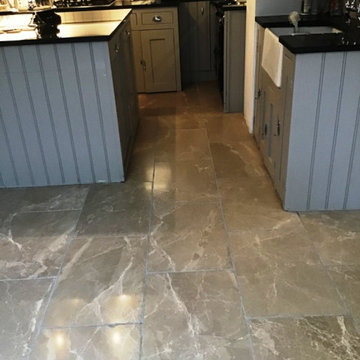
This Limestone tiled floor installed in a kitchen and family room at a property in Wellingborough is a great example of how this material can lose its appearance without a regular maintenance plan in place.
The customer called me as not only was she concerned that the floor had lost its lustre the grey grout had become very stained and almost black in heavy traffic areas, in fact my customer had originally asked about re-grouting but I was confident it could be cleaned.
I provided a quote which they were happy to accept.
The area was a nice wide 6 metre by 5 metre space and except for a few items of furniture that would need moving around there were relatively few obstacles. I reasoned the most efficient way to restore the polished appearance of the Limestone would be to use a set of diamond encrusted Burnishing Pads. These are fitted to a rotary machine and applied to the stone in sequence from coarse to smooth. It’s an effective process that cuts back the layer of dirt on the floor and then we build back up the polish.
We started burnishing the Limestone with a coarse 400-grit pad fitted to a rotary machine and applied with a little water for lubrication. The coarse pad is very good at removing dirt and old sealers from stone and once completed the resultant surface water and loose dirt is removed using a wet vacuum.
At this point I turned my attention to the badly stained grout lines, and applied a strong solution of Tile Doctor Pro-Clean which was scrubbed in along the grout lines using a stiff grout brush, this is necessary as the recessed nature of the grout makes it difficult for the rotary pads to reach it.
I then repeated the burnishing process with the medium 800-grit pad and fine 1500-grit pad, the 800-grit pad removes any small surface scratches and the 1500-grit further refines the look of the Limestone slowly restoring its polished appearance.
After the whole floor had been burnished in this way it was given a further rinse with water and the soil extracted as before. I then inspected the floor to see if more work would be needed.
I was not fully happy with how some of the grout lines had responded, some were still slightly stained, and some marks were visible in the high traffic areas. I had already discussed on my initial visit with the client that this might be the case and it was agreed between us that should this be the case I would apply a Tile Doctor Grout Colourant in Light Grey to recolour all the grout lines and achieve a uniform finish.
The stone and grout was still damp from cleaning and polishing, so I decided to leave the grout colouring until the following day.
On day two I started by grout recolouring all the grout lines, it’s a straight forward process but can be a little tedious where there is a lot of grout to cover. Once complete I allowed the grout colour to dry for a couple of hours before moving onto the next step.
The last pad to be applied in the stone burnishing process is the very fine 3000-grit polishing pad which is applied dry to the tiles using a small amount of water sprayed onto the floor and leaves the stone dry and with a polished silk finish.
The floor was then sealed using two coats of Tile Doctor Ultra Seal Sealant allowing the first coat to dry before applying the second. Ultra-Seal is an impregnating sealer that works by occupying the pores in the stone thereby preventing dirt from becoming ingrained there. It’s also a natural look sealer that doesn’t affect the appearance of the stone.
My customer was very happy with the transformation of her floor and provided the feedback copies below. In-fact she was so impressed with the results that she also used our services to restore the grout and silicon in one of her bathrooms.
“Phil was on time & easy to deal with and did an amazing job on my kitchen and bathroom floors and the carpets & sofa. No fuss, just a great job. Liz O.”
Phil Vissian
Northamptonshire Tile Doctor
 Tile Doctor Ltd
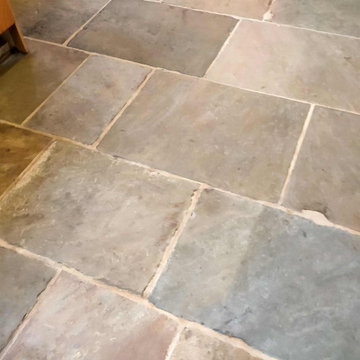
The owner of this period cottage in the old market town of Tadcaster near Leeds, had what was once a beautiful Yorkshire stone floor in the kitchen. It has been a long time since it had been given a proper clean so over the years and with the Kitchen being a high traffic area the whole floor including the grout had darkened and he now wanted it refurbished in time for Christmas.
I visited the property to assess what needed to be done and could see straight away that any protective sealer that was once on the floor had long since worn off. In fact, it was so consistently dirty with years of built-up grease and dirt I had to wonder if one had ever been applied.
I explained what the floor needed was a really deep intensive clean and then a sealer applied to make it easy to keep clean. The problem with most tile and stone is its porosity and if left unprotected dirt easily becomes lodged into its pores making cleaning a struggle.
To prove the difference that can be achieved and to allow me to work out a process on which I could base an accurate quote I ran a test clean on part of the kitchen floor. The test clean went very well, the difference was remarkable, and the cleaned section really stood out. Pleased with the potential of a clean floor they accepted my quote, and we pencilled a date in the diary.
I returned on the appointed date and began by removing the kickboards from under the kitchen units to protect them from splashing. Next, I set about spaying the floor with a strong dilution of Tile Doctor Pro-Clean, this is a purpose made tile and grout cleaner that eats into the grease and dirt so it can be removed. This product works best if you leave it for ten minutes before scrubbing in using a heavy-duty machine fitted with a heavy-duty brush. The soil released from the floor was then extracted using a wet vacuum.
The Pro-Clean did a good job on the grout however it was clear something stronger was required to really get the stone clean, so I stepped up a gear and applied Tile Doctor Remove and Go using the same process as before. This is a really good product for removing deeply ingrained grease and dirt.
The final step of the cleaning process was to give the stone and acid wash using Tile Doctor Grout Clean-Up to remove old grout haze and other mineral deposits; additionally, being an acidic product, it counters the alkaline cleaning products used earlier neutralising the pH level of the floor and leaving it ready for sealing.
Before sealing I like to discuss the different products available and the finishes they can provide. In this case my clients’ main concerns were that they wanted the stone to look natural and easy to maintain going forward.
With this in mind, Tile Doctor Seal & Go Extra was chosen, it’s a modern acrylic-based sealer that brings out the natural colours in the stone and gives a very slight smooth finish. The protection it provides will prevent dirt becoming ingrained int the pores of the stone and ensure the floor is easier to maintain. Several coats were applied, until we achieved the required finish.
The deep cleaning process and fresh sealer transformed the stone floor bringing out its original beauty and my customer couldn’t believe the difference in the floor and was highly delighted.
For aftercare I gave the client a bottle of Tile Doctor Neutral Cleaner, this product is pH neutral so it will clean the floor but won’t damage the sealer. Often people use household cleaners for cleaning tiled floors, but due to the strong chemicals they contain, they can do more harm than good by slowly stripping away the protective sealer and taking the floor back to square one. Tile Doctor Neutral Tile Cleaner is reasonably priced, and the concentrated formula means a small amount goes a long way so it’s well worth using.
This was a pleasurable job for me as it was good to see the floor transform from dull and lifeless to clean and showing the natural colour and beauty of the York stone, and always lovely to have another satisfied client.
Simon Testa
North East Yorkshire Tile Doctor
Find the right local pro for your project
 Antonio Martins Interior Design
Image by Drew kelly
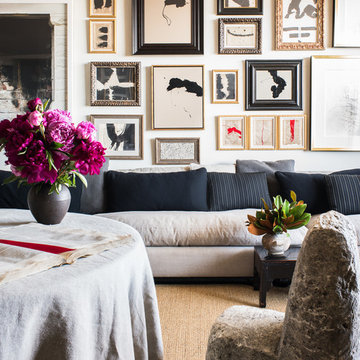
Proof that the adage “the best perfumes come in small bottles…” is true is this two-bedroom apartment in downtown San Francisco. We collaborated with the owner, a retired designer recently settled in San Francisco, to transform this non-descript modern space in a high rise building into a setting of panache and style.
The living room was transformed into a “salon” where linen banquettes face a wall of portraits purchased over the years. Above the banquettes, current artwork by the owner is framed in various frame styles. In the center of the room, a round table draped with a toile de jouy and a linen cloth hosts a collection of vases and artifacts from his travels. A collection of chairs completes the room, including a stone garden seat, a French bergère, and a primitive African chair.
One of the bedrooms is now an elegant dining room with a round table surrounded by archaic Chinese pottery and metal ware. A large Flemish tapestry creates a counterpoint to the Chinese objects. On opposite corners of the room, cozy reading seating areas were created to add to the versatility of the space.
In the master bedroom, pillows made from antique Flemish tapestry enliven a linen bedspread. A large early 20th century portrait by John de Costa creates a link to the portraits in the living room.

 PapersNetwork
It's known as the PISA/TIMSS voyaging convoy. Every time worldwide tests results are discharged with association tables indicating champs and failures a gaggle of scientists, scholastics and grouped kindred explorers plummet on the most astounding performing nation or instruction framework to break down and write about "world's best practice".
The objective continues evolving
One issue with thusly of deduction is that nobody framework reliably beats the rest. In light of the 1995 and 1999 TIMSS (Trends in International Math and Science Study) results, Asian instruction frameworks in Singapore, Japan, South Korea and Taiwan overwhelmed. Accordingly, the emphasis was immovably on recognizing the reasons the Asian tigers were performing so well.
In the PISA (Program for International Student Assessment) 2000 results, Finland positioned first in education, fourth in arithmetic and third in science. Finland became the overwhelming focus and specialists and scholastics ran to Helsinki to find the reasons Finnish understudies performed at or close to the highest point of the table.
By 2012, at the end of the day, an alternate training framework turned into the focal point of consideration. Finland descended the PISA rankings as another champ, Shanghai, rose as first in arithmetic, science and perusing.
Apples aren't being contrasted with apples
A second issue when making correlations is that the spots we've recognized as examples of overcoming adversity are distinctive to Australia. City-states like Singapore and instruction frameworks in profoundly performing spots like Hong Kong and Shanghai have remarkable qualities that separate them from nations like Australia, England and the USA.
Contrasts in topography, the quantities of understudies and schools, the understudy cosmetics (as far as dialect, society and financial profile) and how schools, including educational modules and appraisal, are organized and oversaw significantly affect results.
Singapore, when contrasted with Australia, is little topographically, more homogenous as far as dialect and culture and utilizes instructive practices that have long been out of support in Australia. These incorporate gushing kids in view of their abilities, and high-chance, focused tests and examinations.
As noted in a paper titled How not to prevail upon PISA information: an unexpected examination, there are additionally social components clarifying solid execution that are troublesome, if not unimaginable, to exchange starting with one instruction framework then onto the next.
Evident cases incorporate the effect of Confucian qualities and morals that stretch appreciation for power (particularly instructors), the conviction that achievement is conceivable with inspiration, fixation and diligent work, and the thought that training is focal if one is to accomplish a superior life.
Confounding circumstances and end results
Befuddling what has driven these nations to achievement speaks to the third trouble in expecting that what seems to prompt accomplishment in one nation can without much of a stretch be exchanged to another.
To expect that everything we need to do in Australia to enhance test outcomes is to lessen the impact of the Australian Education Union, while being appealing to some, is both undemocratic and blameworthy of accepting circumstances and end results.
There are a few advantages of abroad correlations
PISA and TIMSS tests have been held for a long time. Thus, there is a decent arrangement of examination recognizing the attributes of more grounded performing instruction frameworks from which states and domains can learn.
The early ethnographic work recording Japanese and American classes nitty gritty in Harvard distribution The Teaching Gap uncovers how the lessons in Asian classrooms are more unequivocal, obviously organized and sound and there is a desire that all understudies, with the essential offer and applications, some assistance with canning succeed.
A later distribution by the Grattan Institute, Catching up: gaining from the best educational systems in East Asia, likewise distinguishes imperative lessons from fruitful Asian instruction frameworks.
Positive variables incorporate giving instructors more opportunity to work cooperatively and to tutor each other, guaranteeing that educator training, course readings and the educational modules are commonly steady and concentrate on enhancing classroom rehearse.
It ought to additionally be noticed that while Australian understudies don't perform in the top level in PISA and TIMSS tests, there is some reason for festivity. Understudies in the Australian Capital Territory perform well over the Australian normal and frequently coordinate the execution of top-performing abroad instruction frameworks.
As far as lifting the execution of understudies from distraught foundations it is additionally critical to take note of that Catholic schools, in light of an investigation of the 2009 PISA results completed by the Australian Council for Educational Research, accomplish a value rating surpassing that of Finland.
About the Author: Amy Parker writes too many academic papers for people who have troubles with it. She always gives needed advices, shows the examples of the papers and helps with writing at http://papersnetwork.net


 Tile Doctor Ltd
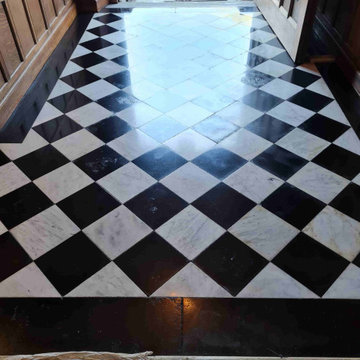
This Black and White Marble tiled hallway floor at a Grade II listed property in the village of Tattenhall has quite a history. The building was constructed in 1865 and at one time it has been the home to the high sheriff of Cheshire, and the family home of Edith Wignall the daughter of Sir Henry Tate the founder of the sugar company Tate and Lyle.
In more recent years the property had been used as a council building and even a nursing home for the elderly. After a long history of decline it has now been restored to a lavish family mansion however the marble floor had suffered over the years and still need attention. The current owner had been in touch as they wanted it restoring and basically brought back to life.
As it turns out I had already planned to go to Tattenhall the following week to work on another listed building which was formerly the village bank. After discussing the Marble floor over the phone, I agreed a date and time to pop over from the bank and inspect the floor in detail. I can provide a rough quote from photographs, which has been especially useful recently, but it’s far better for all concerned if I’m able to properly survey the floor first.
The Marble floor consisted of Black and White Mable tiles laid in a diamond pattern, it wasn’t a very large area perhaps 9 square metres in total. The tiles were well worn as described but also stained and scratched. I would see they would need a deep burnish and polish to bring them back to life and then protected with a fresh sealer. Following on from that visit I was able to provide an accurate quote which was accepted, and a date agreed for my return.
The first job was to protect the surrounding heavy wooden panelling with masking film. The floor was very heavily stained yellow with deep scratches, to remove these I would have to grind the marble back until a clean fresh tile was left. To start I used a 200-grit coarse pad fitted to a weighted buffing machine, the abrasive action of the pad was lubricated with water. After inspection I found that the staining and scratches were still there, so I needed to use stronger pads, so I worked my way through a set of very coarse milling pads starting at a 50, 100 and finishing with a 200-grit pad. Again, water was used to lubricate, and the resultant slurry was removed by a powerful wet vacuum and washed down between each pad.
The milling pads had the desired effect, and I was then able to bring back the polished appearance of the Marble surface using a set of finer burnishing pads with the same process. The 400 and 800-grit pads helped to clean and remove the fine scratches left by the milling pads and then the next 1500-grit pad started to build the shine back on the marble tile.
After finishing with 1500-grit pad I washed the Marble with Tile Doctor Stone Soap and vacuumed up the residue with the wet vacuum. I left an industrial blower in place overnight to dry out the floor ready for the next morning when it would be sealed.
The next morning, I used the last of the four burnishing pads which is a very fine 3000-grit to polish the floor further. This last pad is applied dry with just a spray of water to create a high gloss finish.
When I was happy, I sealed the floor with two coats of Tile Doctor Colour Grow which is an impregnating sealer that soaks into the fine pores of the Marble to protect it from within. This product also improves colour and after application it was left to soak into the tile for five minutes before polishing off and then leaving it to dry.
The last step was to I buff the floor with a white pad. The finish was impressive, and the family were very happy with the work we had carried out. For aftercare I recommended they use Stone Soap as its designed for the regular cleaning of sealed and polished stone, as well as cleaning it also helps build the patina.
Alastair Robb
West Cheshire TIle Doctor


 projectkj
Self
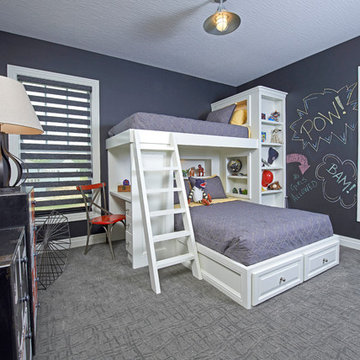
Inspiration for a small modern wooden straight staircase remodel in Louisville with wooden risers
Inspiration for a small modern wooden straight staircase remodel in Louisville with wooden risers
 Tile Doctor Ltd
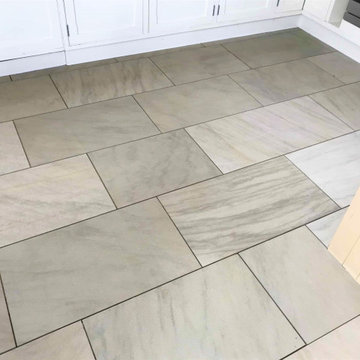
I received an enquiry from a property in Crowthorne to come and survey an unknown Flagstone Floor in a converted barn that was ready to be rented out. The owners where concerned the stone was letting the rest of the property down due to it being dirty and heavily stained, particularly around the kitchen and entrance areas. If your selling or renting out a property it really needs to look its best if you want to achieve a good price. Having spoken over the phone we agreed a date for me to pop over to complete a survey.
From further inspection I confirmed the stone was in fact a Sandstone, it was also clear that the sealer protecting the stone from ingrained dirt had worn away and was now allowing dirt and staining to ruin the appearance of the flagstones. It was a large floor so I measured up so I could work out the quantities of cleaning and sealing products needed and then walked the customer through the cleaning process. Later that day I sent over a detailed quotation which was accepted, and a date agreed for my return.
I should mention this work took place during the Covid restrictions, fortunately being a rental property, I was able to work in the property alone.
To deep clean the floor and remove the ingrained dirt and staining I used a strong dilution of Tile Doctor Pro-Clean. It is sprayed onto the floor and left to soak in for five minutes before agitating with a Black scrubbing pad fitted to a weighted buffing machine. The resultant slurry was then wet extracted away using a powerful high-pressure van mounted extracting system.
This action cleaned up most of the stone nicely however certain areas where heavily stained, particularly in the kitchen area where food and drink stains were more apparent. To tackle this, I applied a stronger cleaner/stripper product called Tile Doctor Remove and Go this time allowing ten minutes for it to soak in before scrubbing the surface with a very coarse 100-grit soft milling pad. This took quite a few attempts each time extracting the slurry away and then inspecting the floor to see if more work was needed.
Happy the stains have been removed, I then focused on renovating the surface Sandstone after the application of the coarse pad. This involves the application of several finer grit burnishing pads which close the pores and adds a subtle polish to the Sandstone. As I started with 100-grit pad it was necessary to gradually refine the surface with an incremental series of pads that included 200, 400 and finally 800-grit pads. Then to ensure a uniform finish across the floor I continued the 400 and 800 grit pads throughout the property. Water is used to lubricate the process and this turns into a fine slurry that is rinse extracted as before.
The cleaning process took up the whole of the first day and I am pleased to say the Sandstone floor looked very clean after I had finished.
The stone was then allowed dry off overnight with the aid of an industrial air mover and I returned later the next day to apply a new protective seal. In the meantime, my customer had been over to check out the floor and were over the moon with how it looked and wanted to keep the finish as natural as possible.
With this in mind, I applied Tile Doctor Ultra-Seal sealer to the Sandstone throughout, only two coats were needed. This is a premium sealer that is almost invisible and works by penetrating the stone thus preventing dirt from becoming ingrained. Once done the floor looked very clean and much brighter than before, it now had that wow factor which will help it attract a good yield in the rental market.
The trouble with rental properties of course is making sure the tenant uses the right product to maintain the floor and not a typical supermarket tile cleaner that are only designed for use on Ceramic and Porcelain tiles. In fact, these types of cleaning product can slowly strip the sealer off the floor so it’s always worth checking the label before purchasing. Fortunately Tile Doctor sells a product called Neutral Cleaner that is ideal for maintaining sealed stone floors, so I left them with a complimentary bottle and recommended they get some more to leave under the sink for the new tenant.
Dennis Buckland
Berkshire Tile Doctor
 Neumann & Rudy Architecture
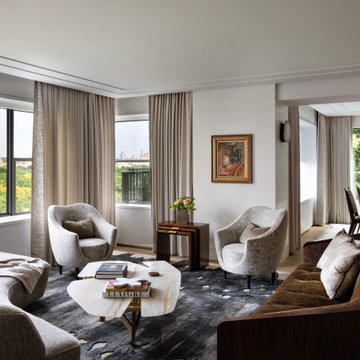
This is a quintessentially urban prewar-into-modern hybrid: a broad, laterally organized reception room whose principal architectural gesture is the corner glazing that dissolves two walls into a panoramic register of treetops and distant skyline. The plan reads as a series of soft, overlapping conversational precincts rather than a single axial arrangement — a pair of swivel-capable lounge chairs anchoring the window wall, a facing pair of high-backed tub chairs, and a deep tuxedo-profile sofa closing the composition toward the viewer — all orbiting an organically contoured cocktail table that performs as the room's centrifugal keystone. The ceiling is treated with a recessed reveal and shallow soffit that traces the perimeter, a device that both conceals drapery hardware and lifts the plane visually, granting the low-slung modern floor plate an unexpected sense of loft. A blade wall carrying a single framed canvas performs critical spatial work, terminating the living volume while permitting an enfilade sightline through to a secondary dining zone beyond, where a glazed wall of ivy-clad courtyard reads as a green tapestry. The geometry throughout is deliberately curvilinear — barrel-backed seating, amoeboid tabletops, splayed tapered legs — set against the orthogonal discipline of window mullions, drapery pleats, and rectilinear millwork, producing a productive tension between architectural rigor and furnishings that behave sculpturally.
**II. Materiality, Color & Texture**
The palette is a study in tonal restraint calibrated for maximum textural incident. Walls are finished in a matte, faintly striated plaster or grasscloth with a warm ecru undertone that absorbs rather than reflects light, establishing a neutral field against which every surface differential registers. Seating is upholstered in a lustrous chenille or crushed velvet of pale greige, whose short pile catches raking daylight and reads almost pearlescent, while the foreground sofa introduces a coarser boucle in an oatmeal register and the opposing sofa shifts decisively into a saturated tobacco-and-umber channel-tufted chenille, its French-polished rosewood or macassar ebony frame supplying the room's darkest, most reflective note. Stone is deployed with connoisseurial precision: the cocktail tables are honed alabaster or backlit-quality onyx, their translucent creamy strata and honey veining offering a warm mineral counterpoint to the cool, ink-washed abstraction of the hand-knotted area rug, which functions as a painterly ground — a gestural silver-and-charcoal wash pooling beneath the furniture. Bronze, patinated brass, and stainless accents appear in table bases, the vessel-form vase, and the sconce, providing metallic punctuation without gleam. Drapery in a heavy sand-toned linen, edged in a beaded or embroidered tape, softens the glazing perimeter and reinforces the room's tactile vocabulary of nap, weave, slub, and polish.
**III. Lighting, Atmosphere & Style Profile**
Natural light is the dominant luminous strategy: the corner glazing admits a soft, diffuse northern wash under overcast conditions, which the designer has intelligently accepted rather than resisted — the flat, shadowless quality flatters the velvet piles and plaster walls, and the drapery is stacked to admit maximum daylight while modulating glare at the jambs. Artificial sources are almost entirely concealed or decorative: a slim architectural sconce on the blade wall, a sculptural biomorphic table lamp in white lacquer or ceramic in the dining zone, and an extraordinary petal-form pendant in patinated metal that reads as an art object first and a fixture second. The resulting atmosphere is hushed, cerebral, and quietly patrician — a room of low chroma and high material intelligence, where drama is supplied by silhouette and surface rather than by color or ornament. Stylistically, the project synthesizes into what might best be termed **Modernist Salon** or **Warm Continental Minimalism**: the DNA of mid-century French decorative arts — Royère, Frank, Adnet — filtered through a contemporary sensibility of tonal layering and soft geometry, with an Art Deco undertow in the ebonized woods and channel tufting. It is a scheme of curatorial discipline: nothing is decorative for its own sake, the view is treated as the primary artwork, and every material is selected for how it behaves in light.

 Whitt Carpet One Floor & Home
Mannington Adura LVT Napa, color Tanin
Elegant vinyl floor bedroom photo
Elegant vinyl floor bedroom photo
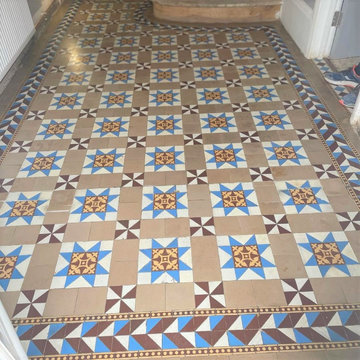 Tile Doctor Ltd
These pictures of a Victorian Tiled Hallway are from a property in Canterbury that was once a nursing home and was now being renovated to become a children’s home. The building was being gutted and extended at the same time and when the carpet was pulled up in the hallway, they were surprised to find a relatively intact Victorian tiled floor underneath.
Whilst they thought it bizarre that anyone would want to cover up such an attractive floor the carpet had protected it over the years. They realized it would make a marvellous feature at the entrance to the property, but professional restoration would be needed to do it justice. After a bit of research, they came across Tile Doctor and got in touch.
Canterbury comes under my North Kent designation, so I went to visit the property and survey the floor and quote for doing the restoration. There were a few missing and loose tiles that would need replacing and refixing also there was a lot of ingrained dirt so a deep clean and application of a new sealer would be required. I gave them a price for the work which they readily accepted, and we arranged a suitable time to carry out the work. Subject to the building schedule I had calculated the floor would take three days to restore.
On the first day I set about replacing and re-fixing the missing, broken, and loose tiles. This is delicate work as you need to extract the old tile without disturbing its neighbours and then clean up the area ready for its replacement. Being a Tile Doctor I keep a selection of stock tiles for repairs, some are reclaimed, and some are replica. Also, there are several companies still making Victorian style tiles so I can usually source what I need.
After the individual missing and broken tiles had been replaced and the adhesive had set, it was then a matter of renovating the floor as a whole. The tiles were covered in a thick layer of carpet adhesive which needed a combination of specialist tools and products to remove. First, a liberal layer of Tile Doctor Remove and Go was applied and left to dwell for thirty minutes. Next, Tile Doctor Pro-Clean was added and scrubbed in with a black pad.
This process softened the adhesive sufficiently in readiness for the next stage which involves using a set of diamond burnishing pads on a weighted buffing machine. Several applications were needed, each time with a successively finer grade of diamond pad and rinsing off the slurry in between. The tiles were first milled using a very coarse 50-grit pad, followed by 100, 200 and finally burnished with a 400-grit burnishing pads. This removed all the adhesive and dirt in the tiles, which was cleaned up using the wet vacuum.
Old Victorian floors like this do not have a damp proof membrane installed under the floor, and with a lot of water being used in the cleaning process I was concerned White efflorescence salts could appear later as the floor dried. To counter this, I gave the floor an acid wash using Tile Doctor Acid Gel to counter and dissolve the salts, it also gives the tiles another clean and will remove any old grout smears further improving the appearance of the tiles. Once done the floor was left to dry overnight.
On my return I tested the floor was dry by taking several moisture readings around the floor with a damp meter. Applying sealer to a damp floor is never advised and can lead to clouding and an unwanted finish.
Happy that the tiles were dry, a single coat of Tile Doctor Colour Grow sealer was applied. This is an impregnating sealer with a colour enhancing component to ‘lift’ the stronger colours of the floor. Colour Grow however does leave a matt appearance and as the client had asked for a shiny finish it was topped up with five coats of Tile Doctor Seal and Go. This is a compatible topical sealer which added a mid to high sheen.
By the end of the third day the Victorian floor looked brand new, and I received the following feedback from the client. Its rare to receive feedback from commercial customers so they were clearly overwhelmed with the transformation.
Did not think this glued covered bad old floor could look sooooo good Fabulous Fantastic job Looks Amazing Thank you
For aftercare I recommend the use of Tile Doctor Neutral Cleaner which isn’t as harsh as many of the products you find in supermarket. Stronger products can actually strip off the sealer over time leaving it vulnerable to dirt and detracting from its appearance.
Graham Davis
North Kent Tile Doctor


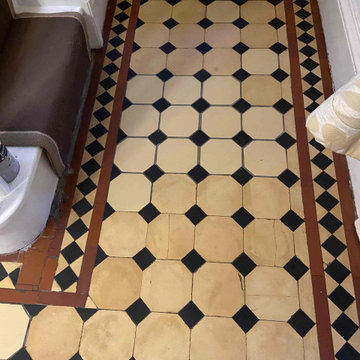 Tile Doctor Ltd
Detailed below is the restoration of a Victorian tiled hallway floor that we started back in June in Preston. Although we started in June there was so much damage to the subfloor and the tiles it took some time to complete, additionally, the client did not like the colour samples of the replacement tiles we had brought along and so decided to source their own which took some time.
Three months later with replacement tiles now sourced we were given the go ahead to start the restoration. The first day’s focus was cleaning the original floor using very coarse 100-grit and 200-grit Diamond pads fitted to a rotary buffer machine and applied to the floor using a strong dilution of Tile Doctor Remove and Go to add extra cleaning power. Tile edges were given special attention using a flex machine fitted with small diamond grit pads.
The floor was rinsed with water to remove the soil generated and this was followed up with an acid rinse using a 1:3 dilution of Tile Doctor Grout Clean Up. This last step in the cleaning process is especially recommend for old floors like this which don’t have a damp proof membrane and can suffer from efflorescence issues.
The next stage focused on repairing the floor and started by carefully knocking out all the broken and chipped tiles. We had previously estimated over 30 tiles needed replacing and so the client had bought two boxes, meaning I had plenty of spares to work with.
Before tiling however, the subfloor had suffered over the years and needed attention first. To deal with this the damaged areas were raked out, cleaned up and then back filled with rapid setting self-levelling screed from Mapie adhesives. Once the sub-base was fixed then we put the new tiles back in, they were not an exact match, about 5mm too short and lighter in tone, but the colour was pretty close.
Tiling an old Victorian floor like this can be a bit like dominoes as you move one out of place 2 decent ones come loose and then they also need refixing. Some of the tiles had hair line cracks in them and once they were loose, they just cracked in half. As such the 20 spare tiles that I thought were spare came into good use and I actually ended up using all of them. I could have done with a few more so it was decided to reset the last four broken tiles and grout them in. Luckily for me the client was very understanding about the nature of tile restoration and had accepted that there would be some imperfections and they were not expecting a new floor.
The Tiles were fixed down using Ultralite Rapid Flex (another product from Mapie) and then grouted using the same adhesive (not a grout, as they did not have grout back in the day, just cement and screed).
The floor was left this to cure overnight, and we came back the next day to finish the clean using a 200-grit diamond pad fitted to a buffing machine and lubricated with water, then one last acid rinse to get the tiles as clean as possible and remove any lingering grout haze. This last clean helps to blend the new tiles in with the original.
Before applying a protective sealer, the floor was left to dry for a couple of days, the tiles need to be thoroughly dry before sealing or you can end up with a patchy appearance.
For this floor with no damp proof membrane, it was important to use a fully breathable sealer that will allow moisture to rise through the tile and evaporate at the surface, so Tile Doctor Colour Grow was chosen. This is a good choice for old floors like this as its fully breathable, head wearing, and it contains a colour enhancer that improves the overall appearance of the tile.
Three coats of Tile Doctor Colour Grow which is a fully breathable, colour enhancing sealer hat works by soaking into the pores of the tile protecting it from within. It has a matt finish, and it works really well with all clay tiles and is ideal for these types of floors.
You can probably spot the lighter coloured tiles in the after photos on this page, however it’s a very subtle difference and I think they have blended in quite well with the original. Certainly, my client was very pleased with the newly restored floor, its completely transformed from when we first visited the client, and the floor has now gained character and history. For aftercare we recommend Tile Doctor Neutral Cleaner, its an effective pH neutral product that is compatible with the new sealer.
Russell Taylor
Lancashire Tile Doctor

 gardenaar
Does your orange tree drop its fruit before it reaches full size, or worse, does it drop flowers before the fruit starts to form?
Trees photosynthesize to produce carbohydrates like sugar which they store as a source of energy. They can maintain a limited amount, which is used to drive the growth of new leaves, branches, roots and stem. Fruitfulness requires the tree to divert its limited energy sources away from these vital functions to the production of flowers, blossoms and fruits.
Fruit development involves maturity followed by fertilization, growth, maturity and maturity. This process takes between 6-7 months in warmer climates, which requires a large number of tree energy sources as a result.
Trees are able to manage their resources, and will also divert them to emergencies ...
Fruit Drop and Crop Depression
In regions where oranges produce one crop per year, they go through a series of growth stages as follows:
Sprout formation and flower launching (mid-winter)
Flowers and fruit set (early spring)
Fruit growth - cell division (late spring to early summer)
Fruit growth - cell proliferation (mid-summer to early autumn)
Fruit ripening (autumn to late winter)
The difference is in the regions where most citrus crops are produced year-round. In these cases, the different stages of development will take place simultaneously.
The orange tree can handle its plant load well, and it will bear as much fruit as we can support. It is natural for all citrus trees to produce too little fruit and too little flowers in early spring to prevent overproduction. There is no need to worry too much about flowering, as an orange tree needs only 1% to 2% of flowers to produce a good crop, and sometimes even less than 1% is enough.
If a tree is depressed because it does not get enough water in hot, dry weather, and if it dies of nitrogen starvation because it is not given enough fertilizer, fruit set will be very difficult in the spring. There may also be a small number of fruit losses in the summer under stressful conditions.
Solution: Provide enough water, and water often in hot weather and strong winds. Orange feed with moderate fertilizer in early spring (September in Southern hemisphere, March in the Northern Hemisphere)
Fruit Drop and Lack of Potassium Nutrient
When orange trees are heavy, the decline in fruit can be exacerbated by low potassium levels.
Potassium, also known as potash (represented by the chemical mark K on fertilizer labels meaning N-P-K or nitrogen-phosphorus-potassium ratio) is a major macronutrient needed for flowering and fruit formation. Next to nitrogen, plants absorb more potassium than any other nutrient. Without potassium, the trees stop flowering and fruiting, which is what happens if they are not fed regularly.
Before any smug horticulturist declares to you that potassium has no direct effect on flowering and fruit set, let me say that as a horticulturist and biochemist, plant chemistry, like the chemistry of all living things is complex, but some input it is necessary to produce certain results. , and the references I have made to the end of this article support what I am saying!
Entering science, Potassium (K) is essential for water, nutrients and the movement of carbohydrates in plant tissues. It also activates enzymes that facilitate the synthesis of complex chemicals within the plant - such as starch, protein and adenosine triphosphate (ATP) production. The role of ATP is to transport the energy needed for all cellular metabolic activities to all living things, and in plants ATP production can regulate the level of photosynthesis.
Potassium also helps regulate the opening and closing of stomata, holes or cavities under which oxygen and carbon dioxide are exchanged with the atmosphere, and respiratory losses are controlled. It increases root growth which increases the absorption of nutrients and improves drought resistance, and increases resistance to frost, pests and diseases. High potassium levels produce similar maturity and fruit growth rate, as well as better nutritional quality, taste and range.
Agricultural extension agencies suggest that large amounts of potash are needed in many crops, and that potassium deficiency or macronutrient deficiency leads to reduced crop growth and reduced yields, and that potassium levels not only affect yield, but fruit size, juice. quality and shelf life.
Since potassium plays an important role in water regulation, deficiency can clearly increase the pressures associated with the declining fruit mentioned in the previous section.
Solution: Make sure that the orange trees are fertilized with the right fertilizer as previously discussed. Extra potassium can be brought in using seaweed extract (which is not a fertilizer but contains a good amount of potassium), wood ash (used in small quantities only as it is very alkaline), or potash sulphate (potassium sulphate) - all this is guaranteed. as acceptable in a natural garden.
Never use potassium chloride as it can be harmful to plants, it is a very inexpensive alternative to fertilizer manufacturers to save money!
Even if there are sufficient levels of potassium in the soil, it may not be accessible to plants, unless we make some improvements.

 Plaistow Cabinet
Shiloh Cabinetry. Polar White, Inset
Kitchen - transitional kitchen idea in Manchester with white cabinets, beaded inset cabinets, marble countertops, white backsplash, marble backsplash and stainless steel appliances
Kitchen - transitional kitchen idea in Manchester with white cabinets, beaded inset cabinets, marble countertops, white backsplash, marble backsplash and stainless steel appliances
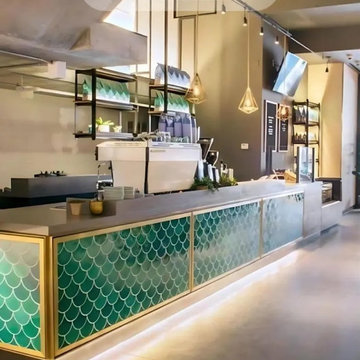
 VISTA TILES
Made by VISTATILES
Ships from a small business in Pennsylvania
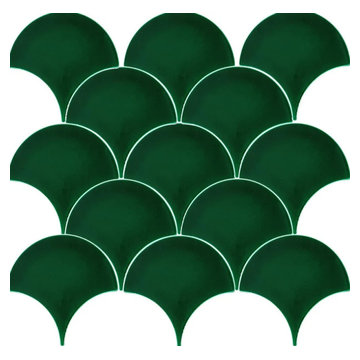
Introducing our exquisite handcrafted ceramic mosaic tiles, measuring 17x17 cm, these Cobalt Fish Scale Patterned Tiles are a true work of art.
Each tile is meticulously created, resulting in a set of 75 unique pieces per square meter (10 square feet). Their captivating design showcases the beauty of Turkish craftsmanship, making them ideal for various applications, from bathroom tiles to decorative elements.
Product Details:
Material: Ceramic
Size: 17x17 cm (6.69 x 6.69 inches)
Quantity: 75 pieces per square meter (10 square feet)
Color: Cobalt Blue with Gold Accents
Pattern: Fish Scale
Style: Handmade, Artisan Crafted
Origin: Turkey
Product Description:
Elevate your space with our stunning Cobalt Fish Scale Patterned Tiles. These handcrafted ceramic tiles feature a mesmerizing design inspired by the scales of a fish. The intricate details and rich cobalt blue color create a captivating visual effect that will add a touch of elegance and sophistication to any room.
Our tiles are perfect for a variety of applications, including:
Bathroom Tiles: Create a spa-like atmosphere in your bathroom with our beautiful fish scale tiles. They are ideal for backsplashes, shower walls, and floors.
Kitchen Backsplashes: Add a splash of color and personality to your kitchen with our unique tiles. They are easy to clean and maintain, making them a practical choice for this high-traffic area.
Decorative Elements: Use our tiles to create stunning decorative accents throughout your home. They can be used to frame mirrors, fireplaces, or accent walls.
Why Choose Our Tiles:
Handcrafted Quality: Each tile is meticulously crafted by skilled artisans, ensuring the highest quality and attention to detail.
Unique Design: Our fish scale pattern is truly one-of-a-kind, adding a touch of personality and style to any space.
Versatile Applications: Our tiles can be used in a variety of settings, from bathrooms and kitchens to living rooms and bedrooms.
Durable and Easy to Maintain: Our ceramic tiles are durable and easy to clean, making them a practical choice for any home.
Turkish Craftsmanship: Our tiles showcase the beauty of Turkish craftsmanship, bringing a piece of Turkish culture into your home.
To achieve their exceptional quality, our tiles undergo a firing process at 1050 degrees Celsius in specialized tile ovens. This meticulous process imparts exceptional resilience, making the tiles suitable for outdoor use as well. From adorning the interiors of Turkish baths to enhancing the aesthetic appeal of spa entrances, these tiles serve as both functional and decorative elements.
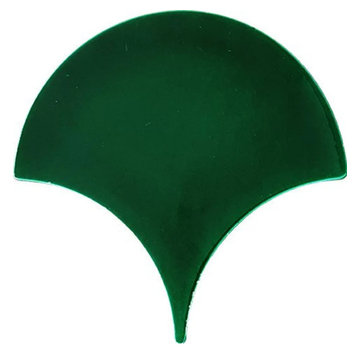
The unique cracked appearance on the surface of the Dark Green Fish Scale Tiles is a deliberate design choice. This subtle crackle pattern remains a hidden gem, adding depth and character to each tile. While these tiles are perfect for various interior and exterior architectural projects, it's important to note that they aren't recommended for direct water immersion due to their surface characteristics.
For aquatic applications such as swimming pools, we recommend opting for our porcelain-based tiles with pigmented colors, ensuring both durability and aesthetic satisfaction. Our crackle tile collection, though not suitable for water exposure, offers an array of options for floor tiles. These specially crafted flat surface tiles find their place in bathroom, kitchen, spa, hammam, hotel, and villa decorations.
The resilience of our Kütahya Fish Scale Tiles against environmental elements, be it sunlight or wind, underscores their exceptional quality. Designed for easy application, these tiles are equally suitable for novice and experienced designers alike. The assortment of Kütahya and Iznik patterned Fish Scale Tiles presents a versatile range that caters to various preferences and budgets.
Order your Cobalt Fish Scale Patterned Tiles today and transform your space into a work of art!
Additional Information:
Shipping: We offer worldwide shipping. Please contact us for shipping rates and estimated delivery times.
Returns: We accept returns within 30 days of purchase. Please contact us for return instructions.
Custom Orders: We can also create custom orders to match your specific needs. Please contact us for more information.
Detailed Specifications:
Width: 17 cm
Height: 17 cm
Thickness: 0.8 cm
Weight per 1 m2: 15.50 kg
Quantity per 1 m2: 75 pieces
We kindly advise international buyers to be aware of potential duties, customs charges, and import taxes applicable upon shipping to their respective countries. These fees are determined and enforced by the buyer's country upon the item's arrival.
In the event of a return, please note that a 25% restocking fee will be deducted from the order amount, and the customer will be responsible for the return shipping costs. Your satisfaction is our priority, and we look forward to providing you with exceptional products that elevate your designs.
 VISTA TILES
Made by VISTATILES
Ships from a small business in Pennsylvania
Introducing our exquisite handcrafted ceramic mosaic tiles, measuring 17x17 cm, these Cobalt Fish Scale Patterned Tiles are a true work of art.
Each tile is meticulously created, resulting in a set of 75 unique pieces per square meter (10 square feet). Their captivating design showcases the beauty of Turkish craftsmanship, making them ideal for various applications, from bathroom tiles to decorative elements.
Product Details:
Material: Ceramic
Size: 17x17 cm (6.69 x 6.69 inches)
Quantity: 75 pieces per square meter (10 square feet)
Color: Cobalt Blue with Gold Accents
Pattern: Fish Scale
Style: Handmade, Artisan Crafted
Origin: Turkey
Product Description:
Elevate your space with our stunning Cobalt Fish Scale Patterned Tiles. These handcrafted ceramic tiles feature a mesmerizing design inspired by the scales of a fish. The intricate details and rich cobalt blue color create a captivating visual effect that will add a touch of elegance and sophistication to any room.
Our tiles are perfect for a variety of applications, including:
Bathroom Tiles: Create a spa-like atmosphere in your bathroom with our beautiful fish scale tiles. They are ideal for backsplashes, shower walls, and floors.
Kitchen Backsplashes: Add a splash of color and personality to your kitchen with our unique tiles. They are easy to clean and maintain, making them a practical choice for this high-traffic area.
Decorative Elements: Use our tiles to create stunning decorative accents throughout your home. They can be used to frame mirrors, fireplaces, or accent walls.
Why Choose Our Tiles:
Handcrafted Quality: Each tile is meticulously crafted by skilled artisans, ensuring the highest quality and attention to detail.
Unique Design: Our fish scale pattern is truly one-of-a-kind, adding a touch of personality and style to any space.
Versatile Applications: Our tiles can be used in a variety of settings, from bathrooms and kitchens to living rooms and bedrooms.
Durable and Easy to Maintain: Our ceramic tiles are durable and easy to clean, making them a practical choice for any home.
Turkish Craftsmanship: Our tiles showcase the beauty of Turkish craftsmanship, bringing a piece of Turkish culture into your home.
To achieve their exceptional quality, our tiles undergo a firing process at 1050 degrees Celsius in specialized tile ovens. This meticulous process imparts exceptional resilience, making the tiles suitable for outdoor use as well. From adorning the interiors of Turkish baths to enhancing the aesthetic appeal of spa entrances, these tiles serve as both functional and decorative elements.
The unique cracked appearance on the surface of the Dark Green Fish Scale Tiles is a deliberate design choice. This subtle crackle pattern remains a hidden gem, adding depth and character to each tile. While these tiles are perfect for various interior and exterior architectural projects, it's important to note that they aren't recommended for direct water immersion due to their surface characteristics.
For aquatic applications such as swimming pools, we recommend opting for our porcelain-based tiles with pigmented colors, ensuring both durability and aesthetic satisfaction. Our crackle tile collection, though not suitable for water exposure, offers an array of options for floor tiles. These specially crafted flat surface tiles find their place in bathroom, kitchen, spa, hammam, hotel, and villa decorations.
The resilience of our Kütahya Fish Scale Tiles against environmental elements, be it sunlight or wind, underscores their exceptional quality. Designed for easy application, these tiles are equally suitable for novice and experienced designers alike. The assortment of Kütahya and Iznik patterned Fish Scale Tiles presents a versatile range that caters to various preferences and budgets.
Order your Cobalt Fish Scale Patterned Tiles today and transform your space into a work of art!
Additional Information:
Shipping: We offer worldwide shipping. Please contact us for shipping rates and estimated delivery times.
Returns: We accept returns within 30 days of purchase. Please contact us for return instructions.
Custom Orders: We can also create custom orders to match your specific needs. Please contact us for more information.
Detailed Specifications:
Width: 17 cm
Height: 17 cm
Thickness: 0.8 cm
Weight per 1 m2: 15.50 kg
Quantity per 1 m2: 75 pieces
We kindly advise international buyers to be aware of potential duties, customs charges, and import taxes applicable upon shipping to their respective countries. These fees are determined and enforced by the buyer's country upon the item's arrival.
In the event of a return, please note that a 25% restocking fee will be deducted from the order amount, and the customer will be responsible for the return shipping costs. Your satisfaction is our priority, and we look forward to providing you with exceptional products that elevate your designs.

 Ehrlich Yanai Rhee Chaney Architects
The ground floor volumes wrapped in an elongated hand-fired brick, emphasizing the horizontality of the architecture that lays solidly on the land.
(Photography by: Matthew Millman)
 VISTA TILES
Made by VISTATILES
Ships from a small business in Pennsylvania
Introducing our exquisite handcrafted ceramic mosaic tiles, measuring 17x17 cm, these Cobalt Fish Scale Patterned Tiles are a true work of art.
Each tile is meticulously created, resulting in a set of 75 unique pieces per square meter (10 square feet). Their captivating design showcases the beauty of Turkish craftsmanship, making them ideal for various applications, from bathroom tiles to decorative elements.
Product Details:
Material: Ceramic
Size: 17x17 cm (6.69 x 6.69 inches)
Quantity: 75 pieces per square meter (10 square feet)
Color: Cobalt Blue with Gold Accents
Pattern: Fish Scale
Style: Handmade, Artisan Crafted
Origin: Turkey
Product Description:
Elevate your space with our stunning Cobalt Fish Scale Patterned Tiles. These handcrafted ceramic tiles feature a mesmerizing design inspired by the scales of a fish. The intricate details and rich cobalt blue color create a captivating visual effect that will add a touch of elegance and sophistication to any room.
Our tiles are perfect for a variety of applications, including:
Bathroom Tiles: Create a spa-like atmosphere in your bathroom with our beautiful fish scale tiles. They are ideal for backsplashes, shower walls, and floors.
Kitchen Backsplashes: Add a splash of color and personality to your kitchen with our unique tiles. They are easy to clean and maintain, making them a practical choice for this high-traffic area.
Decorative Elements: Use our tiles to create stunning decorative accents throughout your home. They can be used to frame mirrors, fireplaces, or accent walls.
Why Choose Our Tiles:
Handcrafted Quality: Each tile is meticulously crafted by skilled artisans, ensuring the highest quality and attention to detail.
Unique Design: Our fish scale pattern is truly one-of-a-kind, adding a touch of personality and style to any space.
Versatile Applications: Our tiles can be used in a variety of settings, from bathrooms and kitchens to living rooms and bedrooms.
Durable and Easy to Maintain: Our ceramic tiles are durable and easy to clean, making them a practical choice for any home.
Turkish Craftsmanship: Our tiles showcase the beauty of Turkish craftsmanship, bringing a piece of Turkish culture into your home.
To achieve their exceptional quality, our tiles undergo a firing process at 1050 degrees Celsius in specialized tile ovens. This meticulous process imparts exceptional resilience, making the tiles suitable for outdoor use as well. From adorning the interiors of Turkish baths to enhancing the aesthetic appeal of spa entrances, these tiles serve as both functional and decorative elements.
The unique cracked appearance on the surface of the Dark Green Fish Scale Tiles is a deliberate design choice. This subtle crackle pattern remains a hidden gem, adding depth and character to each tile. While these tiles are perfect for various interior and exterior architectural projects, it's important to note that they aren't recommended for direct water immersion due to their surface characteristics.
For aquatic applications such as swimming pools, we recommend opting for our porcelain-based tiles with pigmented colors, ensuring both durability and aesthetic satisfaction. Our crackle tile collection, though not suitable for water exposure, offers an array of options for floor tiles. These specially crafted flat surface tiles find their place in bathroom, kitchen, spa, hammam, hotel, and villa decorations.
The resilience of our Kütahya Fish Scale Tiles against environmental elements, be it sunlight or wind, underscores their exceptional quality. Designed for easy application, these tiles are equally suitable for novice and experienced designers alike. The assortment of Kütahya and Iznik patterned Fish Scale Tiles presents a versatile range that caters to various preferences and budgets.
Order your Cobalt Fish Scale Patterned Tiles today and transform your space into a work of art!
Additional Information:
Shipping: We offer worldwide shipping. Please contact us for shipping rates and estimated delivery times.
Returns: We accept returns within 30 days of purchase. Please contact us for return instructions.
Custom Orders: We can also create custom orders to match your specific needs. Please contact us for more information.
Detailed Specifications:
Width: 17 cm
Height: 17 cm
Thickness: 0.8 cm
Weight per 1 m2: 15.50 kg
Quantity per 1 m2: 75 pieces
We kindly advise international buyers to be aware of potential duties, customs charges, and import taxes applicable upon shipping to their respective countries. These fees are determined and enforced by the buyer's country upon the item's arrival.
In the event of a return, please note that a 25% restocking fee will be deducted from the order amount, and the customer will be responsible for the return shipping costs. Your satisfaction is our priority, and we look forward to providing you with exceptional products that elevate your designs.
148