
Search results for "Additional layer" in Home Design Ideas

 CeilDex Stretch Ceilings
Our new project.
To implement it, we were invited by the company in San Francisco. We had a very difficult task to do.
The building in which we had to install sound-absorbing panels has a historical and architectural value, and the main thing was not to harm anything.
And at the moment the building is used by the federal government, so that the work had to be carried out quickly and quietly, not to disturb the employees working in the building.
We have carefully selected materials, so that the shade of color on the wall would be completely coincided with shade of the fabric set. In the choice, we stopped at a specially made for this purpose CLIPSO sound-absorbing fabric. This material is better than any other for this kind of work: 1) Clipso Sound Proof is specially designed for sound absorption. 2) This material is made of synthetic fabric impregnated with polyurethane, it is ready to cope with significant operational loads in public buildings. 3) The texture of the material looks like a canvas, which creates an additional atmosphere of comfort and harmony with every interior of the premises where we have installed it. In the base, behind the CLIPSO fabric, we have installed an additional layer of sound-absorbing material.
This combination has increased the sound absorption to a factor of 1.0 (100%). All premises in which the work was carried out was provided to us for 3 days. During this time, we had to remove all lights, grille ventilation systems, as well as safety sensors and fire extinguishing systems.
Then install the mounting profile in the places told by the architects,mount a layer of sound-absorbing material and sound-absorbing fabric CLIPSO. Then, it was necessary to put back all dismantled equipment.
With this task we coped.
 Kitchen Magic
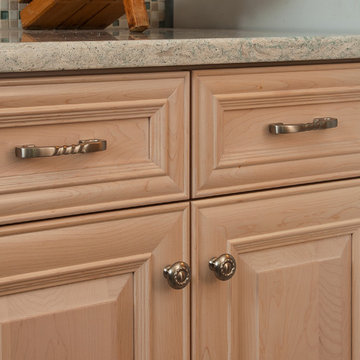
You would think this Alpine stained kitchen would be cold, just like the Alps but it's warm and inviting. The Cambria countertops in Montgomery are luxurious and create an element of luxuxry. The backsplash ads an additional layer of texture that mimicks all the colors in the maple cabinets and countertop. That's what a backsplash should do, pull the whole design together. The room is light, yet warm and inviting. The additional of the small crown modling trim is a subtle accent that frames the room, just like the kick plate.
Cabinet refacing can be done in wood or maintenance free laminate. It's all about your personal style. This design along with the quality materials will stand the test of time. Cabinet refacing, saving up to 50% the cost of refacing, allowed for these additional details that really make this design elegant and transitional.
David Glasofer Photography
 CeilDex Stretch Ceilings
Our new project.
To implement it, we were invited by the company in San Francisco. We had a very difficult task to do.
The building in which we had to install sound-absorbing panels has a historical and architectural value, and the main thing was not to harm anything.
And at the moment the building is used by the federal government, so that the work had to be carried out quickly and quietly, not to disturb the employees working in the building.
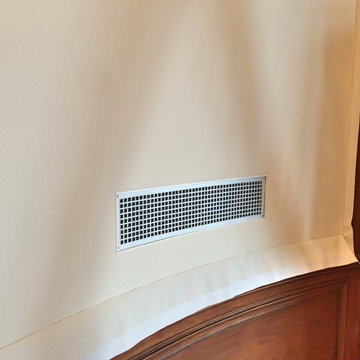
We have carefully selected materials, so that the shade of color on the wall would be completely coincided with shade of the fabric set. In the choice, we stopped at a specially made for this purpose CLIPSO sound-absorbing fabric. This material is better than any other for this kind of work: 1) Clipso Sound Proof is specially designed for sound absorption. 2) This material is made of synthetic fabric impregnated with polyurethane, it is ready to cope with significant operational loads in public buildings. 3) The texture of the material looks like a canvas, which creates an additional atmosphere of comfort and harmony with every interior of the premises where we have installed it. In the base, behind the CLIPSO fabric, we have installed an additional layer of sound-absorbing material.
This combination has increased the sound absorption to a factor of 1.0 (100%). All premises in which the work was carried out was provided to us for 3 days. During this time, we had to remove all lights, grille ventilation systems, as well as safety sensors and fire extinguishing systems.
Then install the mounting profile in the places told by the architects,mount a layer of sound-absorbing material and sound-absorbing fabric CLIPSO. Then, it was necessary to put back all dismantled equipment.
With this task we coped.
Find the right local pro for your project

 Plan Architecture
Dan D'Agostino, AIA
Located in Montclair, coined Manhattan’s sixth borough, is a commuter town with progressive ideals. This modern renovation and addition to a 1960’s split level home is a statement of architecture consistent with the modern undertone to the city’s new development. A recessed minimal entry, through a six-foot pivot door, leads you to a light filled open plan Kitchen, Dining Room and Living Room marked abstract compositions of wall and window. The indoors are extended to the outdoor by way of a 13 foot sliding Nana wall. Minimalistically appointed, natural light is the main focus of this renovation.
Our client valued the notion of a fresh home that with statement architecture. Zoning regulations presented an additional layer of complexity. Split level homes are typically the hardest to work one, we were able make several large modifications such as a widened stair, alignments between floors and a lofted 2 story Living Room tie the new to old.
 Plan Architecture
Dan D'Agostino, AIA
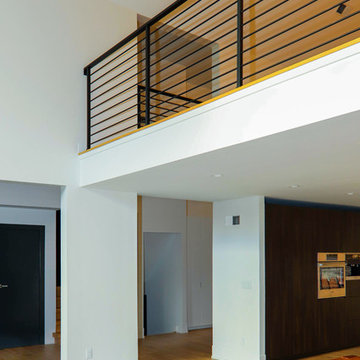
Located in Montclair, coined Manhattan’s sixth borough, is a commuter town with progressive ideals. This modern renovation and addition to a 1960’s split level home is a statement of architecture consistent with the modern undertone to the city’s new development. A recessed minimal entry, through a six-foot pivot door, leads you to a light filled open plan Kitchen, Dining Room and Living Room marked abstract compositions of wall and window. The indoors are extended to the outdoor by way of a 13 foot sliding Nana wall. Minimalistically appointed, natural light is the main focus of this renovation.
Our client valued the notion of a fresh home that with statement architecture. Zoning regulations presented an additional layer of complexity. Split level homes are typically the hardest to work one, we were able make several large modifications such as a widened stair, alignments between floors and a lofted 2 story Living Room tie the new to old.
 CeilDex Stretch Ceilings
Our new project.
To implement it, we were invited by the company in San Francisco. We had a very difficult task to do.
The building in which we had to install sound-absorbing panels has a historical and architectural value, and the main thing was not to harm anything.
And at the moment the building is used by the federal government, so that the work had to be carried out quickly and quietly, not to disturb the employees working in the building.
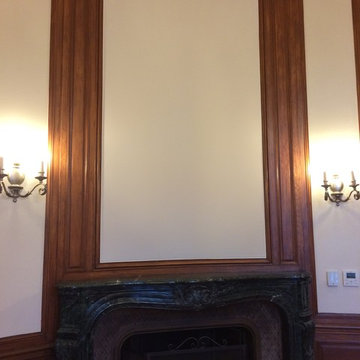
We have carefully selected materials, so that the shade of color on the wall would be completely coincided with shade of the fabric set. In the choice, we stopped at a specially made for this purpose CLIPSO sound-absorbing fabric. This material is better than any other for this kind of work: 1) Clipso Sound Proof is specially designed for sound absorption. 2) This material is made of synthetic fabric impregnated with polyurethane, it is ready to cope with significant operational loads in public buildings. 3) The texture of the material looks like a canvas, which creates an additional atmosphere of comfort and harmony with every interior of the premises where we have installed it. In the base, behind the CLIPSO fabric, we have installed an additional layer of sound-absorbing material.
This combination has increased the sound absorption to a factor of 1.0 (100%). All premises in which the work was carried out was provided to us for 3 days. During this time, we had to remove all lights, grille ventilation systems, as well as safety sensors and fire extinguishing systems.
Then install the mounting profile in the places told by the architects,mount a layer of sound-absorbing material and sound-absorbing fabric CLIPSO. Then, it was necessary to put back all dismantled equipment.
With this task we coped.
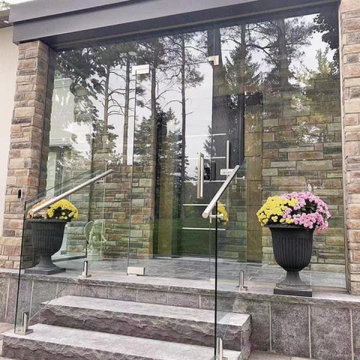
 Leo’s Magic Glass
A winter storm door in glass installation typically involves the placement of a glass-enclosed door in the entryway of a home or building, designed specifically to provide an additional layer of insulation and protection against harsh winter weather conditions.
The glass panel in the winter storm door is typically double-paned, which provides an extra layer of insulation and helps to reduce heat loss. This can help to improve energy efficiency and lower heating costs during the winter months.
In terms of installation, a winter storm door in glass is typically mounted on the exterior of an existing entry door, and may feature a variety of design options such as decorative glass, hardware, and finishes. The installation process may involve anchoring the door securely to the frame of the entryway, and ensuring that the door is properly sealed to prevent air leaks and drafts.
Winter storm doors in glass offer several advantages over traditional doors. They can help to improve energy efficiency and lower heating costs, while also providing an extra layer of protection against harsh winter weather conditions. Additionally, they can enhance the overall aesthetic of a home or building, adding a touch of elegance and sophistication to the entryway.
Overall, a winter storm door in glass installation is a popular choice for those seeking to improve energy efficiency and protect against harsh winter weather conditions. With a range of design options available, it's possible to find a winter storm door in glass that perfectly suits your needs and enhances the overall aesthetic of your home or building.

Sponsored
Columbus, OH
Free consultation for landscape design!

Peabody Landscape Group
Columbus' Reliable Landscape Design & Contracting

 Whitehall Homes
Inspiration for a large timeless formal and enclosed dark wood floor living room remodel in Other with a standard fireplace, a wood fireplace surround, no tv and yellow walls

 ASQUITH Architecture
Photography: Nanne Springer
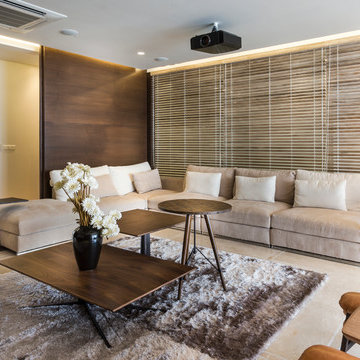
Example of a danish light wood floor living room design in Toronto with gray walls and no fireplace
Example of a danish light wood floor living room design in Toronto with gray walls and no fireplace





 LeichtUSA
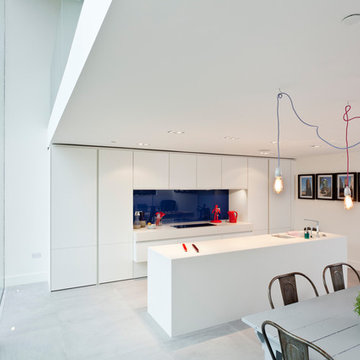
Attractive living as an architectural experiment: a 136-year-old water tower, a listed building with a spectacular 360-degree panorama view over the City of London. The task, to transform it into a superior residence, initially seemed an absolute impossibility. But when the owners came across architect Mike Collier, they had found a partner who was to make the impossible possible. The tower, which had been empty for decades, underwent radical renovation work and was extended by a four-storey cube containing kitchen, dining and living room - connected by glazed tunnels and a lift shaft. The kitchen, realised by Enclosure Interiors in Tunbridge Wells, Kent, with furniture from LEICHT is the very heart of living in this new building.
Shiny white matt-lacquered kitchen fronts (AVANCE-LR), tone-on-tone with the worktops, reflect the light in the room and thus create expanse and openness. The surface of the handle-less kitchen fronts has a horizontal relief embossing; depending on the light incidence, this results in a vitally structured surface. The free-standing preparation isle with its vertical side panels with a seamlessly integrated sink represents the transition between kitchen and living room. The fronts of the floor units facing the dining table were extended to the floor to do away with the plinth typical of most kitchens. Ceiling-high tall units on the wall provide plenty of storage space; the electrical appliances are integrated here invisible to the eye. Floor units on a high plinth which thus appear to be floating form the actual cooking centre within the kitchen, attached to the wall. A range of handle-less wall units concludes the glazed niche at the top.
LEICHT international: “Architecture and kitchen” in the centre of London. www.LeichtUSA.com

Sponsored
Columbus, OH

Structural Remodeling
Franklin County's Heavy Timber Specialists | Best of Houzz 2020!



 Wood-Mode Fine Custom Cabinetry
Elegant kitchen pantry photo in Other with white backsplash and subway tile backsplash
 Architecture BRIO
Sebastian Zachariah
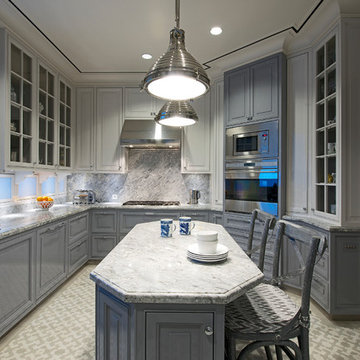
Inspiration for a large transitional u-shaped enclosed kitchen remodel in Mumbai with an undermount sink, beaded inset cabinets, white cabinets, marble countertops, gray backsplash, stone slab backsplash, stainless steel appliances and an island
Inspiration for a large transitional u-shaped enclosed kitchen remodel in Mumbai with an undermount sink, beaded inset cabinets, white cabinets, marble countertops, gray backsplash, stone slab backsplash, stainless steel appliances and an island
 LEIVARS
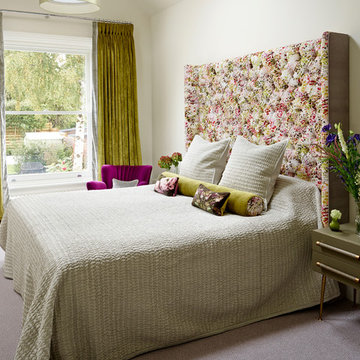
Richmond Bedroom, floral headboard, deep velvet luxury with injections of cerise and purple tones. Detailed with complimenting and contrast bolster cushion.

Sponsored
Columbus, OH

Wannemacher Interiors
Customized Award-Winning Interior Design Solutions in Franklin Cnty OH
 Architect
Why Mattress Thickness Is One of the Most Misunderstood Specs
When most people shop for a memory foam mattress, they focus on firmness, materials, and brand. Thickness tends to be an afterthought — or worse, treated as a proxy for quality. The assumption goes: thicker equals better. That assumption is wrong in a meaningful number of cases, and getting it wrong means waking up with exactly the kind of stiffness, pressure pain, or lower back ache you bought a new mattress to avoid.
The right thickness for a memory foam mattress is not a single number. It is a combination of your body weight, your sleep position, and any specific health conditions you are managing. A 14-inch mattress that provides ideal support for a 250-pound side sleeper may cause a 115-pound stomach sleeper to experience spinal misalignment all night. A 10-inch mattress that works perfectly for a back sleeper of average build offers inadequate pressure relief for a heavier side sleeper whose hips need to sink further into the comfort layer before the support base engages.
This guide maps thickness to the factors that actually determine whether a mattress works for your body. It covers the science of mattress layers, the three primary variables (weight, position, condition), and a complete decision table so you can find your ideal thickness without guesswork.
Understanding Mattress Thickness: Layers, Not Just Height
A memory foam mattress’s total thickness is the sum of its individual layers, and those layers serve entirely different functions. Two mattresses that are both 12 inches thick may feel radically different because their comfort layer depths and support core thicknesses are distributed differently.
The Two Parts That Matter
Every memory foam mattress has two functional zones: the comfort layer at the top and the support core at the bottom. The comfort layer — which in quality mattresses consists of gel-infused viscoelastic foam, transition foam, and a cooling cover — is the zone that contours to your body, relieves pressure, and cushions the joints. The support core — high-density foam or pocketed springs in a hybrid — is the zone that keeps the spine aligned and prevents the entire body from sinking into the mattress.
The key relationship is this: the comfort layer must be deep enough for your body’s heaviest pressure points to sink in fully before the firmer support core pushes back. If it is too shallow, those pressure points press against a firm surface and cause localised pain. If the support core is too thin, the whole mattress sags under body weight and the spine loses alignment regardless of how comfortable the top feels.
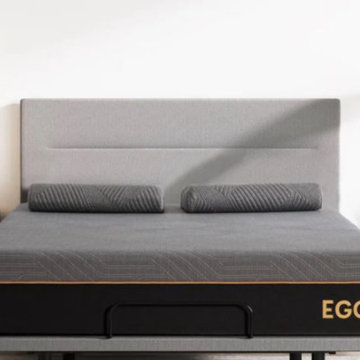
Here is how EGOHOME’s Black series layers map to these functions:
Layer
Material
Function
EGOHOME Technology
Cover (0.5–1")
Fabric + cooling tech
Temperature regulation, hygiene
Anti-heat™ Graphene Cooling Cover
Comfort layer (2–6")
Gel foam, AeroFusion™
Pressure relief, contouring
Copper Gel AeroFusion™ Foam
Transition layer (1–2")
Mid-density foam
Prevents sinkage past comfort zone
BraceSleeper™ Support Foam (upper)
Support core (6–12")
High-density foam or coils
Spinal alignment, edge support
BraceSleeper™ Support Foam (core)
Thickness alone does not tell you how a mattress will perform. A 14-inch mattress with a 2-inch comfort layer and a 12-inch support core will feel firm and supportive. A 14-inch mattress with a 6-inch comfort layer and an 8-inch support core will feel plush and contouring. Always check the comfort layer depth, not just the total inches.
Memory Foam Mattress Thickness Ranges: What Each Category Delivers
Here is a complete breakdown of what to expect from each thickness range and who each suits best:
Thickness
Profile
Best Use Case
Body Weight
Best Sleep Position
6–8"
Low profile
Children, bunk beds, guest rooms, adjustable bases
Under 130 lbs
Kids, lightweight, occasional use
8–10"
Standard-thin
Stomach sleepers, lightweight adults, budget setups
Under 130 lbs
Stomach, lightweight back sleepers
10–12"
Standard
Most adults, back sleepers, back pain relief
130–230 lbs
Back, stomach, combo sleepers
12–14"
High-profile
Side sleepers, plus-size, pressure relief
130–230 lbs+
Side sleepers, hip/shoulder pain
14"+
Premium
Plus-size sleepers, heavy duos, luxury setups
230 lbs+
Plus-size, side sleepers, chronic pain
6–8 Inches: Low-Profile (Specific Use Cases Only)
Low-profile mattresses in the 6 to 8 inch range are designed for specific applications rather than general adult use. They work well on bunk beds and trundle beds where height clearance is limited, for children’s beds where a lower sleep surface is safer, on adjustable bases where the mattress needs to flex significantly, and for lightweight individuals under 130 pounds who need minimal depth to reach the support core. For a standard adult of average build, a mattress under 8 inches is unlikely to provide adequate comfort layer depth for sustained pressure relief.
8–10 Inches: Standard-Thin (Stomach Sleepers and Lightweight Adults)
The 8 to 10 inch range is the practical starting point for most adult use. At this thickness, there is enough comfort layer to provide basic pressure relief without the excessive depth that allows heavier body sections to sink past the support zone. Stomach sleepers in particular benefit from this range: when sleeping face down, the goal is to keep the hips from sinking lower than the shoulders and chest, which would create a downward bow in the lumbar spine. A thinner mattress with a firmer feel prevents this hyperextension more reliably than a thicker, softer model. EGOHOME offers 8-inch memory foam options suited to this profile.
10–12 Inches: Standard (The Sweet Spot for Most Adults)
The 10 to 12 inch range is the most broadly appropriate thickness for adults of standard build. At this depth, a quality memory foam mattress contains enough comfort layer material to contour genuinely around the hips and shoulders without allowing the body to bottom out into the support core. It also contains enough support core depth to maintain spinal alignment under continuous body weight across seven or eight hours. Back sleepers of standard weight (130 to 230 pounds) typically find this range the most supportive, as the lumbar region receives adequate underlying resistance without the excessive softness that taller mattresses can develop under consistent pressure.
12–14 Inches: High-Profile (Side Sleepers and Plus-Size Sleepers)
The 12 to 14 inch range addresses two specific needs: side sleepers who require a deep enough comfort layer to allow the shoulder and hip to sink in while the waist remains supported, and heavier individuals whose body weight requires more foam depth before reaching full support core engagement. For a side sleeper of standard or higher body weight, a comfort layer of less than 4 to 6 inches is often not deep enough for the shoulder to sink fully into an aligned position. The result is an upward lateral bow in the thoracic spine that causes shoulder and upper back pain upon waking. The EGOHOME Black 14-inch Pro and Hybrid models are built specifically for this thickness range.
14 Inches and Above: Premium and Plus-Size
Mattresses at 14 inches or more are appropriate for plus-size sleepers over 230 pounds and for couples where one partner is significantly heavier. At higher body weights, a greater depth of both comfort material and support foam is required because the heavier load compresses the foam more aggressively. A support core that adequately resists a 160-pound sleeper may allow excessive sinkage under a 280-pound sleeper, causing the hips to drop past the point of lumbar support. EGOHOME’s Black 14-inch Firm model includes a 12-inch BraceSleeper™ Support Foam core specifically designed to resist this deep compression under higher body weights.
Thickness by Body Weight: The Primary Determining Factor
Body weight is the single most important variable in thickness selection because it directly determines how far the body sinks into the foam. The same mattress will feel completely different to a 120-pound sleeper versus a 240-pound sleeper, because the heavier person compresses the foam significantly more deeply.
Lightweight Sleepers (Under 130 lbs)
Lightweight sleepers do not need and often cannot benefit from thick mattresses. Because they exert less pressure on the foam, they may not compress a 14-inch mattress deeply enough to feel the support core at all, resulting in a floating sensation with insufficient underlying resistance. For lightweight sleepers, 8 to 10 inches provides adequate comfort layer depth for full pressure relief. The EGOHOME Black 10-inch Classic (medium feel) is the appropriate starting point for this weight category.
Standard-Weight Sleepers (130–230 lbs)
Standard-weight adults represent the broadest population of mattress buyers, and the 10 to 12 inch range was designed specifically for this group. At this weight range, the body compresses the comfort layer meaningfully enough for the foam to contour around pressure points, while the support core remains thick enough to prevent excessive sinkage. The EGOHOME Black 12-inch and the Black 10-inch ranges both address this category, with the 12-inch models being more appropriate for side sleepers who need the extra comfort layer depth.
Plus-Size Sleepers (Over 230 lbs)
Heavier sleepers require 12 to 14 inches at minimum to prevent bottoming out — the point at which body weight compresses through the comfort layer entirely and the sleeper feels the firm support core directly. Bottoming out eliminates pressure relief completely and can significantly worsen joint pain and lower back stiffness. EGOHOME recommends a suggested maximum of 300 pounds per person across their mattress range, and the 14-inch Hybrid and 14-inch Firm models are engineered with the deeper support cores required to handle higher body weights without performance degradation over time.
Thickness by Sleep Position: Matching Depth to Alignment Needs
Side Sleepers: 12 Inches or More
Side sleeping places the body’s heaviest pressure points — the shoulder and hip — in direct contact with the mattress. These points need to sink into the comfort layer deeply enough that the spine remains horizontal from head to toe. If the comfort layer is too thin or too firm, the shoulder cannot descend fully into the mattress, and the spine develops an upward lateral curve between the shoulder and the head. This causes the neck, shoulder, and upper back tension that many side sleepers report upon waking.
Side sleepers of standard weight need at least 12 inches, with a soft to medium-soft comfort layer. EGOHOME’s Black 12-inch Pro (soft feel, 7.5 out of 10 cooling score) is specifically recommended for side sleepers managing back, shoulder, or joint pain. The Black 14-inch Pro (medium-soft, 8 out of 10 cooling) adds additional comfort layer depth for those who need greater pressure relief.
Back Sleepers: 10–12 Inches
Back sleeping is the most spinal-alignment-friendly position because the body’s weight is distributed relatively evenly across the mattress. The primary challenge for back sleepers is lumbar support: the natural inward curve of the lower back creates a gap between the lumbar spine and the mattress surface that must be filled by the foam contouring upward into it. A mattress that is too soft allows the pelvis to sink excessively, flattening this curve and creating lower back compression. A mattress that is too firm cannot conform into the lumbar curve at all.
For back sleepers, 10 to 12 inches with a medium or medium-firm feel provides the optimal combination. EGOHOME’s Black 12-inch Hybrid (medium-firm, 6.5 out of 10 cooling) is specifically noted as ideal for back sleepers, combining pocketed spring zoned support with gel foam contouring for precise lumbar engagement.
Stomach Sleepers: 8–10 Inches
Stomach sleepers face the opposite alignment challenge from side sleepers. Rather than needing the mattress to yield deeply at the joints, they need the mattress to maintain a flat, firm surface that prevents the hips from sinking below the chest. If the hips drop lower than the upper body, the lumbar spine hyperextends into an arched position that compresses the posterior vertebral joints and causes significant lower back pain.
Stomach sleepers need a thinner mattress with a firmer feel. The EGOHOME Black 14-inch Firm is specifically recommended for stomach sleepers and heavier sleepers who need maximum surface resistance. Its 12-inch BraceSleeper™ Support Foam core provides the deep, unyielding base that prevents hip sinkage without requiring a thin mattress that compromises comfort.
Best Thickness for Back Pain: The Medium-Firm 10–12 Inch Principle
For people managing chronic lower back pain, herniated discs, sciatica, or general spinal stiffness, mattress thickness interacts with back health in a specific way that differs from general sleep comfort recommendations.
The key principle for back pain is controlled contouring. You need enough foam depth to relieve pressure at the hips and shoulders, but not so much depth that the foam develops a sag under the heavier sections of the body over time. Excessive thickness combined with a soft comfort layer is one of the most common causes of mattress-induced back pain — the sleeper sinks into a gentle hammock shape that feels comfortable initially but compresses the lumbar discs continuously throughout the night.
10–12 Inches: The Optimal Back Pain Range
A medium-firm mattress of 10 to 12 inches addresses both needs simultaneously. It provides adequate foam depth for genuine pressure relief at the hips and shoulders without the risk of comfort layer collapse that taller, softer mattresses can develop. The support core at this thickness is deep enough to maintain consistent lumbar support from the first night through years of regular use.
For side sleepers with lower back pain, the recommendation extends to 12 inches with a soft feel to ensure the hip can sink into full alignment. For back sleepers with lower back pain, 10 to 12 inches with a medium-firm feel is the target. For stomach sleepers with lower back pain, a firmer feel at any thickness is more important than depth — preventing hip sinkage is the priority.
⚠️ Mattresses over 14 inches with very soft comfort layers are a common hidden cause of lower back pain. The deep softness feels luxurious initially but allows the lumbar region to sag into misalignment through the night. If you sleep on a thick, very soft mattress and wake with lower back stiffness, the mattress — not your position — may be the cause.
Complete Thickness Decision Table: Your Position × Your Weight
Use this table to find your recommended thickness and the matching EGOHOME model:
Sleep Position
Body Weight
Ideal Thickness
EGOHOME Recommendation
Side sleeper
Under 130 lbs
12"
EGOHOME Black 12” Pro (soft, 7.5/10 cool)
Side sleeper
130–230 lbs
12–14"
EGOHOME Black 14” Pro (medium-soft, 8/10 cool)
Side sleeper
Over 230 lbs
14"
EGOHOME Black 14” Hybrid (medium-firm, 8.5/10 cool)
Back sleeper
Under 130 lbs
10"
EGOHOME Black 10” Classic (medium, 6/10 cool)
Back sleeper
130–230 lbs
10–12"
EGOHOME Black 12” Hybrid (medium-firm, 6.5/10 cool)
Back sleeper
Over 230 lbs
12–14"
EGOHOME Black 14” Hybrid (medium-firm, 8.5/10 cool)
Stomach sleeper
Under 130 lbs
8–10"
EGOHOME 8" Memory Foam (firm, standard support)
Stomach sleeper
130–230 lbs
10–12"
EGOHOME Black 10” Hybrid (medium-firm, 6.5/10 cool)
Stomach sleeper
Over 230 lbs
12–14"
EGOHOME Black 14” Firm (firm, 7/10 cool)
Combination
Any weight
10–14"
EGOHOME Black 14” Pro or 14” Hybrid
? If you are between two categories — for example, a 220-pound back sleeper with occasional side sleeping — choose the model suited to your heavier variable. A 12” hybrid model handles the heavier weight and still adapts to position changes. When in doubt, go medium-firm over soft.
EGOHOME Memory Foam Mattresses by Thickness
EGOHOME’s range spans 6 to 14 inches across memory foam and hybrid constructions, with every model carrying CertiPUR-US® and OEKO-TEX® Standard 100 certification, a 10-year warranty, a 100-night home trial, and free shipping and returns across the contiguous U.S.
For 8–10 Inch Needs
The EGOHOME 8-inch memory foam and Black 10-inch Classic and Hybrid models cover the lightweight and stomach sleeper range. The 10-inch Classic offers a medium feel suited to back and side sleepers under 130 pounds. The 10-inch Hybrid adds pocketed spring support for better lumbar engagement and airflow.
For 10–12 Inch Needs
The EGOHOME Black 12-inch range — Classic, Pro, and Hybrid — is the most widely applicable thickness tier. The 12-inch Classic (soft, cool 6/10) suits side sleepers and those with joint pain. The 12-inch Hybrid (medium-firm, cool 6.5/10) is specifically recommended for back sleepers and standard-weight adults across positions. The 12-inch Pro (soft, cool 7.5/10) is the top choice for side sleepers dealing with shoulder or hip pain.
For 12–14 Inch Needs
The EGOHOME Black 14-inch series is the flagship range. The 14-inch Pro (medium-soft, cool 8/10) is designed for side sleepers and pressure-relief-first buyers. The 14-inch Hybrid (medium-firm, cool 8.5/10) handles all sleep positions and is the strongest all-rounder in the range. The 14-inch Firm is built for stomach sleepers and heavier individuals, with a 12-inch BraceSleeper™ Support Foam core that resists sinkage under higher body weights.
Frequently Asked Questions
Is a thicker memory foam mattress always better?
No. Thickness should match your body weight and sleep position, not simply be maximised. A 14-inch mattress with a very soft comfort layer can cause back pain in lightweight sleepers or stomach sleepers by allowing excessive sinkage. A well-calibrated 10-inch mattress will consistently outperform an oversized 14-inch model for the wrong body type.
What thickness of memory foam is good for back pain?
A medium-firm mattress of 10 to 12 inches is the most widely recommended range for lower back pain. It provides enough foam depth for genuine pressure relief without the risk of comfort layer collapse that causes lumbar sagging. Side sleepers with back pain may benefit from 12 inches with a softer feel to ensure hip and shoulder alignment.
What is the minimum thickness for a memory foam mattress for adults?
For most adults, 8 inches is the practical minimum for sustained comfort. Below 8 inches, there is often insufficient comfort layer depth for pressure relief across a full night of sleep. The exception is stomach sleepers who may intentionally choose 8 inches for a firmer surface that prevents hip sinkage.
Does mattress thickness affect how long it lasts?
Yes, indirectly. A mattress that is too thin for the body weight it supports will experience faster comfort layer compression and develop sags and pressure indentations earlier than one appropriately sized for that load. Choosing the correct thickness for your weight extends the usable lifespan of the mattress. EGOHOME mattresses are expected to last 6 to 8 years with proper care, with regular rotation every 3 to 6 months recommended.
Can I use a thick mattress on an adjustable base?
Memory foam mattresses up to 14 inches are generally compatible with adjustable bases, though the mattress should be flexible enough to bend at the head and foot sections without cracking or deforming. EGOHOME mattresses are confirmed compatible with adjustable bases. For very thick or firm mattresses, check the specific flex requirements of your adjustable base before purchasing.
Final Thoughts
The best thickness for a memory foam mattress is not the thickest you can find or the most expensive number on the specification sheet. It is the thickness that aligns precisely with your body weight, your sleep position, and any specific conditions you are managing — then pairs that depth with a comfort layer and support core calibrated to work
 CeilDex Stretch Ceilings
Our new project.
To implement it, we were invited by the company in San Francisco. We had a very difficult task to do.
The building in which we had to install sound-absorbing panels has a historical and architectural value, and the main thing was not to harm anything.
And at the moment the building is used by the federal government, so that the work had to be carried out quickly and quietly, not to disturb the employees working in the building.
We have carefully selected materials, so that the shade of color on the wall would be completely coincided with shade of the fabric set. In the choice, we stopped at a specially made for this purpose CLIPSO sound-absorbing fabric. This material is better than any other for this kind of work: 1) Clipso Sound Proof is specially designed for sound absorption. 2) This material is made of synthetic fabric impregnated with polyurethane, it is ready to cope with significant operational loads in public buildings. 3) The texture of the material looks like a canvas, which creates an additional atmosphere of comfort and harmony with every interior of the premises where we have installed it. In the base, behind the CLIPSO fabric, we have installed an additional layer of sound-absorbing material.
This combination has increased the sound absorption to a factor of 1.0 (100%). All premises in which the work was carried out was provided to us for 3 days. During this time, we had to remove all lights, grille ventilation systems, as well as safety sensors and fire extinguishing systems.
Then install the mounting profile in the places told by the architects,mount a layer of sound-absorbing material and sound-absorbing fabric CLIPSO. Then, it was necessary to put back all dismantled equipment.
With this task we coped.
 CeilDex Stretch Ceilings
Our new project.
To implement it, we were invited by the company in San Francisco. We had a very difficult task to do.
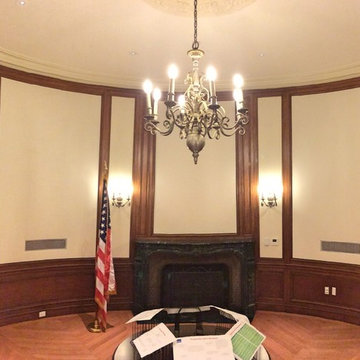
The building in which we had to install sound-absorbing panels has a historical and architectural value, and the main thing was not to harm anything.
And at the moment the building is used by the federal government, so that the work had to be carried out quickly and quietly, not to disturb the employees working in the building.
We have carefully selected materials, so that the shade of color on the wall would be completely coincided with shade of the fabric set. In the choice, we stopped at a specially made for this purpose CLIPSO sound-absorbing fabric. This material is better than any other for this kind of work: 1) Clipso Sound Proof is specially designed for sound absorption. 2) This material is made of synthetic fabric impregnated with polyurethane, it is ready to cope with significant operational loads in public buildings. 3) The texture of the material looks like a canvas, which creates an additional atmosphere of comfort and harmony with every interior of the premises where we have installed it. In the base, behind the CLIPSO fabric, we have installed an additional layer of sound-absorbing material.
This combination has increased the sound absorption to a factor of 1.0 (100%). All premises in which the work was carried out was provided to us for 3 days. During this time, we had to remove all lights, grille ventilation systems, as well as safety sensors and fire extinguishing systems.
Then install the mounting profile in the places told by the architects,mount a layer of sound-absorbing material and sound-absorbing fabric CLIPSO. Then, it was necessary to put back all dismantled equipment.
With this task we coped.
9