
Search results for "Base fail" in Home Design Ideas
 Allman Remodeling Contractors
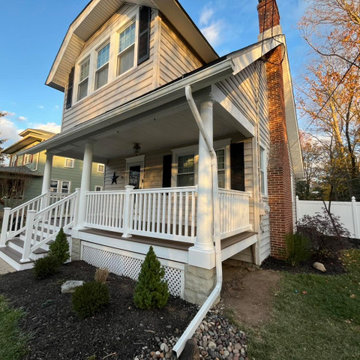
Front Porch Transformation – From Failing Wood to Full Composite Upgrade ✨
This porch had years of peeling paint, rot, water damage, and structural wear. We rebuilt it from the framing up and gave this home a clean, modern, low-maintenance upgrade that will last for decades.
What we did:
✔️ Removed all failing decking, treads, and trim
✔️ Repaired and reinforced the existing framing
✔️ Installed new composite decking in a beautiful wood-tone finish
✔️ Rebuilt the stair system with composite treads & white risers
✔️ Installed new vinyl railings and posts
✔️ Wrapped all exposed structure in PVC for a clean, maintenance-free finish
✔️ Sealed, repaired, and refinished column bases
✔️ Added all new fasteners, blocking, and waterproofing where needed
The result? A porch that’s safer, stronger, and absolutely elevates the curb appeal of this home.
If your porch or deck is showing signs of age — peeling paint, soft spots, loose rails, or rot — we can rebuild it the right way.
 PlaidFox Studio
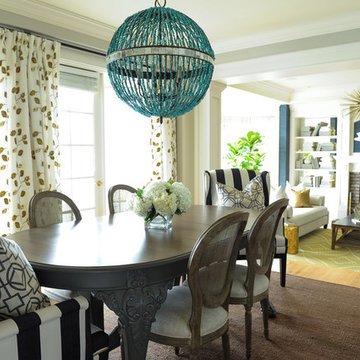
Large beach style light wood floor and brown floor enclosed dining room photo in Vancouver with gray walls, a standard fireplace and a brick fireplace
 TTC Enterprises, LLC
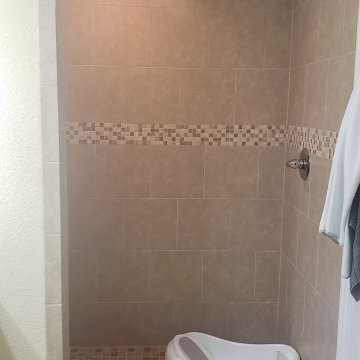
The client had a shower space without a visual showing of damage until you looked at the ceiling in the kitchen. The project was exploratory after all other measures failed to find the leak. The client went with a new look after discovering the problems in the construction of the existing shower base and waterproofing process.
Find the right local pro for your project
 Deskins Group LLC
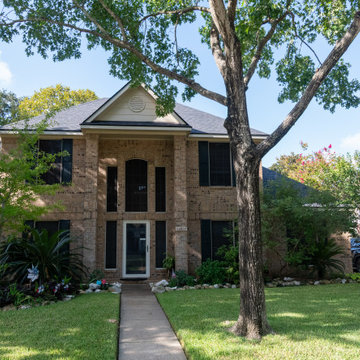
At Deskins Siding & Exteriors, we understand that not every homeowner is ready for a full exterior remodel all at once. That’s why we offer flexible, phased solutions—like this recent project in Cypress, TX.
About 5–10 years ago, this homeowner upgraded their failing siding with James Hardie fiber cement, but only patched the OSB-based fascia at the time (similar to today’s LP SmartSide products). During a recent roof installation, much of the remaining fascia was revealed to be deteriorating. That’s when they called us.
We replaced the compromised trim with smooth Hardie fascia and repainted all existing trim to extend its lifespan. The result? A cohesive, durable finish that protects the home and enhances curb appeal—without the cost of a full tear-out.
Whether you're tackling siding, roofing, or trim repairs, our design-driven approach ensures every detail works in harmony.
Ready to protect your home with long-lasting materials and thoughtful design?
? Call now or schedule a consultation to speak directly with Shaun, owner and principal designer. Let’s build something that lasts.
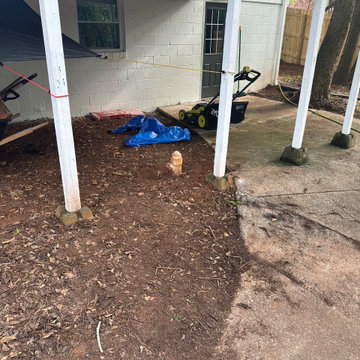
 Solid Base Construction
Concrete Patio & Under-Deck Storage Upgrade
Removed severely cracked and failing concrete and installed a new reinforced concrete slab beneath the elevated deck to create a clean, functional storage area. The project also included a concrete retaining wall beneath the staircase to help manage water runoff and prevent erosion around the new slab. The completed installation transformed an unusable space into a durable, attractive extension of the property while improving drainage, accessibility, and long-term performance.
 Deskins Group LLC
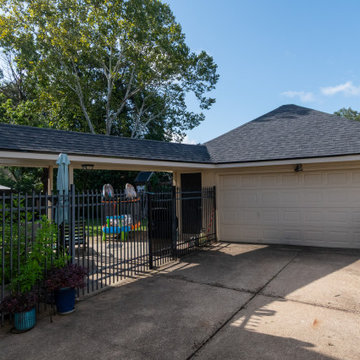
At Deskins Siding & Exteriors, we understand that not every homeowner is ready for a full exterior remodel all at once. That’s why we offer flexible, phased solutions—like this recent project in Cypress, TX.
About 5–10 years ago, this homeowner upgraded their failing siding with James Hardie fiber cement, but only patched the OSB-based fascia at the time (similar to today’s LP SmartSide products). During a recent roof installation, much of the remaining fascia was revealed to be deteriorating. That’s when they called us.
We replaced the compromised trim with smooth Hardie fascia and repainted all existing trim to extend its lifespan. The result? A cohesive, durable finish that protects the home and enhances curb appeal—without the cost of a full tear-out.
Whether you're tackling siding, roofing, or trim repairs, our design-driven approach ensures every detail works in harmony.
Ready to protect your home with long-lasting materials and thoughtful design?
? Call now or schedule a consultation to speak directly with Shaun, owner and principal designer. Let’s build something that lasts.
 Deskins Group LLC
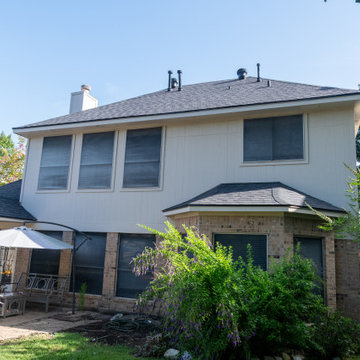
At Deskins Siding & Exteriors, we understand that not every homeowner is ready for a full exterior remodel all at once. That’s why we offer flexible, phased solutions—like this recent project in Cypress, TX.
About 5–10 years ago, this homeowner upgraded their failing siding with James Hardie fiber cement, but only patched the OSB-based fascia at the time (similar to today’s LP SmartSide products). During a recent roof installation, much of the remaining fascia was revealed to be deteriorating. That’s when they called us.
We replaced the compromised trim with smooth Hardie fascia and repainted all existing trim to extend its lifespan. The result? A cohesive, durable finish that protects the home and enhances curb appeal—without the cost of a full tear-out.
Whether you're tackling siding, roofing, or trim repairs, our design-driven approach ensures every detail works in harmony.
Ready to protect your home with long-lasting materials and thoughtful design?
? Call now or schedule a consultation to speak directly with Shaun, owner and principal designer. Let’s build something that lasts.

 Rocky Tops Granite & Marble LLC
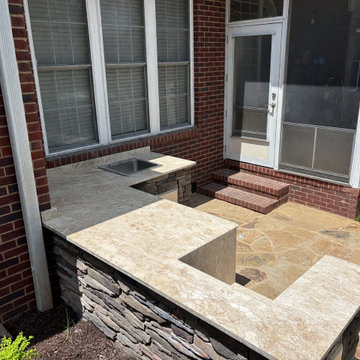
This outdoor kitchen in Lexington is built around 3cm unfilled travertine, and that's a material choice that says a lot about what this space is meant to do. Unfilled travertine keeps its natural pits and texture instead of having them smoothed over with resin, which means the surface reads as raw and organic rather than polished. Out here, under open sky and full sun, that texture works in the stone's favor. It doesn't glare back at you at midday and it doesn't get slick when a hose or a rain shower hits it.
The layout is an L-shaped countertop set over a stacked stone veneer base, with stainless steel drawers and cabinets tucked underneath and a built-in grill anchoring one leg of the L. There's a cutout in the counter for a sink or a cooler, which is the kind of detail that takes real planning at the template stage. You can't cut that opening freehand on site and expect clean lines. We measure twice, dry-fit the appliance or basin, and cut the stone to match before it ever leaves the shop.
Travertine outdoors is a practical call as much as a good-looking one. It handles heat well, which matters right next to a grill, and it won't crack or discolor the way some engineered materials can when they take direct sun for years. Unfilled travertine in particular breathes a little more than the filled version, so it doesn't trap moisture the way a sealed slab might. We finished the edges eased, which keeps the whole thing feeling soft and unfussy, no sharp lines to bang a hip on when you're moving between the grill and the prep space.
Outdoor kitchens take a beating that indoor ones never see: pollen, humidity, the occasional hard freeze here in the Midlands, direct sun for months at a stretch. Travertine's been used outdoors for centuries for exactly that reason, it ages instead of failing. Sealing it now and then keeps water from sitting in the pits, but even bare it holds up. This one in Lexington is set up to be used hard, grilled on, gathered around, and to look better for the wear rather than worse.
 Deskins Group LLC
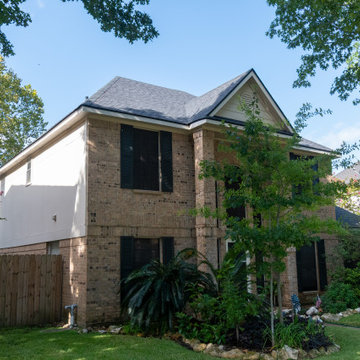
At Deskins Siding & Exteriors, we understand that not every homeowner is ready for a full exterior remodel all at once. That’s why we offer flexible, phased solutions—like this recent project in Cypress, TX.
About 5–10 years ago, this homeowner upgraded their failing siding with James Hardie fiber cement, but only patched the OSB-based fascia at the time (similar to today’s LP SmartSide products). During a recent roof installation, much of the remaining fascia was revealed to be deteriorating. That’s when they called us.
We replaced the compromised trim with smooth Hardie fascia and repainted all existing trim to extend its lifespan. The result? A cohesive, durable finish that protects the home and enhances curb appeal—without the cost of a full tear-out.
Whether you're tackling siding, roofing, or trim repairs, our design-driven approach ensures every detail works in harmony.
Ready to protect your home with long-lasting materials and thoughtful design?
? Call now or schedule a consultation to speak directly with Shaun, owner and principal designer. Let’s build something that lasts.
 Rocky Tops Granite & Marble LLC
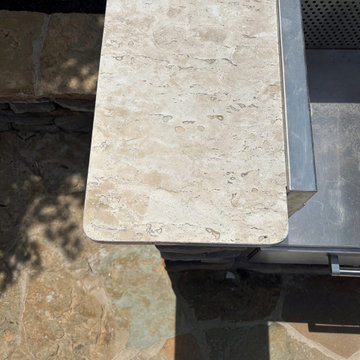
This outdoor kitchen in Lexington is built around 3cm unfilled travertine, and that's a material choice that says a lot about what this space is meant to do. Unfilled travertine keeps its natural pits and texture instead of having them smoothed over with resin, which means the surface reads as raw and organic rather than polished. Out here, under open sky and full sun, that texture works in the stone's favor. It doesn't glare back at you at midday and it doesn't get slick when a hose or a rain shower hits it.
The layout is an L-shaped countertop set over a stacked stone veneer base, with stainless steel drawers and cabinets tucked underneath and a built-in grill anchoring one leg of the L. There's a cutout in the counter for a sink or a cooler, which is the kind of detail that takes real planning at the template stage. You can't cut that opening freehand on site and expect clean lines. We measure twice, dry-fit the appliance or basin, and cut the stone to match before it ever leaves the shop.
Travertine outdoors is a practical call as much as a good-looking one. It handles heat well, which matters right next to a grill, and it won't crack or discolor the way some engineered materials can when they take direct sun for years. Unfilled travertine in particular breathes a little more than the filled version, so it doesn't trap moisture the way a sealed slab might. We finished the edges eased, which keeps the whole thing feeling soft and unfussy, no sharp lines to bang a hip on when you're moving between the grill and the prep space.
Outdoor kitchens take a beating that indoor ones never see: pollen, humidity, the occasional hard freeze here in the Midlands, direct sun for months at a stretch. Travertine's been used outdoors for centuries for exactly that reason, it ages instead of failing. Sealing it now and then keeps water from sitting in the pits, but even bare it holds up. This one in Lexington is set up to be used hard, grilled on, gathered around, and to look better for the wear rather than worse.
 Windy City Painters
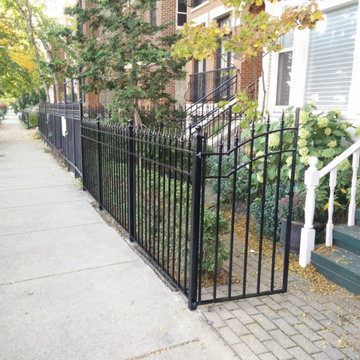
Iron Fence Painting Wicker Park Homeowners Can Trust: A Windy City Painters Case Study
Wicker Park is full of architectural character — ornate 1890s greystone two-flats, vintage brick facades, and wrought iron fencing that has framed these streets for well over a century. However, what iron fence painting Wicker Park properties require is not a simple weekend job. Winters here are brutal on metal, and consequently Windy City Painters has spent years perfecting the restoration process that keeps these fences standing strong. In particular, this case study walks through a recent project completed for a classic Wicker Park property.
Project Overview
The property featured a full wrought iron perimeter fence that had suffered years of freeze-thaw cycling and road salt exposure. Paint had failed across most of the pickets, and oxidation had progressed into active rust at several base rails. Consequently, the homeowners needed more than a fresh coat of paint. They needed a genuine metal restoration, and that is precisely what Windy City Painters delivered.
Materials Used
Windy City Painters selected products specifically rated for Chicago's climate extremes:
Rust-Oleum Professional Rust Inhibitor Primer
Sherwin-Williams DTM Acrylic Enamel (two finish coats)
3M rust converter gel for active oxidation zones
Wire brushes, angle grinders, and detail brushes for precision work
The Process: How Windy City Painters Restores Rusted Iron
Every iron fence painting Wicker Park project follows a disciplined, multi-stage process:
Preparation. Wire brushing and angle grinding remove all loose, flaking, and compromised material. Rust converter gel is applied directly to active oxidation zones, chemically stabilizing the metal underneath.
Repairs. Pitted sections and structurally weak joints are addressed before any coating touches the surface. Notably, skipping this step is the most common reason fence paint fails prematurely.
Priming. A full rust-inhibiting primer coat seals every bare metal surface, preventing moisture from reaching the iron beneath.
Application. Two finish coats of direct-to-metal enamel are applied by hand for even coverage across pickets, finials, and rail joints.
Finishing. A final inspection confirms full coverage, sharp lines, and a smooth, uniform sheen from every angle.
Furthermore, this same process protects the ornate details so common on Wicker Park fencing — decorative finials, scrollwork, and gate hardware — without losing the historic character that makes these properties special.
Advice for Wicker Park Homeowners
Before starting a similar project, homeowners in this neighborhood should keep a few things in mind:
Never paint over active rust. Untreated oxidation will continue spreading beneath the new coating, and the paint will fail within a season or two.
Always prime bare metal before applying a finish coat. Skipping primer is the single fastest path to peeling.
Choose coatings rated for temperature extremes, since Chicago's freeze-thaw cycles are harder on metal than most climates.
Inspect ground-contact areas each spring, as base rails typically rust fastest due to snow melt and road salt runoff.
Budget for prep time. In fact, most of the labor in a quality iron fence painting Wicker Park project happens before a single coat of paint is applied.
Similarly, ask whether the contractor uses rust converter on active oxidation, since skipping this step often shortens the life of the finish considerably.
Moreover, historic greystone properties often have decorative ironwork that requires extra care during grinding and priming so the original detailing is preserved rather than sanded away.
What to Expect: Timeline and Investment
Homeowners often ask how long an iron fence painting Wicker Park project takes from start to finish. In general, prep work — wire brushing, grinding, rust conversion, and repairs — takes up the largest share of the schedule, while primer and enamel application move relatively quickly once the surface is properly stabilized. Cure time between coats also affects the overall timeline, since rushing this stage undermines durability. Consequently, Windy City Painters builds a realistic schedule around weather conditions rather than forcing the job into a tight window. In addition, investment varies based on fence length, the amount of active rust present, and whether ornate detailing requires extra hand-finishing. Homeowners considering this project should request a full on-site walkthrough rather than a rough phone estimate, since rust severity is difficult to judge accurately without seeing the fence in person.
Why Wicker Park Homeowners Choose Windy City Painters
Windy City Painters has become the trusted painting contractor for Chicago's North Side and Near West Side, and iron fence painting Wicker Park residents request most often reflects that reputation directly. In contrast to quick-fix contractors who paint straight over rust, Windy City Painters treats every project as a full restoration. As a result, clients get a finish that holds up through multiple Chicago winters rather than one.
In addition, for related projects, Windy City Painters also offers interior painting, cabinet painting, drywall and plaster repair, and full metal refinishing services for fences, gates, and porches throughout the neighborhood. Ultimately, that range of services is what makes us a true one-stop contractor for Wicker Park homeowners.
See more of our work and request a free estimate at www.windypainters.com.
Ready to transform your Wicker Park home? Contact Windy City Painters for a free estimate — visit www.windypainters.com today. Proudly serving Wicker Park, West Town, Lincoln Park, Roscoe Village, Lakeview, Ukrainian Village, River North, and all of Chicago.

8