
Search results for "Competent" in Home Design Ideas
 Century Stair Company
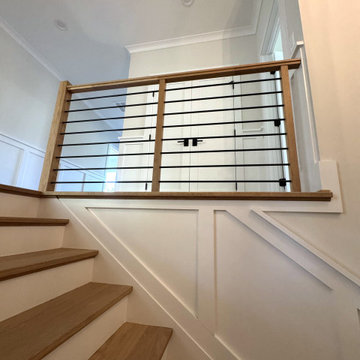
Metal and wood are often treated as opposites, but this staircase makes the case for partnership. White oak treads, chamfer-top newels, and a coordinating handrail bring the warmth and texture that only natural wood can offer. Against that, a satin black horizontal bar balustrade introduces rigid geometric precision, its clean lines and matte finish defining the oak rather than competing with it. The result is a staircase that feels both welcoming and sophisticated. Neither material overwhelms the other. Each one makes the other more defined.
1976-2026 © Century Stair Company

 Santa Barbara Home Design
Design Consultant Jeff Doubét is the author of Creating Spanish Style Homes: Before & After – Techniques – Designs – Insights. The 240 page “Design Consultation in a Book” is now available. Please visit SantaBarbaraHomeDesigner.com for more info.
Jeff Doubét specializes in Santa Barbara style home and landscape designs. To learn more info about the variety of custom design services I offer, please visit SantaBarbaraHomeDesigner.com
Jeff Doubét is the Founder of Santa Barbara Home Design - a design studio based in Santa Barbara, California USA.
 Century Stair Company
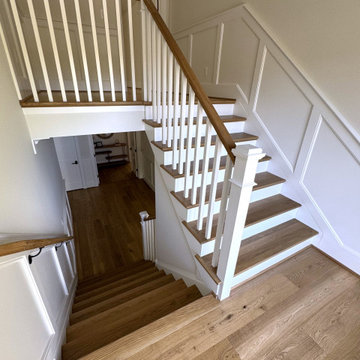
Traditional design elements have survived generations of shifting trends for a reason. This switchback staircase makes that case quietly. Box newels anchor the design with stateliness, while white painted risers and square balusters add definition to the natural white oak treads and handrail. Nothing here competes. Each element makes room for the next.
Set against a modern interior, the staircase doesn't feel out of place. It grounds it. A reminder that classic and contemporary don't have to choose sides.
1976-2026 © Century Stair Company
Find the right local pro for your project
 Century Stair Company
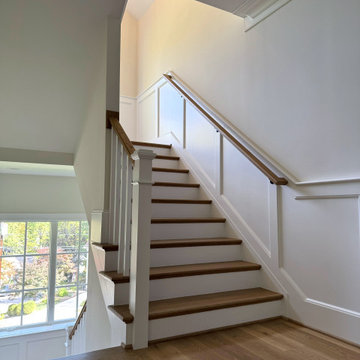
Traditional design elements have survived generations of shifting trends for a reason. This switchback staircase makes that case quietly. Box newels anchor the design with stateliness, while white painted risers and square balusters add definition to the natural white oak treads and handrail. Nothing here competes. Each element makes room for the next.
Set against a modern interior, the staircase doesn't feel out of place. It grounds it. A reminder that classic and contemporary don't have to choose sides.
1976-2026 © Century Stair Company

 SCJ Studio Landscape Architecture
Our client built a striking new home on the east slope of Seattle’s Capitol Hill neighborhood. To complement the clean lines of the facade we designed a simple, elegant landscape that sets off the home rather than competing with the bold architecture.
Soft grasses offer contrast to the natural stone veneer, perennials brighten the mood, and planters add a bit of whimsy to the arrival sequence. On either side of the main entry, roof runoff is dramatically routed down the face of the home in steel troughs to biofilter planters faced in stone.
Around the back of the home, a small “leftover” space was transformed into a cozy patio terrace with bluestone slabs and crushed granite underfoot. A view down into, or across the back patio area provides a serene foreground to the beautiful views to Lake Washington beyond.
Collaborating with Thielsen Architects provided the owners with a sold design team--working together with one voice to build their dream home.
Photography by Miranda Estes
 Century Stair Company
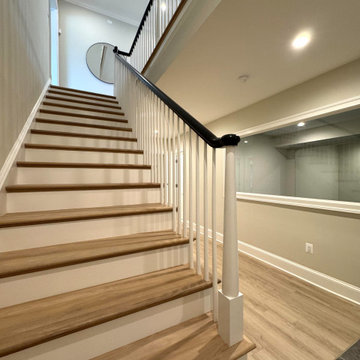
From the first step, this staircase sets the tone. A double bullnose starting step eases the entry with quiet confidence, leading into white oak treads that bring natural warmth to the climb. Slender white balusters hold a light, open rhythm alongside a sleek painted handrail that wraps the structure cleanly from bottom to top. Nothing here competes for attention. Each element defers to the whole, and the whole makes a lasting impression.
1976-2026 © Century Stair Company
 Century Stair Company
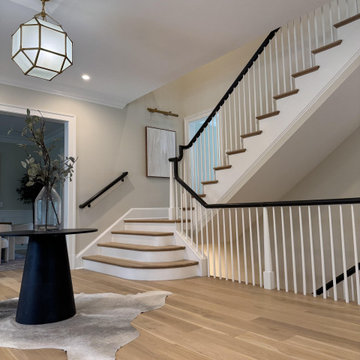
From the first step, this staircase sets the tone. A double bullnose starting step eases the entry with quiet confidence, leading into white oak treads that bring natural warmth to the climb. Slender white balusters hold a light, open rhythm alongside a sleek painted handrail that wraps the structure cleanly from bottom to top. Nothing here competes for attention. Each element defers to the whole, and the whole makes a lasting impression.
1976-2026 © Century Stair Company
 Century Stair Company
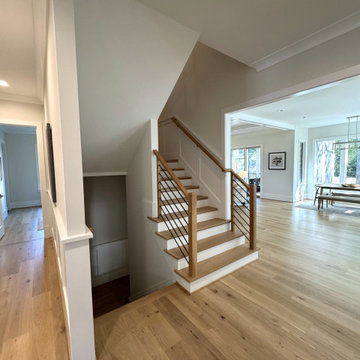
Metal and wood are often treated as opposites, but this staircase makes the case for partnership. White oak treads, chamfer-top newels, and a coordinating handrail bring the warmth and texture that only natural wood can offer. Against that, a satin black horizontal bar balustrade introduces rigid geometric precision, its clean lines and matte finish defining the oak rather than competing with it. The result is a staircase that feels both welcoming and sophisticated. Neither material overwhelms the other. Each one makes the other more defined.
1976-2026 © Century Stair Company
 Century Stair Company
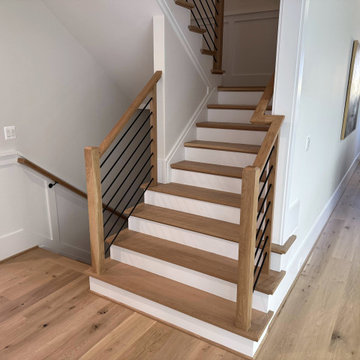
Metal and wood are often treated as opposites, but this staircase makes the case for partnership. White oak treads, chamfer-top newels, and a coordinating handrail bring the warmth and texture that only natural wood can offer. Against that, a satin black horizontal bar balustrade introduces rigid geometric precision, its clean lines and matte finish defining the oak rather than competing with it. The result is a staircase that feels both welcoming and sophisticated. Neither material overwhelms the other. Each one makes the other more defined.
1976-2026 © Century Stair Company
 Century Stair Company
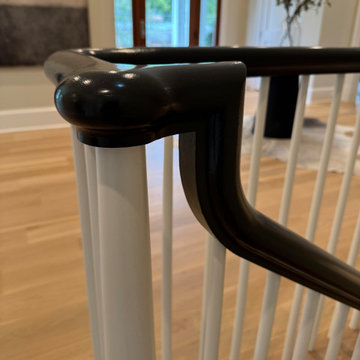
From the first step, this staircase sets the tone. A double bullnose starting step eases the entry with quiet confidence, leading into white oak treads that bring natural warmth to the climb. Slender white balusters hold a light, open rhythm alongside a sleek painted handrail that wraps the structure cleanly from bottom to top. Nothing here competes for attention. Each element defers to the whole, and the whole makes a lasting impression.
1976-2026 © Century Stair Company
 Keene Interiors
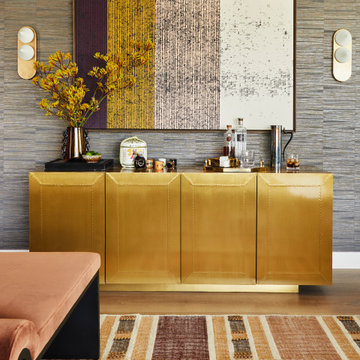
This vignette layers bold color, texture, and refined detailing to create a striking focal point within the space. A warm metallic credenza anchors the composition, its tailored paneling and clean lines offering a modern yet timeless presence. The rich finish adds depth and subtle glamour, balancing the surrounding organic textures.
Above, large-scale abstract artwork introduces vertical movement and a dynamic palette of deep plum, golden ochre, and soft neutrals. The textured wallcovering behind it enhances the layered effect, adding dimension without competing for attention. Sculptural sconces on either side provide symmetry and soft ambient light, reinforcing the architectural rhythm of the wall.
Styled with curated bar accessories and natural florals, the surface feels intentional and livable. The result is an artful moment that blends warmth, structure, and personality, elevating the room with confident, layered design.
 Lavish Interiors
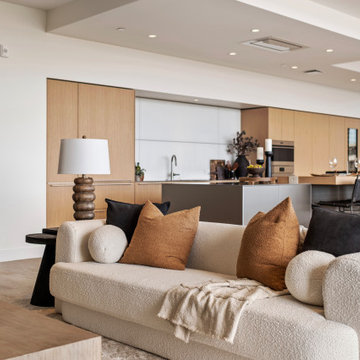
We staged this contemporary Scottsdale residence to complement its clean architecture, luxury finishes, and expansive mountain views.
The furnishings were selected to keep the home feeling elevated but comfortable, using soft neutrals, warm woods, sculptural shapes, and subtle contrast throughout. In the main living areas, we kept the furniture placement open and intentional so the sightlines, natural light, and indoor-outdoor connection remained the focus.
Each space was staged to help buyers understand the scale and function of the home, from the open living and dining areas to the office and additional gathering spaces. The goal was to support the architecture rather than compete with it, while giving the property a finished, inviting feel.
 Century Stair Company
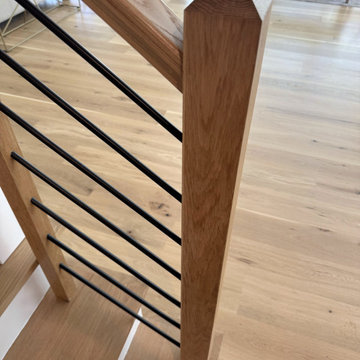
Metal and wood are often treated as opposites, but this staircase makes the case for partnership. White oak treads, chamfer-top newels, and a coordinating handrail bring the warmth and texture that only natural wood can offer. Against that, a satin black horizontal bar balustrade introduces rigid geometric precision, its clean lines and matte finish defining the oak rather than competing with it. The result is a staircase that feels both welcoming and sophisticated. Neither material overwhelms the other. Each one makes the other more defined.
1976-2026 © Century Stair Company
 Century Stair Company
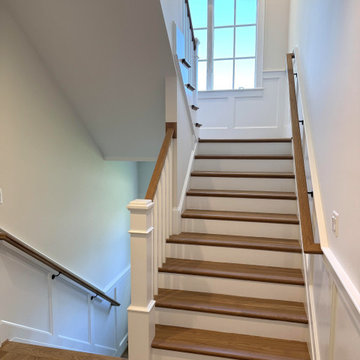
Traditional design elements have survived generations of shifting trends for a reason. This switchback staircase makes that case quietly. Box newels anchor the design with stateliness, while white painted risers and square balusters add definition to the natural white oak treads and handrail. Nothing here competes. Each element makes room for the next.
Set against a modern interior, the staircase doesn't feel out of place. It grounds it. A reminder that classic and contemporary don't have to choose sides.
1976-2026 © Century Stair Company
 Century Stair Company
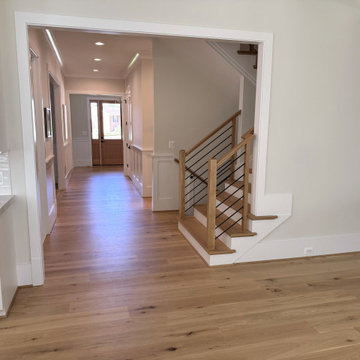
Metal and wood are often treated as opposites, but this staircase makes the case for partnership. White oak treads, chamfer-top newels, and a coordinating handrail bring the warmth and texture that only natural wood can offer. Against that, a satin black horizontal bar balustrade introduces rigid geometric precision, its clean lines and matte finish defining the oak rather than competing with it. The result is a staircase that feels both welcoming and sophisticated. Neither material overwhelms the other. Each one makes the other more defined.
1976-2026 © Century Stair Company
 Century Stair Company
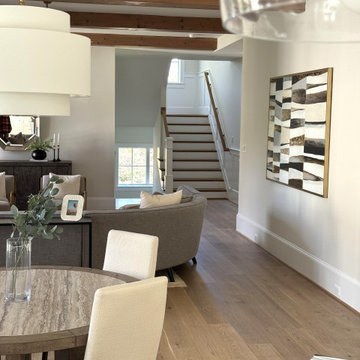
Traditional design elements have survived generations of shifting trends for a reason. This switchback staircase makes that case quietly. Box newels anchor the design with stateliness, while white painted risers and square balusters add definition to the natural white oak treads and handrail. Nothing here competes. Each element makes room for the next.
Set against a modern interior, the staircase doesn't feel out of place. It grounds it. A reminder that classic and contemporary don't have to choose sides.
1976-2026 © Century Stair Company
 Century Stair Company
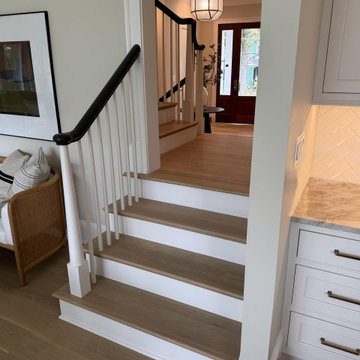
From the first step, this staircase sets the tone. A double bullnose starting step eases the entry with quiet confidence, leading into white oak treads that bring natural warmth to the climb. Slender white balusters hold a light, open rhythm alongside a sleek painted handrail that wraps the structure cleanly from bottom to top. Nothing here competes for attention. Each element defers to the whole, and the whole makes a lasting impression.
1976-2026 © Century Stair Company
 Century Stair Company
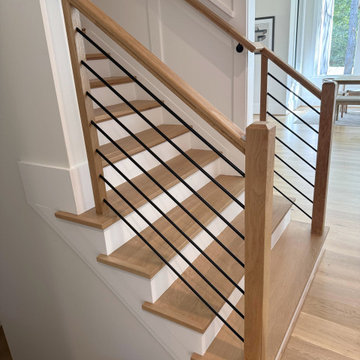
Metal and wood are often treated as opposites, but this staircase makes the case for partnership. White oak treads, chamfer-top newels, and a coordinating handrail bring the warmth and texture that only natural wood can offer. Against that, a satin black horizontal bar balustrade introduces rigid geometric precision, its clean lines and matte finish defining the oak rather than competing with it. The result is a staircase that feels both welcoming and sophisticated. Neither material overwhelms the other. Each one makes the other more defined.
1976-2026 © Century Stair Company
 Century Stair Company
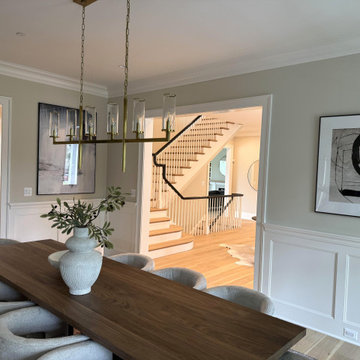
From the first step, this staircase sets the tone. A double bullnose starting step eases the entry with quiet confidence, leading into white oak treads that bring natural warmth to the climb. Slender white balusters hold a light, open rhythm alongside a sleek painted handrail that wraps the structure cleanly from bottom to top. Nothing here competes for attention. Each element defers to the whole, and the whole makes a lasting impression.
1976-2026 © Century Stair Company
 Century Stair Company
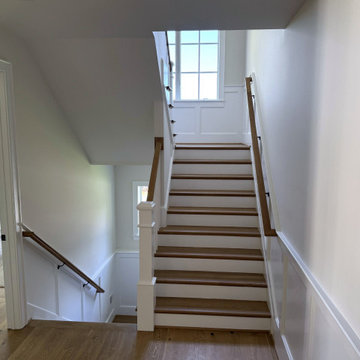
Traditional design elements have survived generations of shifting trends for a reason. This switchback staircase makes that case quietly. Box newels anchor the design with stateliness, while white painted risers and square balusters add definition to the natural white oak treads and handrail. Nothing here competes. Each element makes room for the next.
Set against a modern interior, the staircase doesn't feel out of place. It grounds it. A reminder that classic and contemporary don't have to choose sides.
1976-2026 © Century Stair Company
112