
Search results for "Compressing" in Home Design Ideas



 John
JohnCoco coir is a versatile and sustainable growing medium that is gaining popularity among gardeners. Made from the fibrous husk of coconuts, it’s an eco-friendly alternative to peat moss and can greatly enhance the quality of your soil. In gardening, it is often utilized in systems like Coco Coir Hydroponic, where it helps create an efficient water and nutrient delivery system.
What is Coco Coir?
Coco coir is a natural fiber extracted from coconut husks. It has a neutral pH, excellent water retention, and is reusable, making it a favorite among gardeners who prefer organic and sustainable practices. It is available in different forms such as blocks, bricks, or loose coir, each requiring some preparation before use in gardening.
Benefits of Using Coco Coir in Gardening
Coco coir offers several advantages for gardening. Here are the benefits of using coco coir in gardening:
Holds up to 10 times its weight in water, ensuring plants have consistent moisture.
Promotes oxygen flow to plant roots, leading to healthier root systems.
Coco coir is a renewable and eco-friendly alternative to peat moss.
It can be washed, rehydrated, and reused, reducing waste.
Naturally pH neutral, making it suitable for various plants without major adjustments.
Enhances the texture and moisture retention of garden soil.
How to Prepare Coco Coir for Planting
Preparing coco coir for planting involves a few essential steps. First, you need to hydrate the coir block, as it typically comes in a compressed form. Place the block in a large container and add warm water, allowing the block to expand and absorb the water. Once fully expanded, the coir should be fluffed up by breaking it apart with your hands or a tool to ensure it becomes loose and airy. After the coir has been fluffed, it is important to drain any excess water, as overly wet coir can lead to root suffocation. Finally, since coco coir is inert and does not contain nutrients, it’s a good idea to add organic compost or liquid fertilizer to enrich the coir before planting.
Do You Need to Soak Coco Coir Before Planting?
Yes, soaking coco coir before planting is necessary. Since it comes in a compressed form, it needs to be broken down and hydrated for proper use. The soaking process allows the coir to expand and release the fibers, making it usable as a growing medium. After soaking, the coir should be fluffed to ensure the water is evenly distributed. Draining any excess water is crucial because overly wet coir may impede plant root health.
How to Prepare Coco Peat for Planting
Coco peat, a fine, powdery form of coco coir, is highly beneficial for seed starting and improving water retention in soil. To prepare coco peat, it first needs to be hydrated, similar to how you prepare coir blocks. Slowly add water to the peat in a container and allow it to absorb and fluff up. Once hydrated, coco peat can be used on its own or mixed with other growing media such as perlite or vermiculite for added aeration and drainage. It is advisable to check the pH level of your final mix, as coco peat generally has a neutral pH, but adjustments may be necessary depending on the plants being grown.
Can You Use Just Coco Coir for Plants?
Yes, coco coir can be used by itself to grow plants, especially in hydroponic systems or as a seed-starting medium. However, because coco coir does not naturally contain nutrients, you will need to provide regular fertilizer to support plant growth. This makes it particularly suitable for plants grown in controlled environments, such as hydroponics, where nutrient solutions can be carefully managed. In traditional soil-based gardening, mixing coco coir with other organic materials like compost is recommended to provide essential nutrients and improve the overall soil structure.
How to Use Coco Coir in Hydroponics
Coco coir is widely used in hydroponic systems due to its water retention and aeration properties. To use coco coir in hydroponics, it first needs to be soaked and hydrated, as discussed earlier. Once the coir is fully prepared, it can be placed in the hydroponic system. Since coco coir does not contain natural nutrients, you will need to supply a balanced nutrient solution tailored for hydroponic plants. Regular monitoring of water and nutrient levels is essential to prevent nutrient imbalances or root rot. One of the benefits of coco coir in hydroponics is its reusability. After completing a growing cycle, the coir can be washed, rehydrated, and used again in future plantings.
Using Coco Coir as a Soil Amendment
Coco coir is also an excellent soil amendment, as it improves the texture and moisture retention of garden soil. To use coco coir in this way, mix loose coir with your existing garden soil at a ratio of one part coco coir to two parts soil. This will help retain moisture without compacting the soil, improving both water drainage and root growth. For optimal results, you can also add organic compost to the mix, ensuring that the nutrient levels are sufficient for plant growth. Coco coir works particularly well in raised beds, where it helps maintain proper soil structure over time.
Advantages of Using Coco Coir Over Peat Moss
While peat moss has been traditionally used as a growing medium, coco coir offers several advantages over it. Coco coir is a renewable resource, as it is a byproduct of coconut processing, while peat moss is harvested from peat bogs that take centuries to regenerate. Coco coir is also more durable, as it can be reused multiple times without breaking down, while peat moss disintegrates after a single use. Another key benefit is its neutral pH, whereas peat moss is more acidic and may require balancing to meet the needs of specific plants.
Conclusion
Coco coir is a highly versatile and sustainable growing medium that benefits both novice and experienced gardeners alike. Whether you are using it for hydroponics, as a soil amendment, or as a standalone medium for growing plants, knowing how to properly prepare and use it is key to maximizing its benefits. By following the steps detailed above, you can improve water retention, aeration, and overall plant health in your garden, all while contributing to eco-friendly gardening practices.
 Bud Dietrich, AIA
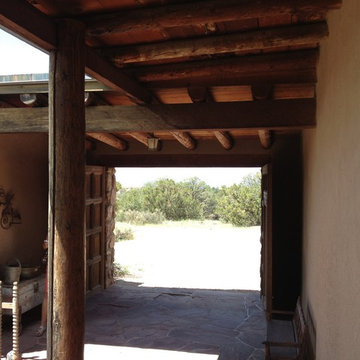
Zaguan at the John Gaw Meem house in Santa Fe built in the 1930's and an example of the Territorial Style.
Inspiration for a timeless exterior home remodel in Albuquerque
Inspiration for a timeless exterior home remodel in Albuquerque
Find the right local pro for your project

 Stone Action
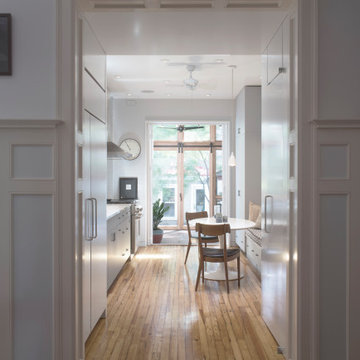
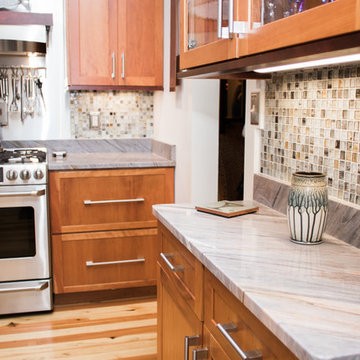
This beautiful kitchen has been fabricated by Ancient Art Stone! http://www.ancientartstone.com/
Aurora Blue quartzite is one of a kind in looks. It's soft veining and light contrast in colors really makes it stand out!
Understanding Quartzite
It’s more durable than granite. The two are both natural stones, both are hard, and both are very beautiful, but you have to look a little deeper to see if one is a better fit for you than the other. Both are formed deep within the earth from heat and pressure, so both stones are hard and sturdy. At a 7 on the Mohs Hardness Scale, quartzite is actually harder than granite. It’s harder than all the other popular stones used in countertops.
Many people love the look of quartzite because some types can look very much like marble. Another difference between the two stones is the fact that most quartzite is denser and less porous than granite so some people don’t even seal the stone at all.
Quartzite and quartz are two very different materials. Quartzite is a natural metamorphic stone formed when sand is heated and compressed within the earth. Quartz contains pieces of ground quartz combined with resin and polymers to create a man-made material that’s pretty and strong.
Quartzite may seem expensive. However, it can be less expensive than most marble. When comparing the price to either granite or quartz, you’ll find they fall in a similar range. Generally, the more ‘exotic’ i.e. rare, the higher the price. Quartzites that look like marble can fetch higher prices because of demand.
We hope you personally check out our beautiful quartzite selection!
Click to see more quartzite or other stone products (you can search for aurora blue): http://www.stoneaction.com

 Brooklyn City Furniture
Dimensions: 128 "L x 39" D x 24" H Sectional Area: 64 " D
The Baseline sofa is in stock in the US for quick delivery at 128" x 63" with chaise in Gravel 26 and Tangent 16. Includes: Head Roll 6 3/4"dia x 23 1/2"w and three Back Cushions 21 3/4" x 25 1/2 x 2 3/4". Find fabric images Nueva, Bakar, Bubble II, Gravel, Plindy, Tangent, Desert, Herring and Nature, all available for special order with promotional pricing. Inquire for more info. Fabric samples are available upon request.
Comes in Left Facing or Right Facing
By Eilersen: Solid-wood frame with Nozag-spring seat-base, covered with polyurethane foam in a 600 g pre-compressed, fibre-fill wrap. Back cushion and neck-roll filling is 100% down and small duck feathers sewn into a ribbed, feather-proof cambric casing. To retain the feather cushion’s appearance and shape, regular fluffing-up and airing are recommended. 3 cushions and 1 bolster included.
Born a classic. Named after its expression. Clean lines and uncomplicated elegance make Baseline an obvious starting point for the interior decoration of your living room. Baseline is the epitome of quality, comfort, and classic design. Plus double the flexibility. With its stylistically consistent simplicity, Baseline glides effortlessly into any interior. Moreover, we have produced it in a varied series of corners, centre elements, stools and chaise-lounge which provide almost unlimited possibilities for individual combinations. Build the modules in systems - or choose them as free-standing furniture.
Both the seat and back are upholstered with a super flexible layer of pre-compressed fiberfill which optimizes sitting comfort and gives a soft, rounded look. You can easily purchase movable neckroll pillows and large down pillows, 55 x 65 cm, so Baseline invites even more relaxed enjoyment. The 25 cm broad armrest gives a balanced finish and also lifts the sofa which seems to float freely in the air on its legs of black-stained wood that are only a few centimetres high.
You can choose your cover from Eilersen's large fabric collection. The cover is removable and fitted with velcro so you can easily take it off and clean it (follow the care and maintenance instructions of the fabric). Under the cover, the sofa is further protected by a base cover in 100% cotton

 Sustainable Design Group
Featured on the Discovery Channel's Renovation Nation, this green solar home built on a narrow infill lot is passively heated, naturally cooled and solar powered. Unlike conventional homes built with wood or masonry, this home is built from the soil from the excavation on site. A machine uses very high pressure to compress the soil into a brick. The compressed earth bricks, wrapped with a continuous layer of foam insulation to retain heat, form a structurally sound massive exterior wall that is an integral part of the home’s passive heating and cooling system. In the winter, the sun coming through the south facing windows heats the house and warms the walls. At night, the massive walls radiate heat back into the home. Features of this house include 3000 gallons of rainwater collection, LED lighting, energy recovery ventilation, and non-toxic materials. The home is certified by EarthCraft Virginia green building program.

 Originate Natural Building Materials
Richlite Rainshadow Midnight Iron - compressed paper panels for fencing
Inspiration for a timeless exterior home remodel in Phoenix
Inspiration for a timeless exterior home remodel in Phoenix
 Hammer Architects
Peter Vanderwarker
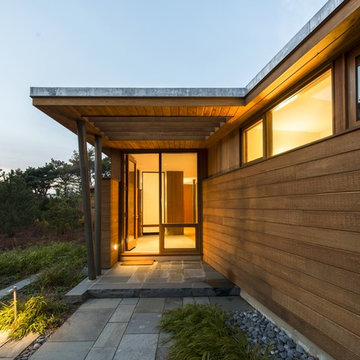
Inspiration for a mid-sized modern brown one-story wood exterior home remodel in Boston
Inspiration for a mid-sized modern brown one-story wood exterior home remodel in Boston
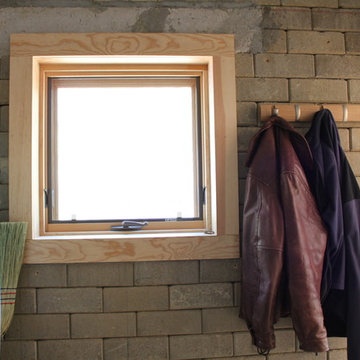 Sustainable Design Group
Featured on the Discovery Channel's Renovation Nation, this green solar home built on a narrow infill lot is passively heated, naturally cooled and solar powered. Unlike conventional homes built with wood or masonry, this home is built from the soil from the excavation on site. A machine uses very high pressure to compress the soil into a brick. The compressed earth bricks, wrapped with a continuous layer of foam insulation to retain heat, form a structurally sound massive exterior wall that is an integral part of the home’s passive heating and cooling system. In the winter, the sun coming through the south facing windows heats the house and warms the walls. At night, the massive walls radiate heat back into the home. Features of this house include 3000 gallons of rainwater collection, LED lighting, energy recovery ventilation, and non-toxic materials. The home is certified by EarthCraft Virginia green building program.
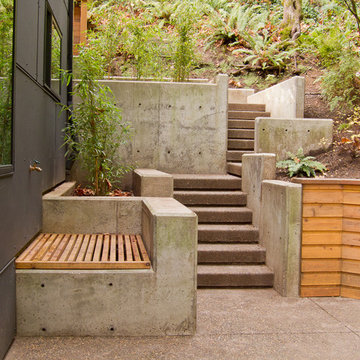
 LANDline design
Kevin Wells, www.kevinwellsphoto.com
Design ideas for a contemporary landscaping in Portland.
Design ideas for a contemporary landscaping in Portland.
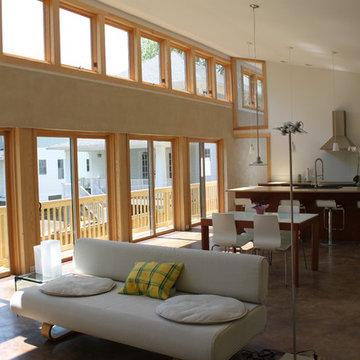 Sustainable Design Group
Featured on the Discovery Channel's Renovation Nation, this green solar home built on a narrow infill lot is passively heated, naturally cooled and solar powered. Unlike conventional homes built with wood or masonry, this home is built from the soil from the excavation on site. A machine uses very high pressure to compress the soil into a brick. The compressed earth bricks, wrapped with a continuous layer of foam insulation to retain heat, form a structurally sound massive exterior wall that is an integral part of the home’s passive heating and cooling system. In the winter, the sun coming through the south facing windows heats the house and warms the walls. At night, the massive walls radiate heat back into the home. Features of this house include 3000 gallons of rainwater collection, LED lighting, energy recovery ventilation, and non-toxic materials. The home is certified by EarthCraft Virginia green building program.
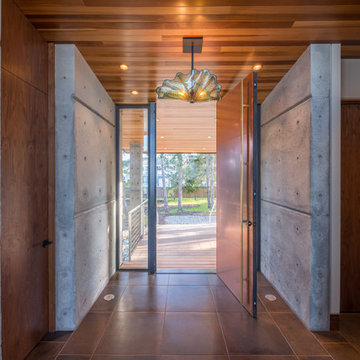
 Dan Nelson, Designs Northwest Architects
Photography by Lucas Henning.
Entryway - small modern porcelain tile and beige floor entryway idea in Seattle with gray walls and a metal front door
Entryway - small modern porcelain tile and beige floor entryway idea in Seattle with gray walls and a metal front door
 Sustainable Design Group
Featured on the Discovery Channel's Renovation Nation, this green solar home built on a narrow infill lot is passively heated, naturally cooled and solar powered. Unlike conventional homes built with wood or masonry, this home is built from the soil from the excavation on site. A machine uses very high pressure to compress the soil into a brick. The compressed earth bricks, wrapped with a continuous layer of foam insulation to retain heat, form a structurally sound massive exterior wall that is an integral part of the home’s passive heating and cooling system. In the winter, the sun coming through the south facing windows heats the house and warms the walls. At night, the massive walls radiate heat back into the home. Features of this house include 3000 gallons of rainwater collection, LED lighting, energy recovery ventilation, and non-toxic materials. The home is certified by EarthCraft Virginia green building program.

 Tate Studio Architects
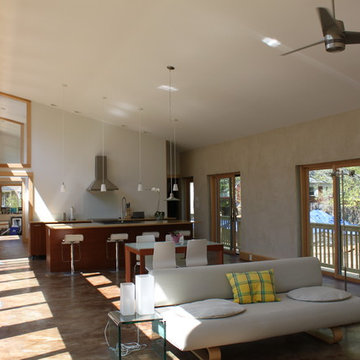
Dining area within the Great Room. A "Trellis Like" cloud ceiling made from Walnut compresses the space to stitch the kitchen together with the dining area. Builder - Build Inc, Interior Design - Tate Studio Architects, Photography - Thompson Photographic.
 Direct Flooring Center
usfloorsllc.com
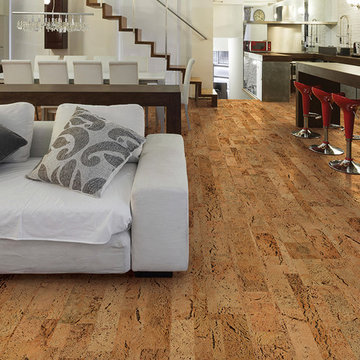
Mid-sized minimalist open concept cork floor living room photo in Other with white walls
Mid-sized minimalist open concept cork floor living room photo in Other with white walls

 PlushBeds
Indulge your guests in the plush cooling comfort of our premium cool gel memory foam sofa bed mattress with greater cooling properties and comfort benefits than traditional memory foam. Our cool gel sleeper sofa mattress offers a generous 4.5 inches of luxurious, shape-conforming, cool gel memory foam and high density Plushfoam, made of billions of open-ended cells, resulting in a formula almost three times as dense as regular foam, and guarantees that your guests will not feel any metal bars.
When our cool gel memory foam is compressed, the gel beads coalesce, resulting in a smooth shift from viscoelastic (memory foam) properties to pressure-relieving gel properties, offering a luxurious Variable Support Factor. Greater compression brings greater support and the result is superior comfort without the traditional memory foam "bottom-out" under heavy loads on a sofa mattress.
Gel foam is used in many products where pressure relief and energy absorption is required. Wrapped in our luxurious breathable cover, our cool gel replacement sofa bed mattress is the perfect solution for a comfortable, cooler night's sleep.
Plushbeds Slice of Heaven™ Cool Gel Sofa Mattress comes in the following sizes:
Twin (35" x 72") - $299
Twin Wide (38" x 72") - $299
Full (52" x 72") - $349
Full Wide (54" x 72") - $349
Queen (58" x 72") - $379
Queen Wide (60" x 72") - $379
Single (24" x 72") - $269



 Sargent Pillsbury Designs LLC
Inspiration for a large transitional l-shaped dark wood floor open concept kitchen remodel in Los Angeles with a farmhouse sink, raised-panel cabinets, gray cabinets, glass countertops, white backsplash, ceramic backsplash, stainless steel appliances and an island
 Charles Hilton Architects
HOBI Award 2013 - Winner - Custom Home of the Year
HOBI Award 2013 - Winner - Project of the Year
HOBI Award 2013 - Winner - Best Custom Home 6,000-7,000 SF
HOBI Award 2013 - Winner - Best Remodeled Home $2 Million - $3 Million
Brick Industry Associates 2013 Brick in Architecture Awards 2013 - Best in Class - Residential- Single Family
AIA Connecticut 2014 Alice Washburn Awards 2014 - Honorable Mention - New Construction
athome alist Award 2014 - Finalist - Residential Architecture
Charles Hilton Architects
Woodruff/Brown Architectural Photography
6